Understanding Water Tables on Top of Cornices
When we think of roof elements, we generally just think of the roof directly on top of the main part of the building. All the elements exposed at the tops of buildings need coverings, and in some cases these coverings work similar to a roof. Large cornices are examples of this type of additional roof-like covering.
The typical type of roof gutters that we see in most buildings today were not commonly used at front facades, in historic times. Also, with the relatively small size of this cornice, the overall area of the surface at the top of the corner doesn’t necessitate the use of a guttering and collection system. Instead, the water is just indiscriminately cast off the edge of the cornice. This type of limited depth surface is often referred to as a water table, in historic architecture.
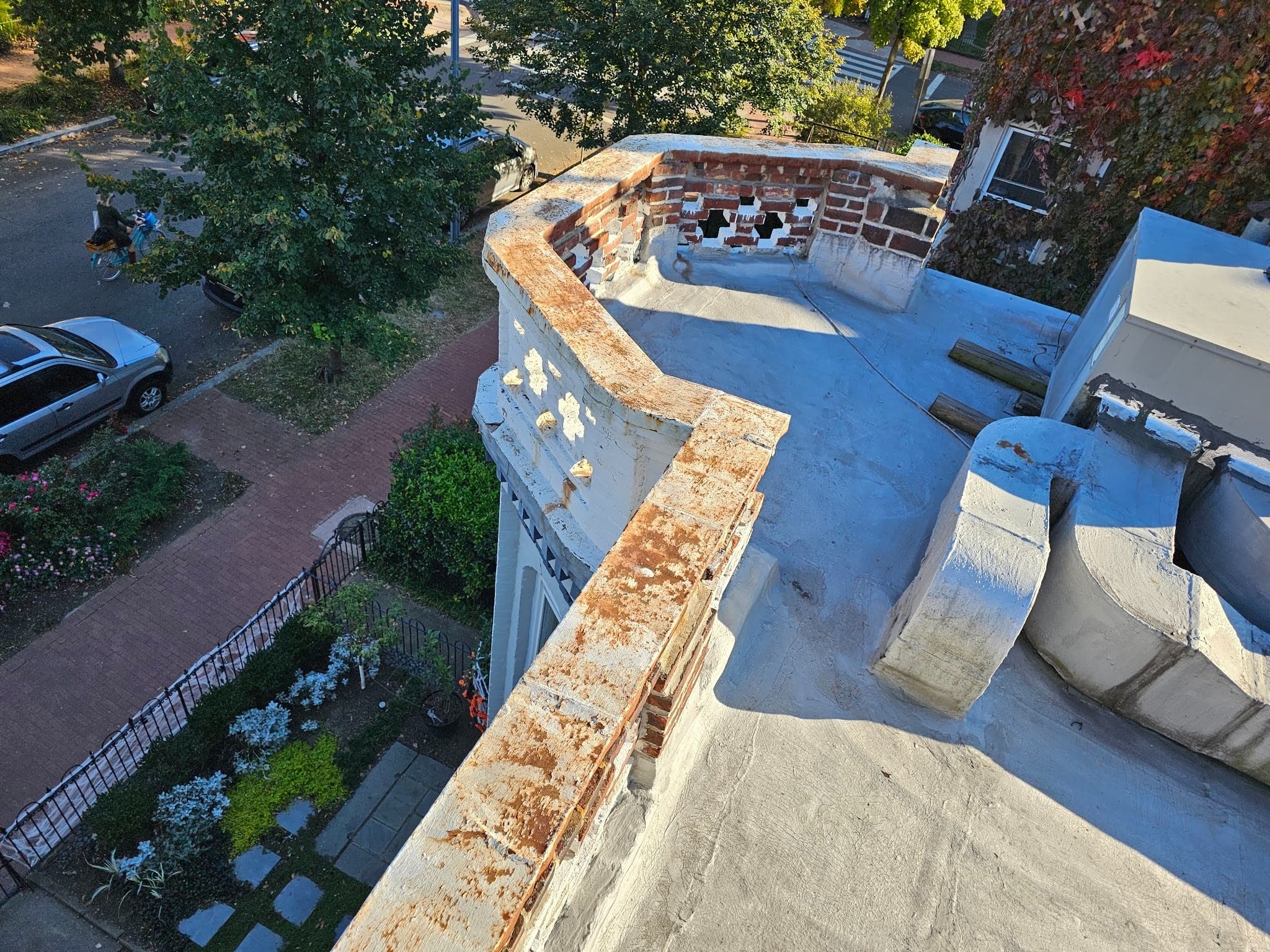
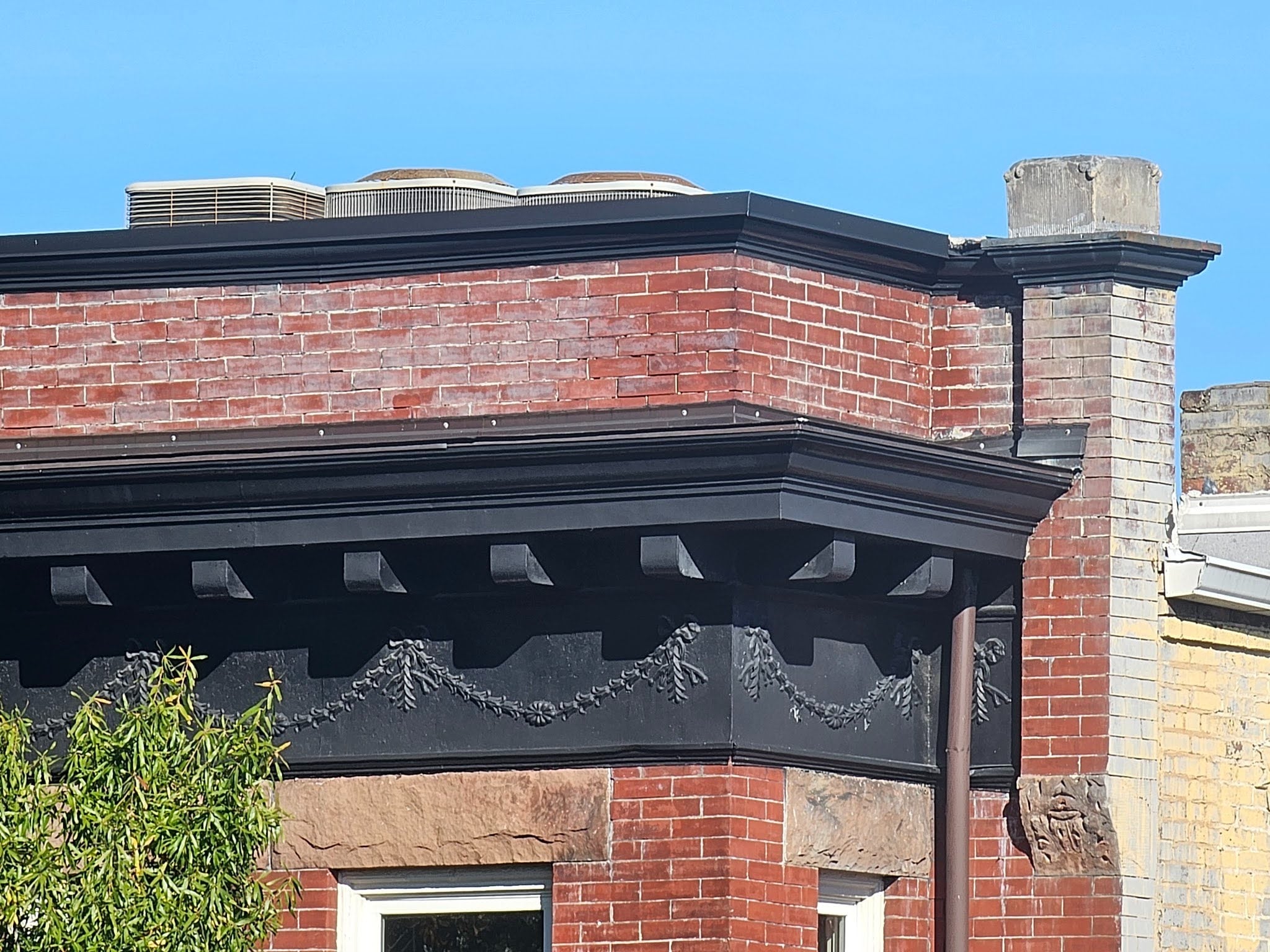
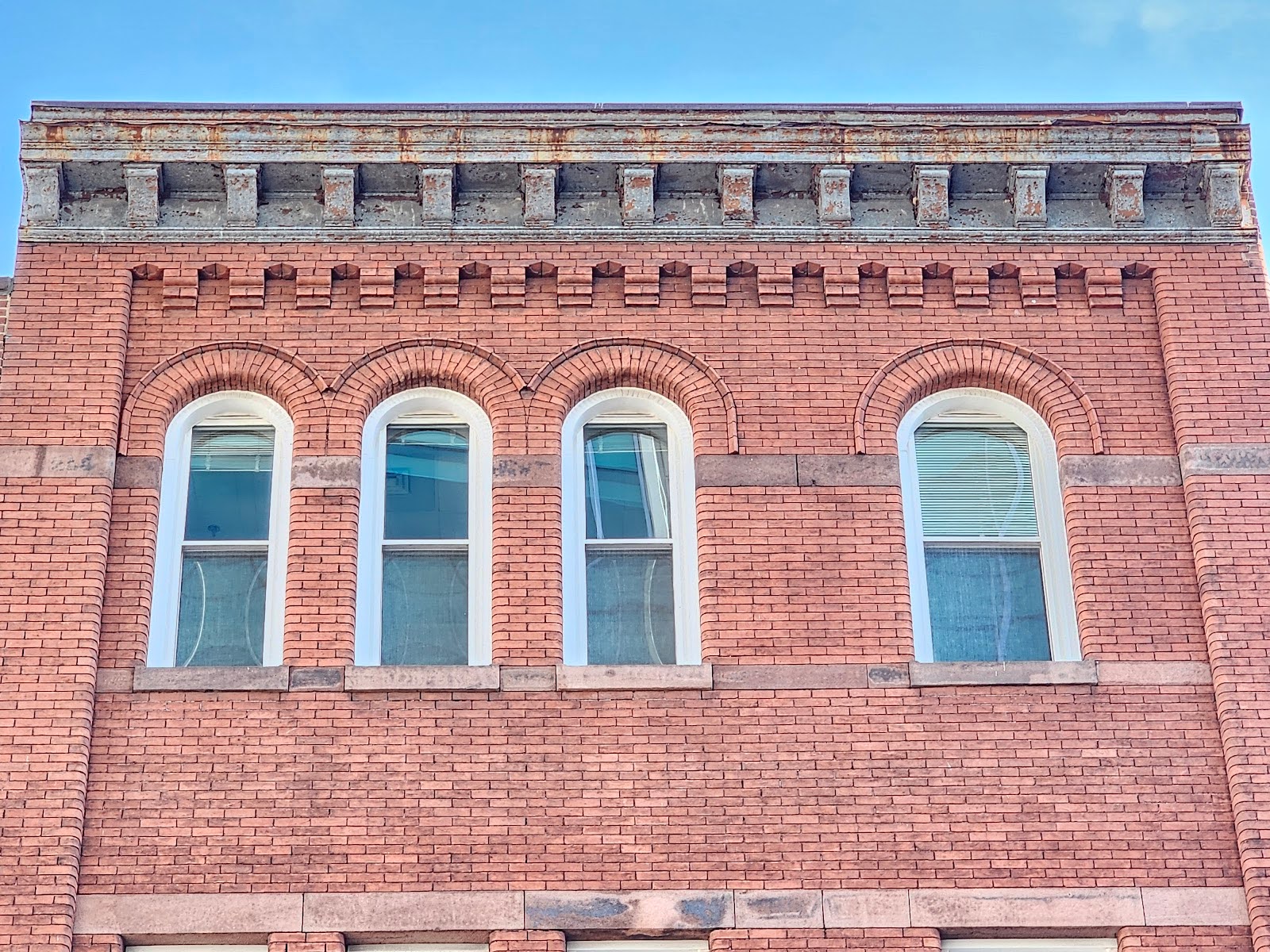
In cases like the cornice shown in the picture below, from this particular angle it looks like the cornice is just an extension of the roof. We show that same cornice from a different angle though in the following next picture below and you can see that it’s actually not in line with the roof. Just below the top of the actual roof area, the top of the front masonry wall extends above the cornice. The cornice is hung and applied on a just lower part of the front facade wall.
At the top of this image, at the very top of the front facade, you can see just a bit of the exposed facade. It pokes out just above the projecting cornice. From this angle the cornice almost covers the view, but not completely. You can just barely tell that the cornice is not connected to the roof of the building.
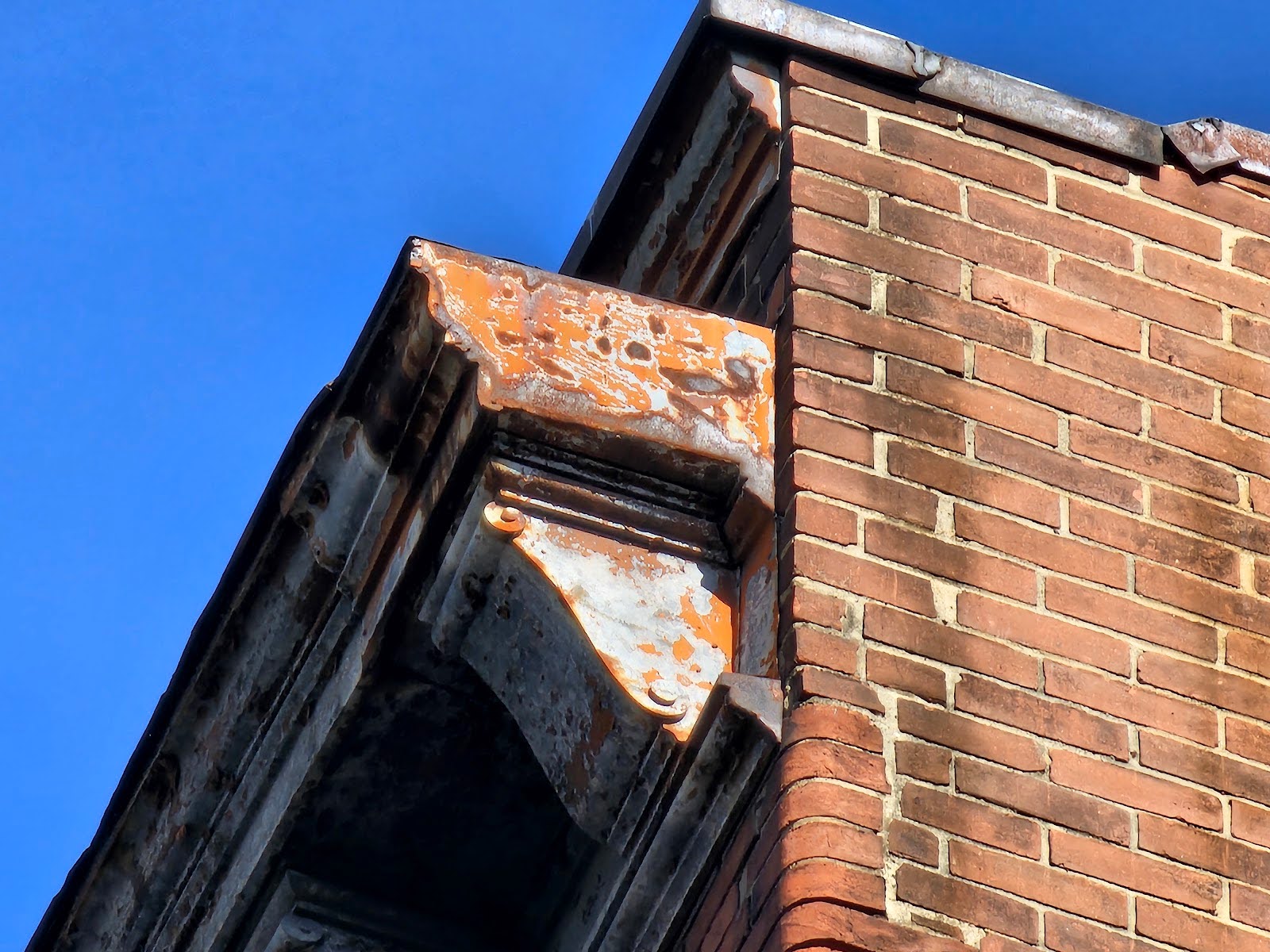
You can see red oxide rust on the exposed surface of this cornice. This cornice is made of a relatively heavy sheet metal. The sheet metal is made of a ferrous metal. Ferrous metal includes iron. In this case, that metal has been painted to protect from exposure to the elements, but over time that paint has deteriorated and it needs to be maintained and kept on a tighter schedule.
Some of the typical examples of rust and deterioration can be seen at the edge of the cornice. The majority of the areas at the side of the cornice and the supporting corbel appear to show bare metal. Here as well, at this angle, you can see that the cornice is separated from the main roof of the building.
The cornice is mounted directly against the brick facade and sets below the fascia underneath the front edge of the main roof. Since these two different elements do not align, it’s not really applicable for the main roof covering to protect this cornice. Instead, the cornice needs its own covering. A covering has been installed on top of the metal cornice, but it’s not the same as a roof material.
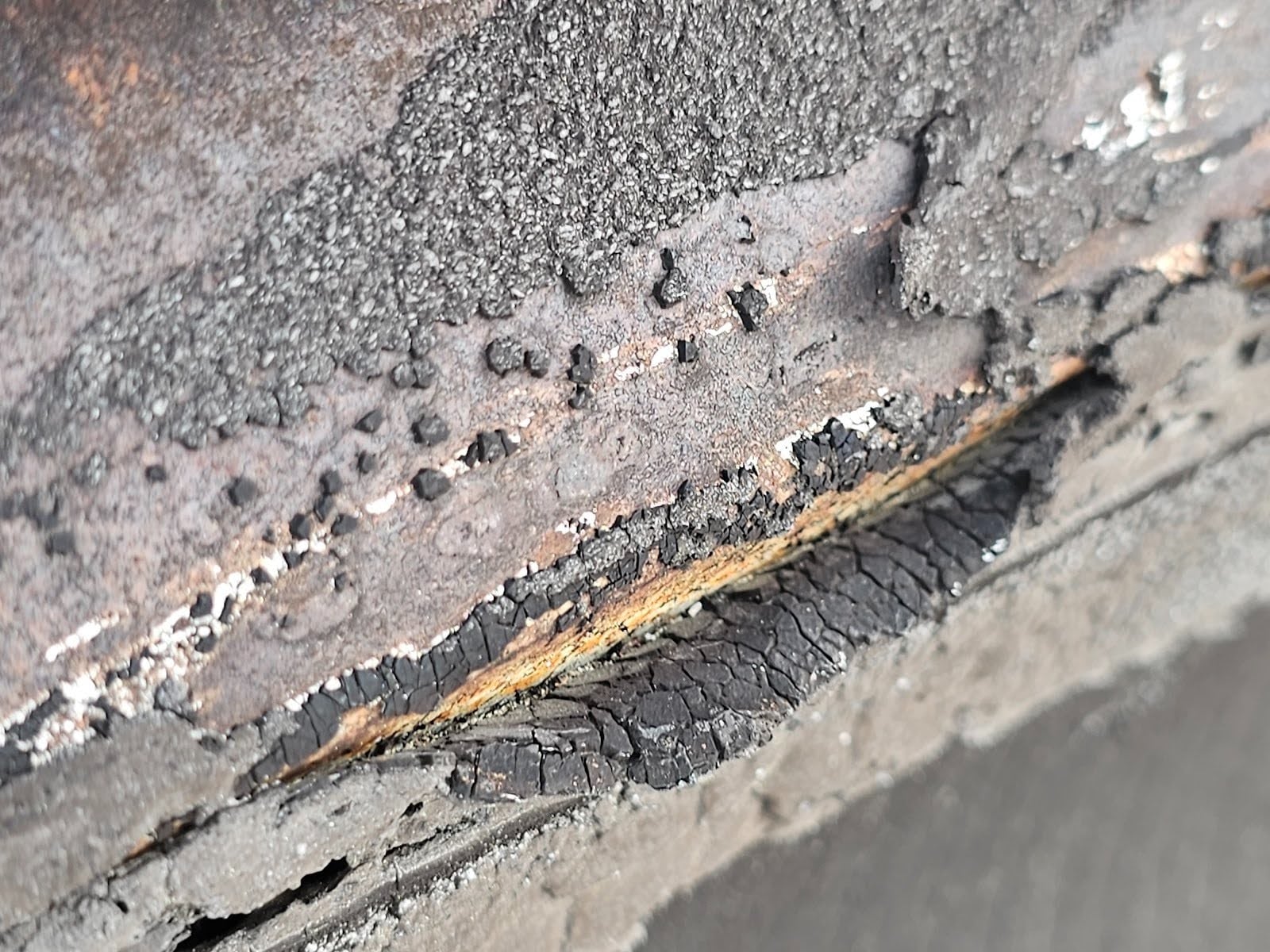
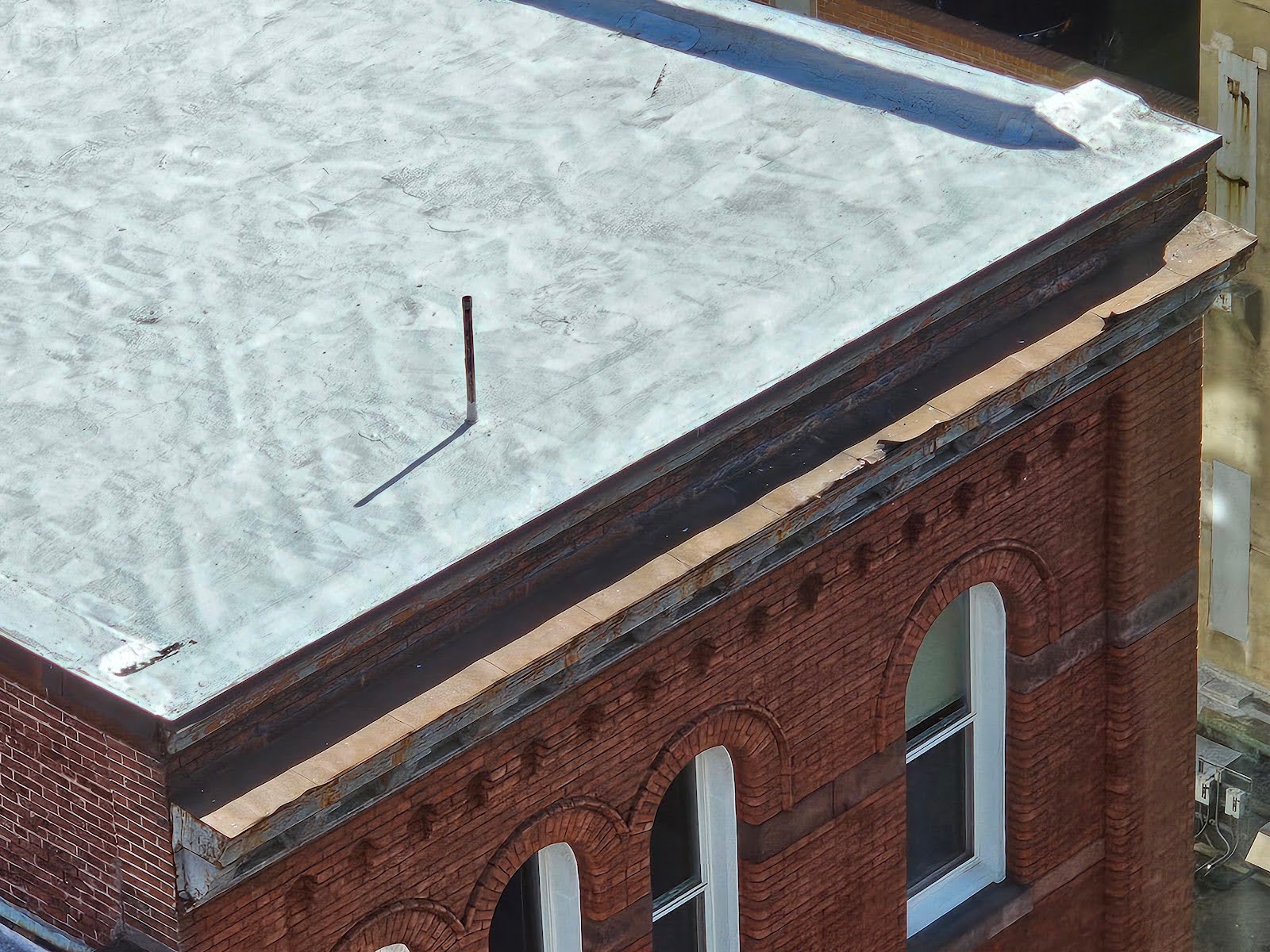
In the picture below, you can see the same cornice but looking downward from an upward angle. From this angle you can see the metal covering that is intended to protect the cornice. It’s not working well though. It is rusted and has separated slightly at the seams and edges. As well, we will show a closer view of the brickwork above the cornice in the second part of this article series, in this coming week.
At a glance, the main roof appears to be covered in a modified bitumen membrane, but it’s actually a built-up type cap sheet that’s been painted with an aluminum paint. The gray color comes from this paint application and the substrate roll roof material is actually a dark color, closer to black. Without the moderately reflective paint, the roof absorbs an excessive amount of heat energy from the sunlight and is easily damaged by exposure to ultraviolet light.
In this coming week, we will look more closely at the connection between the water table on top of this architectural cornice and the front facade. Since this installation is different than an upper roof, open on all sides, it requires a perimeter connection. That perimeter connection at the masonry wall requires a termination through a counter flashing to the adjacent masonry wall. We’ll take a closer look at this particular detail because it’s an important area that’s often built or maintained improperly. Improper construction and / or maintenance at this type of connection has a high tendency to lead to leakage.
We provide this information here on our blog, and our website, to help our customers and future clients, and we recommend every building owner in DC who values the longevity of their roof (and their investments) and building use a contractor who values the simple and important principles of proper roof construction like Dupont Roofing DC. Our company specializes in flat roofing here in Washington DC and we’re happy to help building owners of almost all types.
Learn more about our company and the proper techniques of working with roofing on historic buildings in Washington DC here on our blog at DupontRoofingDC.com, and you can call us at (202) 840-8698 and email us at dupontroofingdc@gmail.com. We are happy to help and at least talk through options.