the Role of Water Tables on Top of Cornices
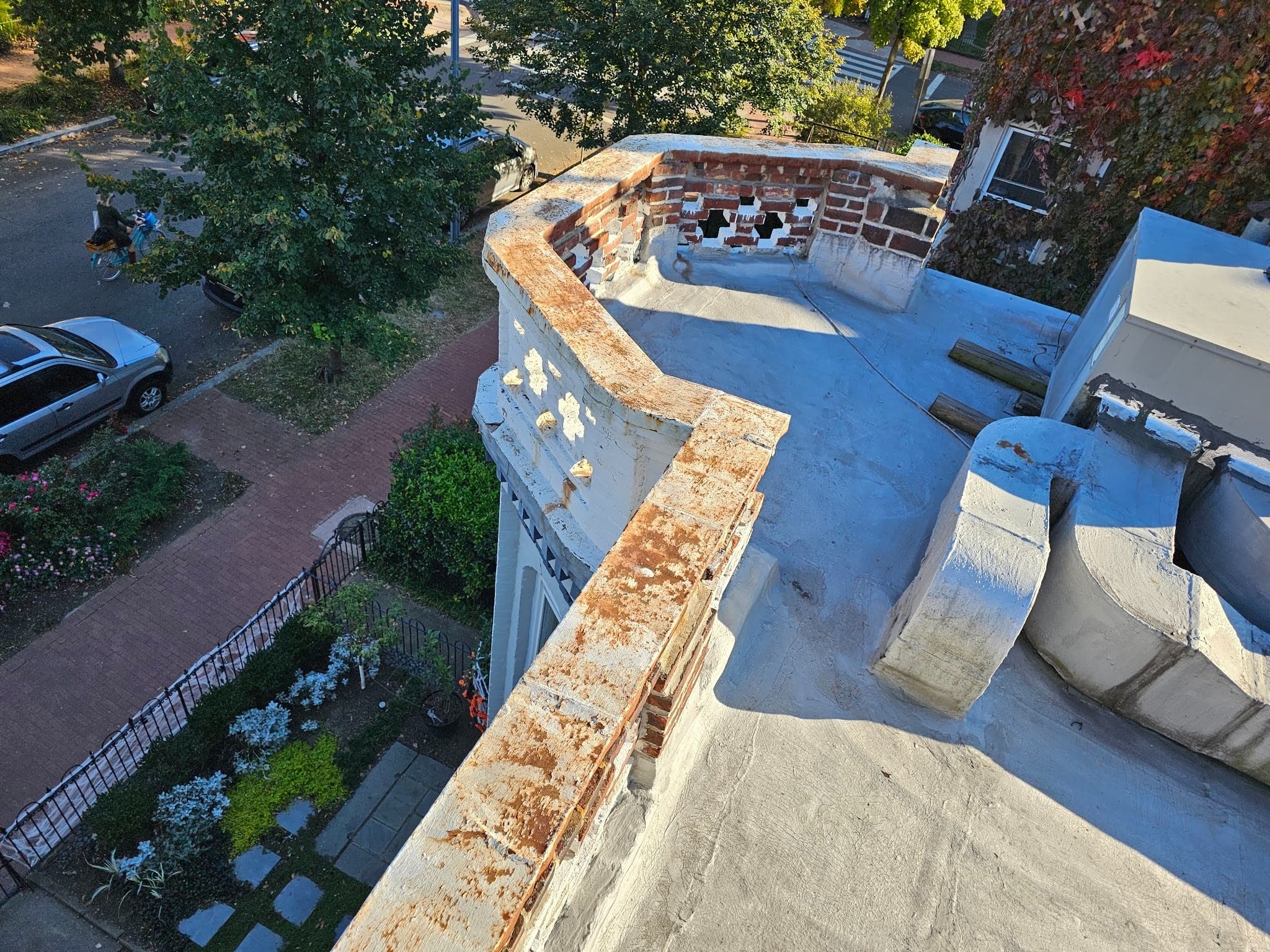
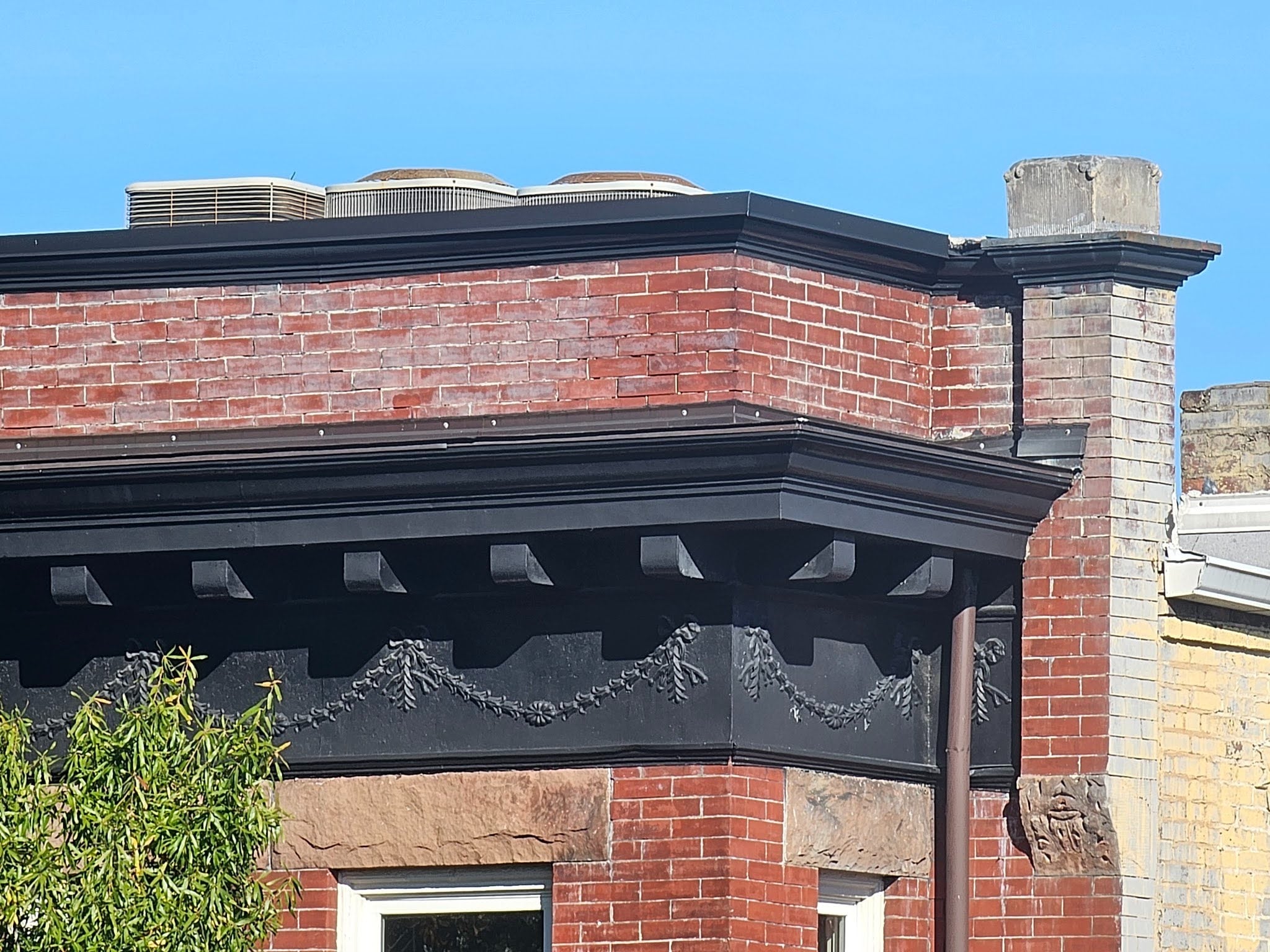
This past week, we took a look at a large architectural cornice at the top of a historic masonry facade. We talked about a few concerns with the upkeep and maintenance of this element, in terms of roofing. There are concerns with the covering on top of this cornice which although is referred to as a water table. A water table works very similarly to a roof. The large adjacent main roof of the building is a low slope roof that is covered with a built up type membrane system. The cornice, by comparison, is built with sheet metal. The covering on that water table is also built with a type of flat laid seam sheet metal covering.
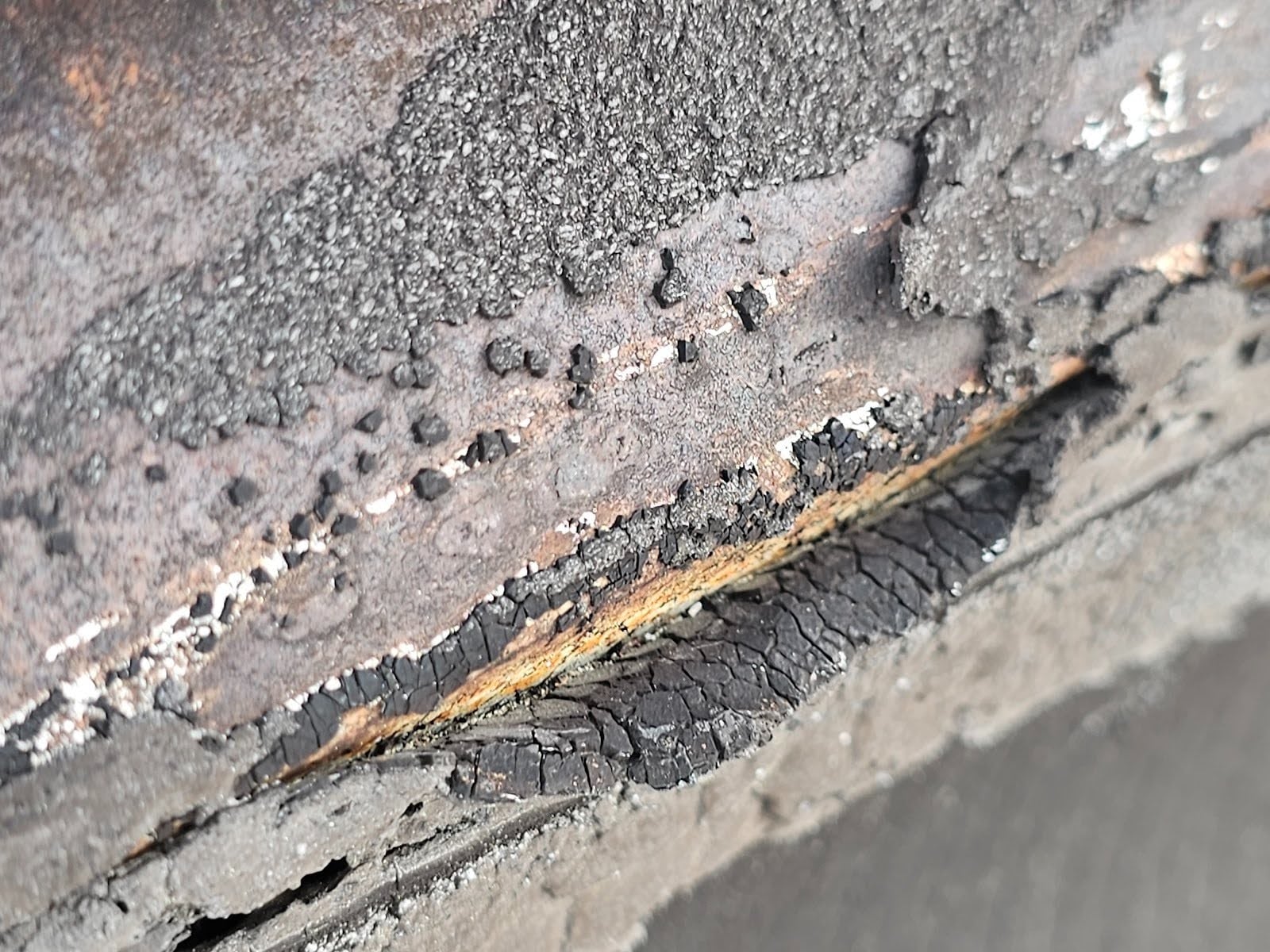
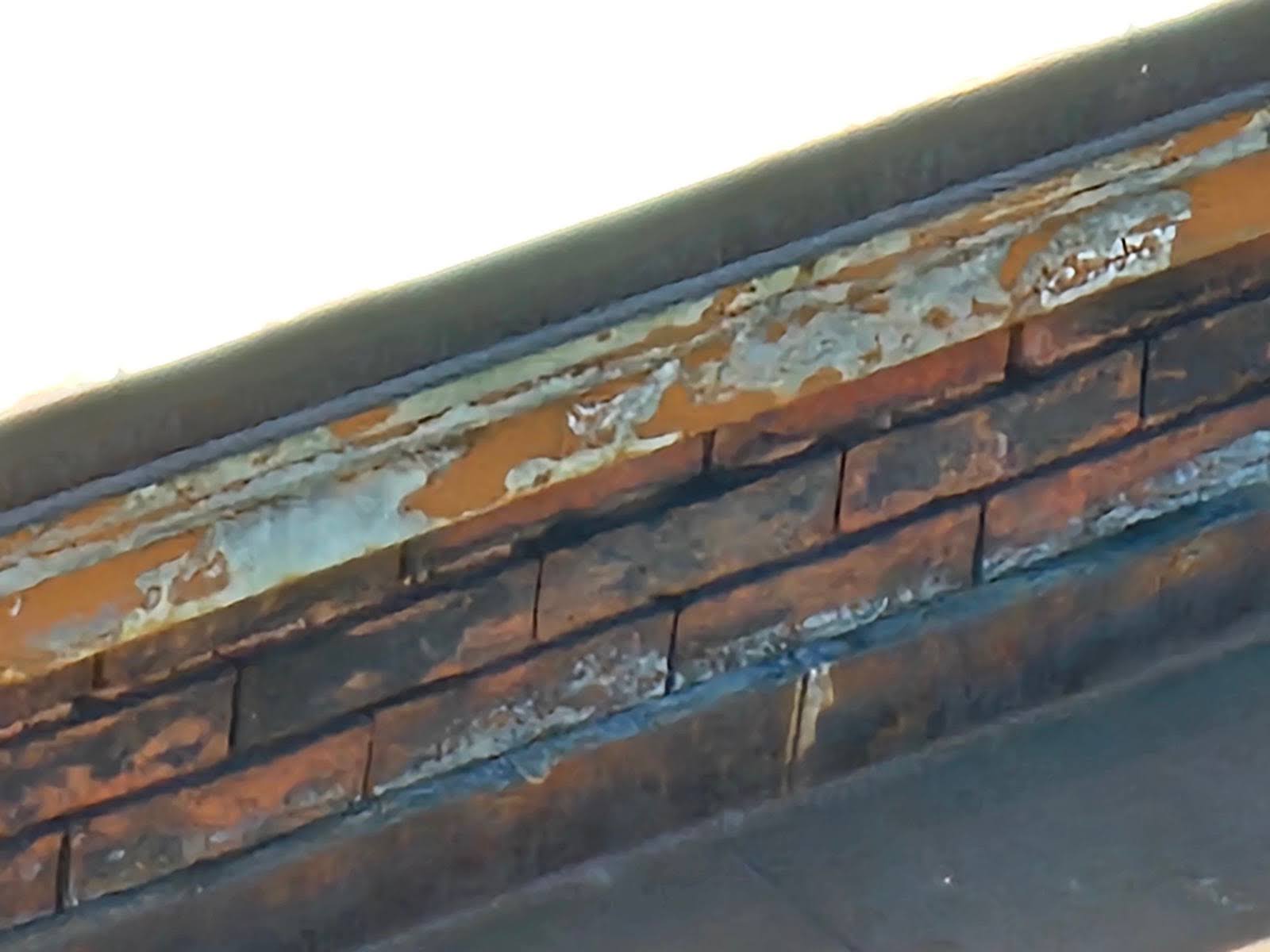
In the next picture below you can see a closer view of the opposite side of the cornice. This side doesn’t have the same level of extreme oxidation, and you can see the zinc galvanization applied to the edge of the sheet metal. This cornice was originally painted but over the years since the installation, the paint has all but entirely delaminated.
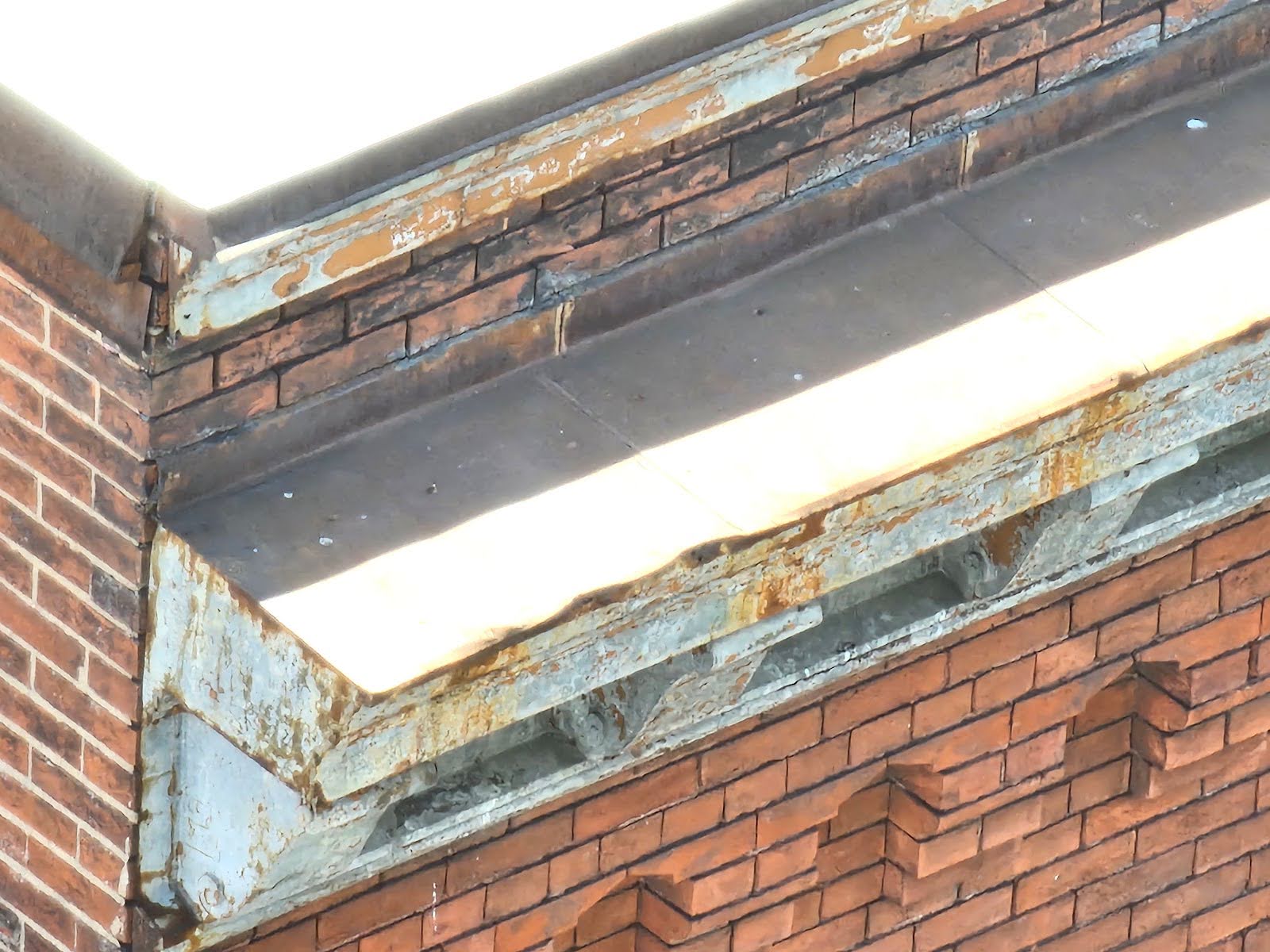
The top of the counter flashing, which spans from the vertical wall facade to the near horizontal cornice covering, is set into a reglet or raggle in the masonry. A reglet and raggle are the same thing, but these are two different words that were used in historic times to explain this type of connection. Essentially, a recess is cut into or omitted during construction of the brick work. This recess allows a space for the upturned counter flashing to be set into a mortar joint area at the facade. After the counterflashing is set into the joint between the row of bricks, the sheet metal is secured and sealed.
In historic times, small lead wedges were used to press and set between the top of the bent counter flashing and the underside of the brick. The wedge created a friction fit type of pressure which held the counter flashing in place. By having an embedment of the top of the counter flashing, it protects from having water run down the vertical wall and then back behind the area of the connection between the roof-like covering and the facade. The same type of connection is typical in regular low slope roof installation.
In contemporary times, we would overlay the exposed area of the joint with high strength sealants. These materials perform well to maintain flexibility and also resist much of the impact of exposure to ultraviolet light. They do not last as long as most roof systems. The reduced amount of planned longevity is just one of the natural limitations of gun applied sealants.
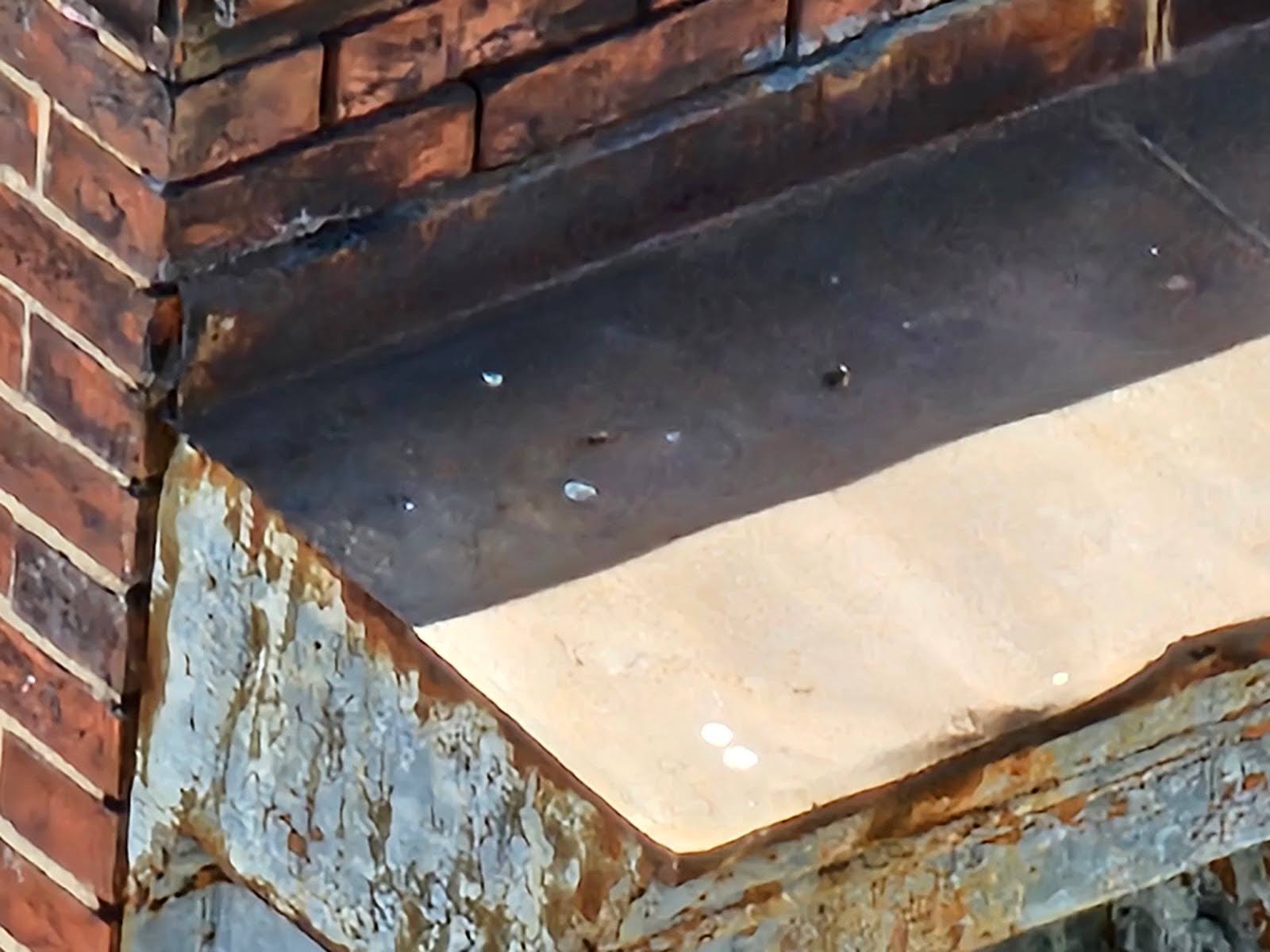
One of the biggest problems with this installation and the reason that there’s water entry into the cornice and that the metal covering is leaking is because the edges are improperly terminated. This metal covering is applied to the top of the cornice, but it’s not a continuous roll of metal, it has seams. As well, at the edges, there is no formed or bent downturn to cast water away. Drip edges are intentional extensions that run beyond areas of overlaid installations. For example, where there is a transition at a building facade such as a slate projection, the area of projection may be overlaid with a drip edge to protect the top surface from water infiltration.
In some cases that water infiltration is caused by permeation. Aluminum flashings, for example, have a high resistance to permeation and are generally considered waterproof. It’s important that they are continuous though because lap seams are areas of high frequency point failures. This applies to several types of seams, but particularly where seams are laid in a continuous horizontal run, it’s better to design or build a continuous metal overlay to avoid seams, where possible.
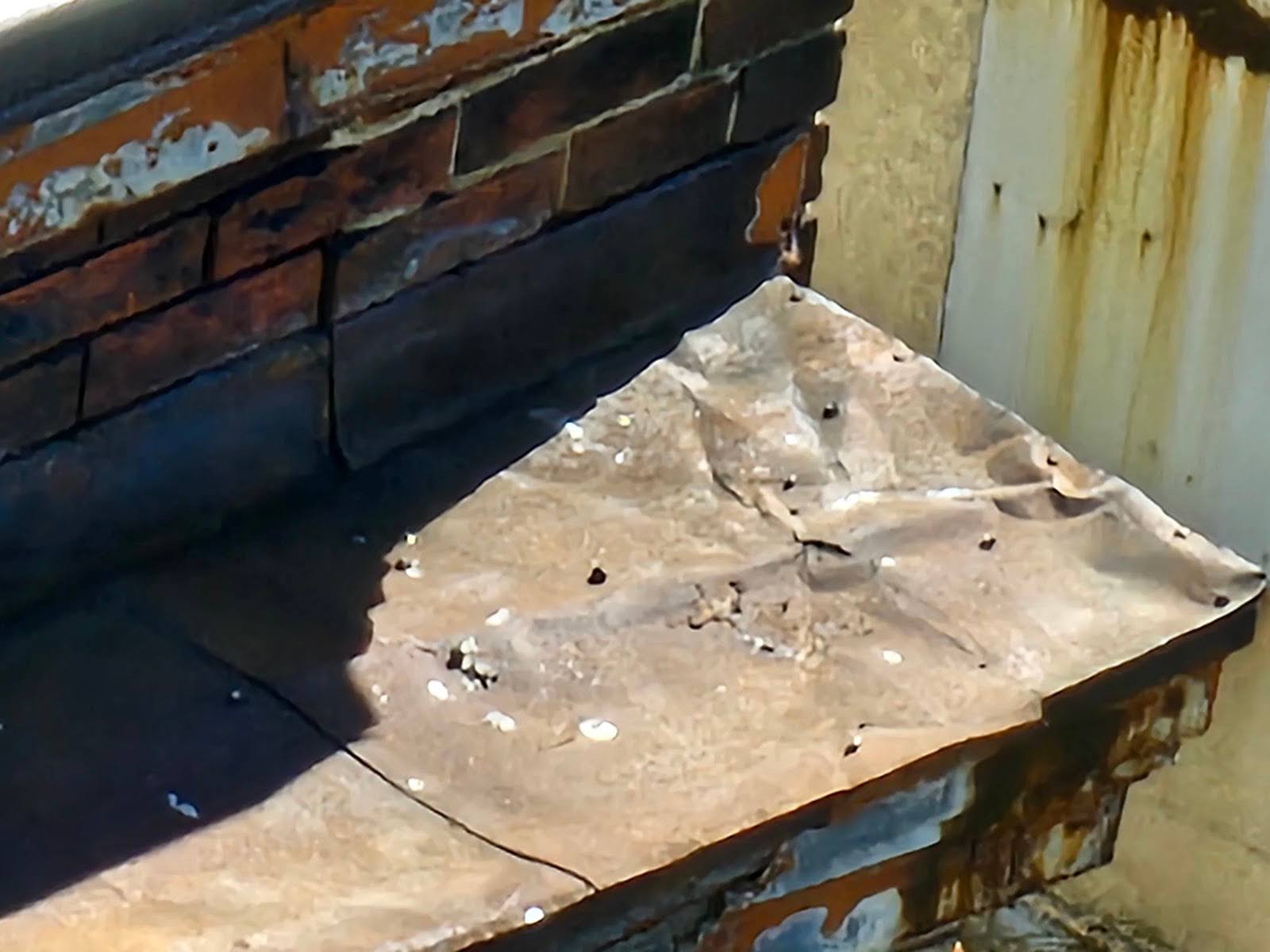
The picture below shows a closer view of the area where the counter flashing interfaces with the vertical wall. You can see a mastic or type of adhesive has been smeared across the brickwork. This looks bad. In modern times, when a sealant is applied across a masonry facade, particularly where the masonry is unpainted, we recommend masking. The masking can be removed after the application of the sealant.
Once the masking is removed, the face of the adjacent masonry is left largely unblemished. As we mentioned above, in contemporary times we would use high performance sealants such as elastomeric types of polyurethane or exterior grade siliconized materials. In historic times though, these materials didn’t exist. Instead a variety of lesser quality materials would be used. In some cases oakum would be set into the open joints. This may have helped to an extent, but it’s imperfect in several ways.
We provide this information here on our blog, and our website, to help our customers and future clients, and we recommend every building owner in DC who values the longevity of their roof (and their investments) and building use a contractor who values the simple and important principles of proper roof construction like Dupont Roofing DC. Our company specializes in flat roofing here in Washington DC and we’re happy to help building owners of almost all types.
Learn more about our company and the proper techniques of working with roofing on historic buildings in Washington DC here on our blog at DupontRoofingDC.com, and you can call us at (202) 840-8698 and email us at dupontroofingdc@gmail.com. We are happy to help and at least talk through options.