Variety of Roof Types in a Single Building Explained
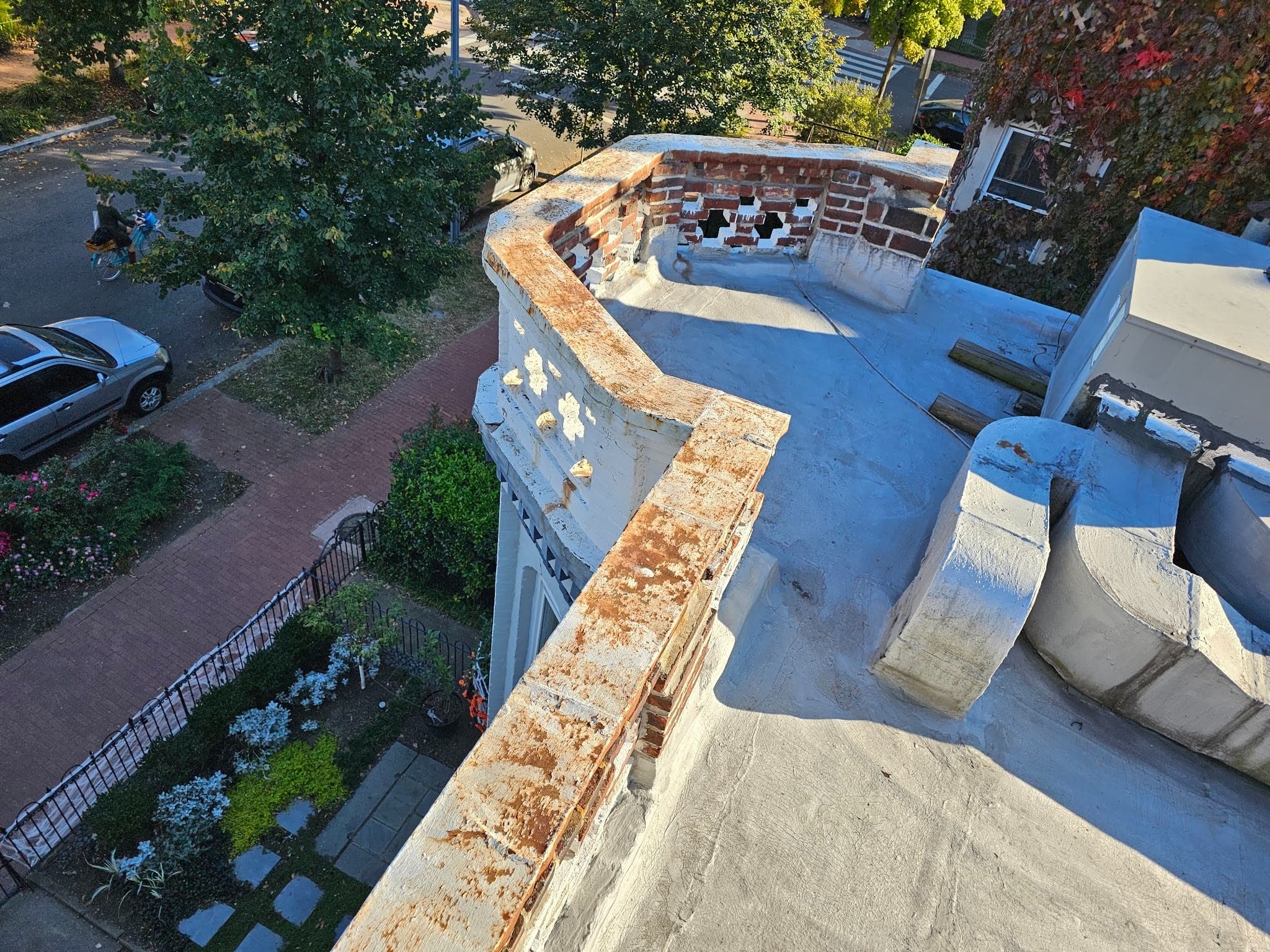
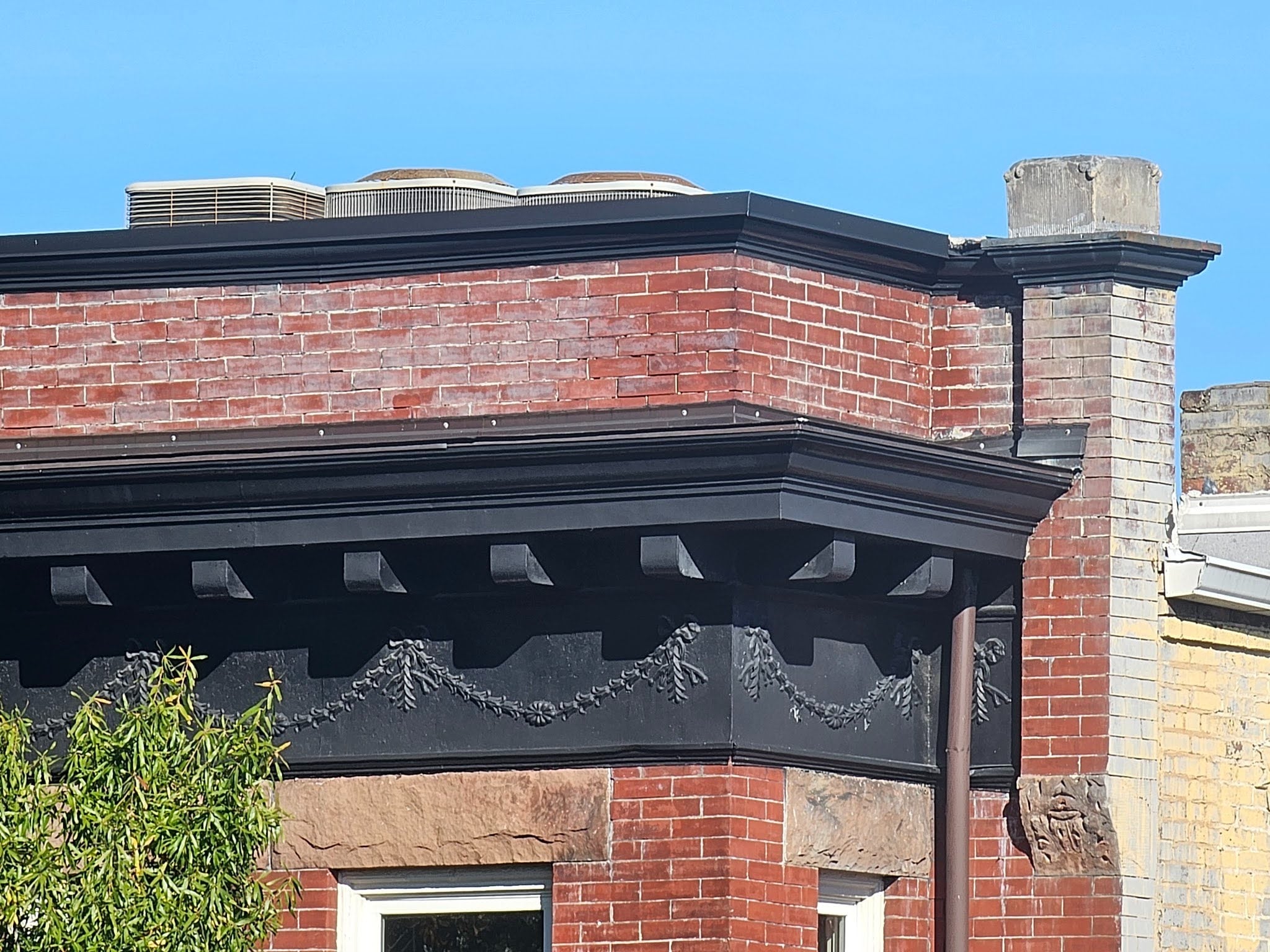
Today we’re looking at a case studio based on one of the many thousands of historic buildings here in Washington D.C. Like many typical DC row homes, this particular building happens to have a mansard roof. This particular building though is not a row home.
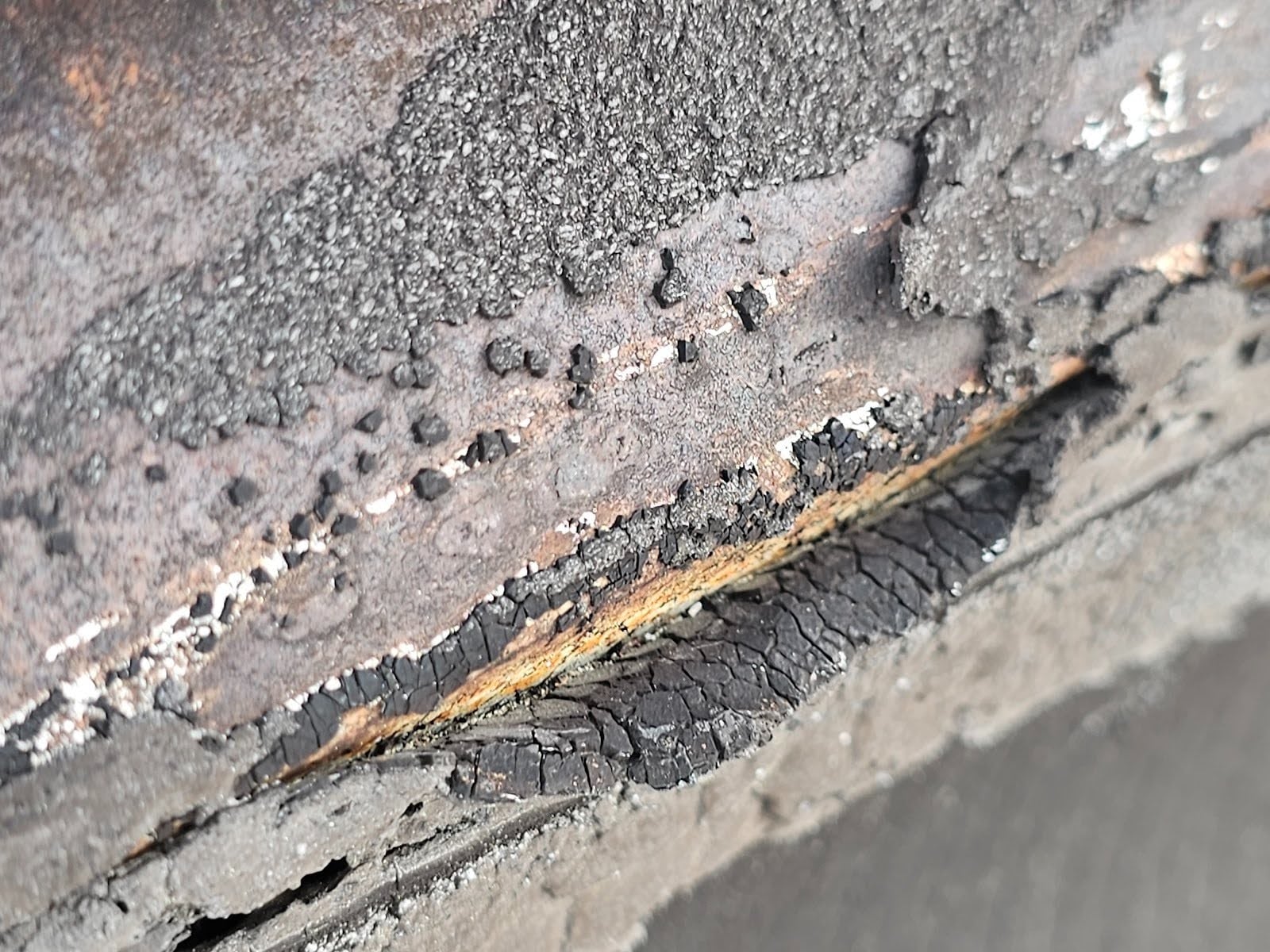
Instead it’s a freestanding building, and the mansard doesn’t just sit at the top of the single front facade. In this case the mansard roof tops all three main facades of the building. Although mansard roofs are common here in Washington DC, there are also many thousands of other buildings that just have a single flat roof and no other roofs. This particular building has several different roof areas and several different roof materials, as well.

This particular mansard roof that runs around the top of the facade is covered with a slate tile roofing material. At the time of the original construction, slate was a very common type of material used for this type of roof area. In the many decades that followed after the original construction, as the mansard on roofs need to be recovered and replaced, in many cases, to cut costs, people have replaced the slate with modern materials. One of the most common types of modern materials used asphalt shingles.
Asphalt shingles, though, really do not fit the historic aesthetic. Instead, asphalt shingles happen to look like the type of materials commonly used for tract homes and low cost stick framed residential buildings in the suburbs and country.
It happens to be just a personal opinion, but many people do agree that historic mansard roofs deserve better than just cheap asphalt shingles. Slate is expensive though and we understand that not everybody can afford to replace a mansard roof with authentic natural slate. We try to work with our customers to find a solution that works best for them. We highly recommend replacing natural slate with natural slate though, at least whenever possible. In addition to asphalt shingles, there is another type of alternative replacement material. Today, there are synthetic slate materials. They are not made from actual slate.
One of the most common types of artificial slate tile is made from materials similar to plastics, in some cases, polyvinyl chloride and or combinations of polyethylene and other polymers may be used. These materials are pretty much readily available or at least can be ordered for use in most types of modern slate roof replacement. They weren’t the first type of artificial slate used though. One of the first types of artificial or fake slate was actually made from asbestos.

Back at the time of the introduction of the asbestos alternative, the dangers of using asbestos was not widely known. The history of asbestos is interesting. Just because it wasn’t widely known doesn’t mean it wasn’t known at all. In fact, people were aware of the dangers of using asbestos, even all the way back into the 1800s. Asbestos was profitable though especially for manufacturers and large corporations. It would have hurt their profits to regulate the use of asbestos, so regulation didn’t happen quickly.
In fact, government regulation actually happened very late. Medical reports came out in the 1800s that had noted the high coincidence of lung issues and lung diseases with asbestos workers. By the early 20th century, insurance companies were aware of the coincidence of dangers of working with asbestos and actually stopped insuring asbestos workers. To help with continuing to make profits from asbestos, the manufacturers suppressed information related to the dangers of asbestos.
Even though these dangers were known over a century ago, it wasn’t until much more recently that effective bands and regulation on asbestos were put into effect by the United States government. It definitely seems ridiculous that the private market had restrictions on asbestos before the government could actually regulate it appropriately. It says a lot about how tied the politicians were to the tycoons of that time, almost as much as they are today.
The history of asbestos has striking similarities between the way that corporations are trying to manipulate and hide information regarding climate change today. They aren’t necessarily doing it because they want to destroy the environment, but in a capitalist framework it might help them get richer.
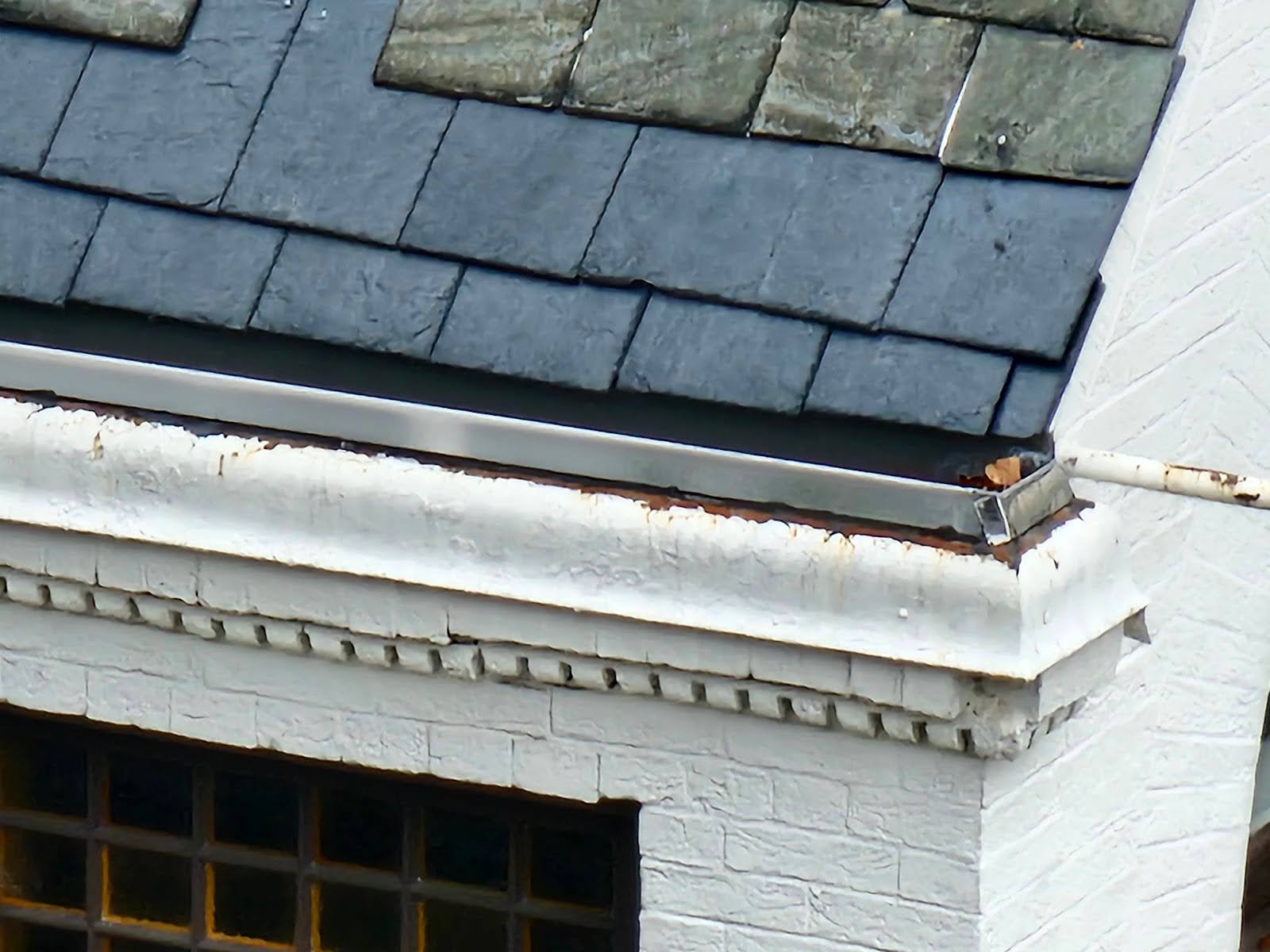
If you look closely at the picture above, you may notice that the bottom two or so courses of slate roofing look different than the upper courses. This isn’t just a coincidence. The upper slate is original and the lower slate has been replaced. In this particular case, they saved costs by just replacing the lower slate where it was most deteriorated. All of this particular type of slate, shown here, happens to be natural and authentic. It’s not a alternative or replacement type of material like the asbestos we described above.
A closer of that transition follows below. When you look at it closely, the difference is very apparent. In this coming week we’ll talk more about the low slope area of the roof and other parts of medium to moderate pitch areas of roofing at this building.
We provide this information here on our blog, and our website, to help our customers and future clients, and we recommend every building owner in DC who values the longevity of their roof (and their investments) and building use a contractor who values the simple and important principles of proper roof construction like Dupont Roofing DC. Our company specializes in flat roofing here in Washington DC and we’re happy to help building owners of almost all types.
Learn more about our company and the proper techniques of working with roofing on historic buildings in Washington DC here on our blog at DupontRoofingDC.com, and you can call us at (202) 840-8698 and email us at dupontroofingdc@gmail.com. We are happy to help and at least talk through options.