A Deeper Look at a Floating Rooftop Dunnage System
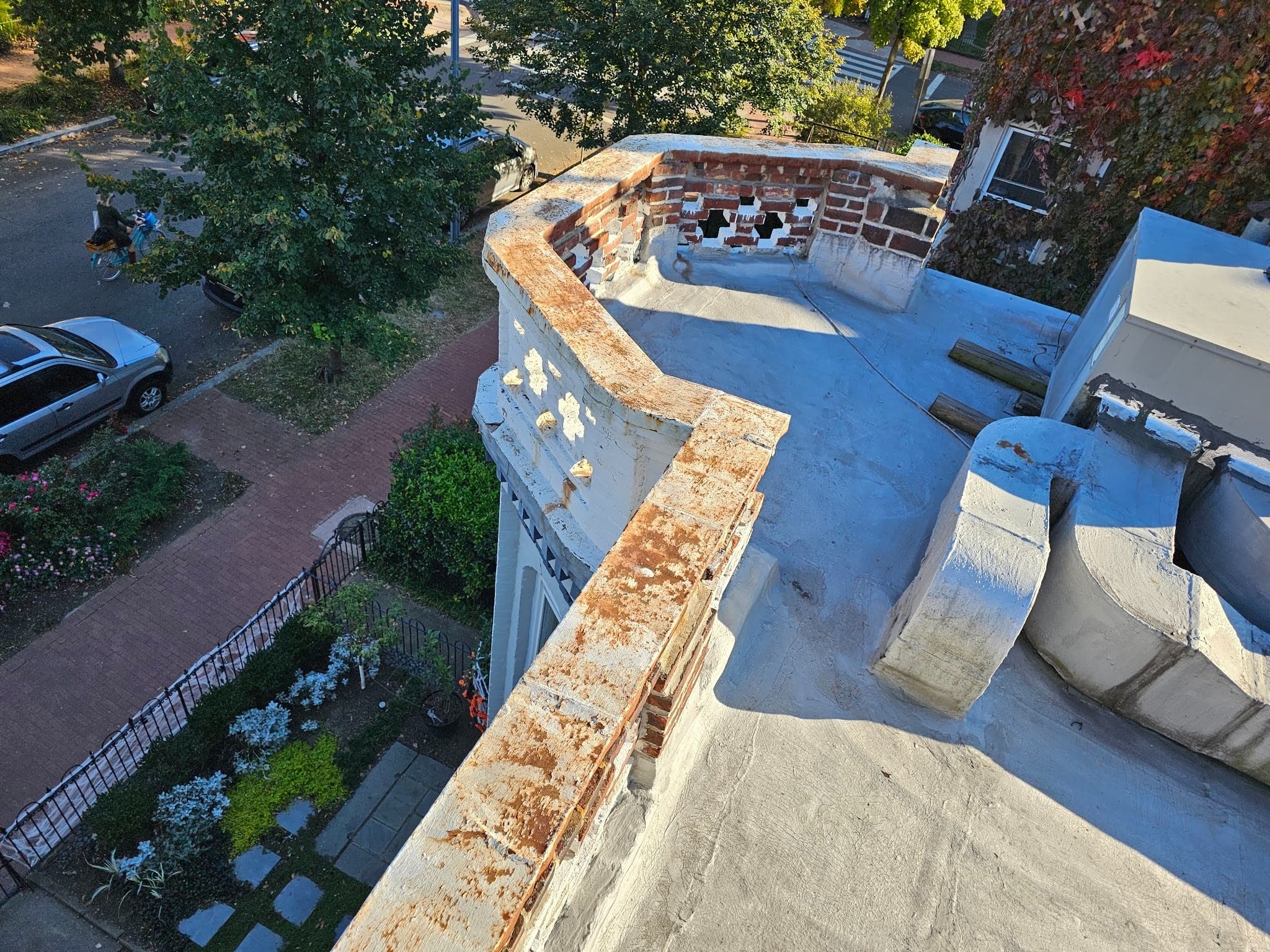
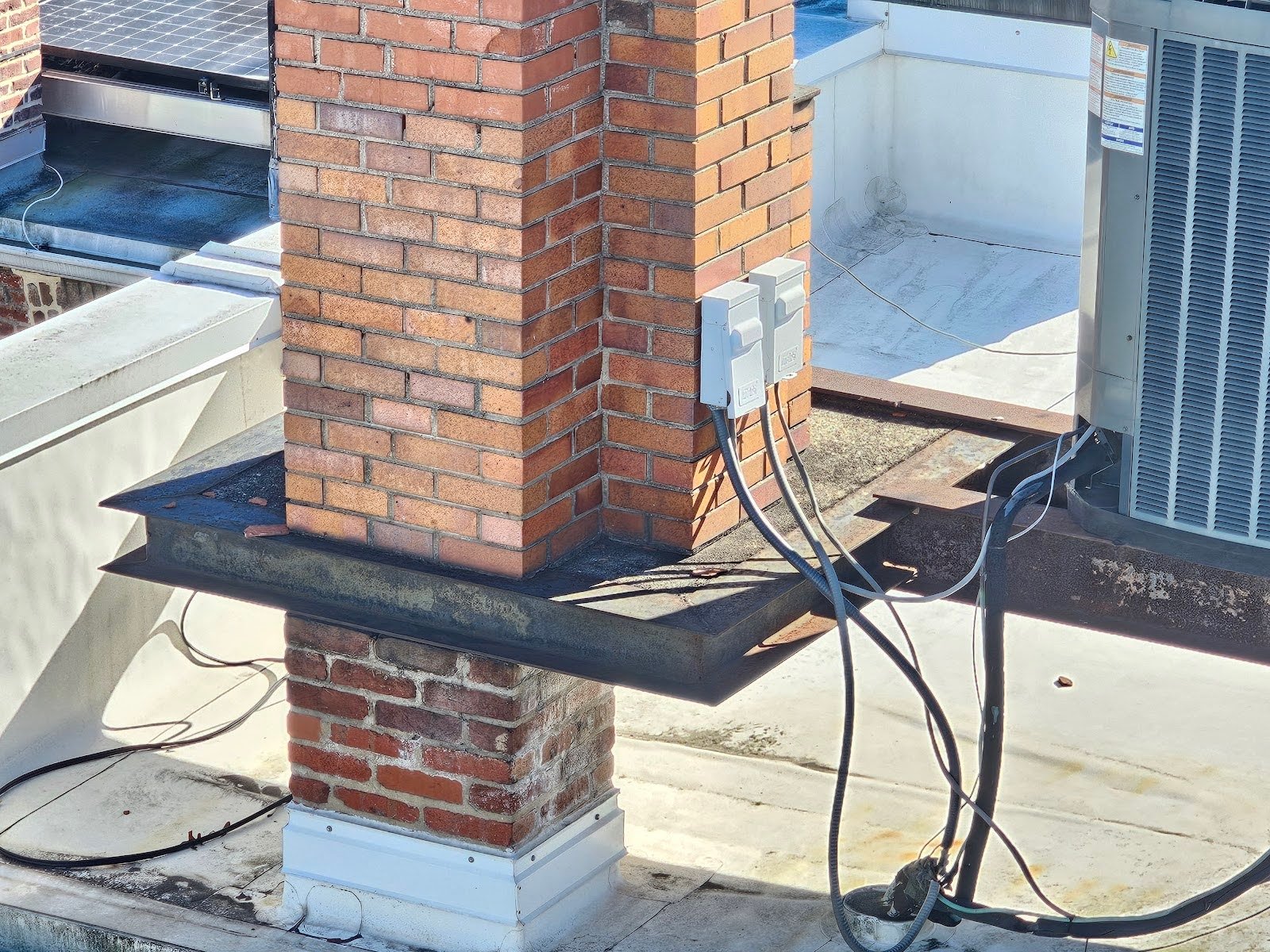
This past week we started looking at this really odd rooftop dunnage assembly. We talked a lot about the natural lack of tensile resistance of the chimney. Yet, even though the chimney doesn’t have the strength to resist in that configuration, the single beam of the main strength axis of the dunnage system is relying on the chimney to prevent torsion. We don’t know exactly how this was put together. We think that somewhere along the lines of time, in decades past, this was built entirely differently. We think it was likely then modified into its current configuration.
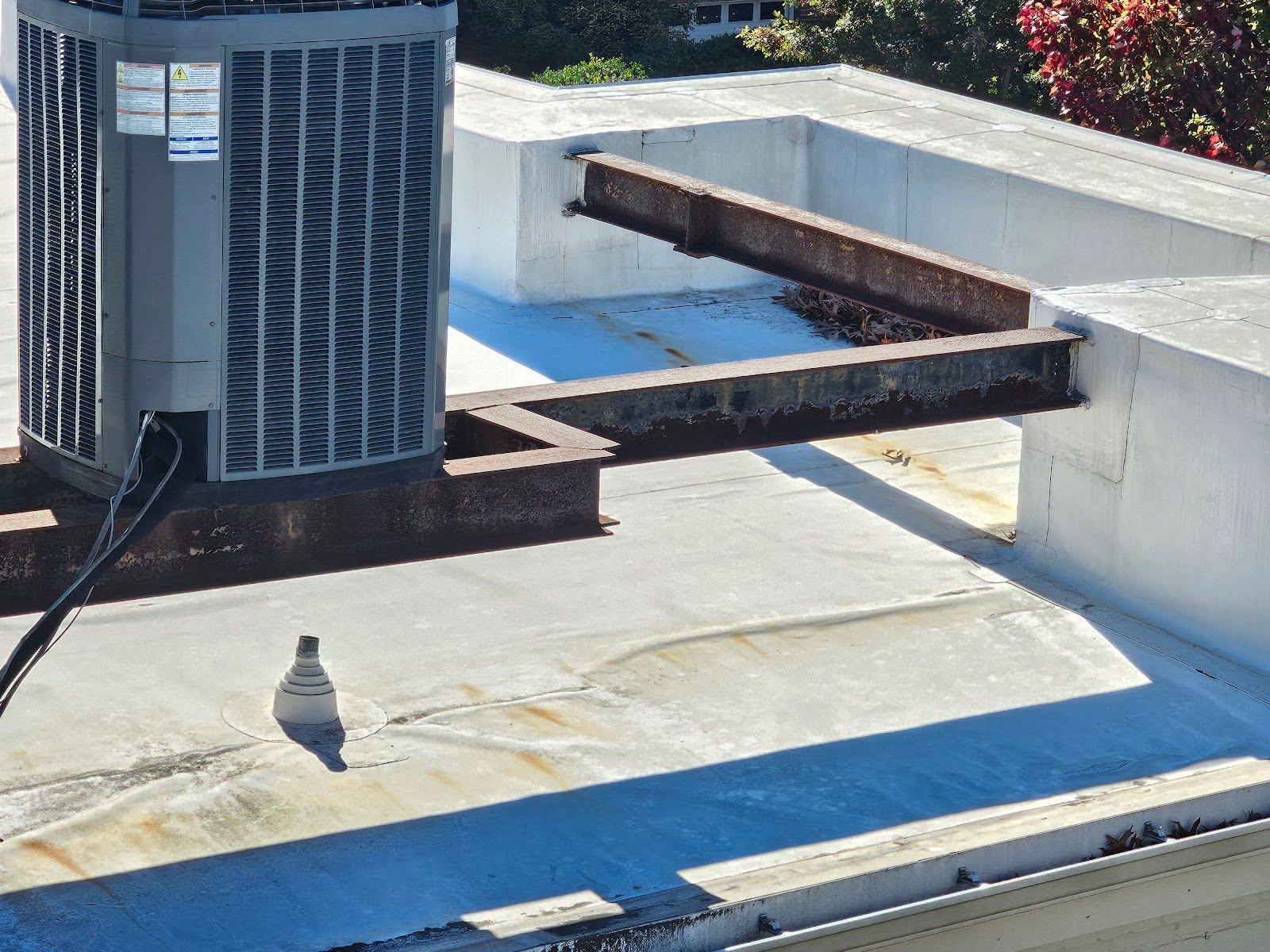
There are several other aspects of this Assembly that we can’t easily explain. For example, when you look at the picture below, you can see that at the right hand side of the main single beam that’s supporting the AC units, there’s a perpendicular beam that runs into the parapets of a facade bay below. This particular beam seems to have no apparent purpose. It’s not doing anything. You could say that it’s used as a stabilization bar between the sides of the bay parapet to keep the top of those masonry partitions from contracting or expanding, but it’s completely unnecessary. Those walls are self supporting entirely.
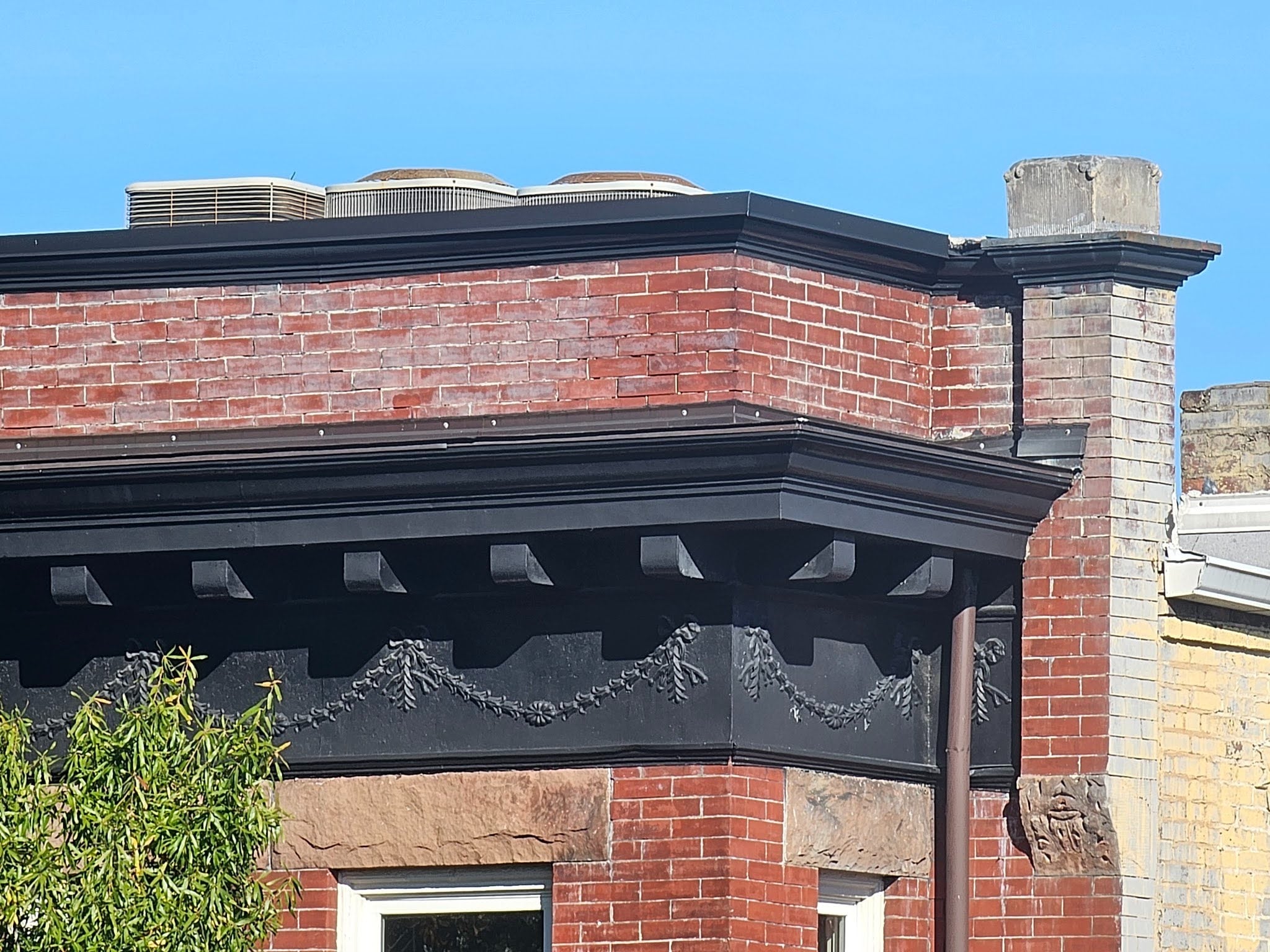
We’re almost certain though that was put there for a reason. It had to be an initial purpose for it. Otherwise somebody wouldn’t have taken the cost or the time to furnish and install it. Also, for reference, this happens to be at the roof of a historic building here near downtown Washington DC.
When you look at the next picture below, you can see that the base of the chimney, the thinner red brick, is historic brick, likely original to the original construction of the building. The lighter color brick on top of the area of the I-beam collar is a newer brick. We can identify this difference because of the lighter color of the brick. Also, there’s other differences. For example, these bricks are a little bit less wide than the historic bricks. The mortar joints are thinner.
We have no idea though why they enlarged the chimney above the tonnage system. It doesn’t seem purposeful. Without a larger base to the chimney, we know that they aren’t using it to now exhaust or vent other equipment. It wouldn’t make sense because the base of the chimney is fixed at its current size since it wasn’t enlarged.
So far, last week and today, we’ve been discussing the structural Oddities of this chimney and dunnage system. We haven’t yet really taken the opportunity yet to discuss the roofing itself. This is a thermo plastic type of roof membrane. Thermoplastic roofs and Compass a few different more familiar types of roofing. One of the most original types of thermoplastic roofing was PVC membranes. Later, TPO membranes were invented and became widely distributed. There’s many of them here in Washington DC. Looking closely at the picture above, you can see that there’s a wrinkle or a set of wrinkles near the seam closest to the rear termination of the rooftop.
We believe that this set of wrinkles near the rear termination of this roof. We believe that this sign indicates that this existing membrane is likely a PVC membrane and not a TPO membrane. There are multiple types of both PVCs and TPO membranes. The most common type of TPO membranes, here in Washington DC, are fully adhered membranes. That means that they are applied with an adhesive that basically glues them down to the entirety of the substrate materials. And most of those types of applications are installations where you do not find wrinkles like this.
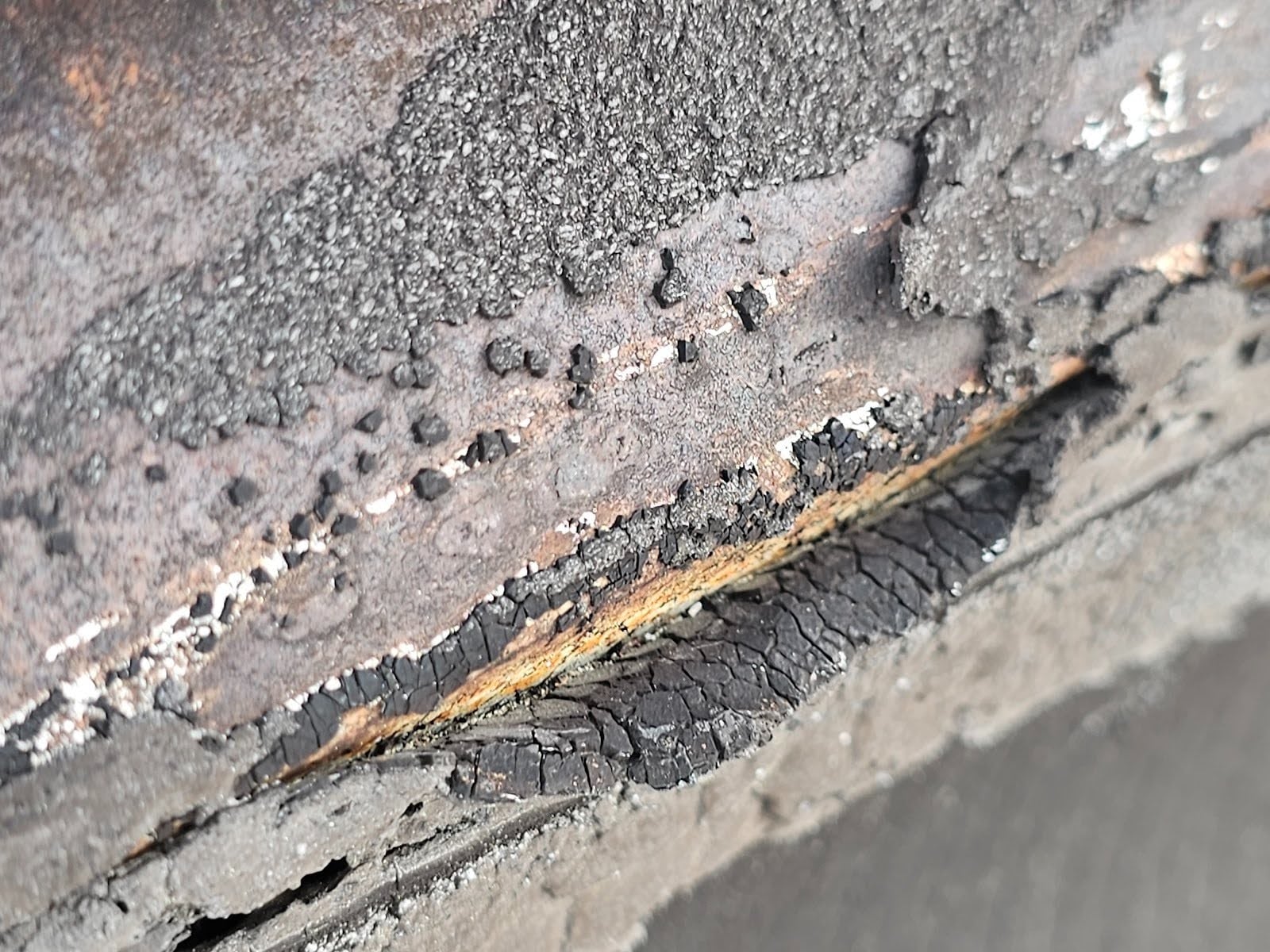
The base of the chimney is covered with a roofing counter flashing. That roofing counter flashing turns upwards from the horizontal or flat portion of the roof to encapsulate the base of the chimney. Then on top of the thermoplastic membrane, an aluminum piece of counter flashing has been installed. The top of that aluminum counter flashing has then been terminated with an aluminum termination bar. Normally, either just an aluminum counter flashing or an aluminum termination bar will suffice. Here they’ve used both.
It’s likely the termination bar was added after there was trouble found in the installation of the original counter flashing. Often, as a shortcut, some low quality roofers will skip the step of installing the counter flashing into a reglet or raggle which is required by both the building code and roofing industry standards. That omission may be the reason the termination bar was later installed.
Going back to the structural issues here, just for a moment, it’s really weird that they filled in the space between the I-beam collar with concrete. We imagine that was intended to serve the load path of the widened base of the chimney, but that element also doesn’t make clear sense.
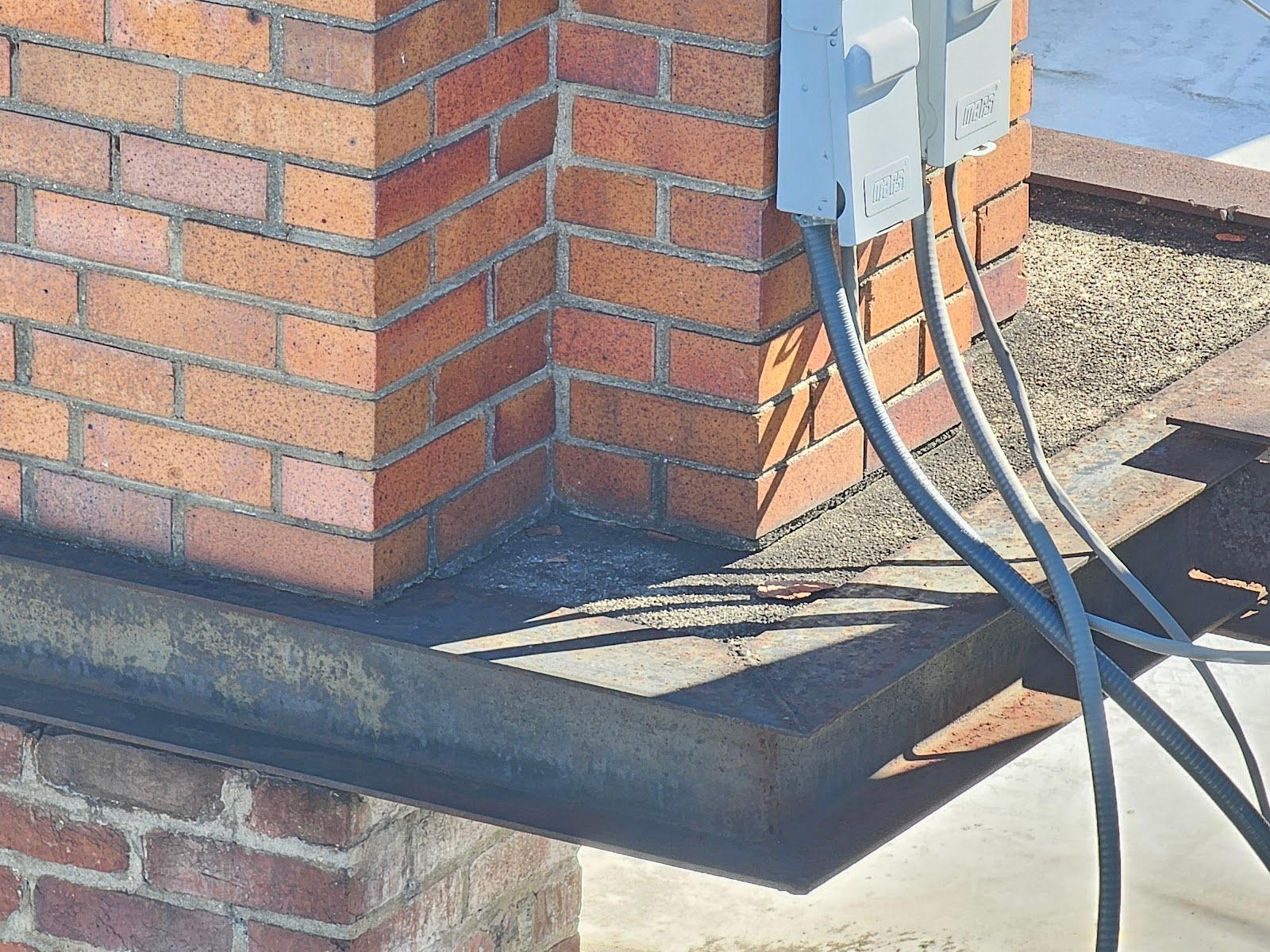
Like many chimneys here at low slope or flat roofs in Washington DC, this chimney has also been used as a mounting location for additional lightweight small electrical and low voltage devices. A satellite dish has been mounted to the south side and a pair of electrical disconnects for the adjacent AC unit compressors are mounted on the right side of the chimney.

We provide this information here on our blog, and our website, to help our customers and future clients, and we recommend every building owner in DC who values the longevity of their roof (and their investments) and building use a contractor who values the simple and important principles of proper roof construction like Dupont Roofing DC.
Our company specializes in flat roofing here in Washington DC and we’re happy to help building owners of almost all types. Learn more about our company and the proper techniques of working with roofing on historic buildings in Washington DC here on our blog at DupontRoofingDC.com, and you can call us at (202) 840-8698 and email us at dupontroofingdc@gmail.com. We are happy to help and at least talk through options.