Best Practices for Low-Slope Green Roofs – Part II
This past week we talked about stormwater absorption, energy dissipation and photosynthesis as part of some of the reasons that green roofs are helpful from an environmental perspective. Another one of the beneficial characteristics of green roofs is that they act as thermal mass. The thermal mass of the plant growth and growth medium on the roof slow the rate of heat transfer into the building below. This helps because it reduces both the energy footprint of the building’s cooling system and reduces the urban heat island effect. These things help a lot in dense urban areas like Washington DC.
The urban heat island effect is fascinating. Cities like Washington DC are much hotter than the surrounding rural country areas. There are a lot of factors such as absorption of thermal energy from sunlight. Even though this is just one isolated area, having a green roof here helps.
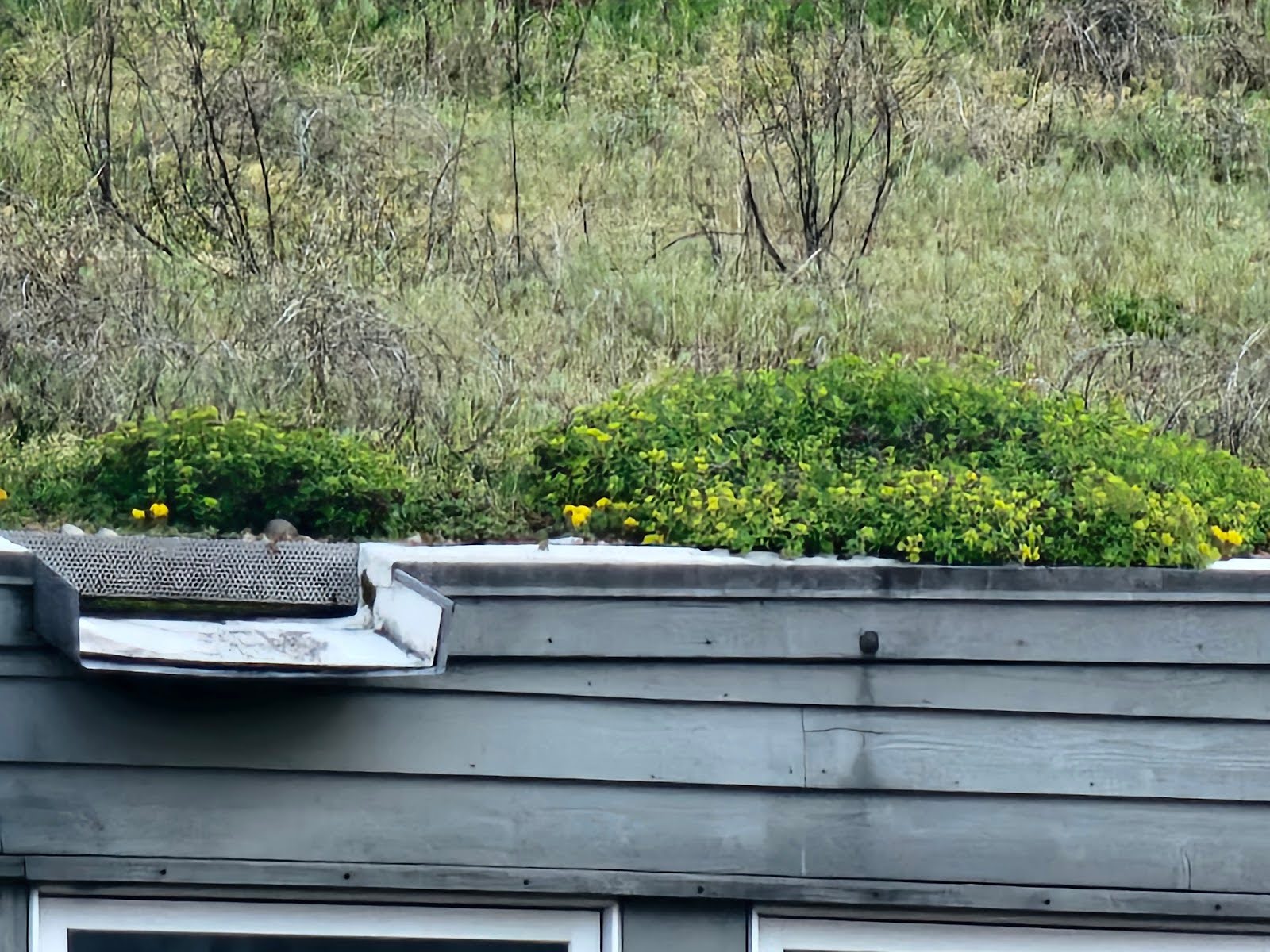
One of the particular types of plants growing in the foreground of the picture below is called Bermuda buttercup. This plant has at least a degree of toxicity to both humans and the pets and is invasive in parts of the Mediterranean. The plant is native to South Africa and spreads through underground bulbils. Once the plant has taken root it’s notoriously difficult to eradicate. But it’s only toxic if ingested and not dangerous in any other significant way.
At most typical DC row homes, the roof structure is made from wood. The framing will be 2x rafters, generally 2×10 lumber or larger. And in some cases in historic roof systems, the 2×8 or 2×10 rafters will bear on perpendicular 3×12 girders called king joists. Generally, on top of the framing system, a 3/4 inch thick sheathing system will be installed. In historic times, the sheathing was generally laid with milled 1×6 boards. In reality, those boards today are roughly 3/4 of an inch thick x 5.5 inches wide. In historic times though, they were generally at least slightly larger.
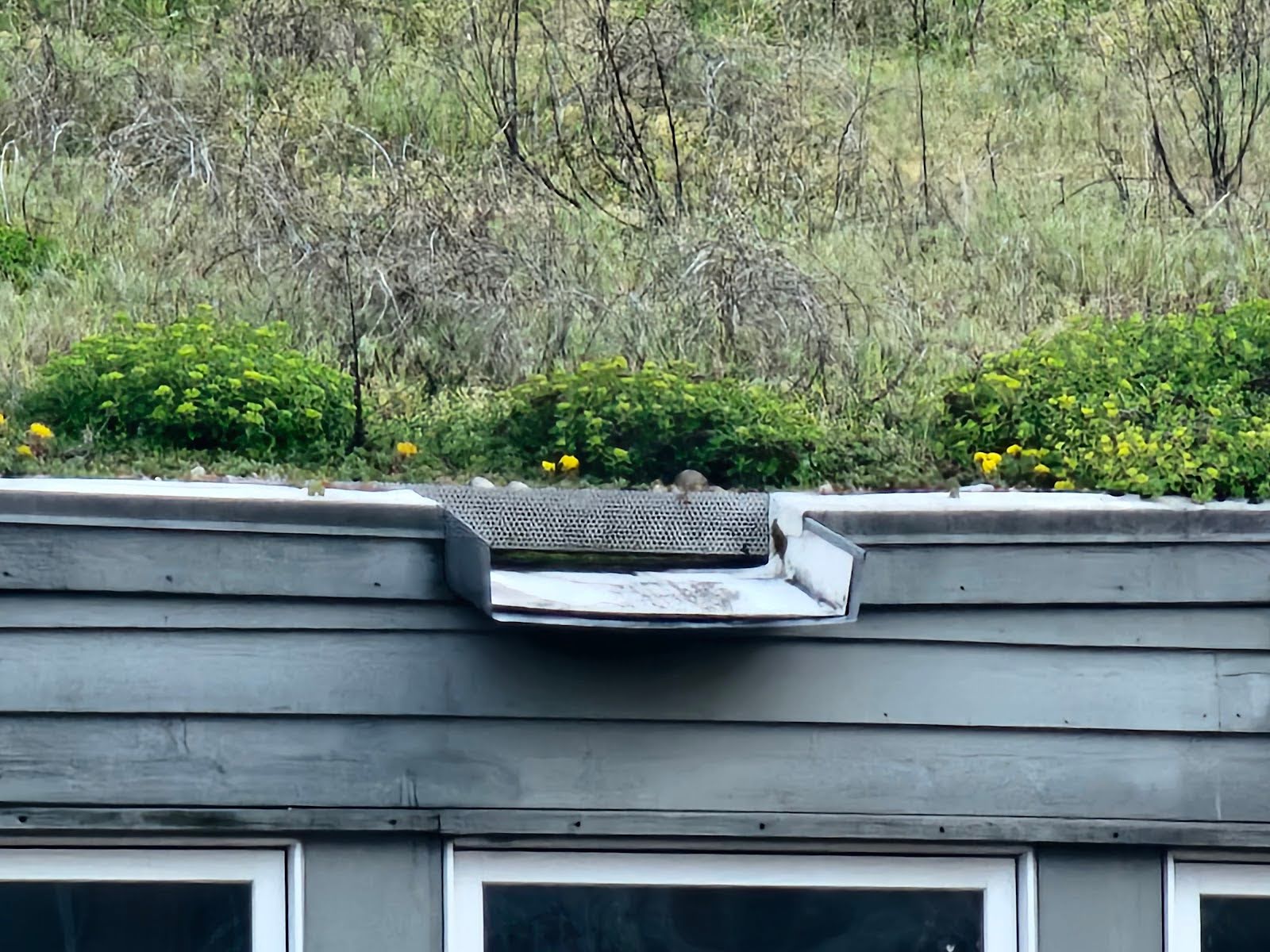
In contrast though, commercial roof systems are generally built differently. They’ll often have a concrete deck. In most cases that concrete deck will be cast in place. In other words, it will be formed up from below, during initial construction. The reinforcement bars system will be laid into the area above the formwork and concrete will be poured on top embedding the steel reinforcement.
In addition to the typical roofing membrane, on a green roof, there’s also often an additional membrane that works like a root barrier. From this perspective, it’s intended to prevent roots from pushing through the membrane and not as a waterproofing element. In fact, it’s actually intended to allow water to flow, in most cases.
In a green roof, there will generally also be a spacing layer. This is a step and element that’s not at all required in most types of low slope roofs. Here though because the plant roots could otherwise completely impede the flow of water, this interstitial space will allow water to flow below the root system. From there, the water will run on top of an impermeable barrier to a drain point.
Support for the upper layer of the void in the spacing layer will be created through a dimpled membrane that stands up away from the actual roof membrane like a platform. That raised platform creates the drainage layer. And on top of the drainage layer, there will generally be a type of filter fabric which has significant strength to remain intact over time but allows water to flow through. Generally a growing layer, a medium of lightweight soil will be placed on top of the filter layer. In most cases the growing medium will be roughly 3 to 6 in thick.
Together, this system works so that water first drains vertically down through the soil and through the filter fabric. Then the water runs, draining across, more horizontally, the spacing layer of interstitial mostly open space. From there the water flows to the drain points.
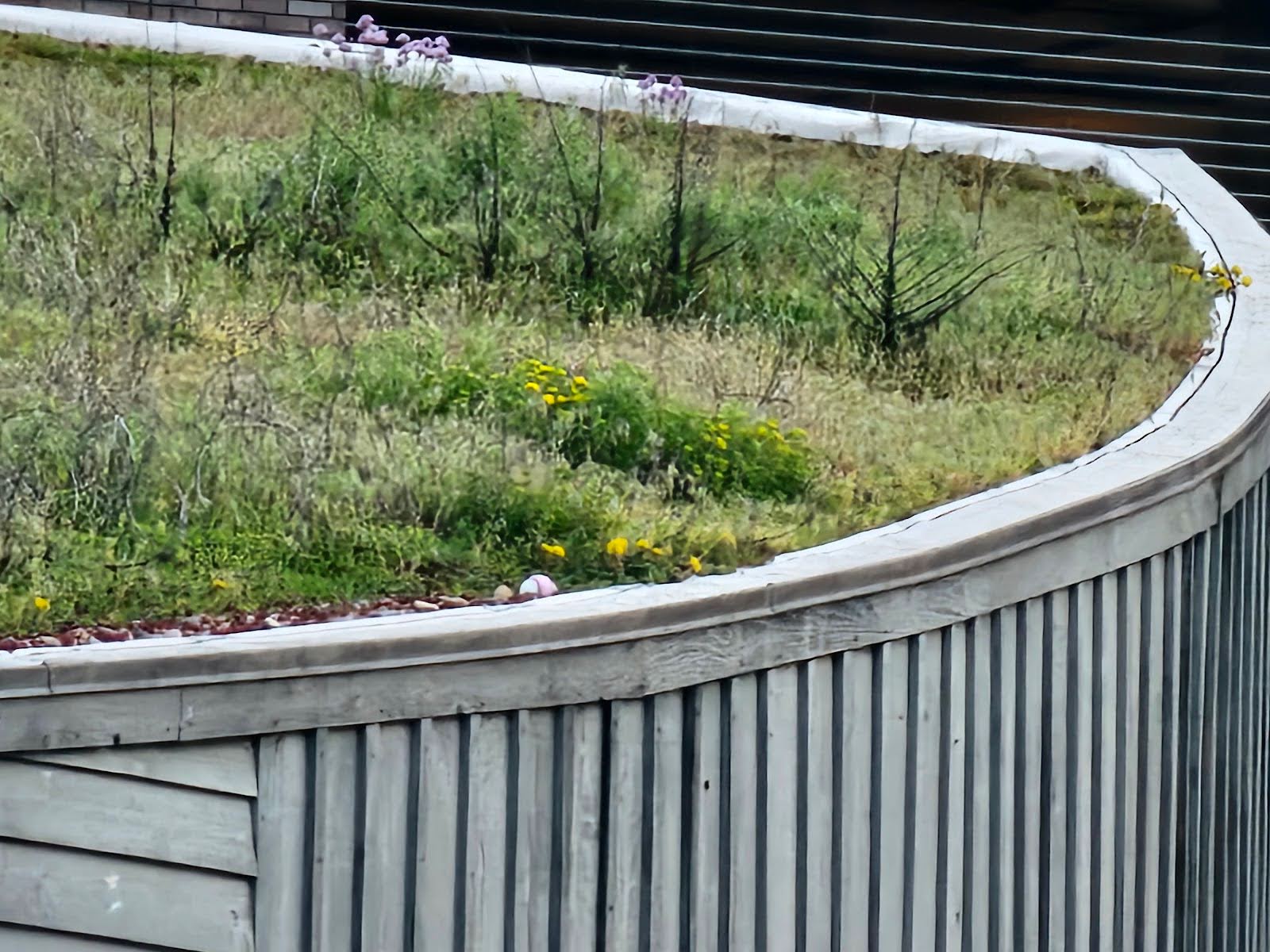
As well, generally, there will be an insulation membrane on top of the roof deck. This isn’t always required, in all configurations, but it’s helpful. The insulation layer can also, in some cases, be installed underneath the concrete deck but it seems to work much better in most cases when it’s above the roof deck.
We provide this information here on our blog, and our website, to help our customers and future clients, and we recommend every building owner in DC who values the longevity of their roof (and their investments) and building use a contractor who values the simple and important principles of proper roof construction like Dupont Roofing DC. ur company specializes in flat roofing here in Washington DC and we’re happy to help building owners of almost all types.
Learn more about our company and the proper techniques of working with roofing on historic buildings in Washington DC here on our blog at DupontRoofingDC.com, and you can call us at (202) 840-8698 and email us at dupontroofingdc@gmail.com. We are happy to help and at least talk through options.