Modified Bitumen Roofing for Sloped Roofs – Part I
Most of our work and most of the information we talk about here on our blog and website is related to flat roofing. Modified bitumen is one of the main types of flat roofing materials. We also often talk about alternative types such as TPO.
TPO stands for Thermoplastic Polyolefin. It’s a high reflexivity synthetic type of membrane. It is applied in larger rolls than the traditional modified bitumen membranes and is a fully adhered system. It has a lot of trade-offs such as pros and cons between itself and other roof types like modified bitumen. Some of the other types of really common systems used on flat roof buildings here in Washington DC are increasingly more and more outdated as time goes by.
One of those previously common types of roof systems was BUR or built-up roofing. This is a type of roof membrane that is several layers of hot mopped tar onto felt sheets. It doesn’t have an intrinsic attachment element and adds a lot of weight to a building.
The way we’re referring to both applies to the membrane itself but also these systems generally require a ballast. Another alternative type that we see commonly here in Washington DC is standing seam metal roofs. These roofs are made from a variety of different metals such as galvanized steel, aluminum, and even copper in some rare cases. Many of the metal types, often, are part of an alloy that used to include lead.
Today, you can still buy sheet metal systems for roofing, but they no longer contain lead and lead was one of the really high performance subcomponents for standing seam metal roofs. The environmental impact of lead is negative though so for that reason it’s worth it being taken off the market.
There are also lots of reasons why standing seam metal roofs are arguably not as good as modern single-player membranes such as TPO. Today though, we’re going to look at a type of modified bitumen that is applied on a sloped roof and not a flat roof. There’s nothing really in the building code that we’re aware of that says you can’t apply modified bitumen membranes on a highly sloped surface, but it’s definitely not common.
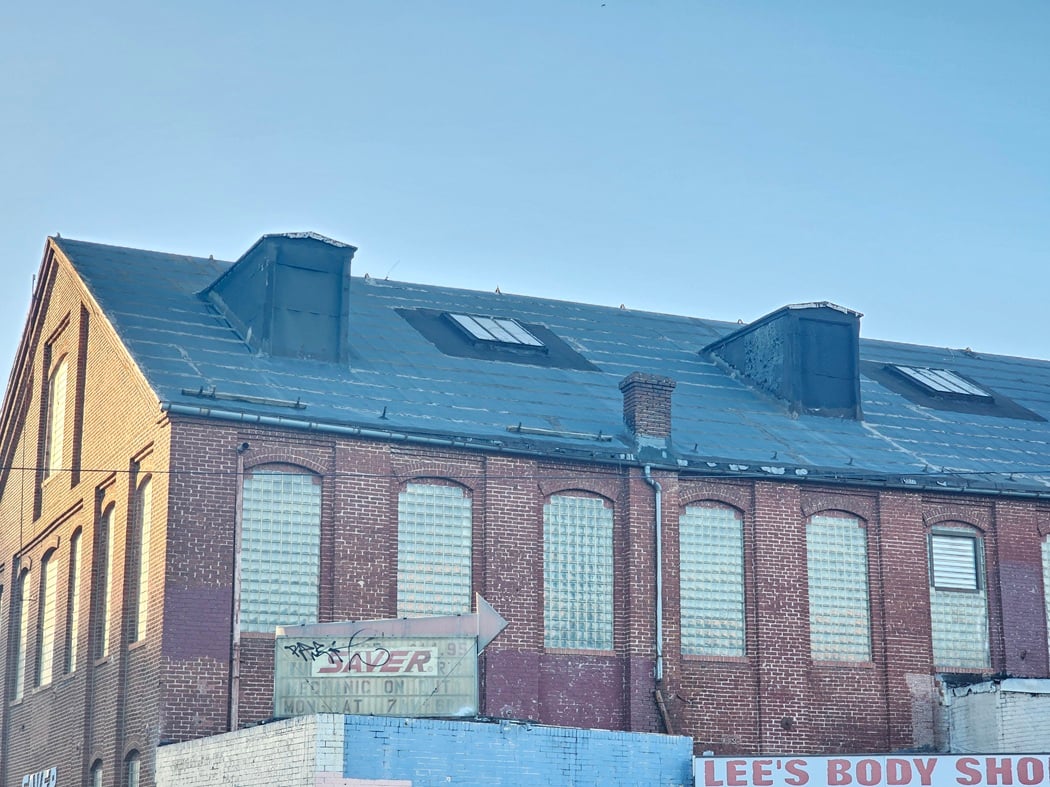
The large roof, on a historic building, shown in the picture below has a slope of roughly 5-12. That means the ratio incrementally has five units of rise for every 12 units of run. That’s a relatively common slope or angle of grade. We recommend always having a roof slope greater than 3 to 12 if you’re going to use a asphalt shingle, but there’s obviously no low limit, down to about 2%, to using a single-ply membrane like modified bitumen.
We just want to clarify though by saying even in a supposedly flat roof, you should always have at least a quarter inch of slope per linear foot at all parts within the roof area. TPO membranes can often handle areas of backgrade, but it doesn’t mean it’s acceptable.
Areas of back grade are essentially areas that pond or hold water. Any area is technically considered ponding if it holds water for more than 48 hours. That means that, in our climate zone, any amount of flatness or negative grade is a ponding area. We understand that areas of ponding, if shallow enough, might dissipate within 48 hours in the heat of the Sun in the middle of the summer.
Our climate zone though has bitter cold winters. Throughout those bitter cold winters, there will consistently be times of precipitation. Any precipitation that isn’t a puddling area will be retained in that puddling area for more than 48 hours during the coldest temperatures. Therefore, in conclusion on that issue, we believe any back grade is unacceptable in a brand new roof.
In an existing roof, where there are areas of ponding, things should be done to strengthen those areas, but the building code doesn’t necessarily say that the roof has to be removed or replaced just to fix those areas. We highly recommend taking appropriate action though.
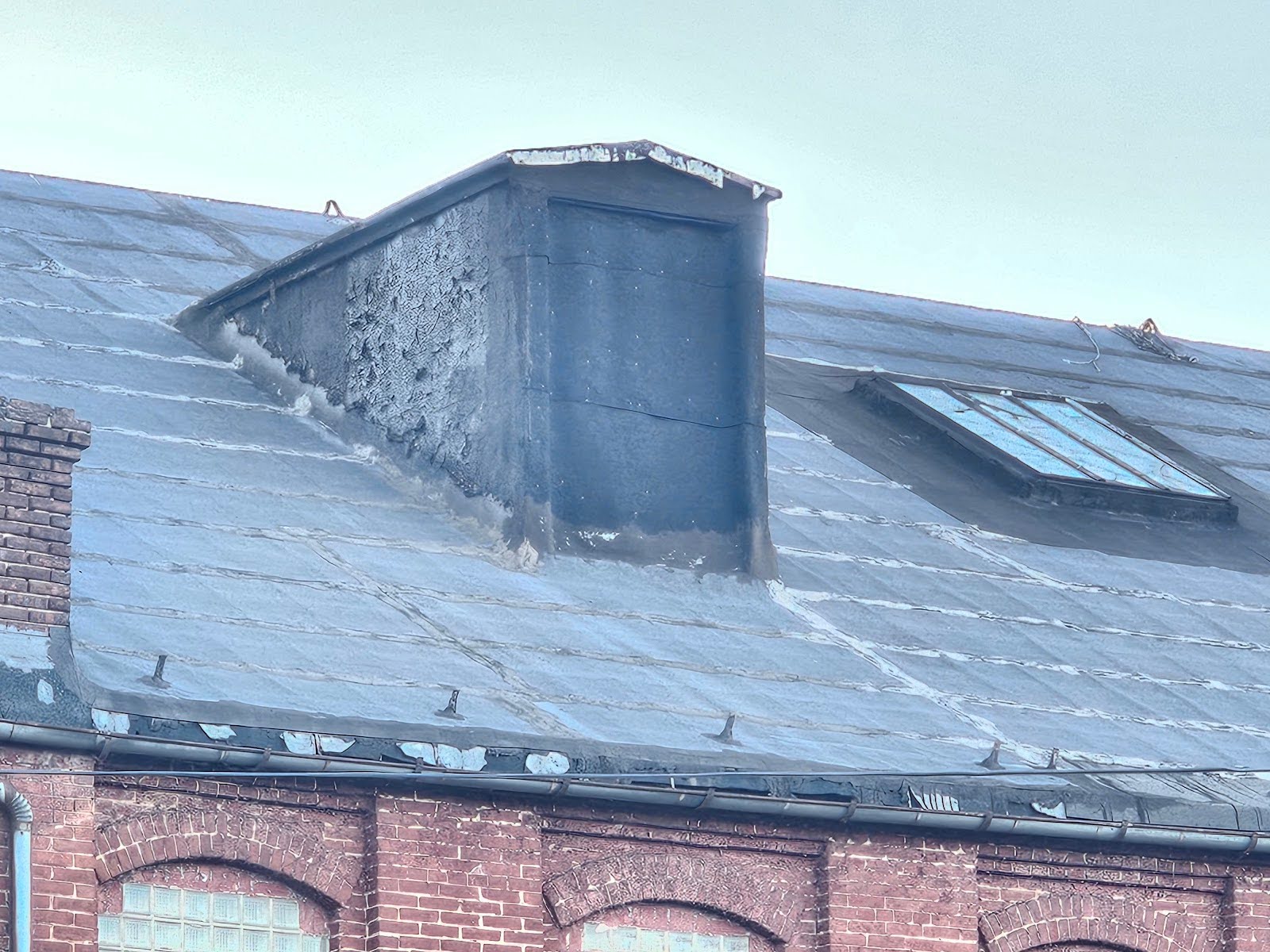
The next picture below shows this modified bitumen membrane on top of this sloped roof. One of the other things that’s interesting about this type of installation is that you don’t often or normally see modified bitumen installations from the street. Normally they’re installed on flat roofs above eye lines so there’s no exposed facing from which you can see at the street level.
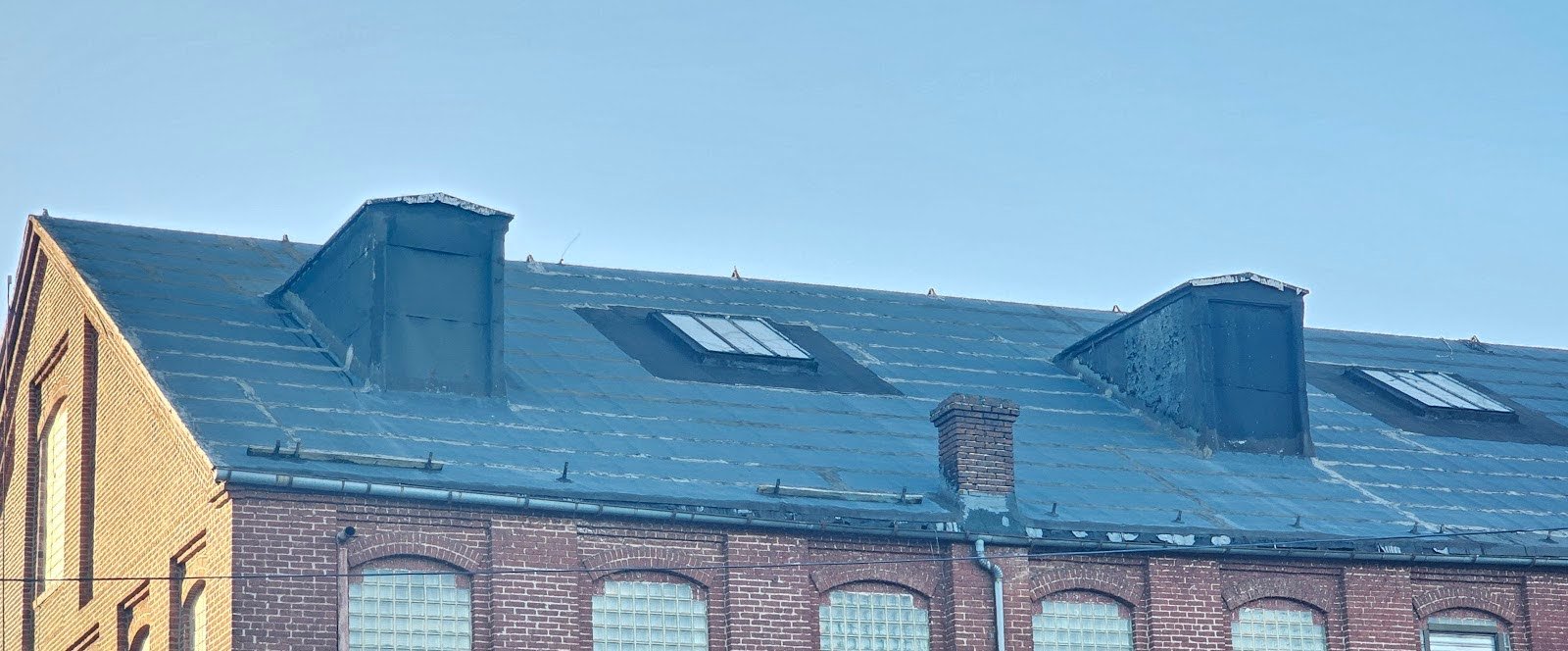
One of our first deductive observations from looking at something like this is recognizing that a modified bitumen smooth membrane should always be coated. The coating helps the membrane resist the deleterious effect of exposure to ultraviolet rays. Intrinsically or internally, this type of membrane has little resistance to prevent or protect from damage from exposure to ultraviolet. Specific types of roofing paints can be applied to help that roof last longer even in the face or exposure of ultraviolet.
We’ll look at more details of the same roof in this upcoming week.
We provide this information here on our blog, and our website, to help our customers and future clients, and we recommend every building owner in DC who values the longevity of their roof (and their investments) and building use a contractor who values the simple and important principles of proper roof construction like Dupont Roofing DC.
Our company specializes in flat roofing here in Washington DC and we’re happy to help building owners of almost all types. Learn more about our company and the proper techniques of working with roofing on historic buildings in Washington DC here on our blog at DupontRoofingDC.com, and you can call us at (202) 840-8698 and email us at dupontroofingdc@gmail.com. We are happy to help and at least talk through options.