Using Modified Bitumen on Sloped Roof Systems
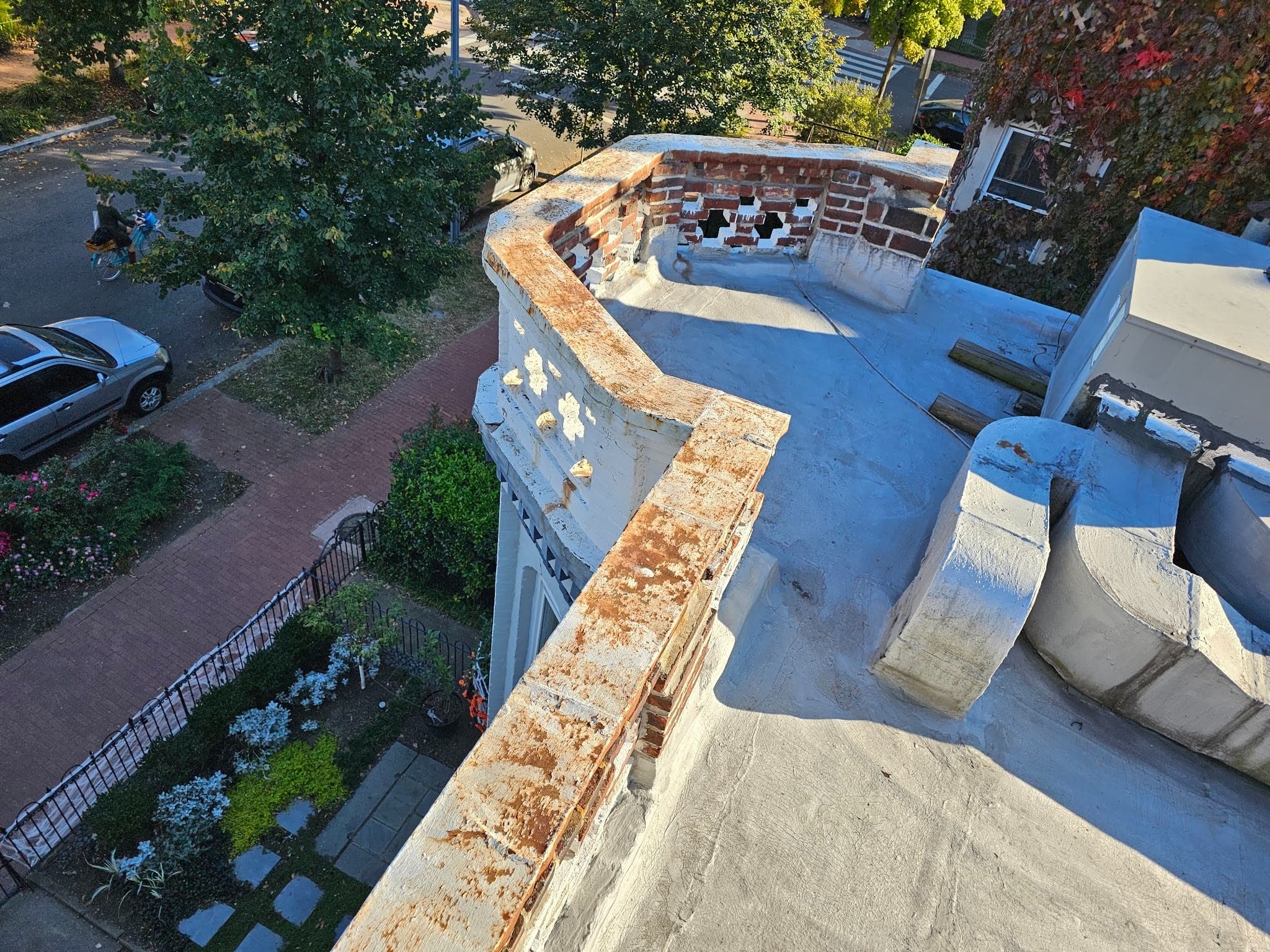
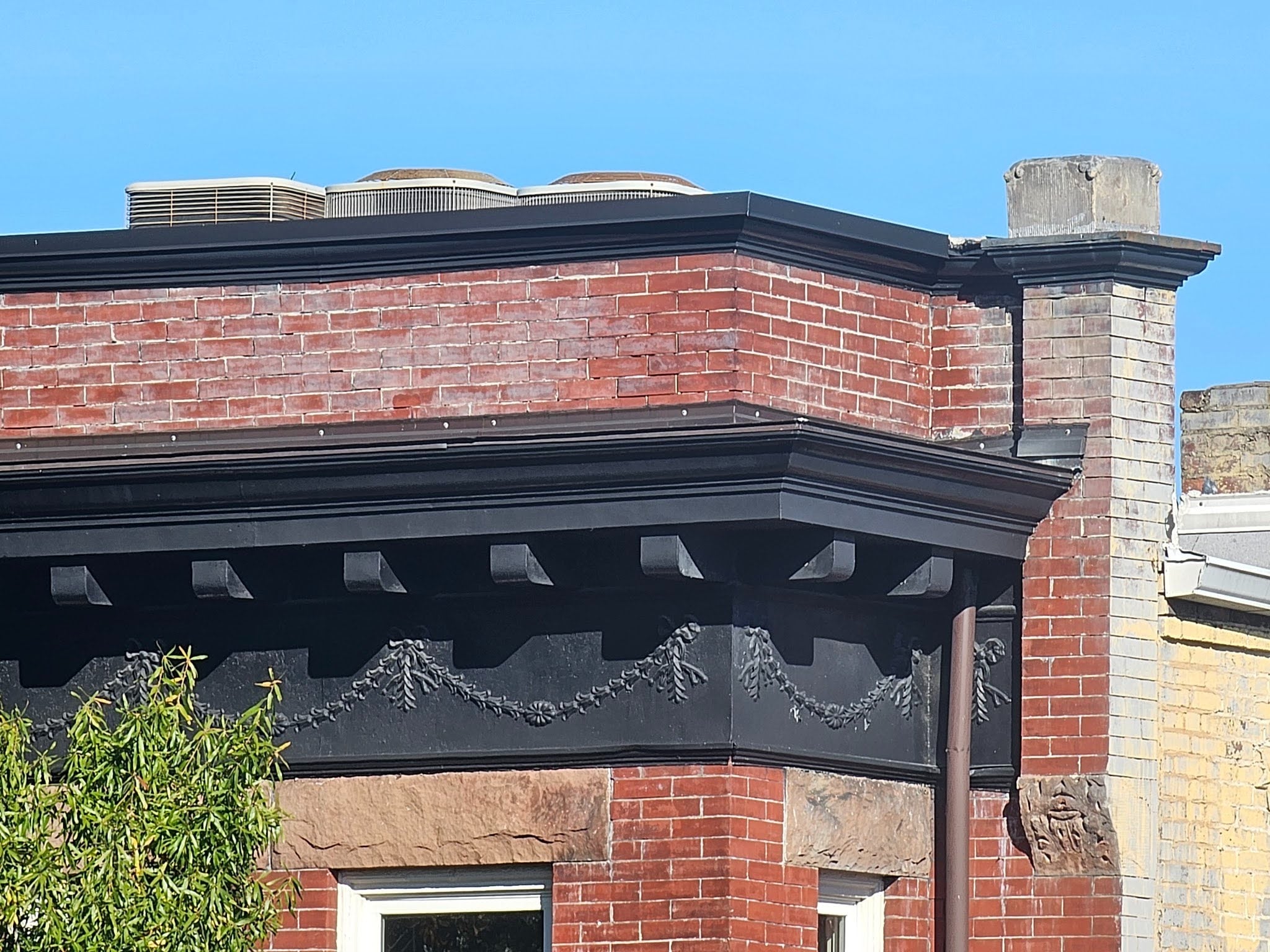
This past week, we began looking at a really odd pitched roof with a modified bitumen roof membrane. Modified bitumen roof membranes are very uncommon on top of pitched roof buildings. This particular pitched roof happens to be a gable roof on top of a historic brick building. This original building was likely used as a manufacturing warehouse or storage type bodega, roughly over 100 years ago. Today, the building has largely fallen into disrepair. One of the main topics within the larger part of the discussion on revitalizations on historic buildings has to do with the changing economics. As time has gone by, the particular building use has changed considerably.
The economics and the viability of this particular real estate investment have also changed. We believe there are many buildings, here in Washington DC and even more in other urban areas in this part of our country that have or had fallen into urban blight. DC began to drastically reverse that course about 20 years ago. Essentially, as interest in urban development has decreased, so has the interest in maintaining and vitalizing real estate investments. To put it in simple terms, there are significant areas, even here in Washington DC, during different economic cycles that were significantly depressed.
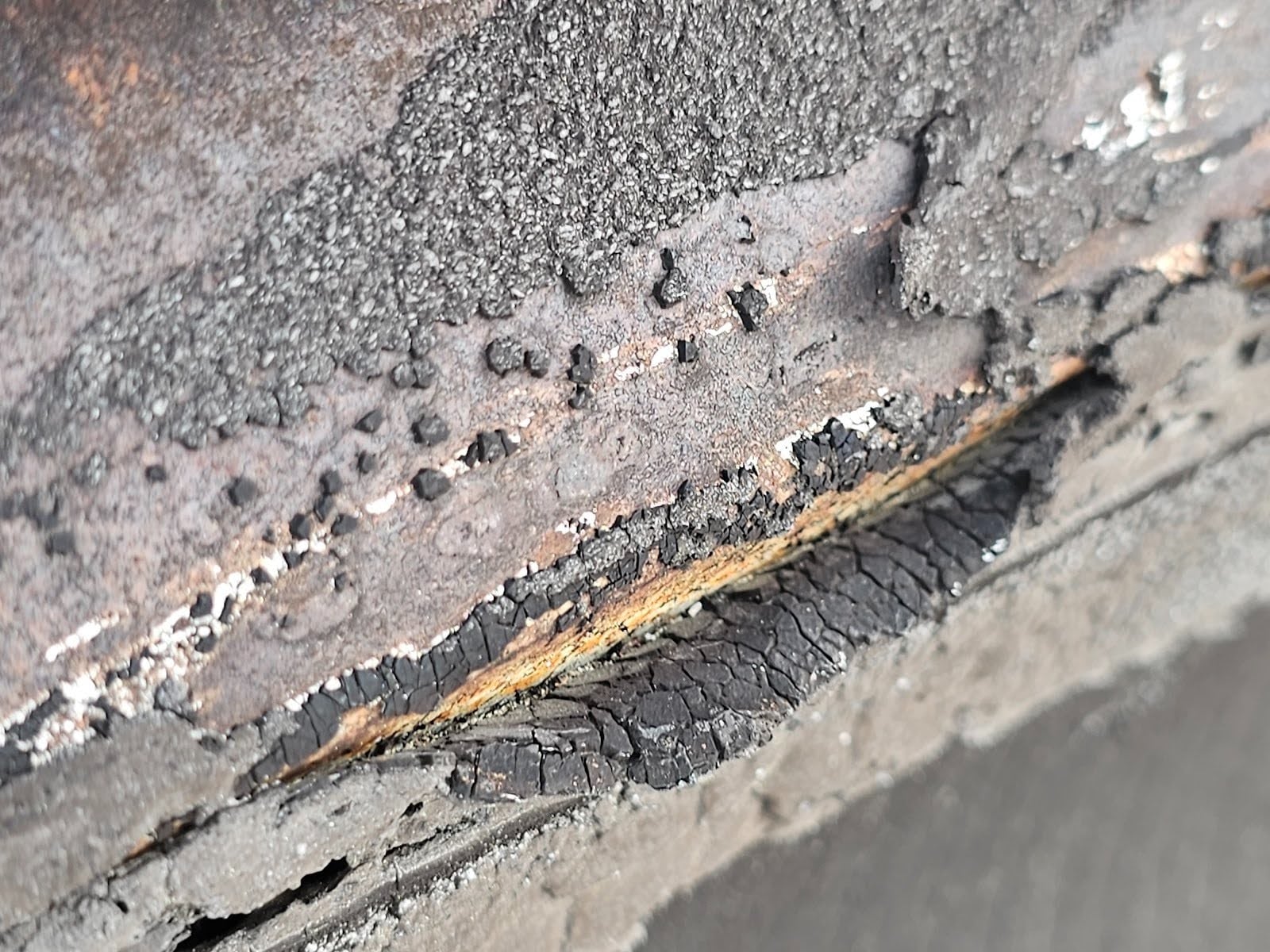
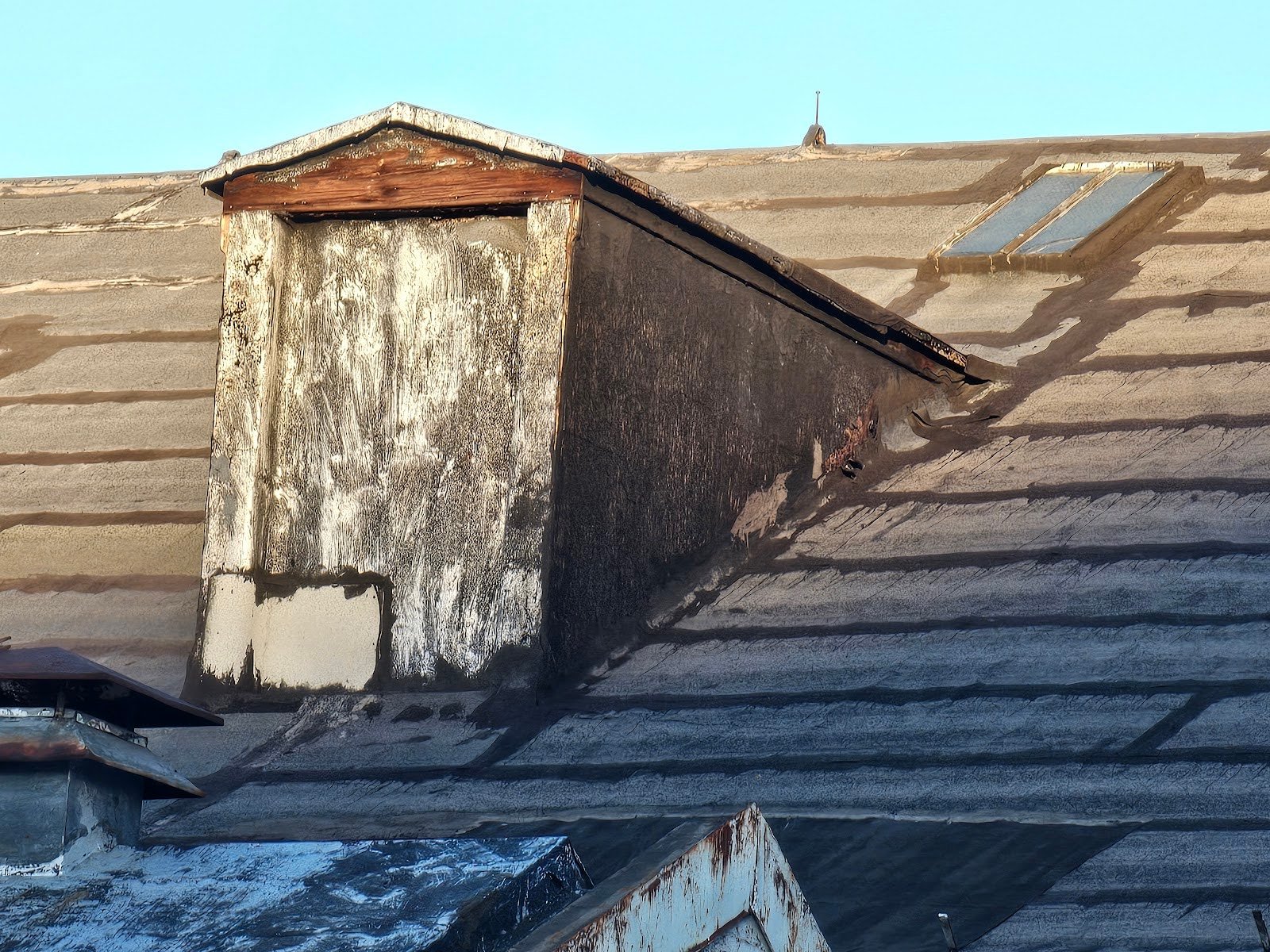
In the picture below, you can see the lap seams of the modified bitumen roof membrane. We mentioned last week, this particular membrane needs to be coated with one of the specific types of paint designed to protect single-ply roof membranes from the deleterious effects of UV. We have some ideas on how this roof ended up being covered with modified bitumen membrane instead of a typical shingle. In most cases, sloped roofs are covered either in metal panels or one of the different types of a variety of shingles.
It’s not normal to put modified bitumen on a pitched roof, and the big question is why was this done? We weren’t here and we don’t know the people who did it so we can’t ask them. We have a few hunches though.
Often, we see odd types of work, that were usually done about a bit more than 20 years ago. Back before that time, DC was embedded in a bit of a cycle of urban decline. The economics of the city really weren’t working for the people who lived here, for the most part. Of course there are wide swaths of exceptions. There are parts of DC that have always been wealthy. Other parts of industrial areas in the adjoining or adjacent non-industrial areas had ups and considerable downs. During the times of some of those down cycles, people didn’t have the money nor did the real estate itself provide a return to make it worth it to invest a lot into the upkeep, maintenance, and repair of these historic buildings.
We’ve seen odd cases where people put vinyl siding on top of historic brick facades, for example. The brick facades were meant to be an area of architectural prominence. Yet, they covered it up with something as cheap as plastic siding. We see tons of examples where people put asphalt shingles on top of their historic slate mansard roofs. All these things are done to fix a problem. In many cases, those problems might feel like an emergency and there might not be adequate funding available to fix it in a way that matches the original character of the building.
In many cases, particularly where odd materials that don’t belong, are used to make these type of emergency repairs, we believe the building stewards may have been financially stressed. In some of those cases, we think it might be that they looked around to their familiar circles for help and found a friend or a family member who knew how to do one thing. Even though it wasn’t the right thing, they just asked for help. The vinyl siding installed on top of a historic brick facade is one of those examples. It doesn’t make complete sense why somebody would do it, but if somebody had a friend or family member who knew how to install vinyl siding but didn’t know how to repoint brickwork, maybe that’s why they went and just covered it up with vinyl siding.
It may have done the job, in an emergency, just to stop leakage coming through a wall. Here as well, maybe the people didn’t have the money they needed to install the appropriate type of roofing membrane, but they looked around to their familiar circles and found a friend or family member who kinda knew something about how to install modified bitumen membrane but didn’t know how to install shingles. They took what they thought was the cheapest route out and just did something that one of their friends knew how to do. In this case, they ended up with a roof that was intended to be covered with shingles, now covered with modified bitumen. Modified bitumen definitely isn’t less expensive, but if they knew someone closely who knew something about how to apply it, they may have just taken that option. (It was applied incorrectly though.)
On the dormers, as another cheap shortcut, instead of installing siding, they just ran the base paper, for roofing underlayment, up the sides of the walls of the dormers. This is another shortcut.
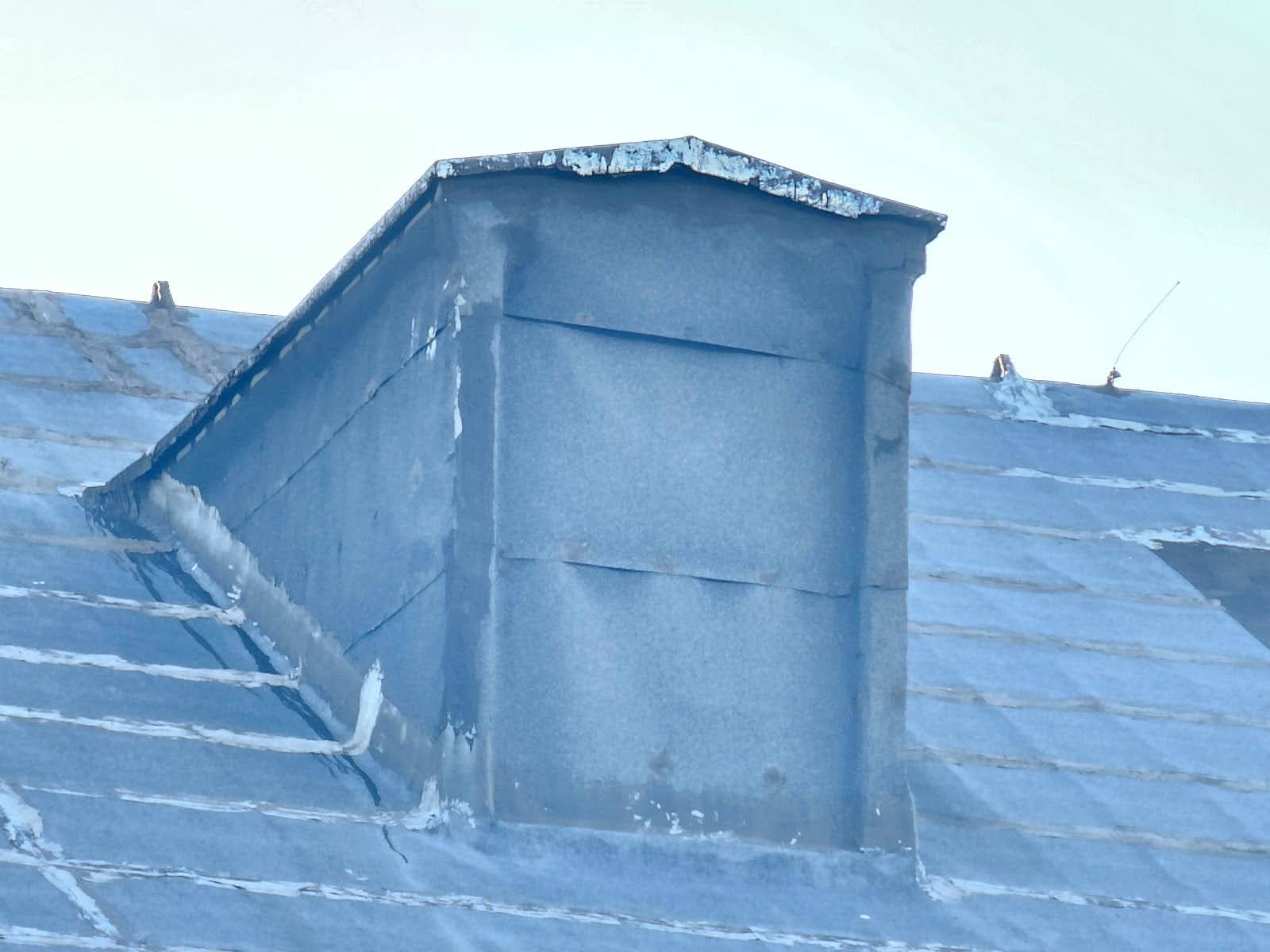
Where there were once glass windows inside of these dormers, they took the same asphaltic embedded felt paper and just ran it across the opening where the windows used to be. This is another cheap approach to save a buck.
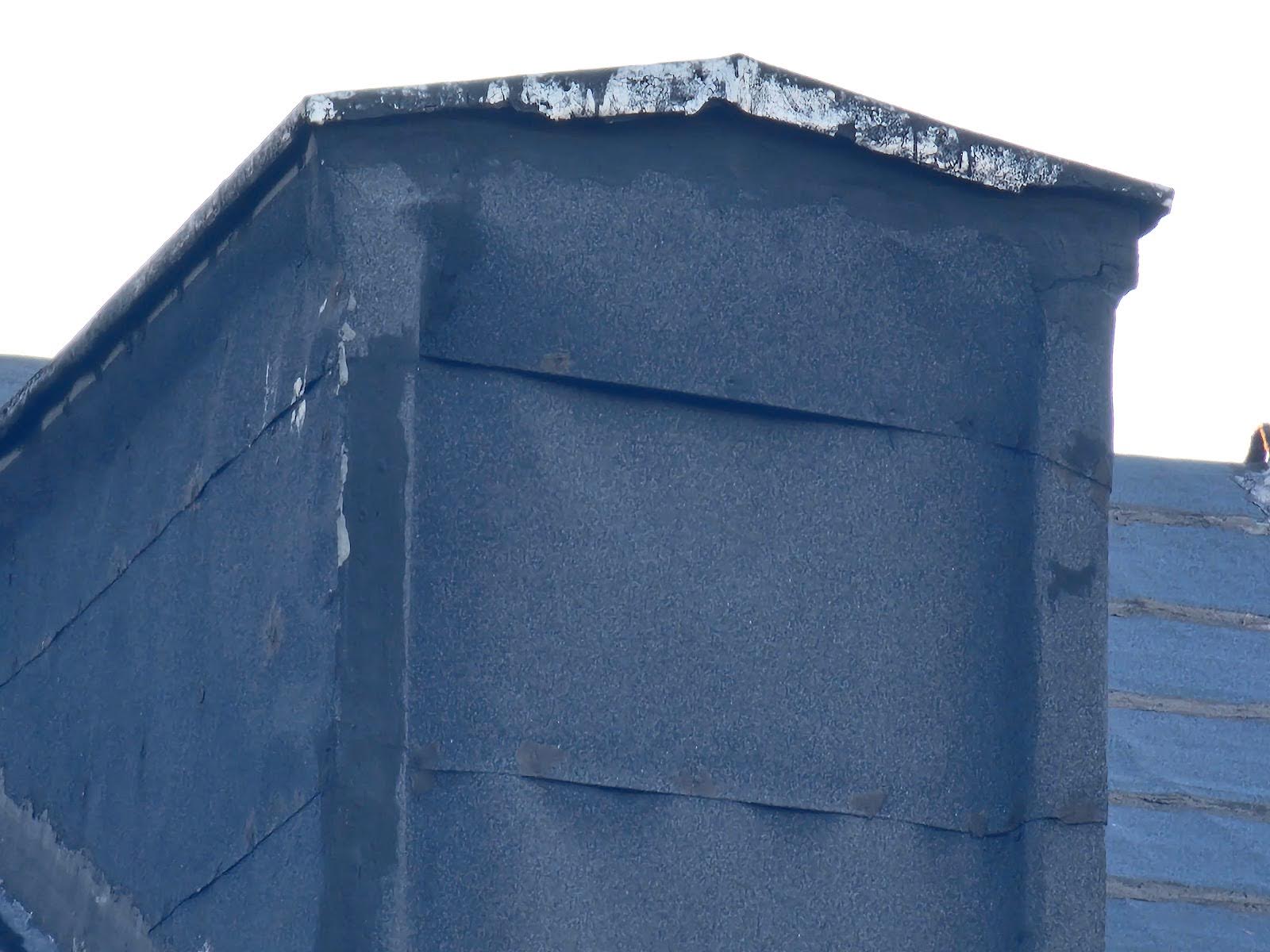
When you look closely, you can see the unsealed lap joints where the top of the lower layers are covered by the bottom of the upper layers of felt paper. This is the proper sequence for installation, but this paper is not meant to be exposed as a finished surface.
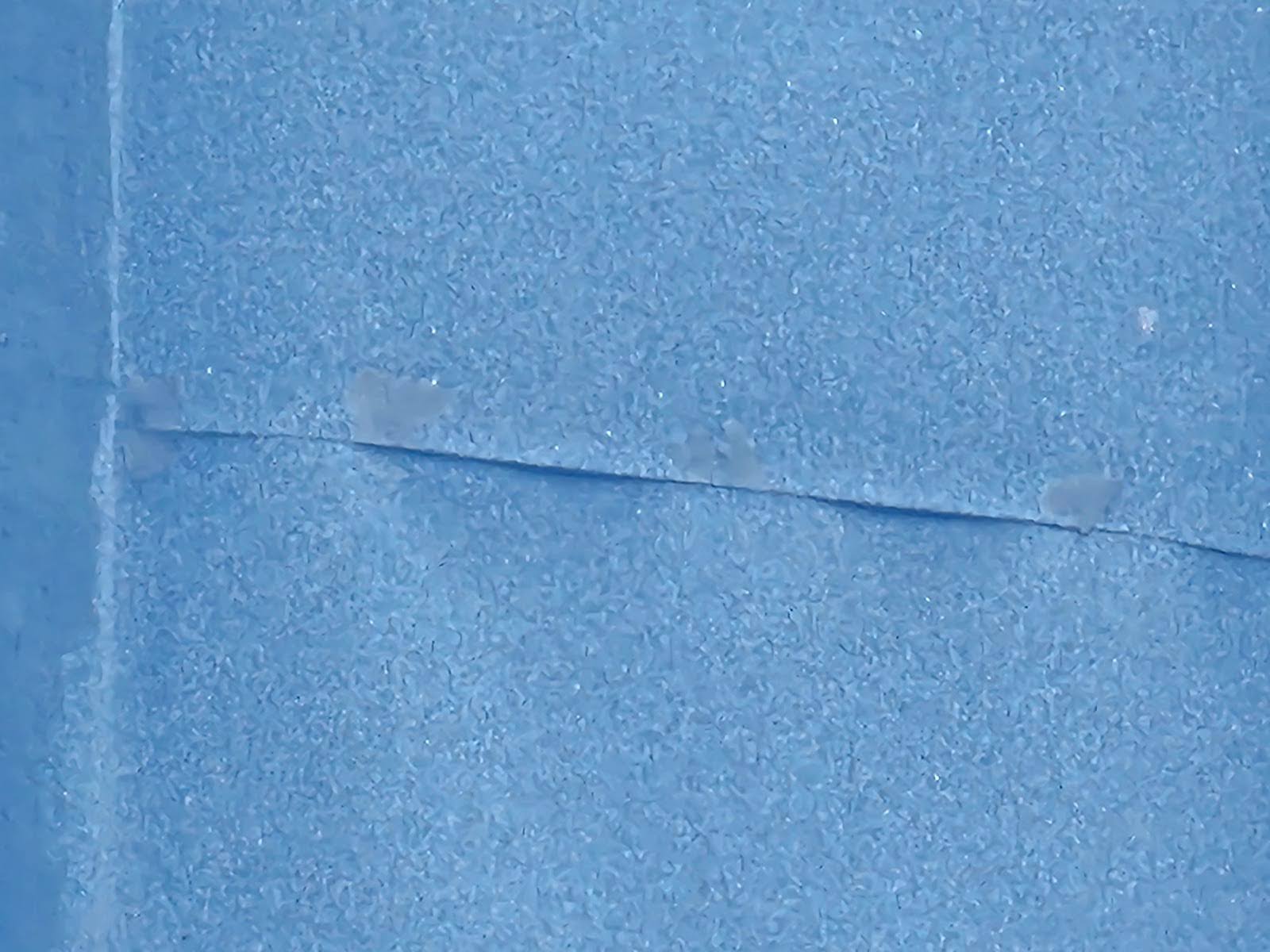
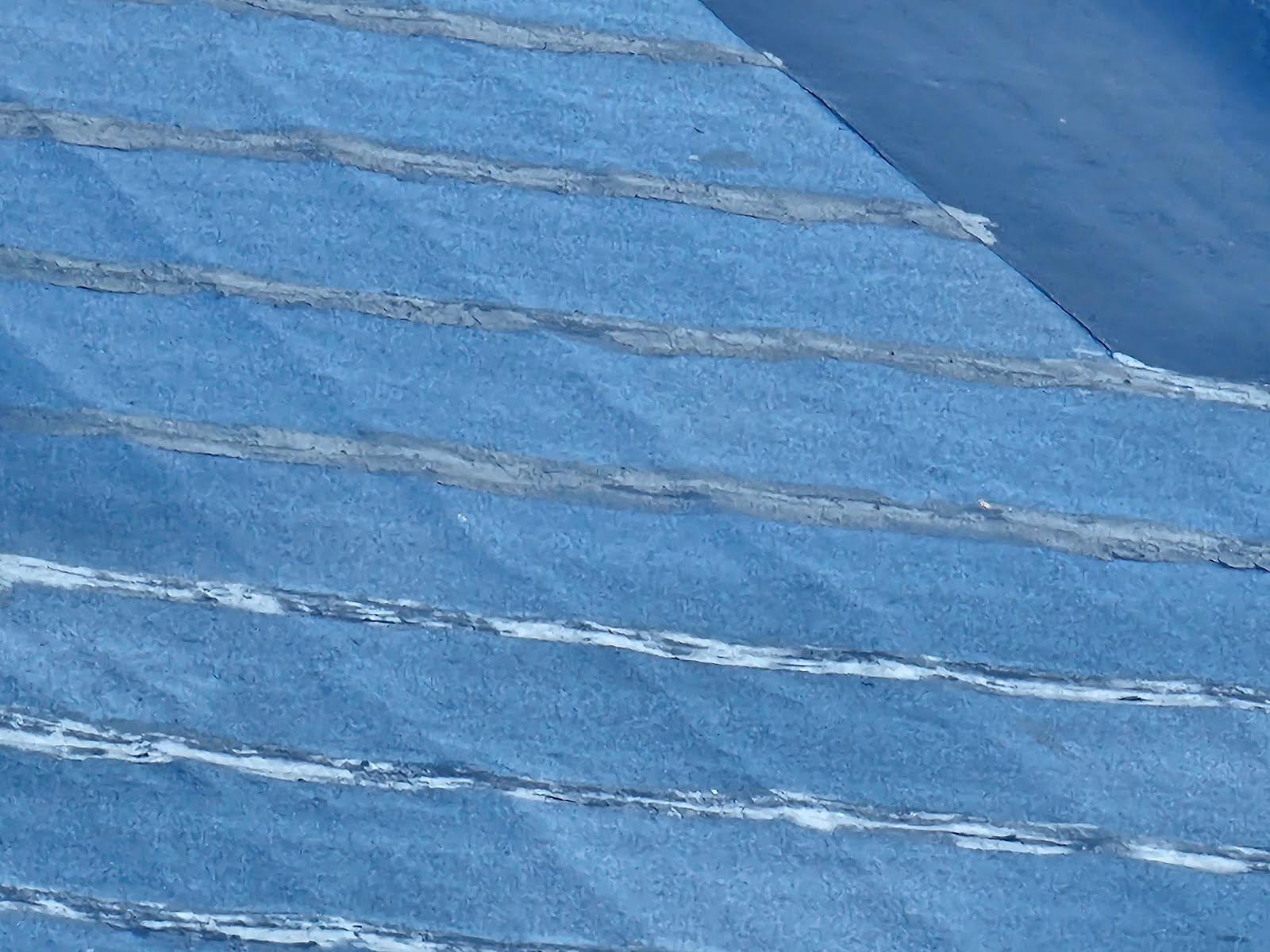
Looking across the majority of the roof itself, you can see that even the seams were not properly welded. It looks like after the application of initial installation, somebody went back and applied a supposedly redundant application of a cold process asphaltic mastic.
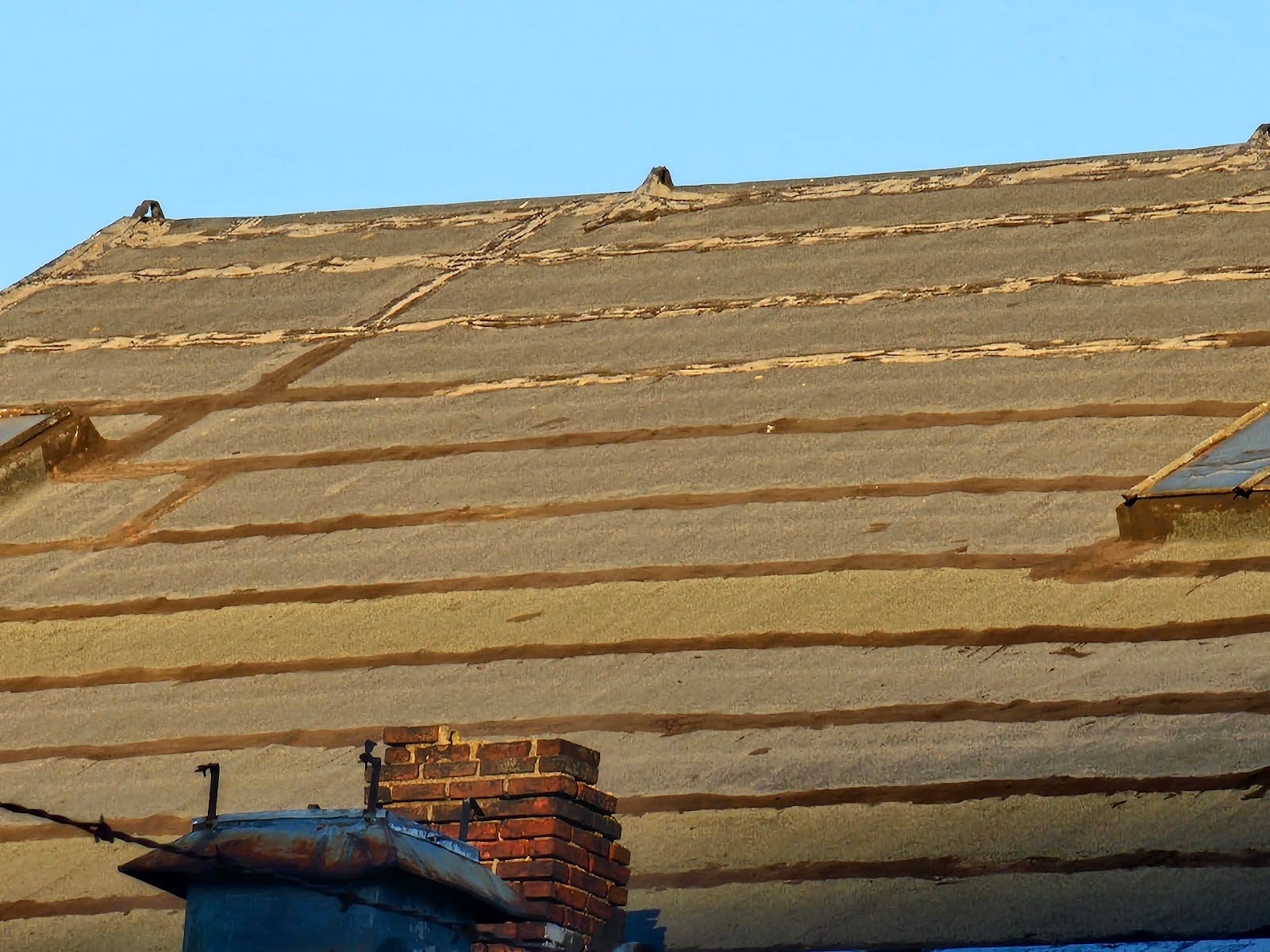
At one of the dormers, they overlaid it with an aluminum paint. There’s no real good reason to use aluminum paint on an application like this, but here it’s probably done just because they had a leak and we’re looking for any way they could to try to stop it or solve it.
We provide this information here on our blog, and our website, to help our customers and future clients, and we recommend every building owner in DC who values the longevity of their roof (and their investments) and building use a contractor who values the simple and important principles of proper roof construction like Dupont Roofing DC.
Our company specializes in flat roofing here in Washington DC and we’re happy to help building owners of almost all types. Learn more about our company and the proper techniques of working with roofing on historic buildings in Washington DC here on our blog at DupontRoofingDC.com, and you can call us at (202) 840-8698 and email us at dupontroofingdc@gmail.com. We are happy to help and at least talk through options.