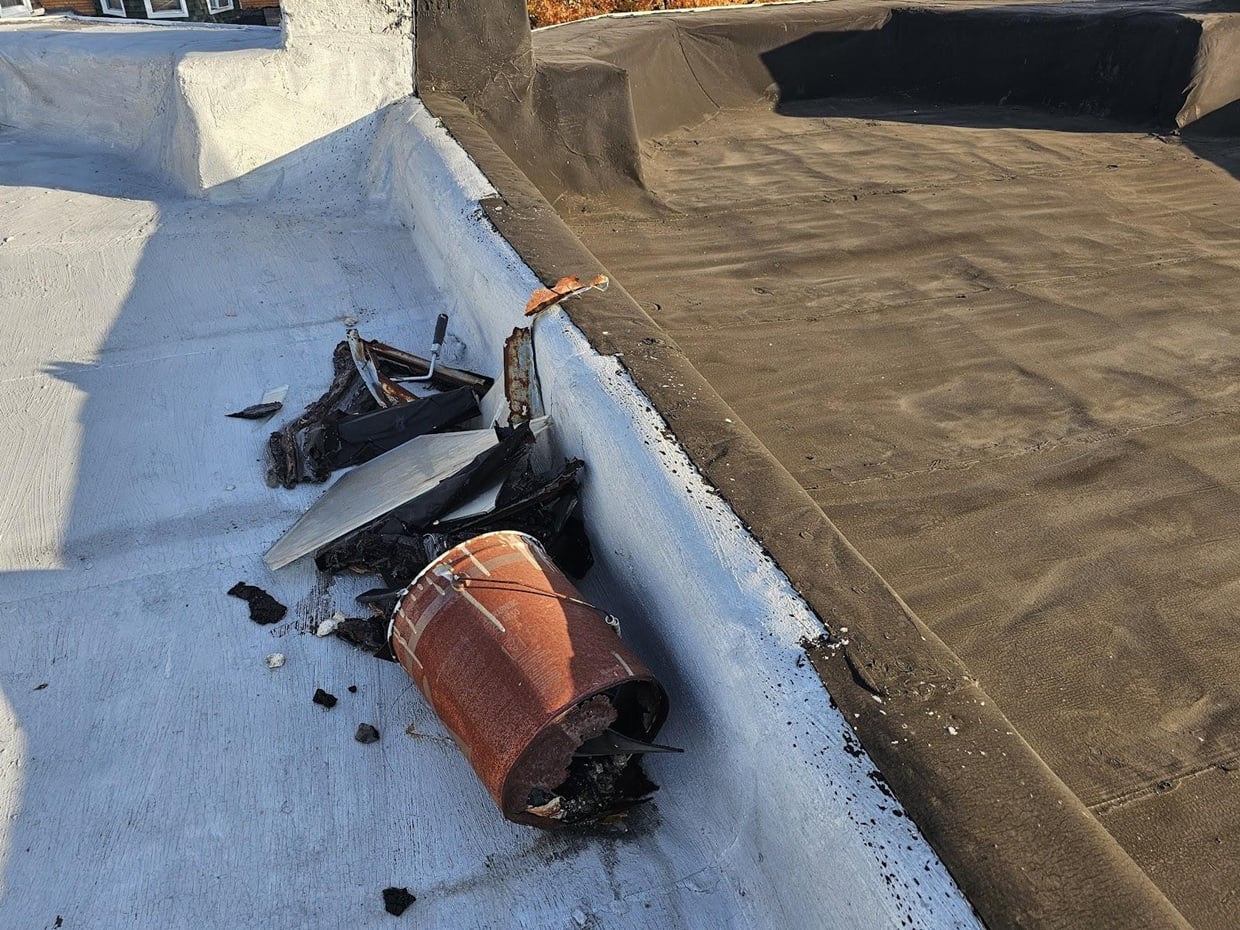
Here in Washington DC, we come across a ton of flat roofs that need upkeep, repair, and maintenance, if not complete replacement. The maintenance part is sometimes easy and inexpensive, if done on a proactive schedule. When things are left to deteriorate too far, replacement might be the only option. Sometimes other parts of the building get damaged from not fixing problems sooner. In other words, if a roof is not well maintained it can cause leakage that damages adjacent parts of the building like the framing and drywall and even floor systems below.
Small leaks can slowly allow water to penetrate through the roof membrane and cause serious damage before they are even recognized. In so many cases, the small and slow leaks can be worse than the quick and big leaks. Some of those cases will leave no other options and simply necessity replacement.
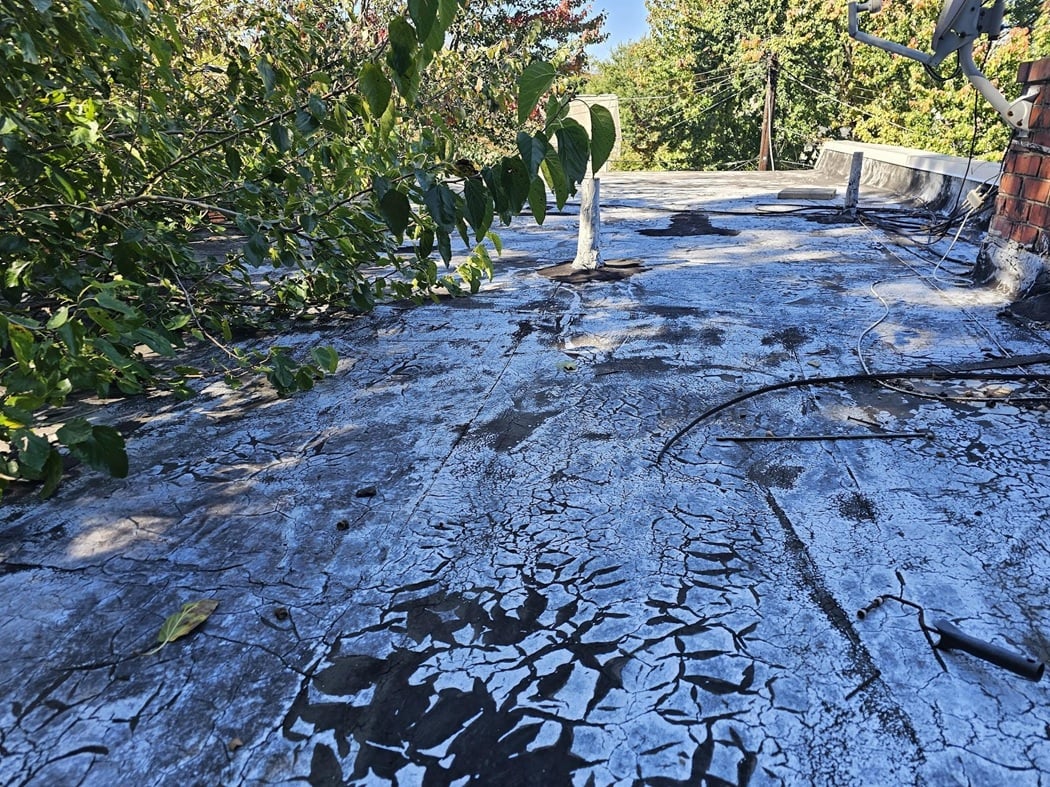
The roof shown in the picture below has an underlying modified bitumen membrane, but there is an application of tar that’s been applied on top of the modified bitumen membrane. This application was applied because the roofers of the past didn’t install the modified bitumen well and then they didn’t understand how to repair it. As an attempt at a shortcut, they applied this tar application. Then on top of the tar application an aluminum paint was applied, as well.
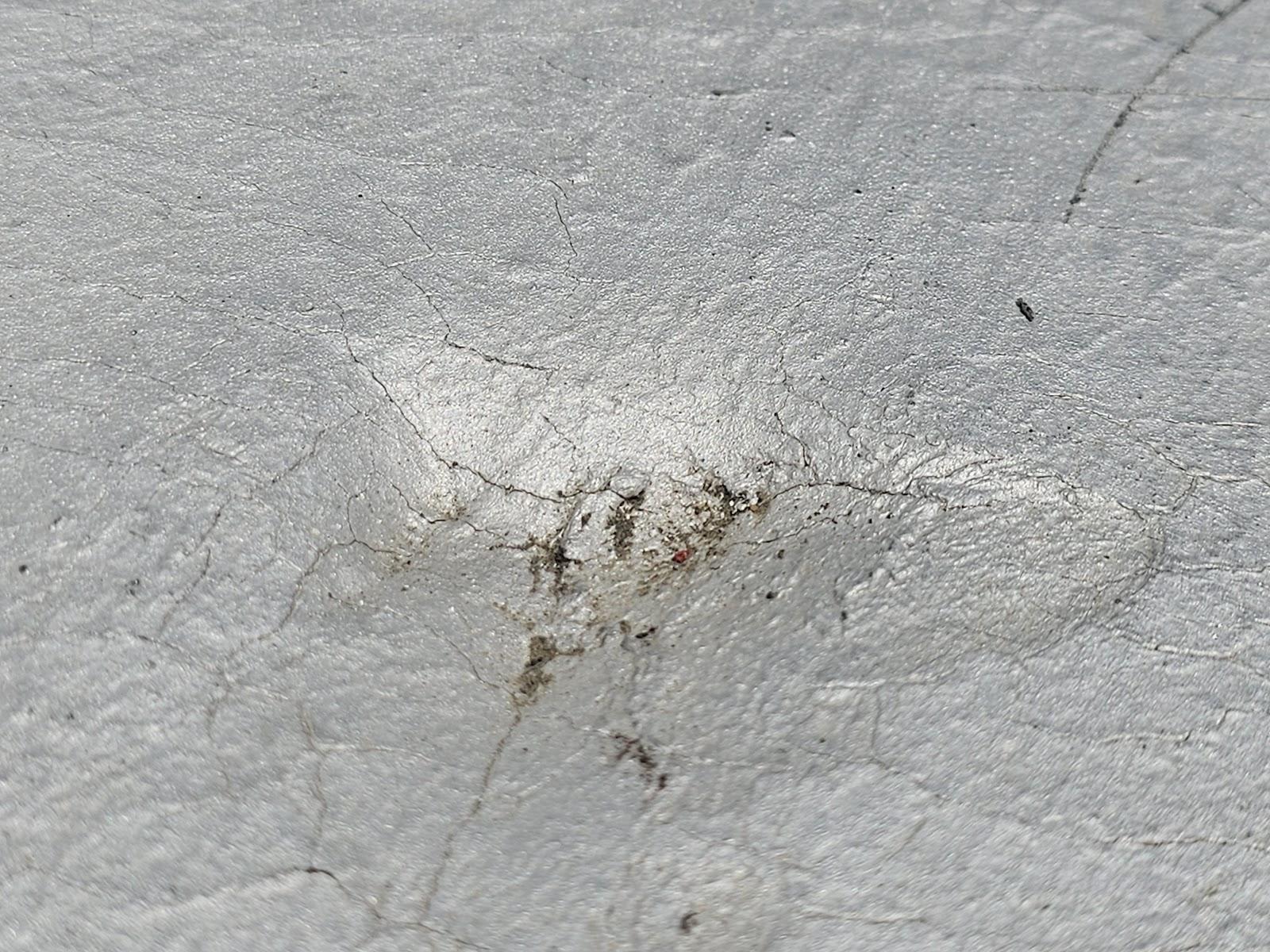
Aluminum paint can protect a modified bitumen membrane from some of the deleterious effects of exposure to the ultraviolet rays found in regular sunlight. Aluminum paints have limitations though, like all materials.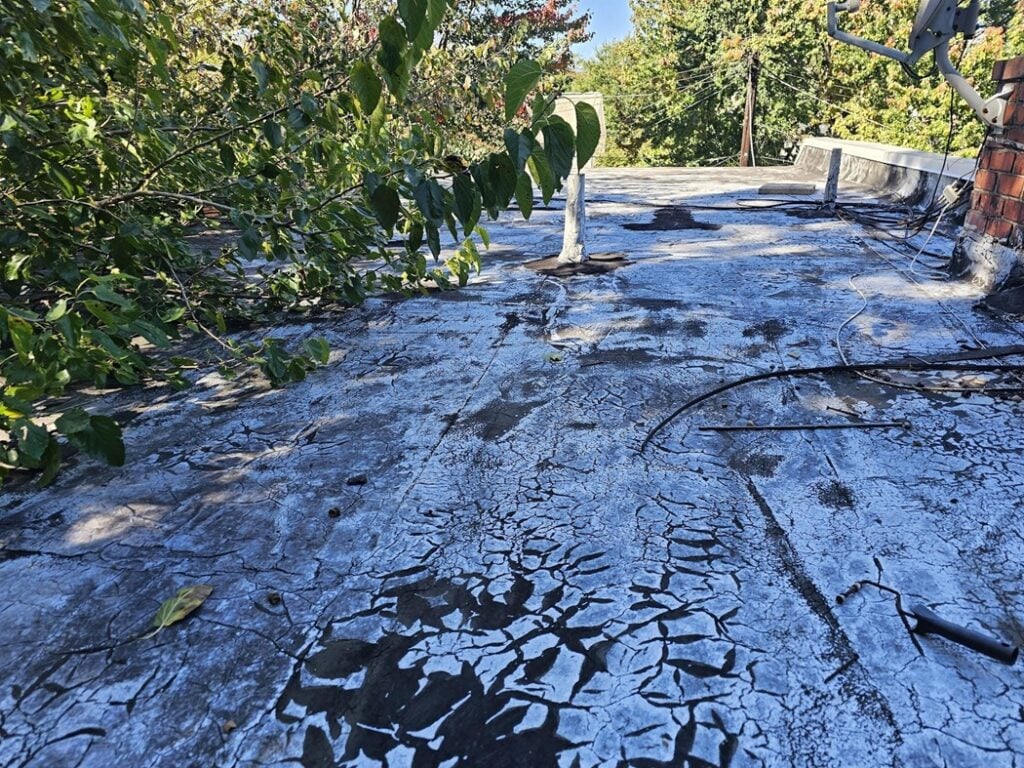 Generally aluminum paints don’t necessarily have a very long life span before they need to be recoated. In this particular case this roof was coated at one of the initial points, but it wasn’t recoated on a proactive schedule after the initial painting.
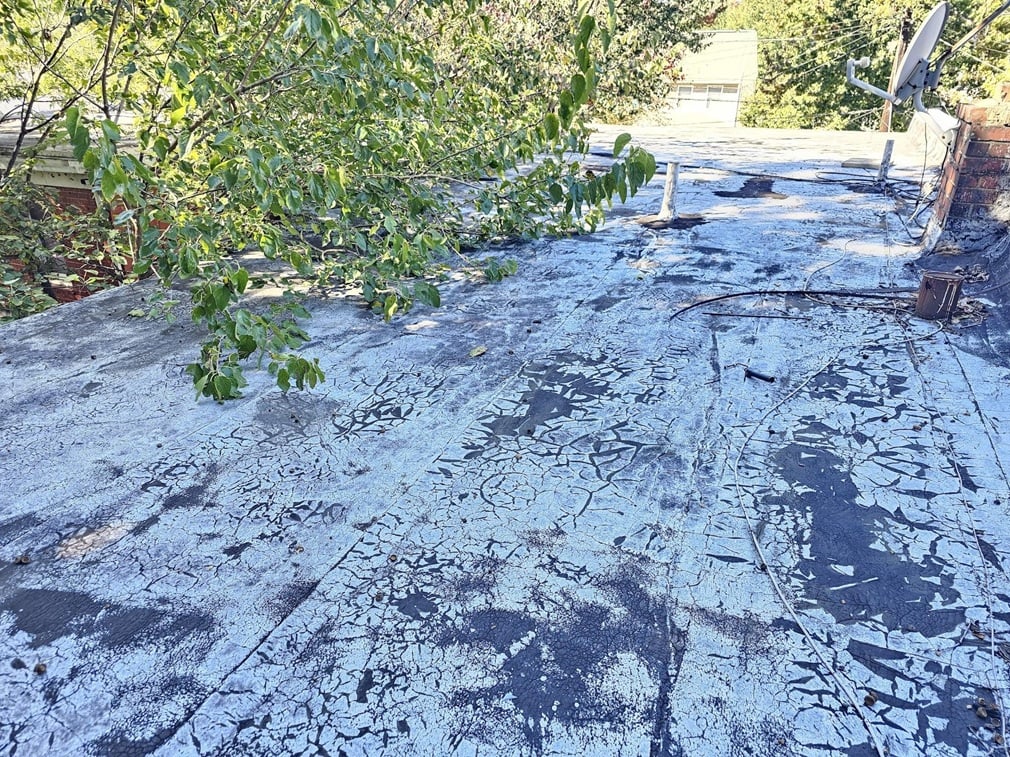
There’s cracking that runs throughout the roof surface, and sometimes we might refer to this type of cracking as alligatoring. In this specific case, though, it’s a little bit different than what we would expect in a typical alligatoring circumstance. In fact, the texture here is actually almost flat. Sometimes in alligatoring conditions, it’s not just the cracking itself, but it’s a peeling or turning up and cupping of the little pieces of paint or membrane.
Essentially, when there is significant deteriorated in an alligatoring type of context, the surface of the roof will not just have plane cracks with openings between them, instead it will cause the little pieces to cup upwards.
This happens because as the material is being eaten up by the ultraviolet, it’s not just breaking apart through the cracking, but it’s actually shrinking. As each piece separates from the next pieces of the roof, since it’s shrinking, the outer edge of the individual cracked around peace bends upwards.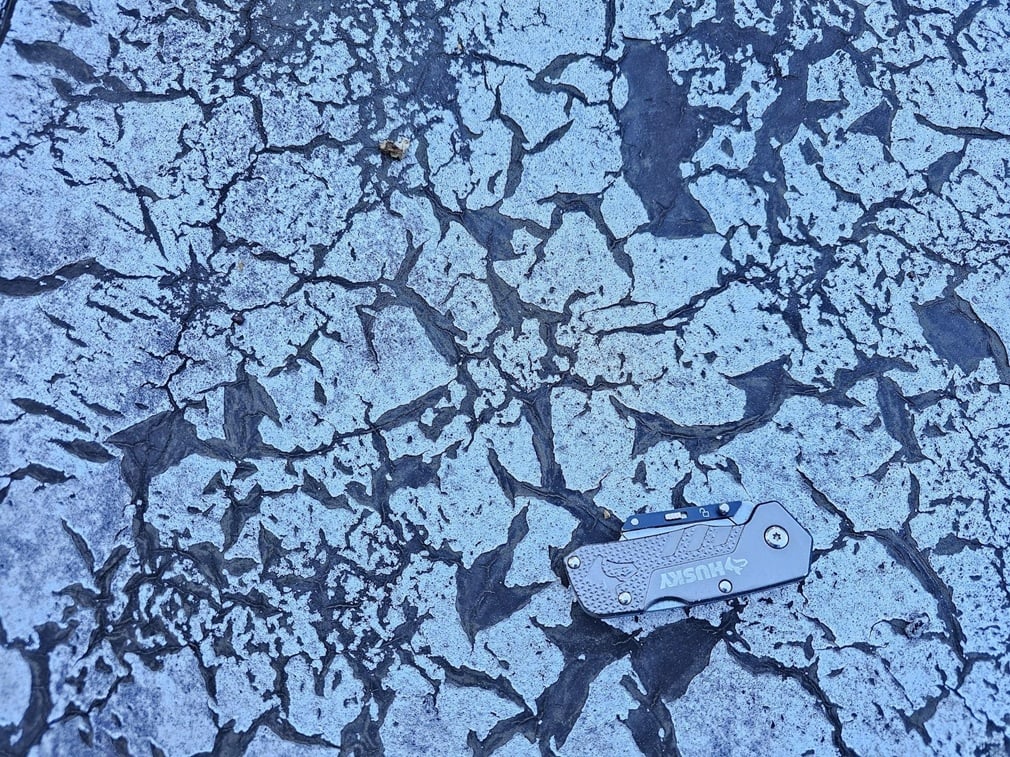
In this circumstance, the cracking is present but the cupping associated with alligatoring is not present. Here, someone might refer to this as mud cracking. In some cases it can be also referred to as crazing. Generally mud cracking applies specifically to liquid or higher viscosity applications like this.
You wouldn’t really find a mud cracking sort of scenario at the surface of a modified bitumen roll membrane, for example. In the upper exposed surface of the modified bitumen membrane you might find alligatoring, but it’s technically a little bit different.
One of the visually obvious problems here is that the areas of separation of the coating have left big exposed cracked areas.
They’re not really cracked but where the underlying substrate has become more like a fluid in the hot this temperatures, The top coating has experienced a stress which has caused it to contract and expand. Since the substrate hasn’t maintained a solid form in the hottest temperatures, the top layer has torn apart.
Diagnosing the root problem is complicated because there’s several different things happening here at once. It’s important first to understand what materials have really been applied here. The top coating is an aluminum paint. The substrate is not really modified bitumen. The original modified between roof was installed in a way that was questionable. Somewhere in the timeline, other contractors came to fix leaks. They determined the previous installation of modified bitumen single-ply membrane had been applied incorrectly or insufficiently.
In this coming week, we’re going to talk about the different iterations and generations of applications that have happened at this roof. We’re also going to look into the technical reasons why materials like this, when applied with different types of incompatibilities, don’t work well together and end up leading to failure.
We provide this information here on our blog, and our website, to help our customers and future clients, and we recommend every building owner in DC who values the longevity of their roof (and their investments) and building use a contractor who values the simple and important principles of proper roof construction like Dupont Roofing DC.
Our company specializes in flat roofing here in Washington DC and we’re happy to help building owners of almost all types.
Learn more about our company and the proper techniques of working with roofing on historic buildings in Washington DC here on our blog at DupontRoofingDC.com, and you can call us at (202) 840-8698 and email us at dupontroofingdc@gmail.com. We are happy to help and at least talk through options.