Flat Roof Ballasts for UV Protection: Advantages and Drawbacks
This past week we looked at a gravel ballasted commercial roof. Right here in DC, there’s a handful of old roofs that were built with built-up roof materials. That type of membrane doesn’t necessarily have an intrinsic adhesion to the wood decking and roof deck substrate. Often it will need to have a ballast applied on top to keep it in place. The ballast also does more than just keep it in place though, it also helps the membrane resist the deleterious effects of exposure to ultraviolet rays. Essentially, these materials, when uncovered and exposed to sunlight, will deteriorate very rapidly.
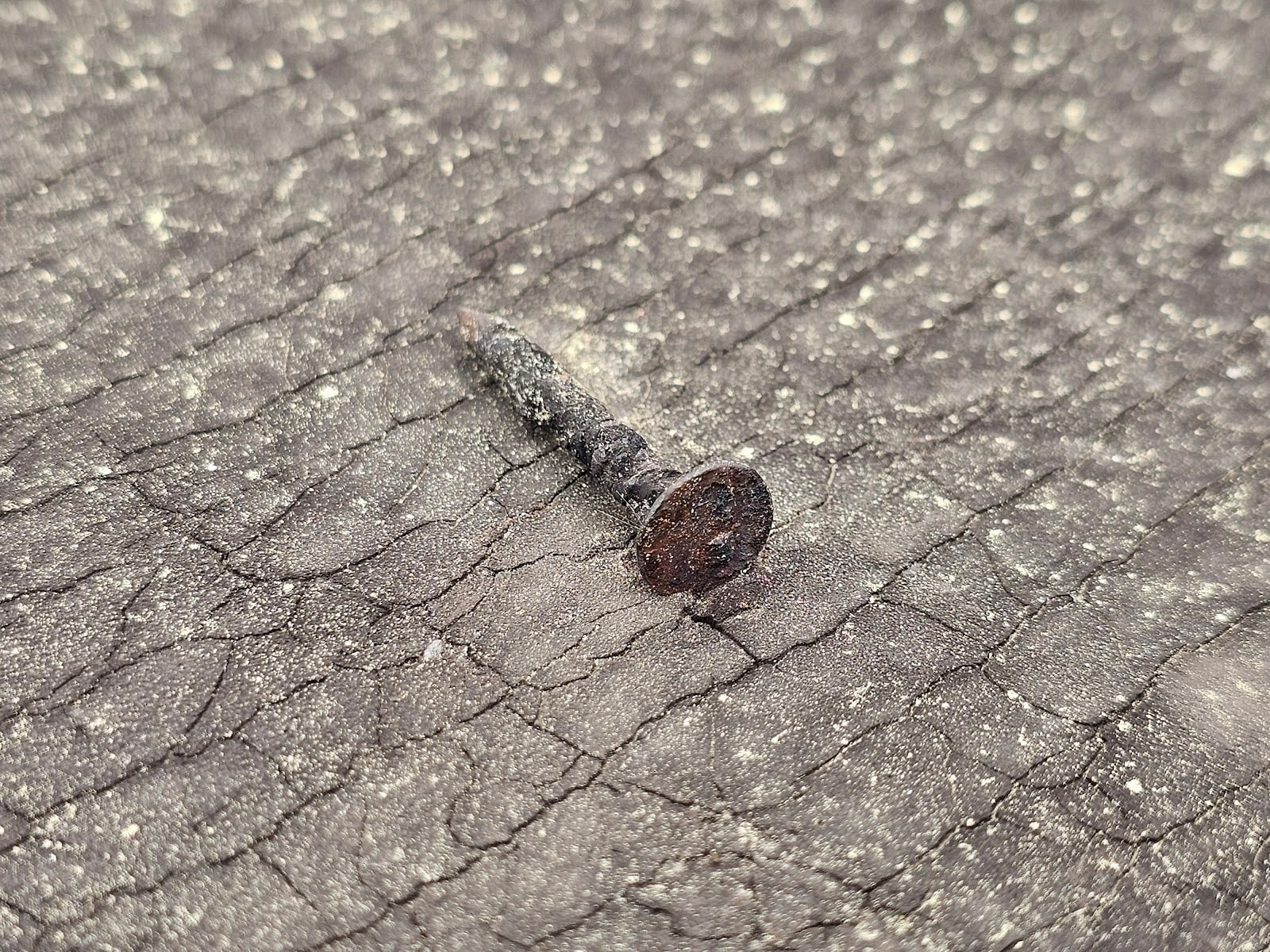
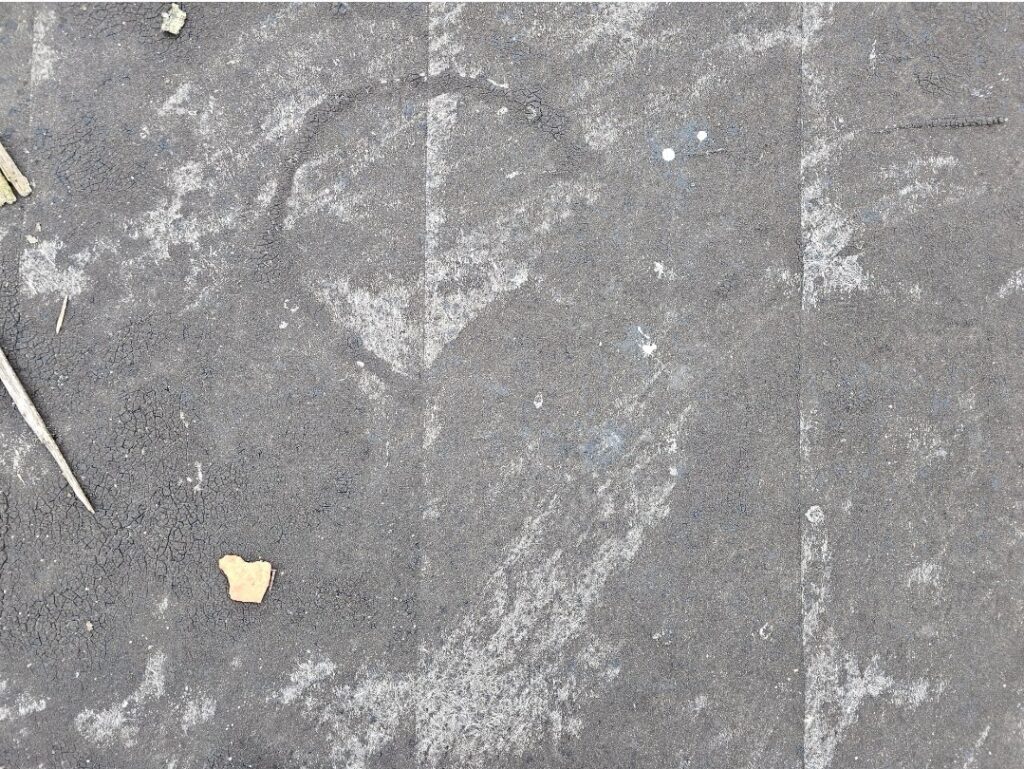
The ballast can help them last much longer. The roof that we showed last week, had a ballast applied on top. All you could see was the stone aggregate ballast. You weren’t able to see the exposed roof membrane below. Today though, we’re going to show some pictures of the exposed built-up roof membrane. Here, it has had some unprotected exposure to ultraviolet rays and has a significant amount of associated deterioration. From being exposed to sunlight it has been damaged by the ultraviolet rays in the sunlight.
The felt backing that you see in the picture below is just the top layer of several layers laid one on top of the next of a built-up roof. The common modified bitumen roof membranes look a bit similar, but they are single-ply systems. Essentially, they are just one single membrane that’s overlapped at the edges of each successive rolled out portion of the membrane. It’s important that the overlap is done correctly and although that might sound obvious, we’ve seen examples where untrained roofers have actually done it backwards. It sounds crazy, but there’s also people out there trying to make money doing things that they haven’t learned or been trained on how to do properly.
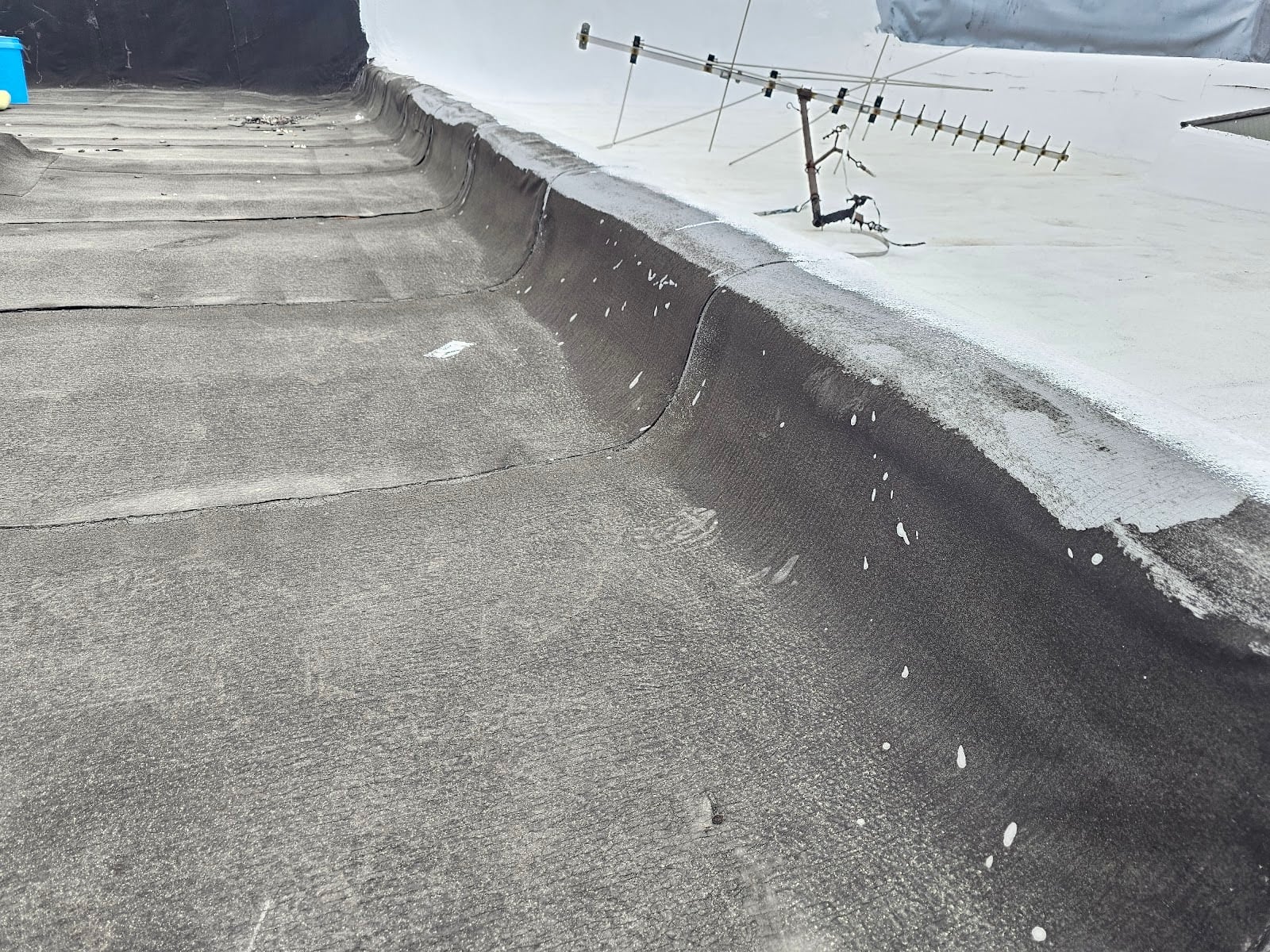
One of the signs that indicates, right away, that this roof is different than a modified bitumen roof is that each lap of roofing only has about 15 inches of space between each course.
All types of roofs should begin at the low end and work successively from there upwards towards the higher end of the roof. Even flat roofs have slope. Any roof that’s actually flat or any roof that has any parts that are actually flat is built incorrectly.
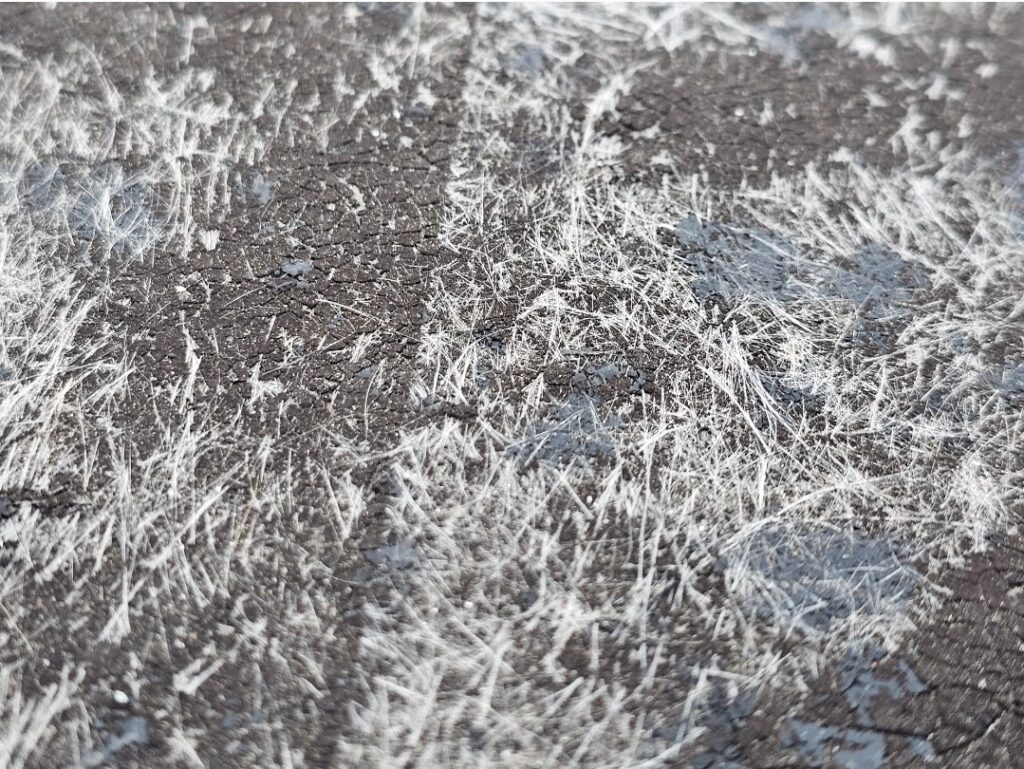
Modified bitumen rolls are about 39-5/8 of an inch tall. When the roofing is laid with the 3 and 5/8 inch flap, it leaves about 36 in exposed. That’s about 3 feet. The next picture below shows a modified bitumen membrane similar to built up roofing, modified bitumen roofing also has to be covered.
Some types of modified bitumen roofing are manufactured with a ceramic granule embedded in the top upper surface of the membrane. That ceramic granule protects the underlying modified bitumen membrane. Other types of modified bitumen roofing are called modified bitumen smooth roofing and do not have an aggregate embedded in the upper surface. Instead, they need to be coated with an aluminum paint or an acrylic type paint or similar. These paints protect the roof membrane from accelerated damage from exposure to ultraviolet rays.
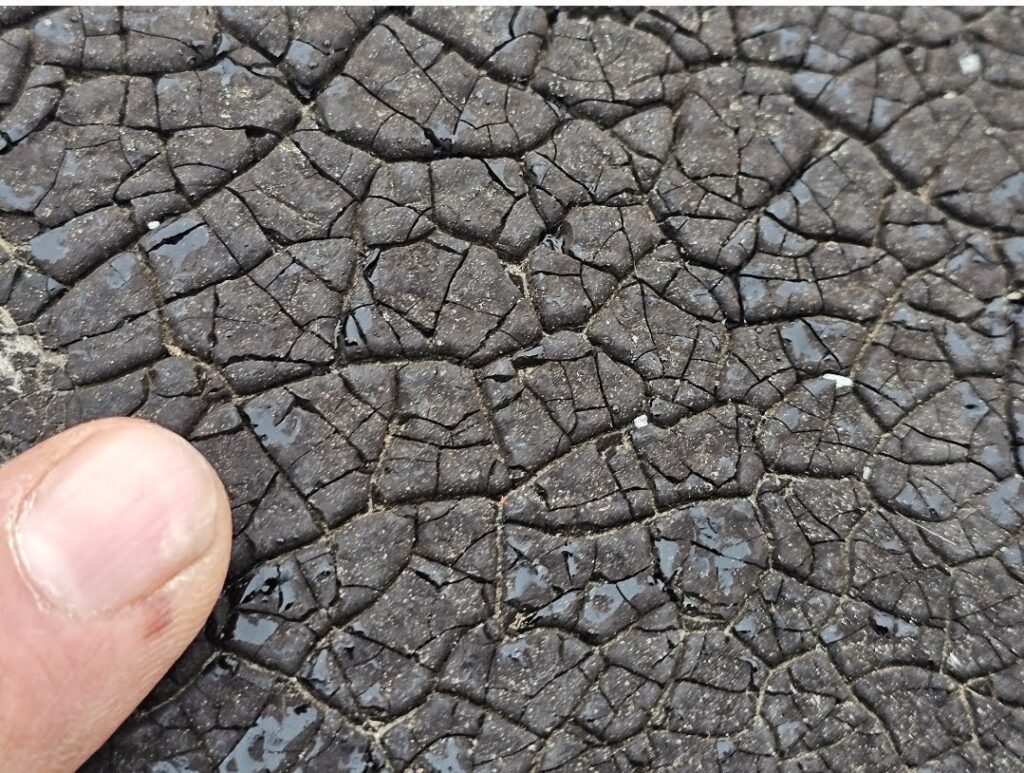
The roofing membrane shown in the picture below has been installed and set on a rooftop for a long period of time, but it was never been covered with a protective coating. Therefore, this modified bitumen has taken the full brunt of the sun and the deleterious effects of exposure to ultraviolet rays. We call this type of damage “alligatoring”. The upper surface of the roof is being completely compromised because it was not protected with a coating.
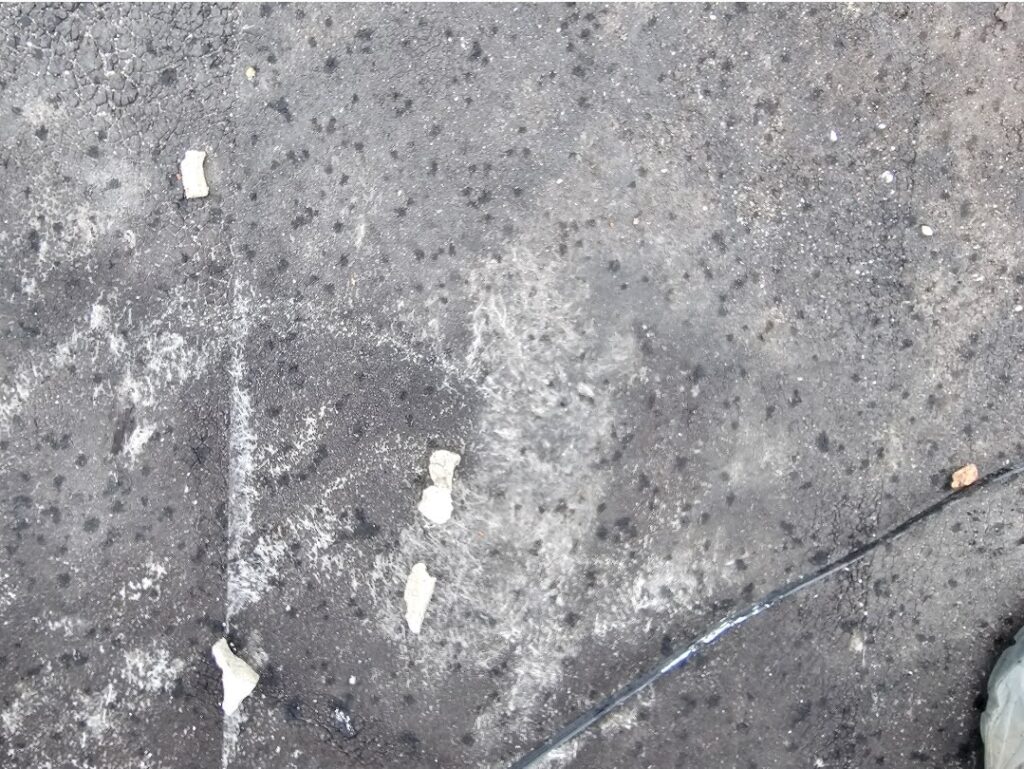
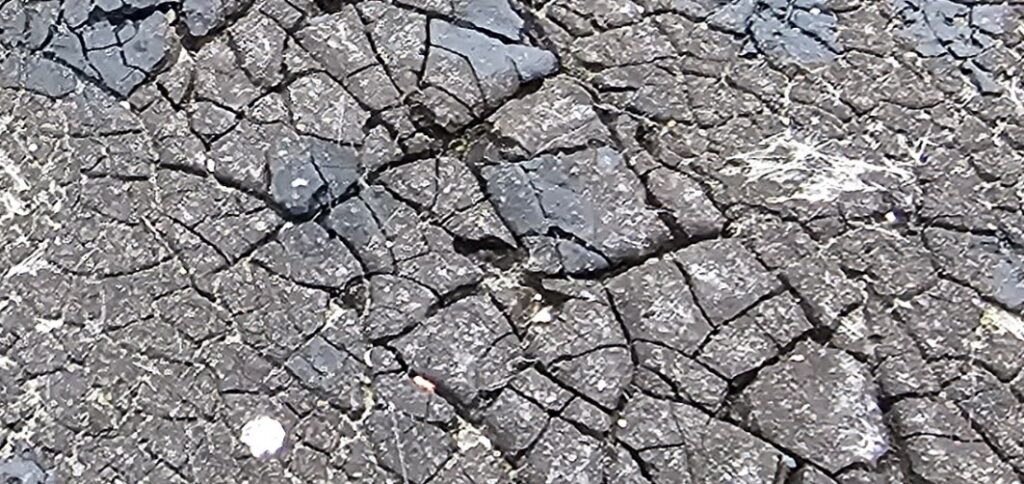
The picture below shows another area of the same roof but here and asphaltic mastic has been applied and the asphaltic mastic as well has no intrinsic defense against exposure to ultraviolet. Here the roof has been compromised and damaged by exposure to ultraviolet rays from sunlight. If the roof had been professionally serviced or maintained by a trained contractor all of this damage could have been simply avoided. Installations should be done by a professional roofing company like ourselves or at least checked throughout the out the span of the life of the roof for need upkeep and maintenance.
We provide this information here on our blog, and our website, to help our customers and future clients, and we recommend every building owner in DC who values the longevity of their roof (and their investments) and building use a contractor who values the simple and important principles of proper roof construction like Dupont Roofing DC.
Our company specializes in flat roofing here in Washington DC and we’re happy to help building owners of almost all types. Learn more about our company and the proper techniques of working with roofing on historic buildings in Washington DC here on our blog at DupontRoofingDC.com, and you can call us at (202) 840-8698 and email us at dupontroofingdc@gmail.com. We are happy to help and at least talk through options.