Signs Your Historic Built In Gutter System Needs Repair
Here in Washington, DC, particularly in historic buildings, there’s multiple different types of bays and facades. Some different facades have configurations that make bays a prominent part of the wall layout. It adds shadow lines and details to the facade that make it more interesting than just a simple flat facade. It also allows additional fenestration such as windows which can bring in additional light from the outside. Since the additional windows are positioned differently, throughout the day as the sun changes its position, the house can be lit mire effectively.
We show examples below. Here in this example, we’re going to look at a particular set of bays, really built in a pair at a side facade of a typical DC row home. Unlike bays with turrets or gables, this particular bay happens to have a flat roof. However, behind this roof there is an additional ornamental and functional parapet wall that stands behind the roof with an additional projection built into the wall, giving it a different visual interest, similar to a fractal without the differentiations in height.
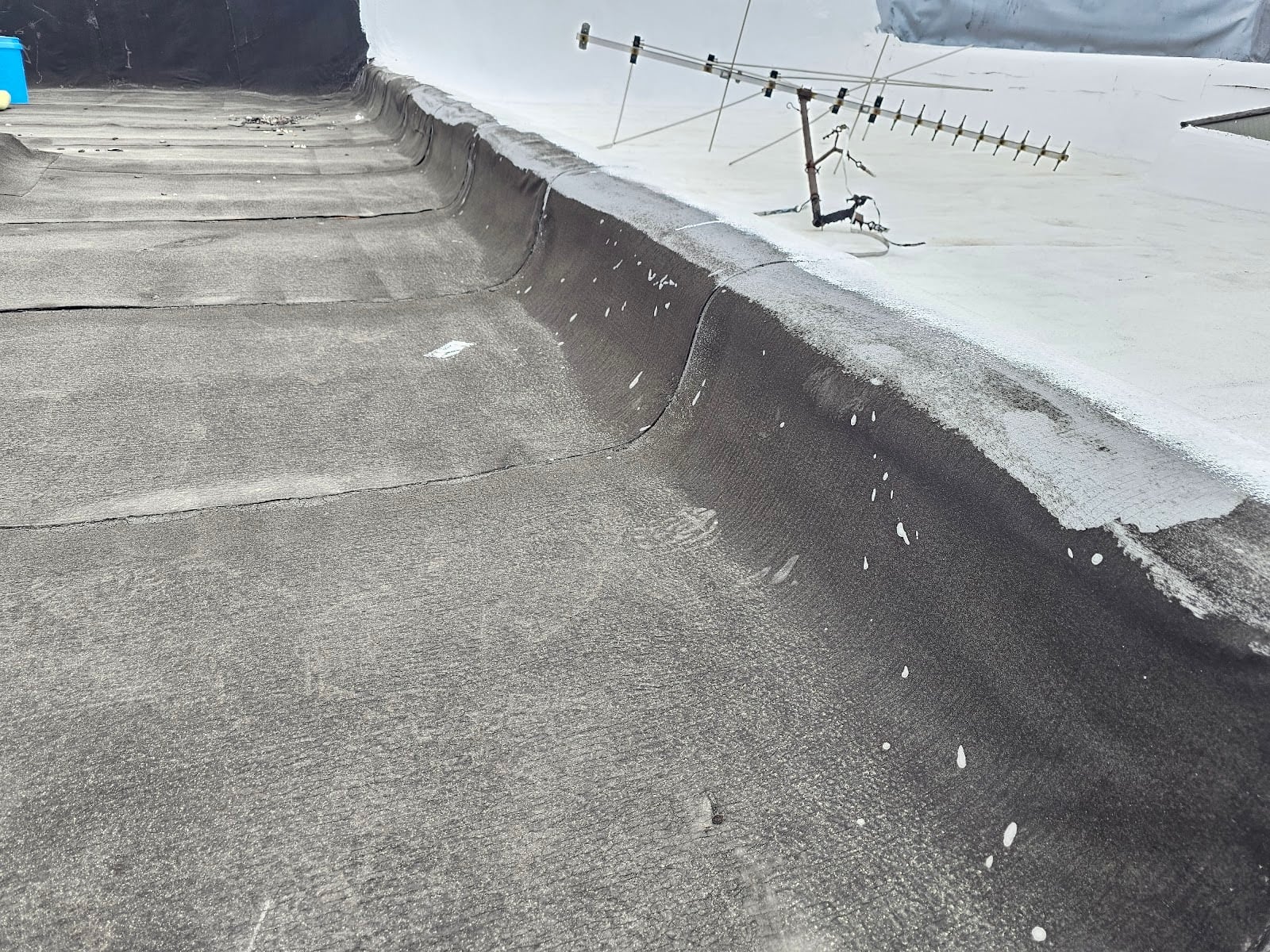
You can see the roof of this bay in the next picture below. It is a low slope roof with a built-in gutter. Inside of the top edge of the cornice, there is a recess, a suppressed area that works like a channel. It’s similar to a typical contemporary gutter, but this is actually built in to the roof system as an integral part of the roof.

The next picture below shows a closer view of that broken up portion of the front facade. Here you can see in the next picture, from a different angle. Like a fractal which also has a significant degree of intentional variation, this variation is limited to the depth away from the elevation of the front facade, not the height.
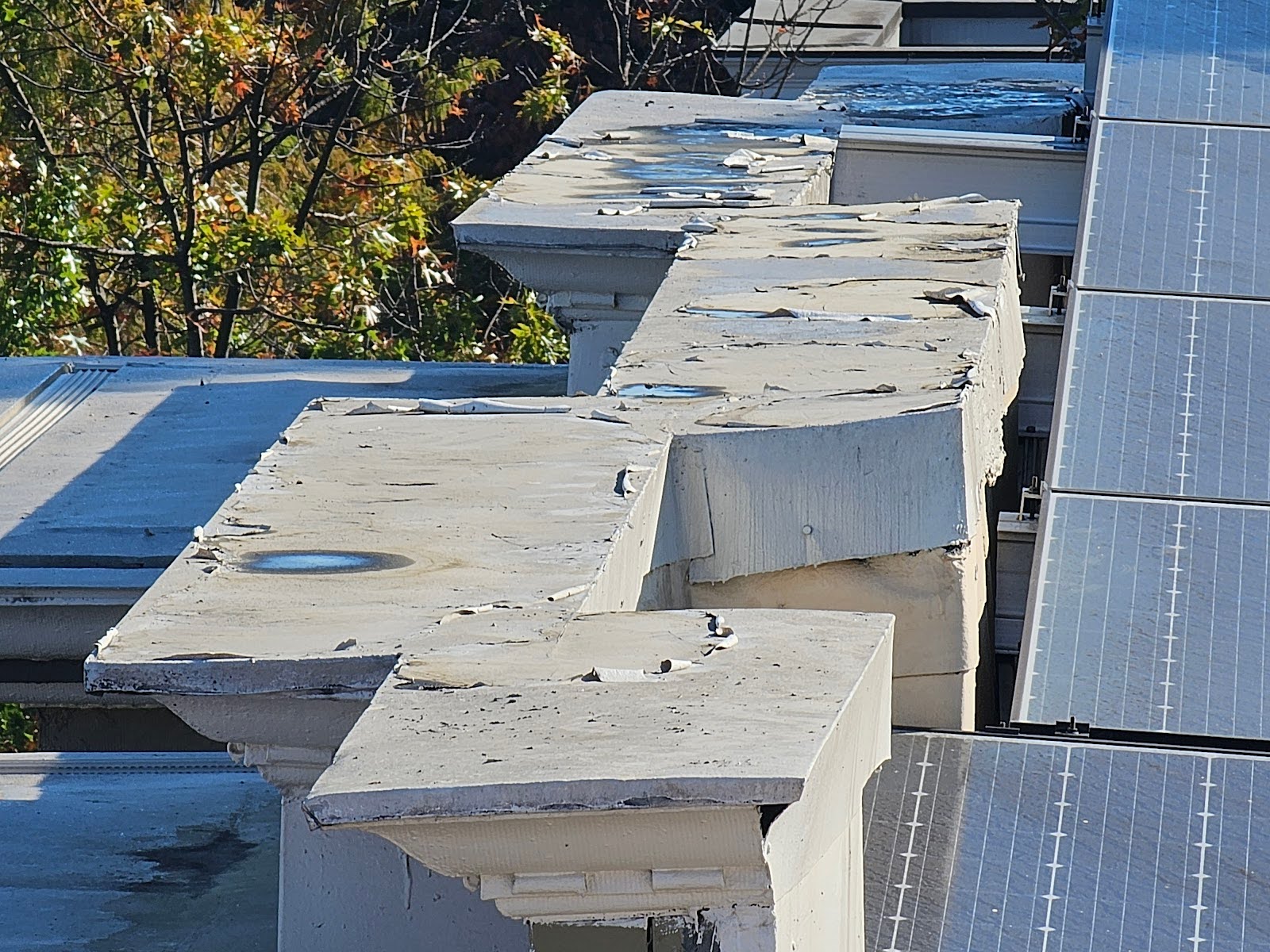
Like a typical parapet, in a side-to-side building connection, these parapets are covered with a coping that protects the masonry from rainwater. Except, here in this particular configuration, the coping is wider. At low slope rooftops, demising walls normally extend above the rooftops to separate two similar roofs between similar rowhomes. In those cases, the coping is specifically purpose-built. This means it’s built for function, not for form or aesthetics.
At those areas where you cannot see the coping from the street, in most cases, parapet coping are normally without any architectural embellishments. Instead it’ll be just a simple upside down u-shaped cap that spans the top of the brick wall and returns downward a few inches on each side. At the edges of the coping, the metal will be built out just about 3/16 of an inch to create a drip edge so water runs a little bit away from the vertical face of the parapet during typical rainfall.
If you look at the shape of the coping below, you can see that there is a decorative profile like a cornice, built into the external vertical face of the coping. This isn’t purely done for decoration. It does provide a decorative architectural aesthetic, but it also allows the falling rainwater to project farther away from the vertical face of the building. That helps preserve and extend the life of the masonry. Essentially with each successive rainfall, less rain will run down the face of the vertical wall. That means the masonry will be less hydrated over many years and decades and therein have less deterioration.
The picture below shows a leaf guard inserted into the built-in gutter channel at the top of the bay roof. That channel works like a gutter but it’s not typical or at all built like the gutters we find installed at the exterior drip edges of roof terminations.
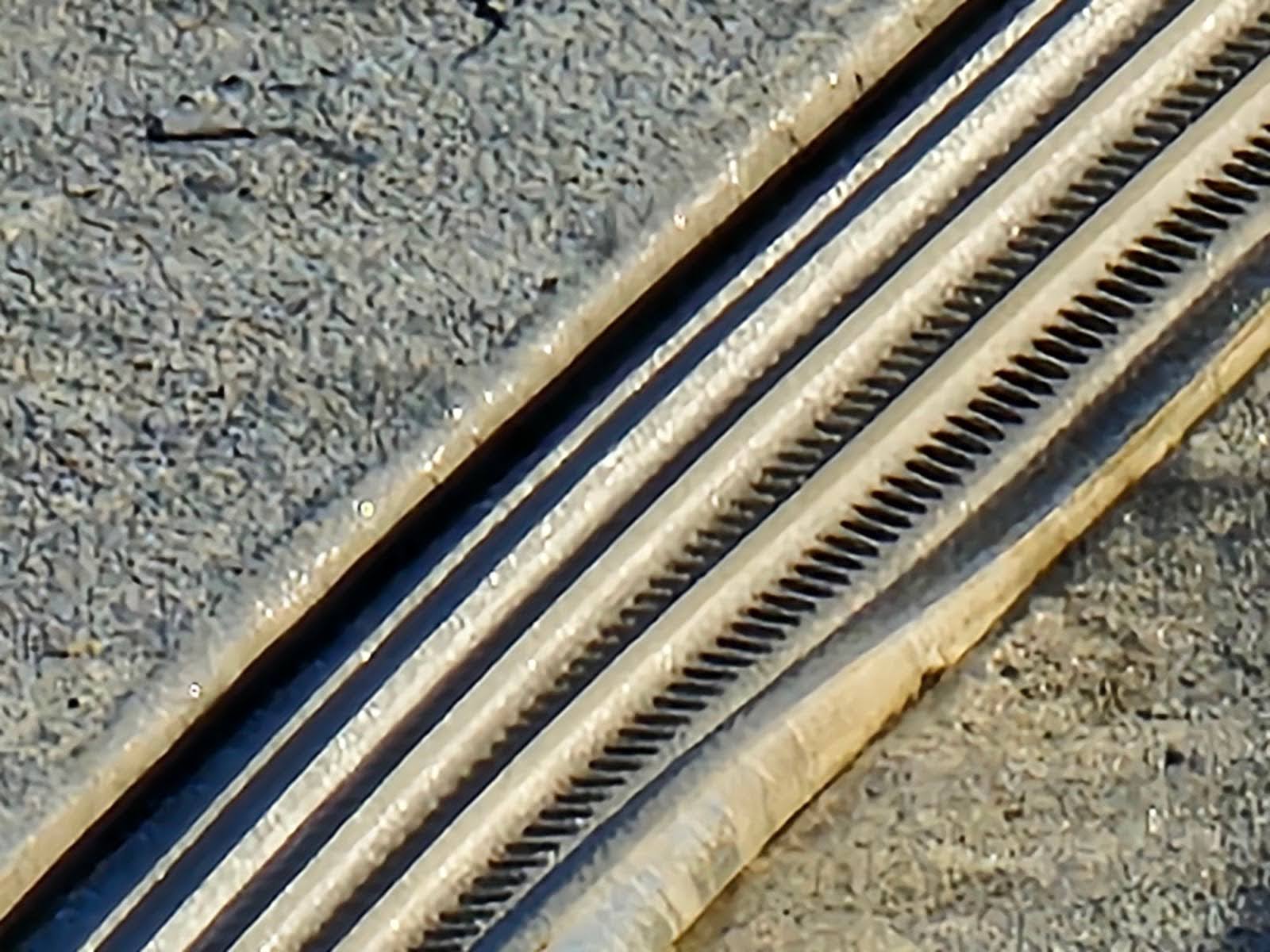
Unlike a more common contemporary type of gutter, this gutter drains through the masonry parapet and then sheet flows onto the lower flat roof.
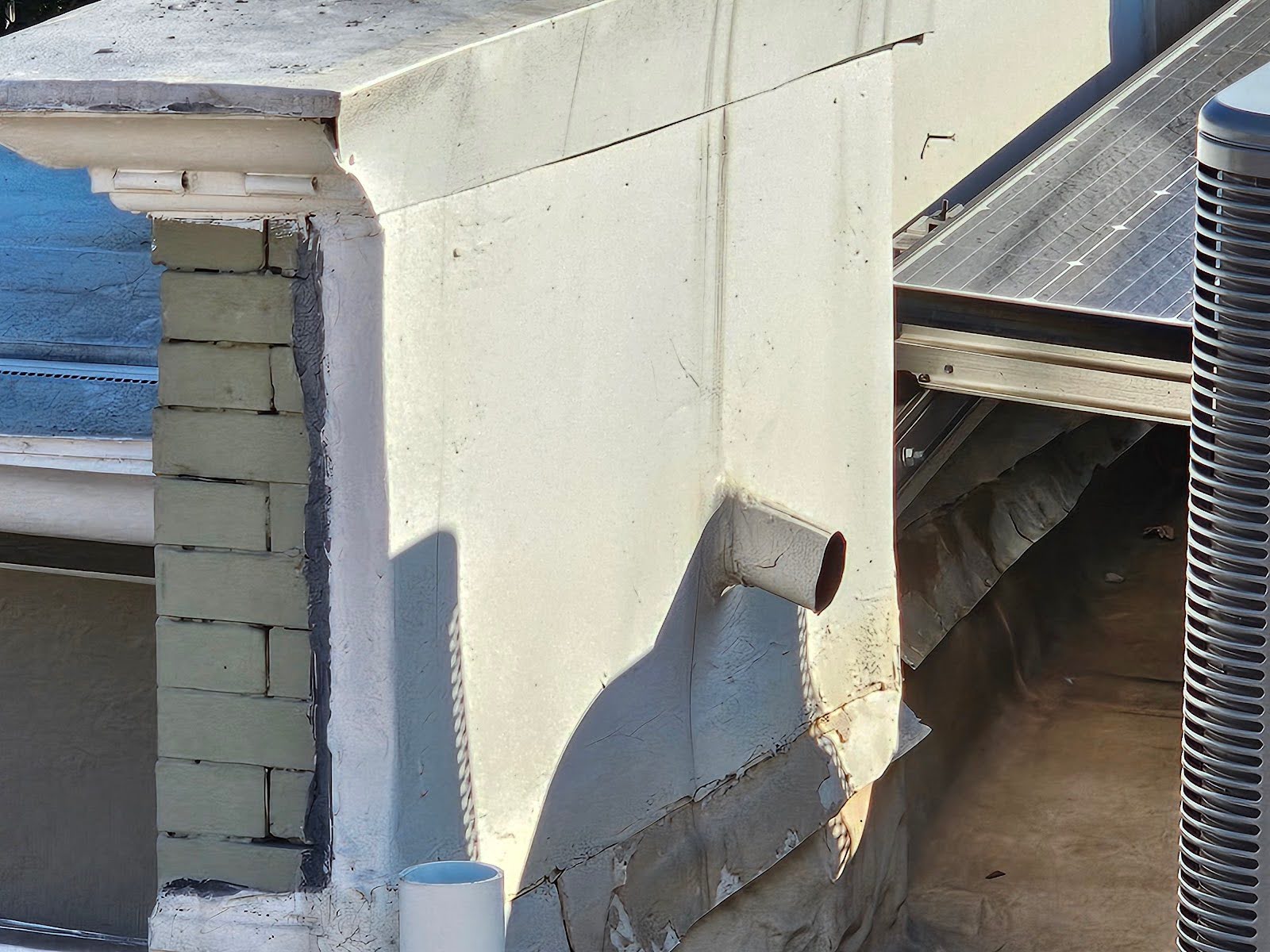
After the water comes through the scupper, it simply sheet flows onto the larger portion of the main building’s high flat roof. The only management of that water from that point is that it flows with the remainder of the high roof’s water and continues to sheet flow from there to the rear gutter at the back of the building.
 We provide this information here on our blog, and our website, to help our customers and future clients, and we recommend every building owner in DC who values the longevity of their roof (and their investments) and building use a contractor who values the simple and important principles of proper roof construction like Dupont Roofing DC. Our company specializes in flat roofing here in Washington DC and we’re happy to help building owners of almost all types.
Learn more about our company and the proper techniques of working with roofing on historic buildings in Washington DC here on our blog at DupontRoofingDC.com, and you can call us at (202) 840-8698 and email us at dupontroofingdc@gmail.com. We are happy to help and at least talk through options.