Leaking Gutter Issues Affecting Historic Structures
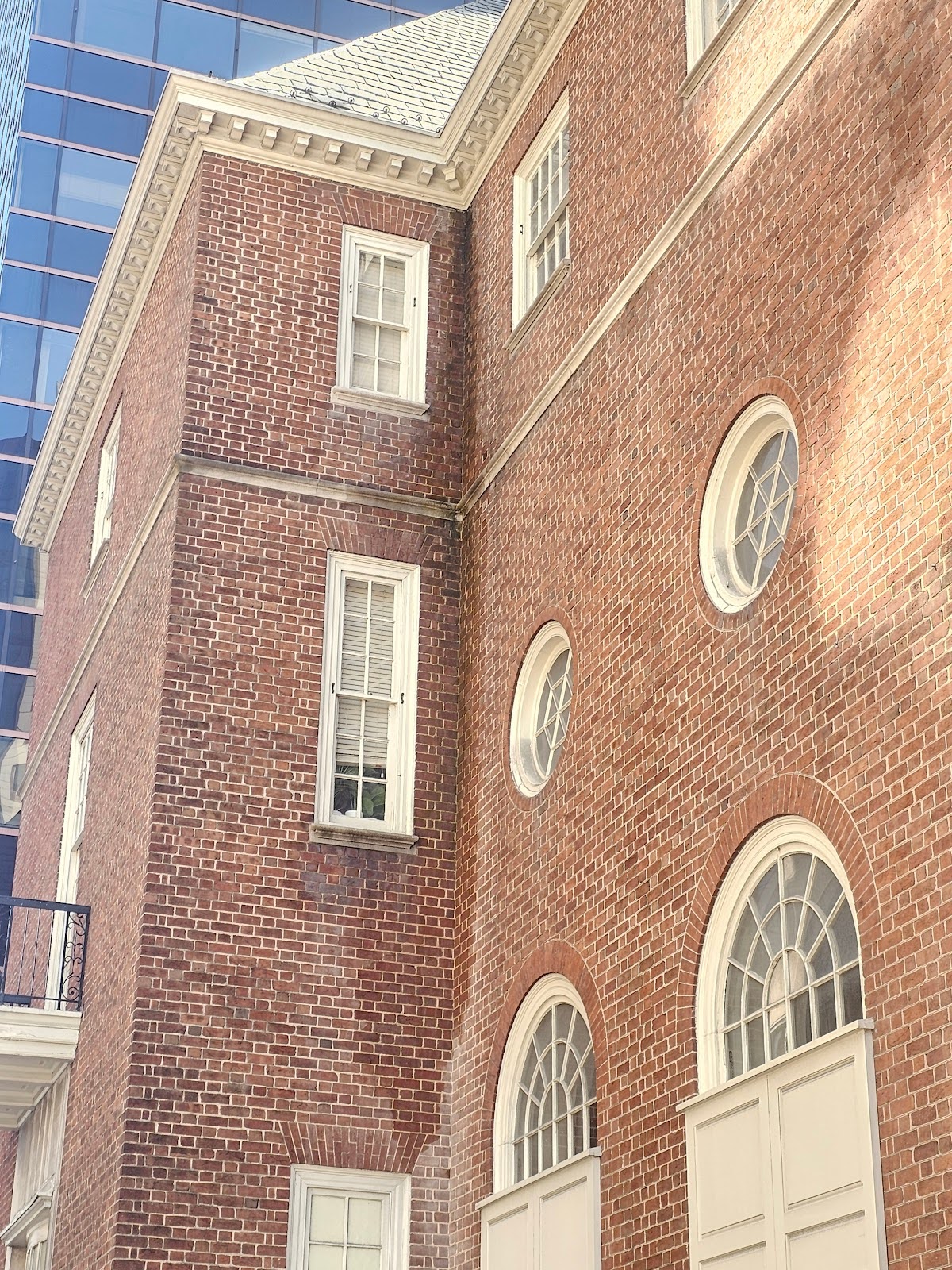
This past week, we looked at an example of a water table installed at a historic building facade. Today we’re looking at a similar type of building but it’s different. This particular building has a cornice that wraps around the facade, not just at the front facade. As well the roof here is not an entirely flat roof. In fact the majority of the roof is built with a mansard type of construction.
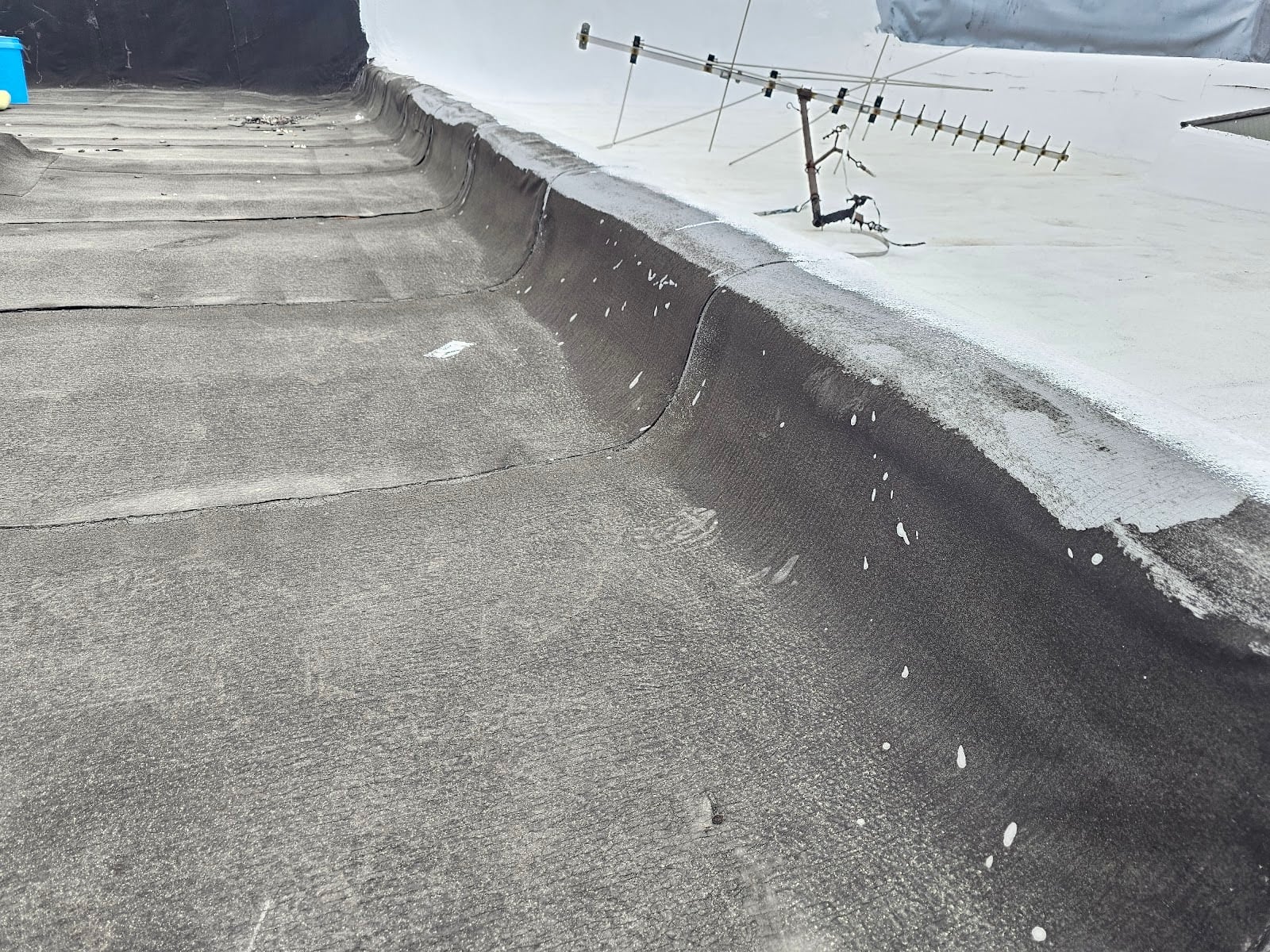
A major roof is similar to what you might think of as a suburban country roof. Most of those roofs have peaks and ridges. Flat roofs of course generally don’t have a peak or a ridge. They are low slope roofs that generally run close to flat. Even though they’re called “flat” though, but they’re not actually flat. In fact every part of a flat roof is actually supposed to have a grade or slope of at least 2%.
The big takeaway though is that here, this roof is a different type of roof than the one we looked at last week. It has a cornice, but the cornice is built differently because the cornice has miters and corners that wrap around a much larger area of the facade of the building. As well here, the cornice is generally in better condition, but there is an active leak.
You can see that the leak in the wall corner is shown in the picture below. The inside corner has a spot where water is leaking through the internal guttering system. In last week’s blog article, we specifically looked at a water table. Here, instead of a water table, there is a gutter.
The guttering system channels the water away, instead of just shedding it from the area above the corners. Essentially, a water table grades towards the front and allows the water to run off of the top of the cornice, yet since it has a projection at the top of the corners, the majority of that water does not land on the vertical face of the building as it falls downward.
Although the exterior brick and most of the exterior elements of the building are intended to be water resistant, they deteriorate. Over time, with prolonged and unnecessary interations of exposure to moisture, these materials do begin to deteriorate and essentially decompose. They rot.
This type of unnecessary deterioration is problematic because it’s expensive to repair. This is just explained here as an argument for the need for proactive upkeep and maintenance. Particularly, even though it’s built as an exterior element, the corbelled cornice, at the top of this facade wall, is intricate and very detailed. It’s expensive to repair and or rebuild, but it’s rotting on the inside because of this unnecessary exposure. The internal gutter here is leaking. That water comes through and saturates the inside miter corner of the cornice and the water then filters through to run down the face of the masonry wall.
You can see it clearly with the dark water stains at the inside corner of this brick facade. The excessive exposure to moisture is bad for the brickwork and exterior elements, but the damage to those areas still happens very slowly over time. It will essentially cause the mortar joints and brick elements to oversaturate and therefore experience deterioration. This type of exposure is particularly problematic in the winter months through cycles of freezing and thawing.
The cornice is largely made with a combination of wooden and metal materials. Those wooden elements will rot out much faster than the brickwork and or even the metal elements. The metal elements, in this case, are made with a galvanized steel instead of a contemporary more common aluminum. Aluminum can also deteriorate over time, but it doesn’t rust or oxidize significantly. Ferrous metals, by comparison, like this galvanized steel sheet metal do rust. The galvanization on the exterior facings of the metal help, but they’re not enough to effectively protect this metal with an iron or steel substrate for a very long time.
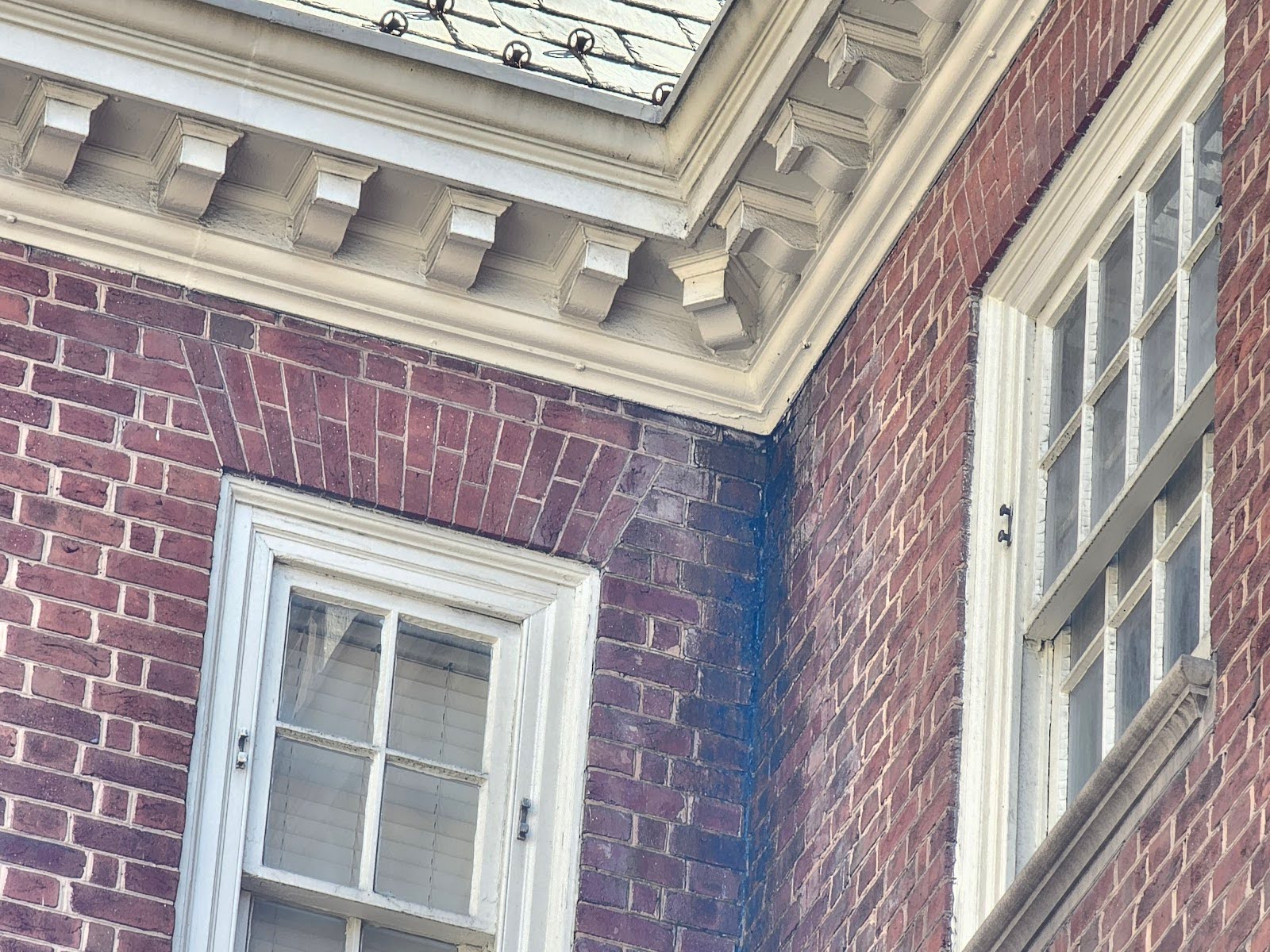
Around the edges of the dark water stain, you can also see signs of efflorescence. Efflorescence is generally a white-ish cloudy type of effect like a salt deposit. In fact even though it’s not the typical sodium chloride table salt that we are most used to, it’s actually a type of salt.
A view of another inside corner, at the same building, follows below. This particular corner, shown here, is not affected by leakage through the built-in gutter. This serves as a good counterpoint or comparison.
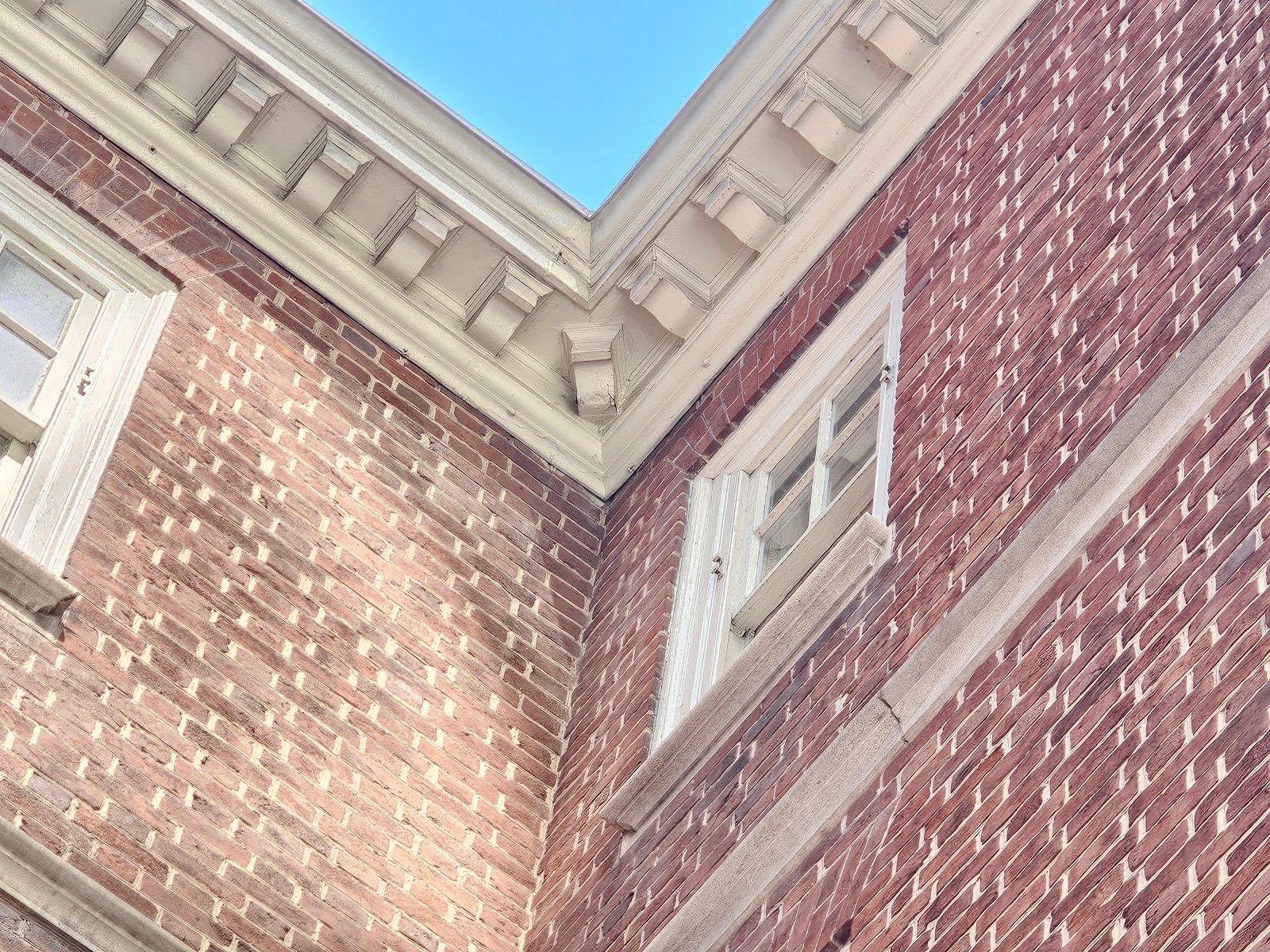
You can see the edge of this building at the right side of the photo below. The cornice butts up against an approximately 6 inch edge of the adjacent building. The adjacent building is set forward proud of the building that we are discussing today. That building to the left has a Scupper and a downspout. The Scupper runs through from the interior flat roof, to and through the parapet to a sculpture collection box. From there, the water runs down to the underground collection pipe through the downspout.
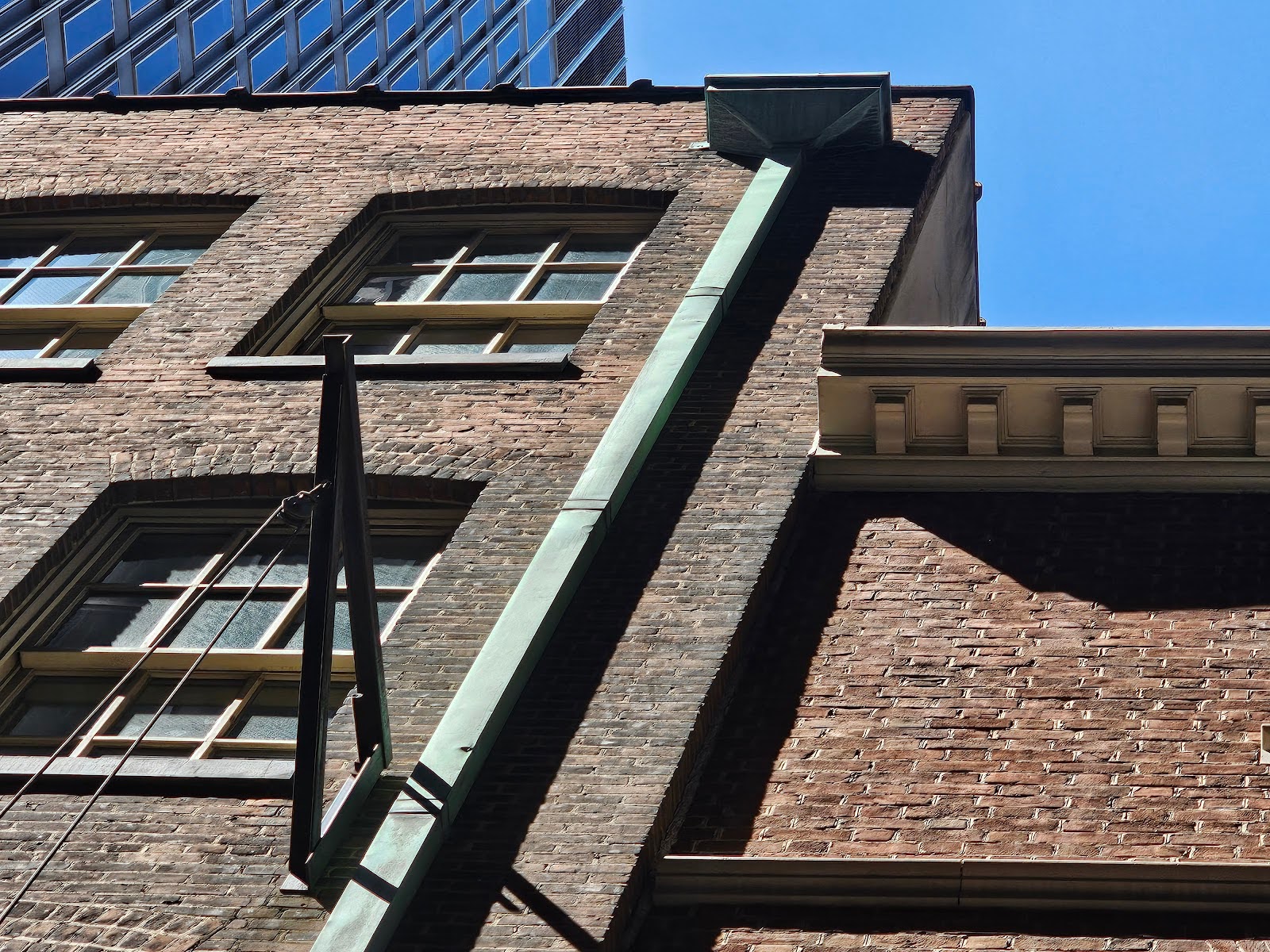
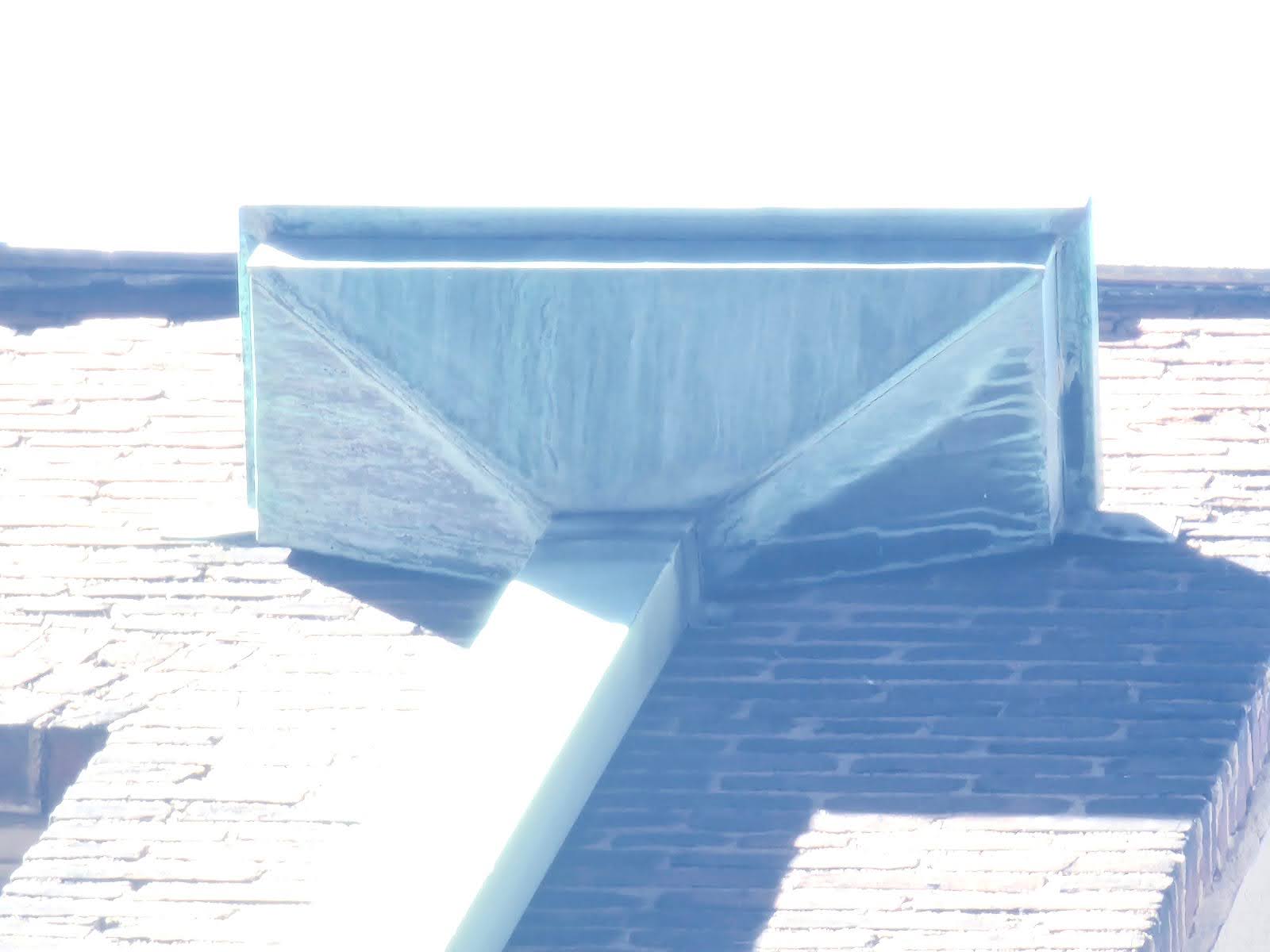
A closer view of the underside of that Scupper collection box is shown in the picture below. The Scupper is built with a copper metal and you can see the blue patina from oxidation. Unlike the oxidation of iron or steel, in the firm of rust, people actually prefer or like the aesthetic of oxidized copper.
We provide this information here on our blog, and our website, to help our customers and future clients, and we recommend every building owner in DC who values the longevity of their roof (and their investments) and building use a contractor who values the simple and important principles of proper roof construction like Dupont Roofing DC. Our company specializes in flat roofing here in Washington DC and we’re happy to help building owners of almost all types.
Learn more about our company and the proper techniques of working with roofing on historic buildings in Washington DC here on our blog at DupontRoofingDC.com, and you can call us at (202) 840-8698 and email us at dupontroofingdc@gmail.com. We are happy to help and at least talk through options.