Shingle Roofs Without Drip Edges: Risks and Concerns
In the commercial roofs that our company normally works on, the edge of the roofing membrane needs to be terminated with a drip edge, which feeds into a gutter. That type of detail is also needed in most types of configurations and applications at residential roofs, as well. Most residential roofs are made with shingles. There are exceptions because different types of systems can also be interspersed or applied within a residential roof plan.
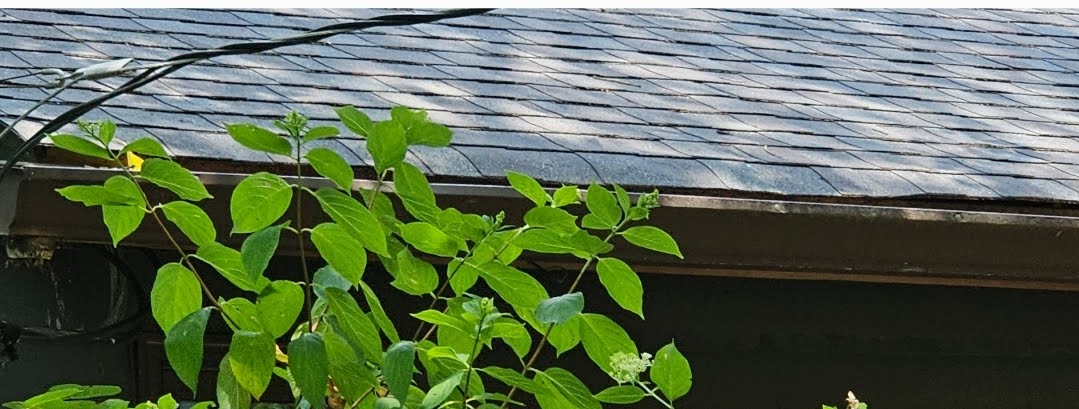
In the two different pictures below, we show two different types of residential roof terminations at the eave edge of a gable roof. This particular type of roof termination runs along the non-gable side of the roof. The eave side of a gable roof runs horizontal at the lower edge at the bottom of the roofing planes, on each side of the building. In contrast, at the opposite ends or perpendicular ends of the building, the gable sides, go up like a triangle.
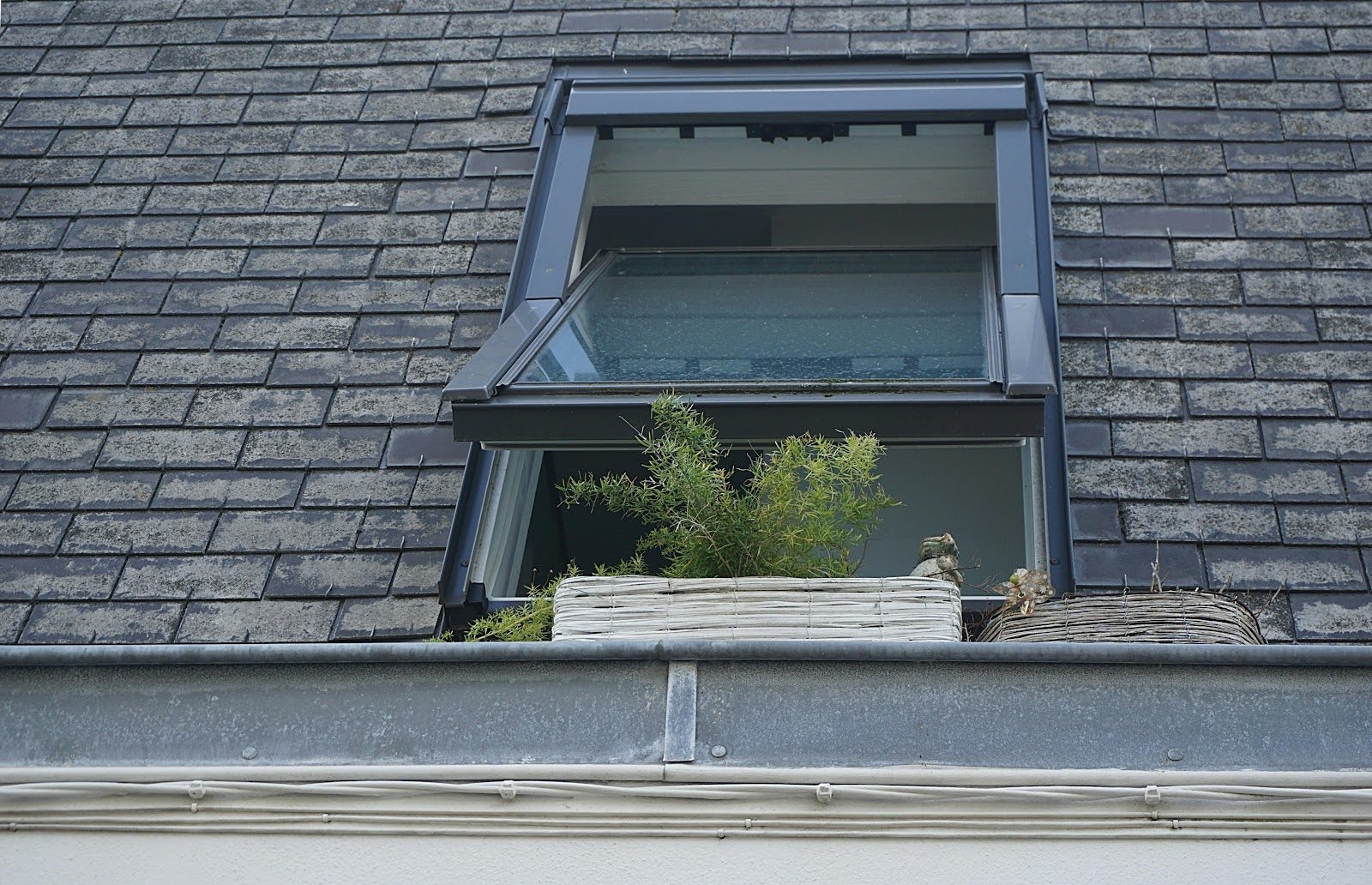
The next picture below shows a very similar eave of a residential shingle roof. These roofs are clad with systems that are completely different from the typical low slope or flat roof. but they have some similarities: In a commercial roof, instead of having an underlayment paper and individual small shingles on top, the membrane will generally be continuous. Even where there are roll materials, the rolls will be much larger and will be continuously joined along a seam.
Here though, one of the big differences is all of the individual shingles are set like scales on a fish. Along that eave though, just like the low rear termination of a typical Washington DC rowhome flat roof, the membrane needs to be terminated. The membrane ends and then runs over the edge of the roof decking.
In the picture below, you can see that the original installer of these shingles skip the step of installing a drip edge termination. A drip edge is a type of flashing that basically allows that membrane to be continuously sealed, below the shingles themselves. The water from rain and precipitation will generally run over those shingles and then drip from the roof edge, either off the roof onto the ground or back onto the building facade. Where there’s a gutter, it will collect the majority of that water and run that water away, by letting it flow in a controlled manner.
If you look closely in the next picture below, you can see that the underlayment paper still remains. It just doesn’t fully cover the edge of the roof deck boards. The roof deck boards are installed both on low slope flat roofs and on residential pitched roofs. Essentially, on top of the rafters, which are the framing boards that support the roof itself, there will be a roof decking. That roof decking is just a thin type of wood that gives a flat surface or planar surface for the roof membrane or roof system to be connected.
In the example of a shingle roof, the individual shingles are nailed to the roof decking. If the roof decking wasn’t there then the shingles would essentially sag between each of the rafters and only be able to be nailed once every 16 inches.
That particular spacing assumes that the rafters are installed at 16 inch centers, but in some cases rafters can even be installed on wider spacing layouts or smaller. Where slate shingles are used, for example, they’re even heavier than asphalt shingles and a closer spacing of rafters will generally be used instead. In cheap tract homes out in the country suburbs, sometimes they will install the roof rafters on a 19-⅜” spacing to save money.
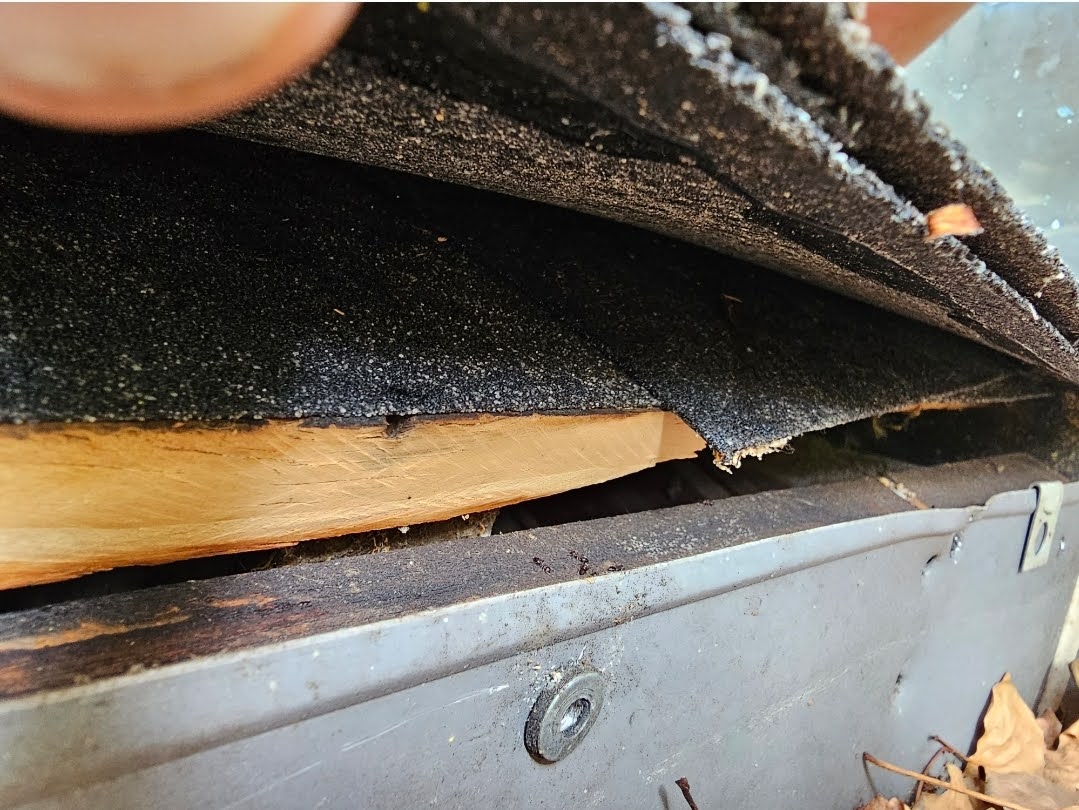
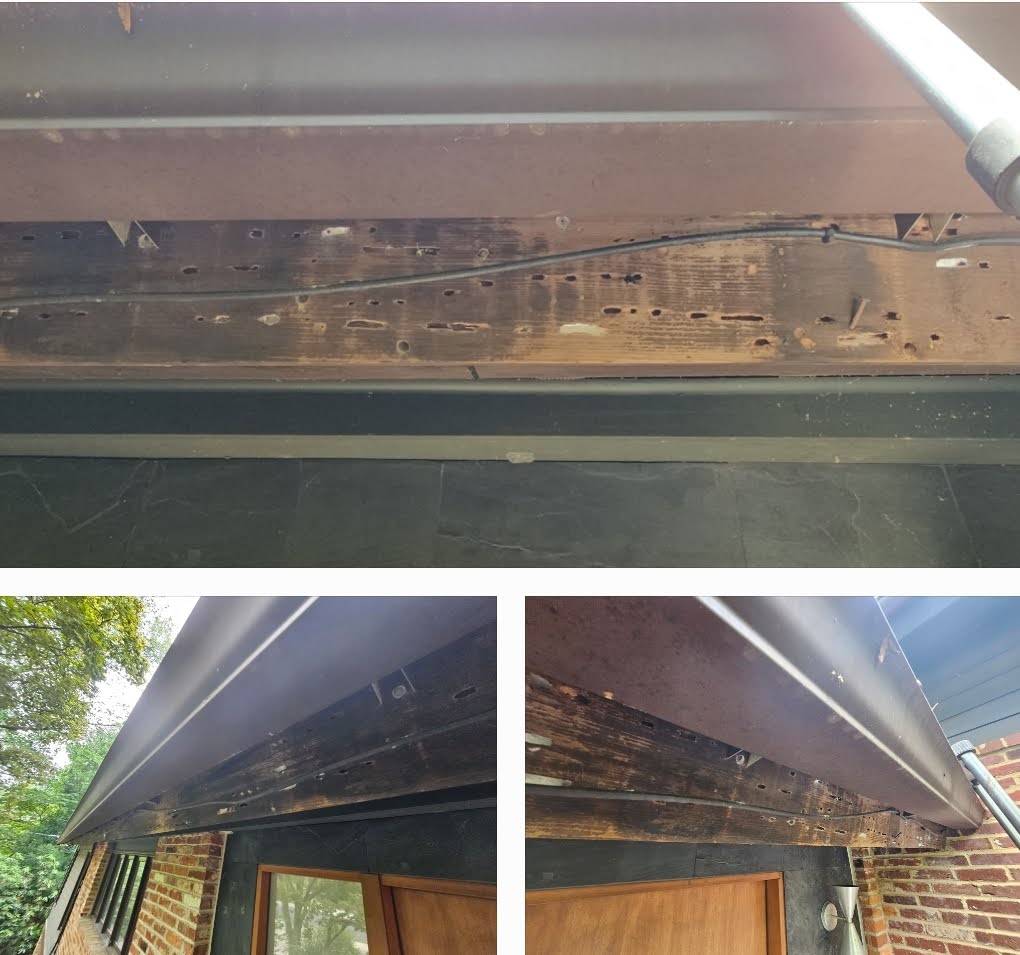
In simple terms, we’ll just start by saying that omitting the drip edge and or a type of flashing to span underneath of the roofing felt paper into the gutters is a bad idea. It leads to leakage and water that runs down the face of the fascia boards. Fascia boards are intended to be an exterior installation that can handle exterior weather conditions, but they aren’t intended to be a pathway for water to run across at every rain or precipitation cycle.
Here, since the roof shingles do not extend or have flashing to create a barrier between them and the gutter, water will end up being in contact with this susceptible wood. It should have been covered by a drip edge flashing. We’ll talk more about this in this coming week and we’ll look at some of the damage that’s occurred by not having proper flashing.
We provide this information here on our blog, and our website, to help our customers and future clients, and we recommend every building owner in DC who values the longevity of their roof (and their investments) and building use a contractor who values the simple and important principles of proper roof construction like Dupont Roofing DC.
Our company specializes in flat roofing here in Washington DC and we’re happy to help building owners of almost all types. Learn more about our company and the proper techniques of working with roofing on historic buildings in Washington DC here on our blog at DupontRoofingDC.com, and you can call us at (202) 840-8698 and email us at dupontroofingdc@gmail.com. We are happy to help and at least talk through options.