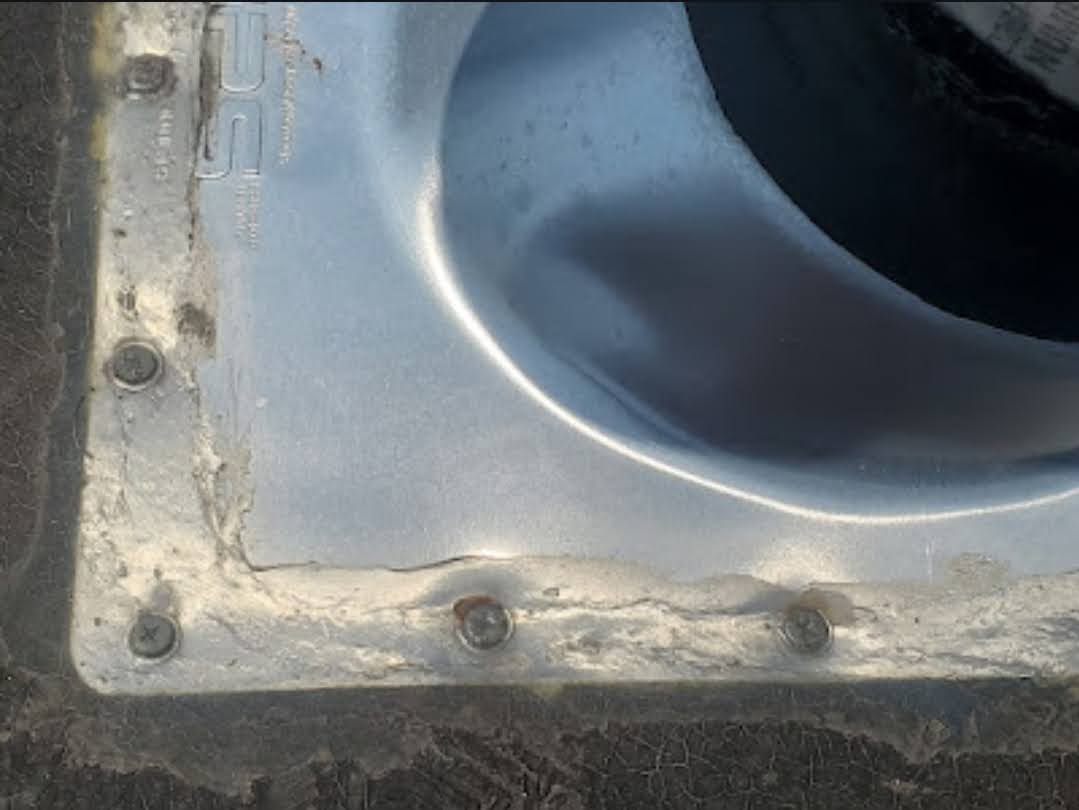
Why Missing Drip Edges on Shingle Roofs Can Cause Serious Damage
This past week, we looked at two different residential type buildings where the shingle roof installer just omitted the installation of a drip edge at the roof termination. This is a big mistake. They did it as a shortcut, it seems, to save a few dollars, but it doesn’t save enough to make it worth it. To us we look at it like not changing the oil in your car because oil is expensive.
It’s true, in recent years, the price of a quart of oil has gone up significantly, but it’s still not worth not changing the oil. It doesn’t make sense. It will basically ruin the vehicle’s motor all just to save a few dollars. Here, by skipping this important step of installing the flashing, they caused significant damage to the fascia and the subfascia.
We talked about this this past week, but just a quick recap: the fascia board essentially creates an enclosure to the edge of the roof rafters. The gutter is mounted on top of the fascia. Even though the fascia board is an exterior type of wood, it can’t resist concentrated flows of rainwater and precipitation without accelerated deterioration. Here, by skipping the step of just installing the drip edge to create a proper flashing from the roof system to the gutter, they caused the fascia boards to be wet, repeatedly, through a multitude of different cycles of precipitation. Today, we’re going to look at pictures of the specific damage.
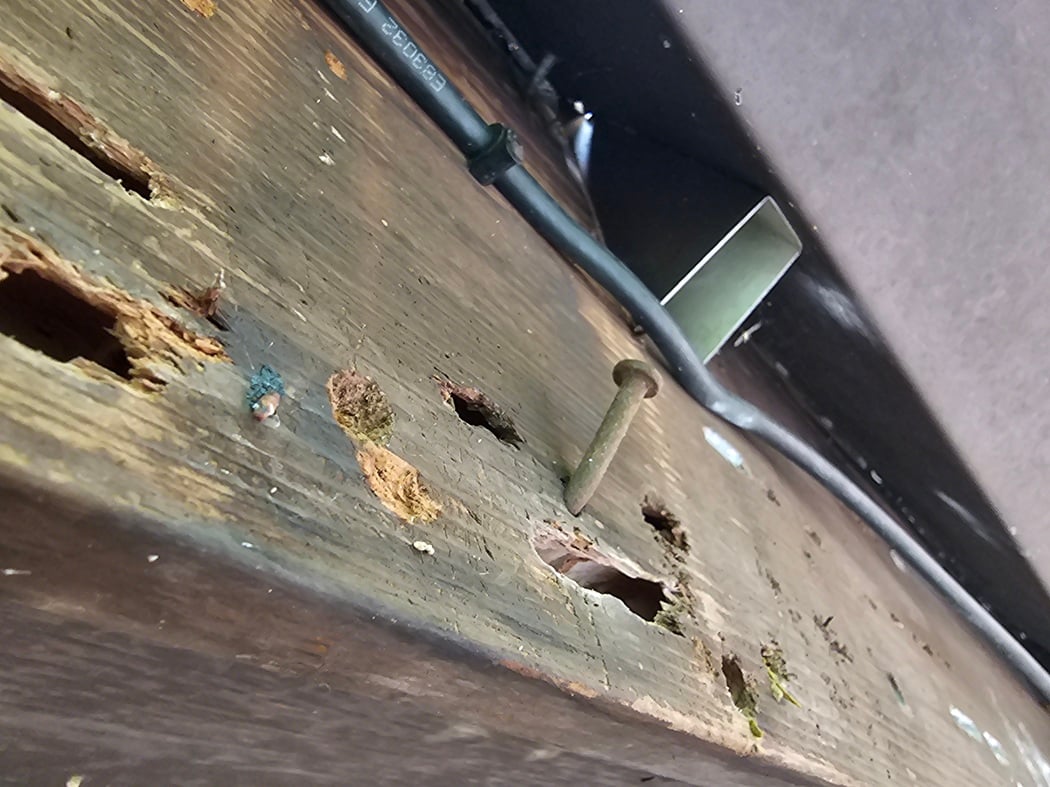 At this particular area of installation, the underside of the soffit is sheathed with plywood panels. Because there’s excessive moisture at the soffit, this area is also rotted out as well. There’s always a debate, in the background of all of these decisions, whether to use real or synthetic materials. We strongly recommend against the use of vinyl sidings and things like that. It just looks like plastic. Those kinds of materials don’t belong on a decent building.
There are advantages to both options, between natural wood and cementitious siding type materials. The cementitious materials are highly resistant to exposure to moisture and the exterior elements, but they need to be painted and they don’t really have options for staining like natural wood.
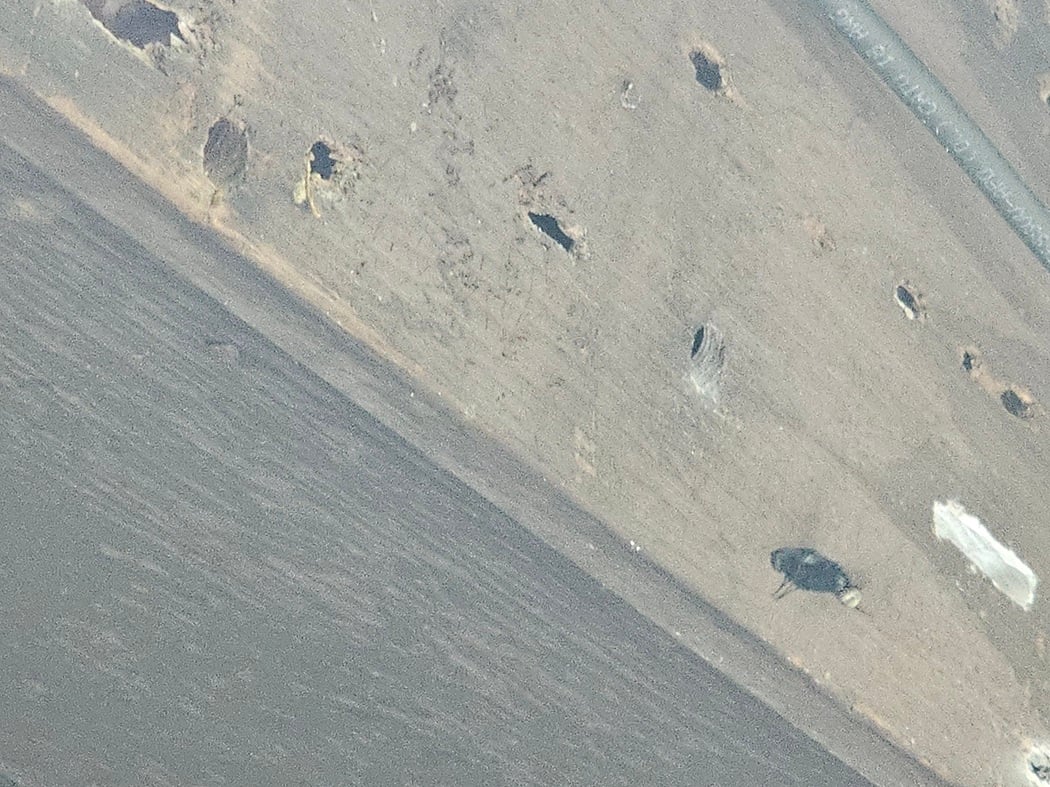
If you look closely in the picture below, you can see that there’s a carpenter bee flying outside of one of these holes, looking for a point of reentry. We believe this is a carpenter bee because it looks very similar to a yellow jacket. One of the differences between carpenter bees and yellow jackets is that yellow jackets look like they have hair all over them. Meanwhile, carpenter bees have a dark shiny abdomen that some people say looks like it has a shiny black butt.
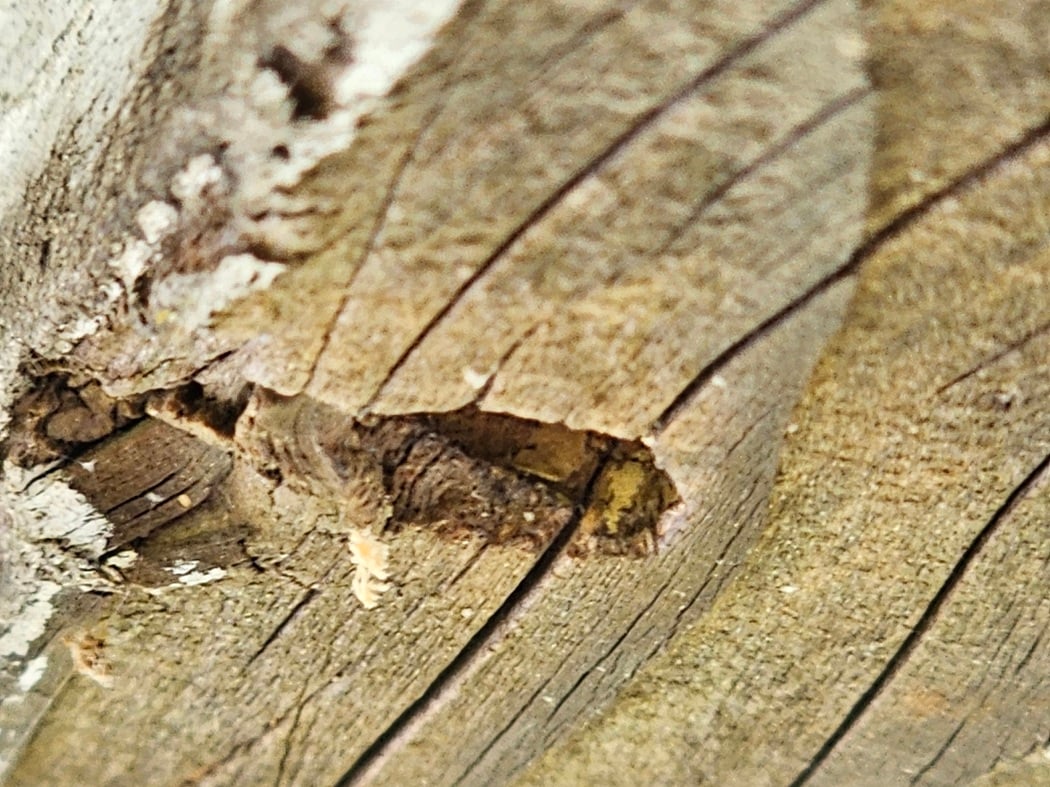
In some cases, some different types of wood will be eaten by a greater variety of different types of animals. Some animals will be more inclined to eat the wood if the wood is exposed to water like this. In the case of the carpenter bees, they are using it for a nursery area to reproduce and grow their offspring. Termites, on the other hand, will literally eat the wood as food. Essentially, they’re chewing it up to consume it, and they strongly prefer wet wood or wood that has been damaged by exposure to water.
There’s a link here between having a missing drip edge or flashing termination and the wood rot, the water damage, and being eaten by pests and animals. The chances and tendencies for wood trim or siding, as part of the building, to be destroyed by creatures increases significantly if the wood is not protected by the roof system, as intended.
Here, you can see a picture of an angle, looking up to the underside of the eave of the roof. The soffit is uncovered and the screen that was originally installed needs to be replaced. We did these repairs, but from this angle, it gives you a few to understand the construction a bit better. Essentially, the framing of the roof system is set upon the ceiling joists.
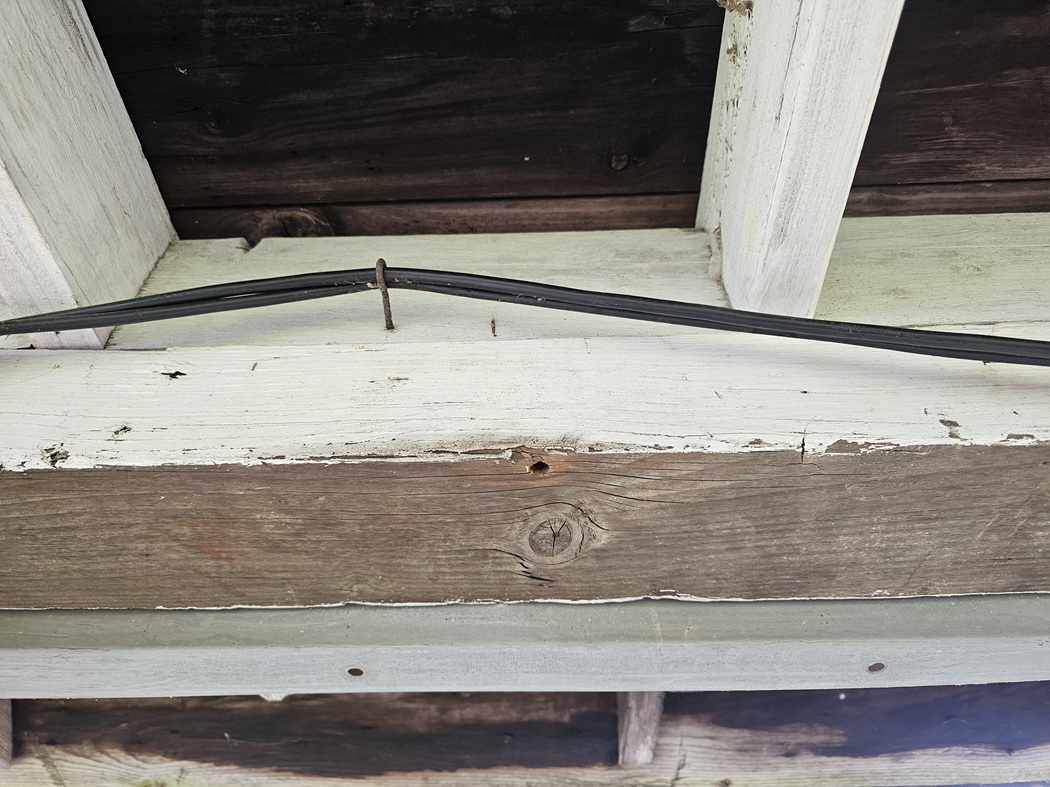
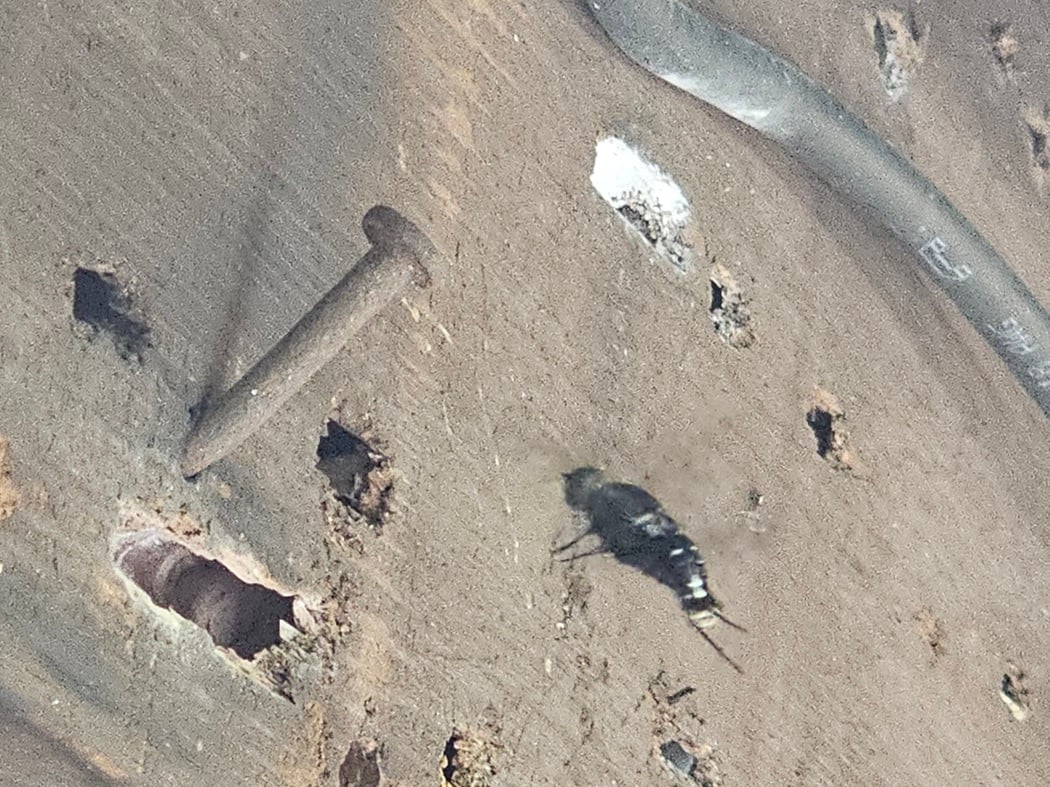
A dry rotted area of the plywood soffit is shown in the next picture. A portion of this wood has been painted, but more than half of the area shown remains unpainted or the paint at that area that was originally applied is now delaminated.
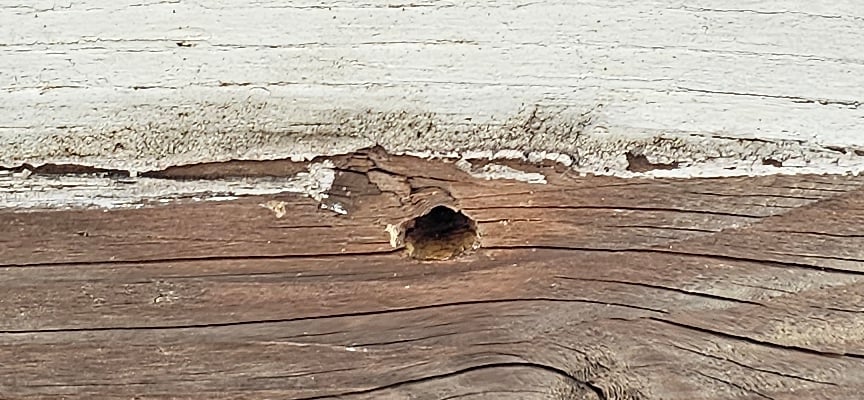
As you look closely at this portion of the wood soffit, you can see there’s damage caused both by excessive moisture exposure and by insects. All of this type of damage though could have been prevented.
We provide this information here on our blog, and our website, to help our customers and future clients, and we recommend every building owner in DC who values the longevity of their roof (and their investments) and building use a contractor who values the simple and important principles of proper roof construction like Dupont Roofing DC.
Our company specializes in flat roofing here in Washington DC and we’re happy to help building owners of almost all types. Learn more about our company and the proper techniques of working with roofing on historic buildings in Washington DC here on our blog at DupontRoofingDC.com, and you can call us at (202) 840-8698 and email us at dupontroofingdc@gmail.com. We are happy to help and at least talk through options.