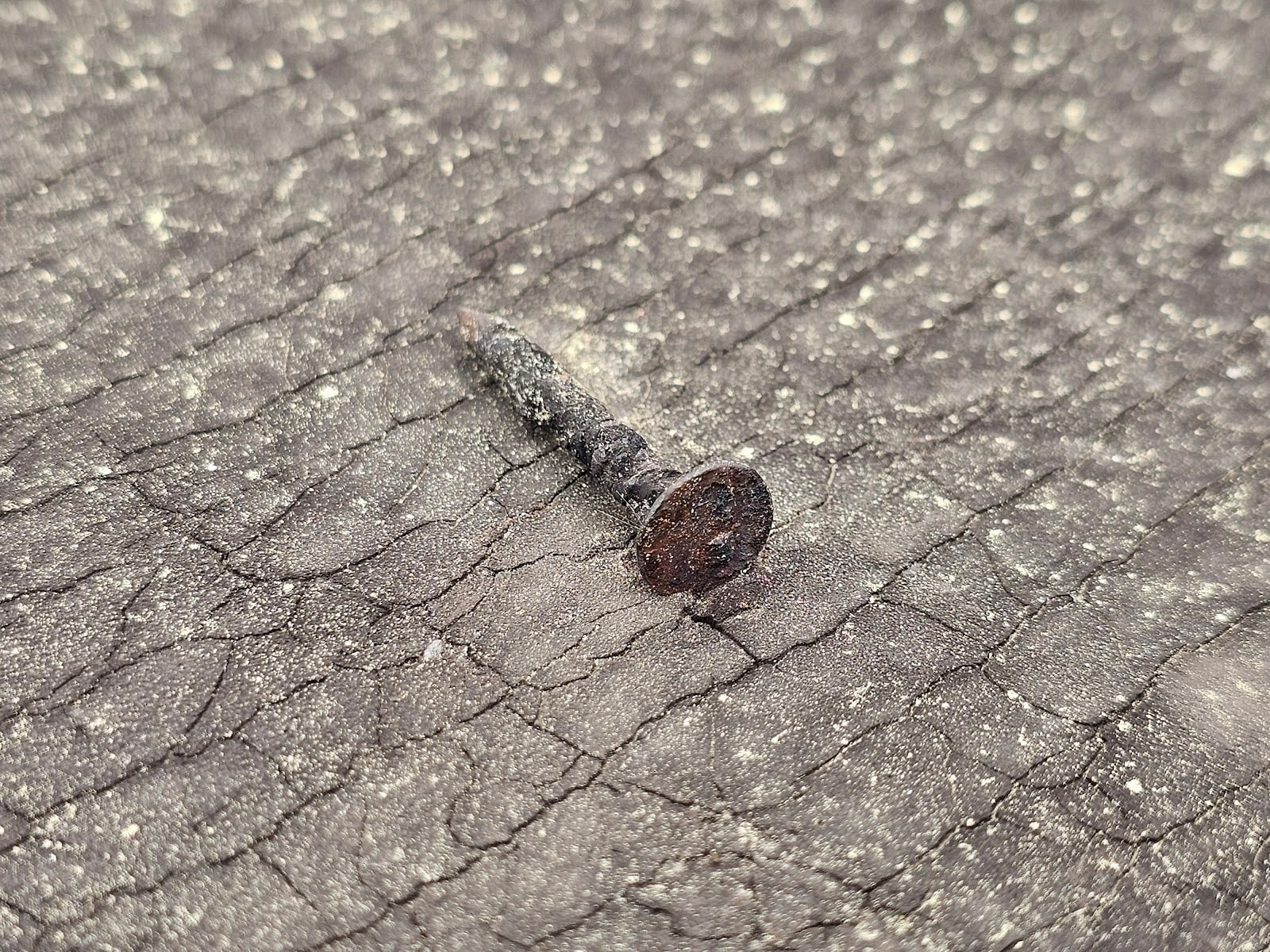
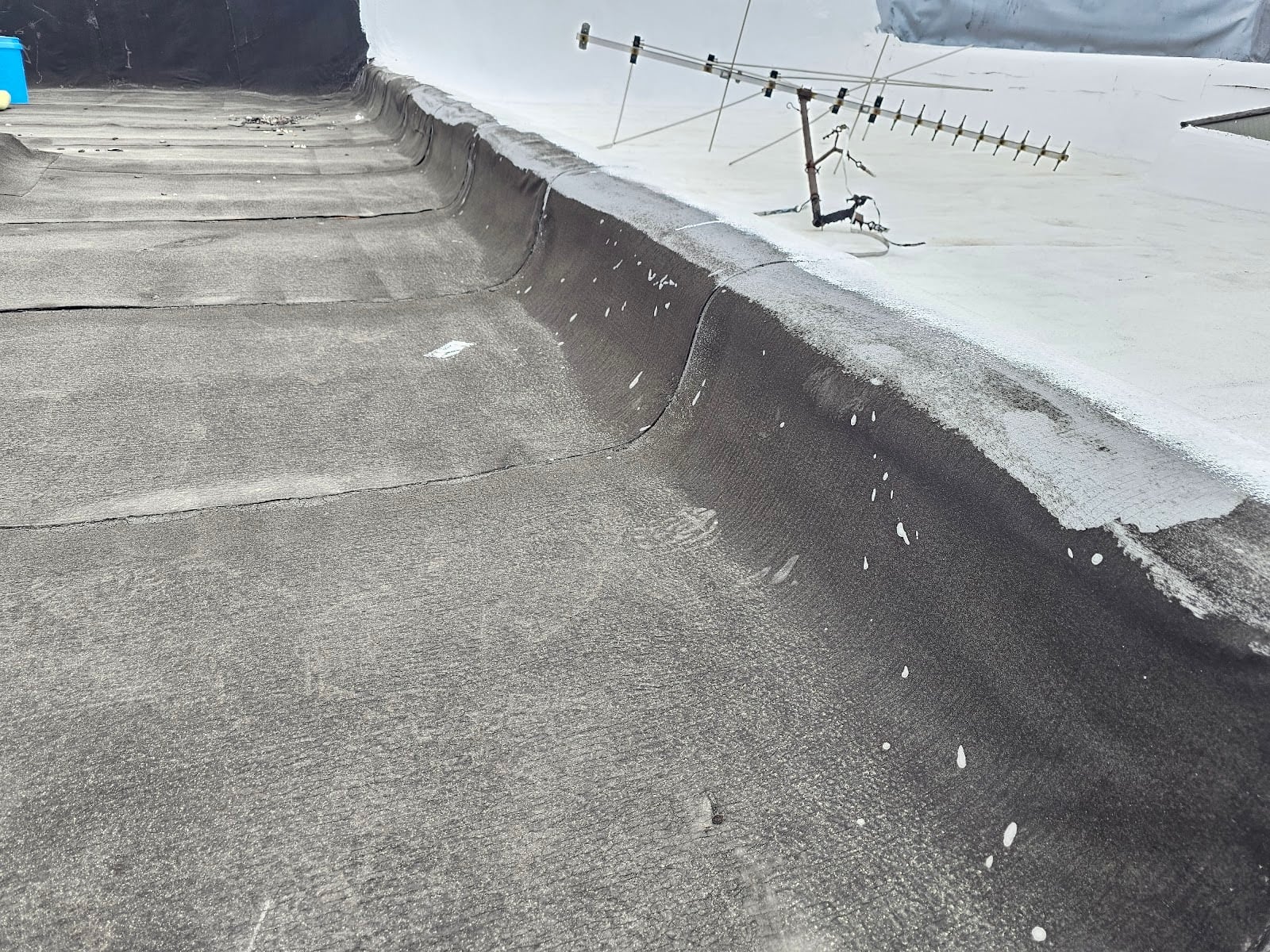
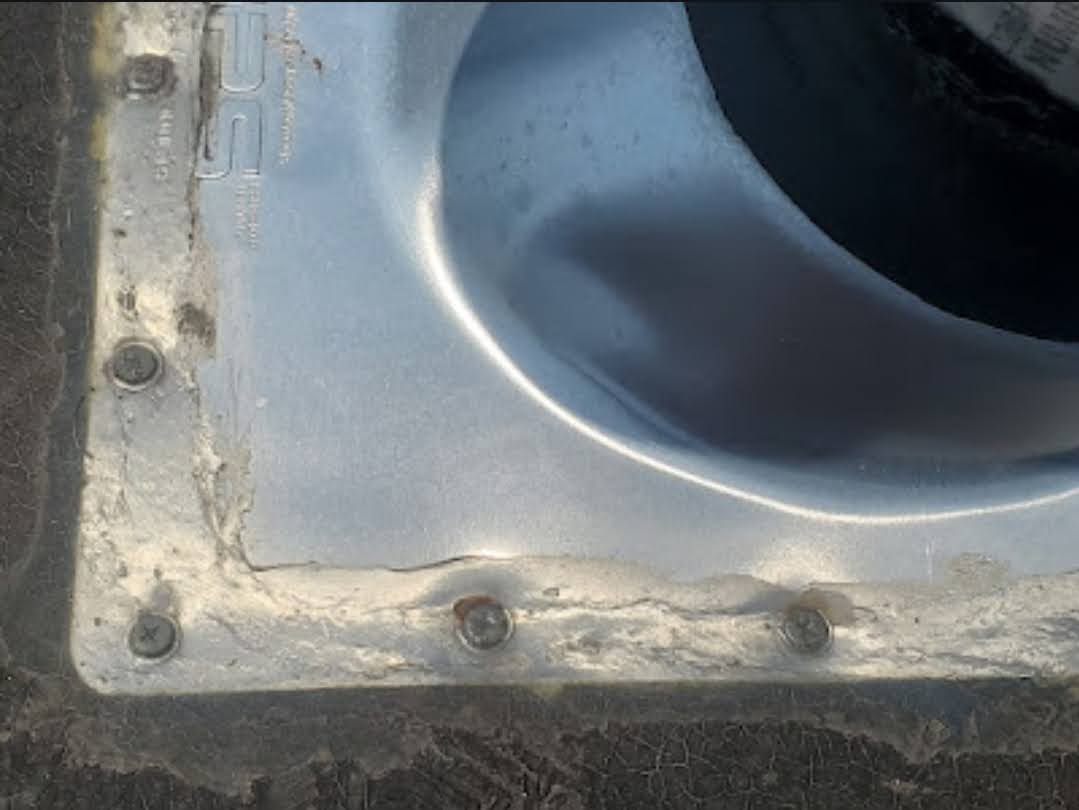
Built Up Roof and Ballast in Older Systems
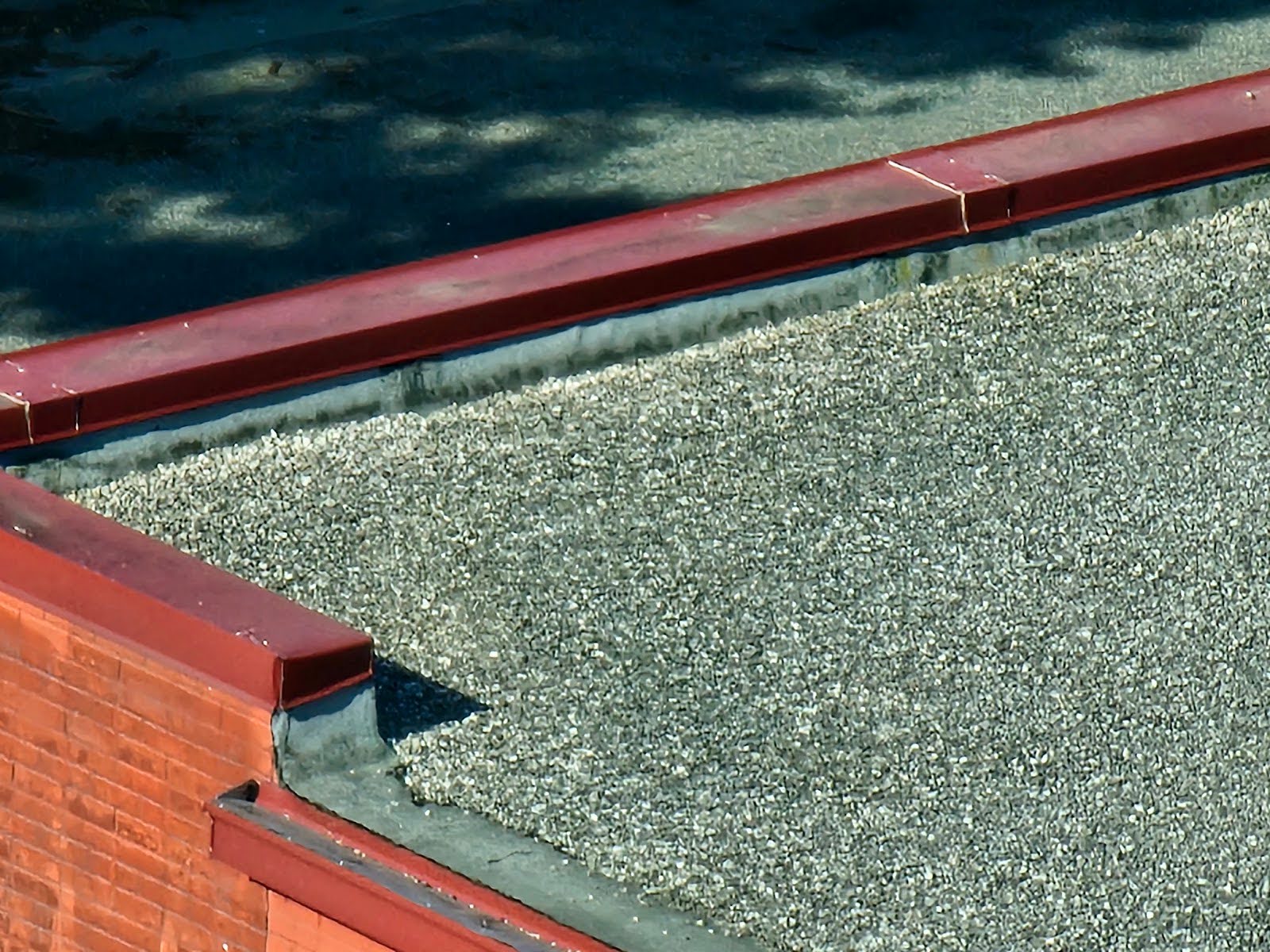
Today, we’re looking at some interesting photographs of elevated views of an old low-slope commercial roof. Old built-up roofs needed to be covered with a ballast instead of just being fully adhered like many modern roofs. Old materials also lack intrinsic characteristics or elements that protect or at least deter from accelerated deterioration. The main driving force of this accelerated deterioration is ultraviolet light found in typical sunlight. Even high performance modern materials aren’t perfectly protected from exposure to UV.
Technology has improved over the past many generations, but even the best materials today still deteriorate from exposure to uv. The ballast covers the roof. Therein, the roof membrane itself is not exposed to sunlight. It’s essentially shaded by the rock or ballast on top of it. The sunlight doesn’t really reach the roof through a thick covering of ballast and therefore stays protected from the damage caused by ultraviolet rays.
The picture below shows the roof of a large building covered with a stone ballast. Some stone ballast materials are selected because they are particularly lightweight. Most stone that were commonly used were still typically pretty heavy. There are some types of igneous rock though that are a little bit lighter and can be used as a ballast material. The volume of the needed material is significant though. It’s not just one truckload of ballast, up on a roof like this. Instead it’s really an immense amount of stone
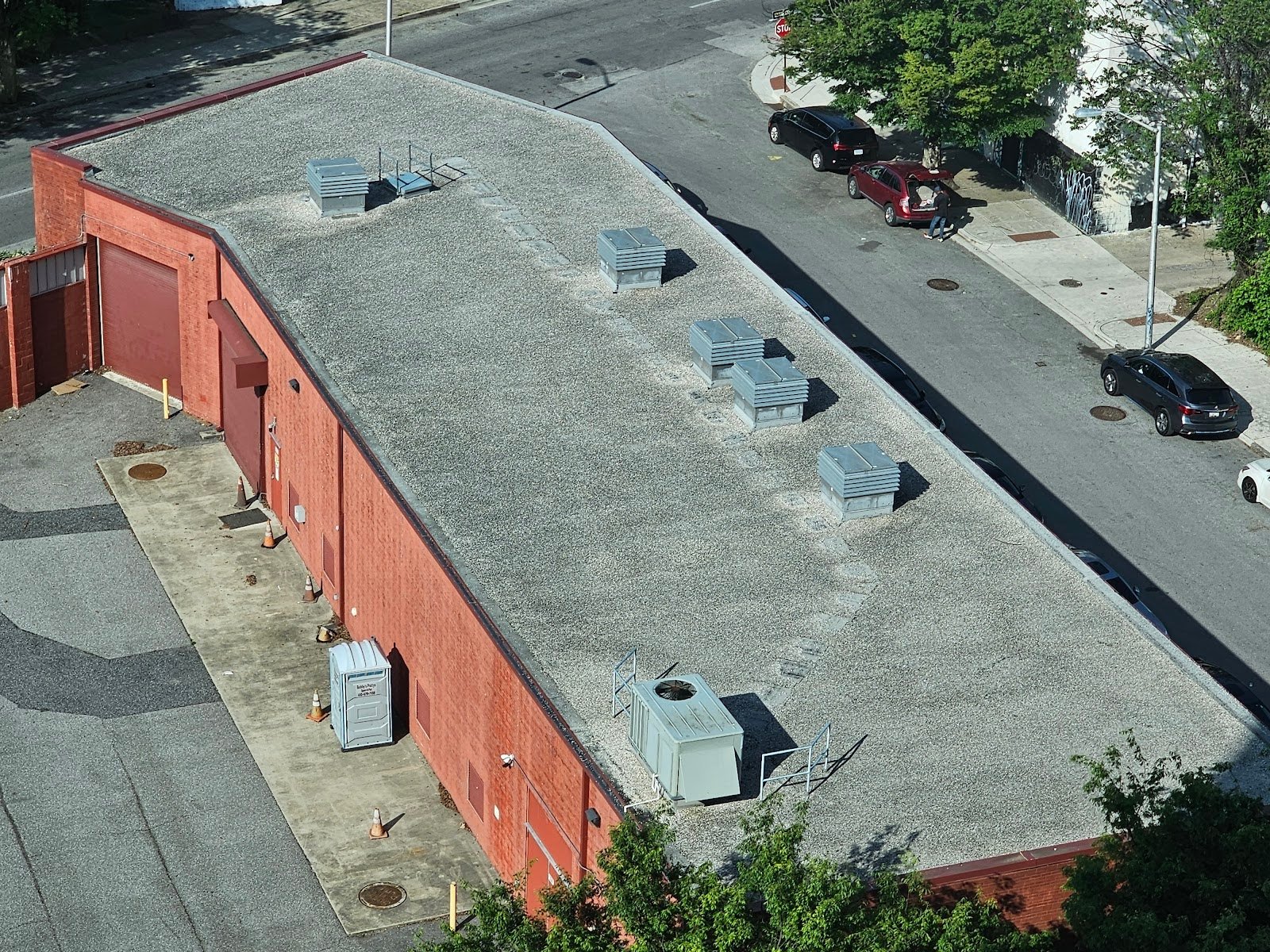
You may find the actual calculation surprising. This particular building happens to be roughly 95 ft x 50 ft. There are some odd angles at the upper end of the building shown in the picture above. Those angles make the calculation a little bit more complicated, but for simplification we’re just going to say that the building has roughly a net footprint of 5,225 SF.
At a total depth of about three to four inches, we will calculate the depth in feet as 0.30 ft. That calculates to about 1,567 cubic feet. A typical full size pickup truck with a large bed can carry a payload of stone of roughly one cubic yard. Each cubic yard has 27 cubic feet. If we divide the total of 1,567 cubic feet by 27 cubic feet, we have a total quantity of yards.
Here, in this example, that comes out to be about 58 cubic yards. That then means that they would need about 58 truckloads. That’s not a small amount of stone or materials. Regardless of what type of materials it is, 58 truckloads is a massive amount. Obviously, in a circumstance like this, the contractor who installed the roof would not go and drive 58 individual truck loads. Instead, they would order massive quantities of deliveries in roughly six 10 cubic yard trucks. That’s about the largest size of load you can have for stone like this. Trucks can carry much larger cubic volumes of load, but the weight here becomes a constraining factor.
Trucks cannot be loaded over certain weights, depending on your classification, on public roads. Overloaded trucks can be heavily fined because their tires will literally damage the asphalt and sub base of the roads, when the truck is over-loaded. This specifically applies to public streets and highways, of course. Private roads may have their own rules but those rules are not necessarily relevant to DDOT. This type of deterioration and damage happens over time but each truckload that’s overweight, from a DDOT perspective, leads to accelerated deterioration.
After working in operations of construction for a while, you might start to feel like construction and trucking and hauling are directly intertwined. Construction isn’t really possible to be done in a productive way with significant amounts of materials unless you understand and work within the framework of trucking and hauling. That adjacent industry is a linchpin to our industry.
The picture below shows a view near the center of this massive expanse of aggregate stone.

Although it’s a very large roof, compared to typical Washington DC row homes, the building doesn’t actually have many of the typical complicating services found on rooftops. Here, instead, there is just basically a HVAC unit, a few exhaust fans and and access hatch. In the blog this coming week, we’ll take another look at these items and talk about them in greater detail to explain some of the reasons why they’re used.

We provide this information here on our blog, and our website, to help our customers and future clients, and we recommend every building owner in DC who values the longevity of their roof (and their investments) and building use a contractor who values the simple and important principles of proper roof construction like Dupont Roofing DC. Our company specializes in flat roofing here in Washington DC and we’re happy to help building owners of almost all types.
Learn more about our company and the proper techniques of working with roofing on historic buildings in Washington DC here on our blog at DupontRoofingDC.com, and you can call us at (202) 840-8698 and email us at dupontroofingdc@gmail.com. We are happy to help and at least talk through options.