Pitch Pocket Alternatives for Reliable Roof Penetration Sealing
We have looked at several different types of pitch pocket alternatives over the past few weeks. We also talked about the basics of pitch pockets and how they work. We looked at other examples here last year and the year before on our website, as well.
Today we’re looking at a variety of types of examples of duct penetrations through low slope or flat roofs. We’re also going to go back to look at some of the original examples that started this series to examine the fabrication and assemblies.

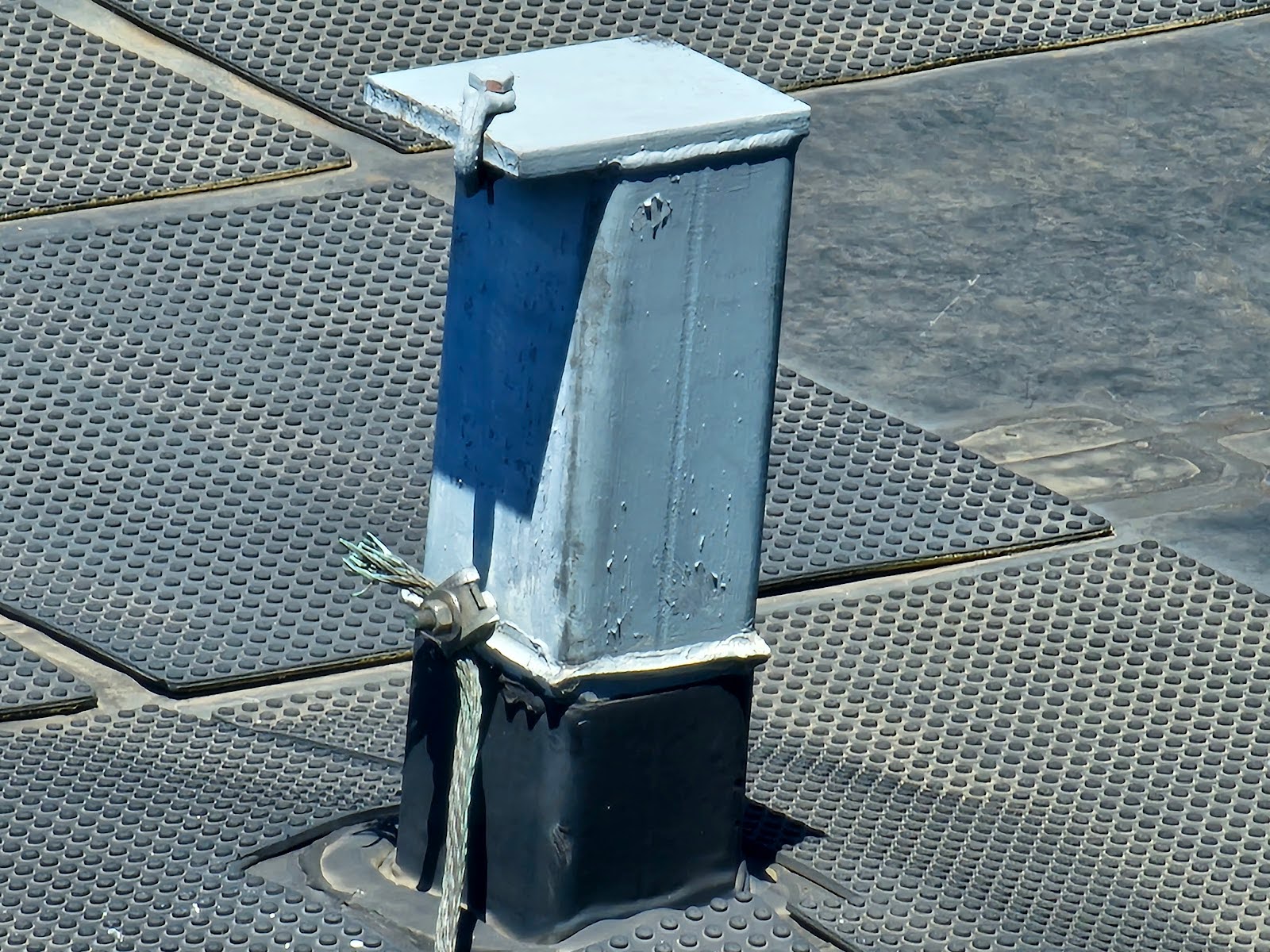
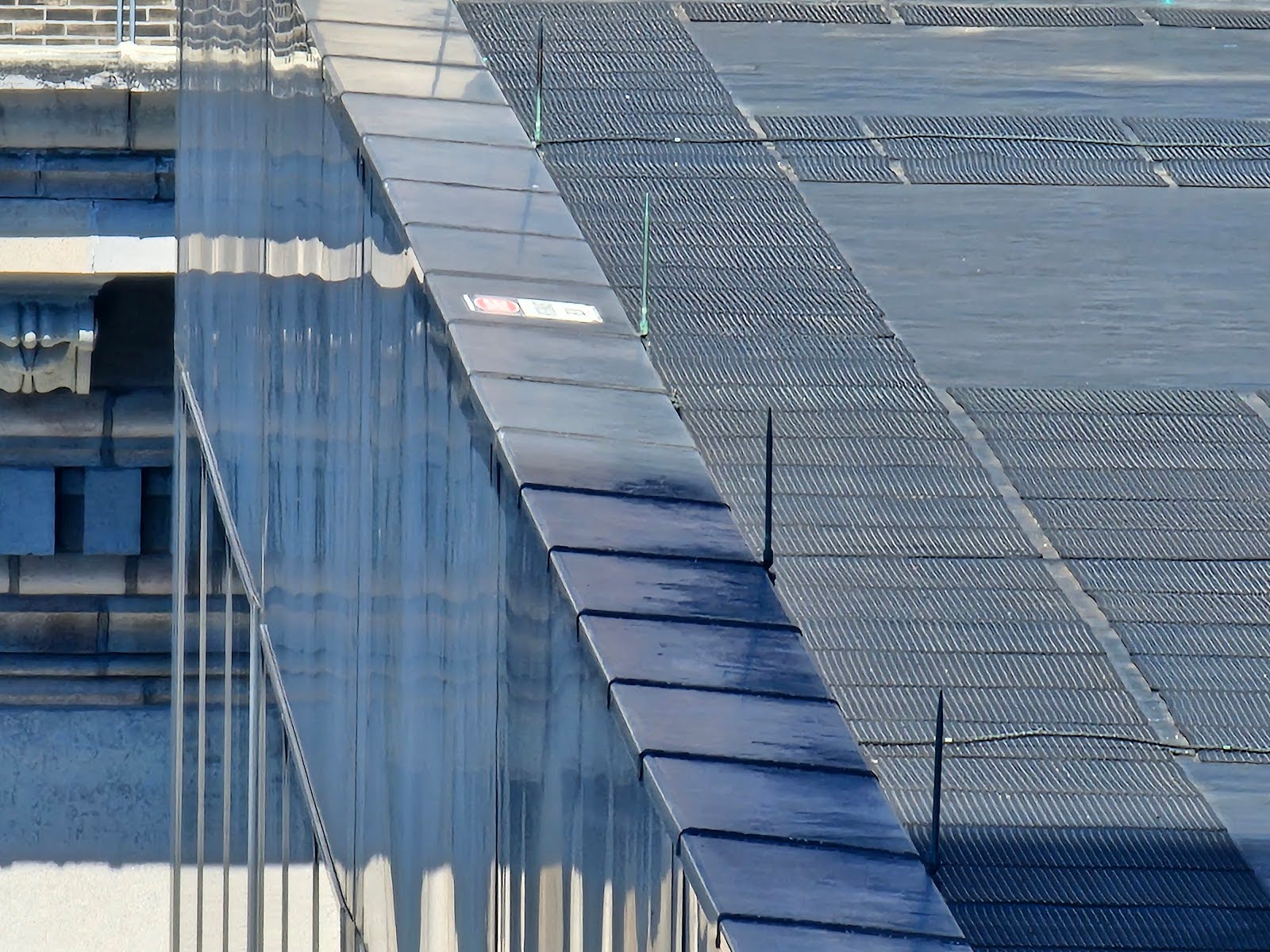
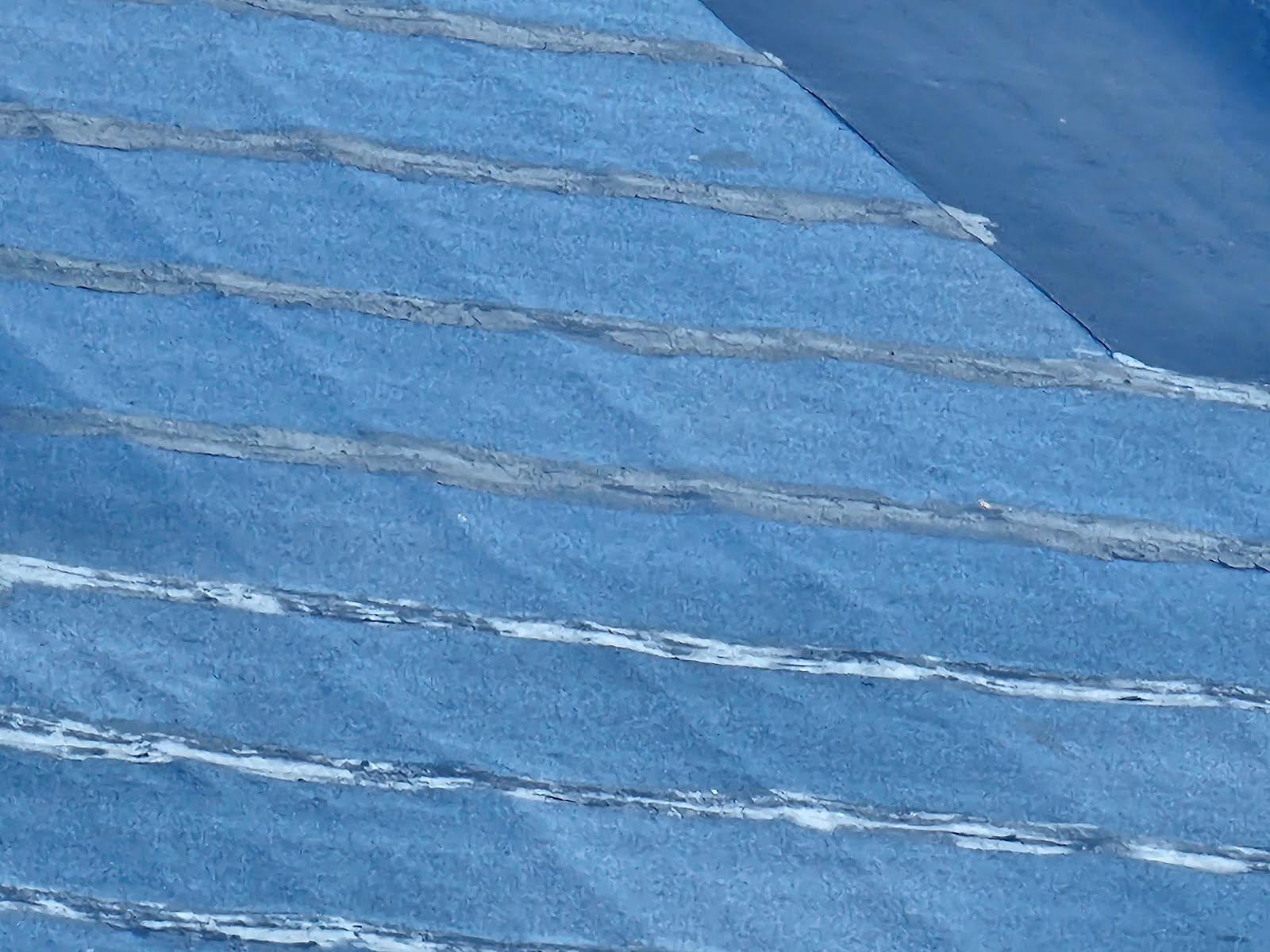
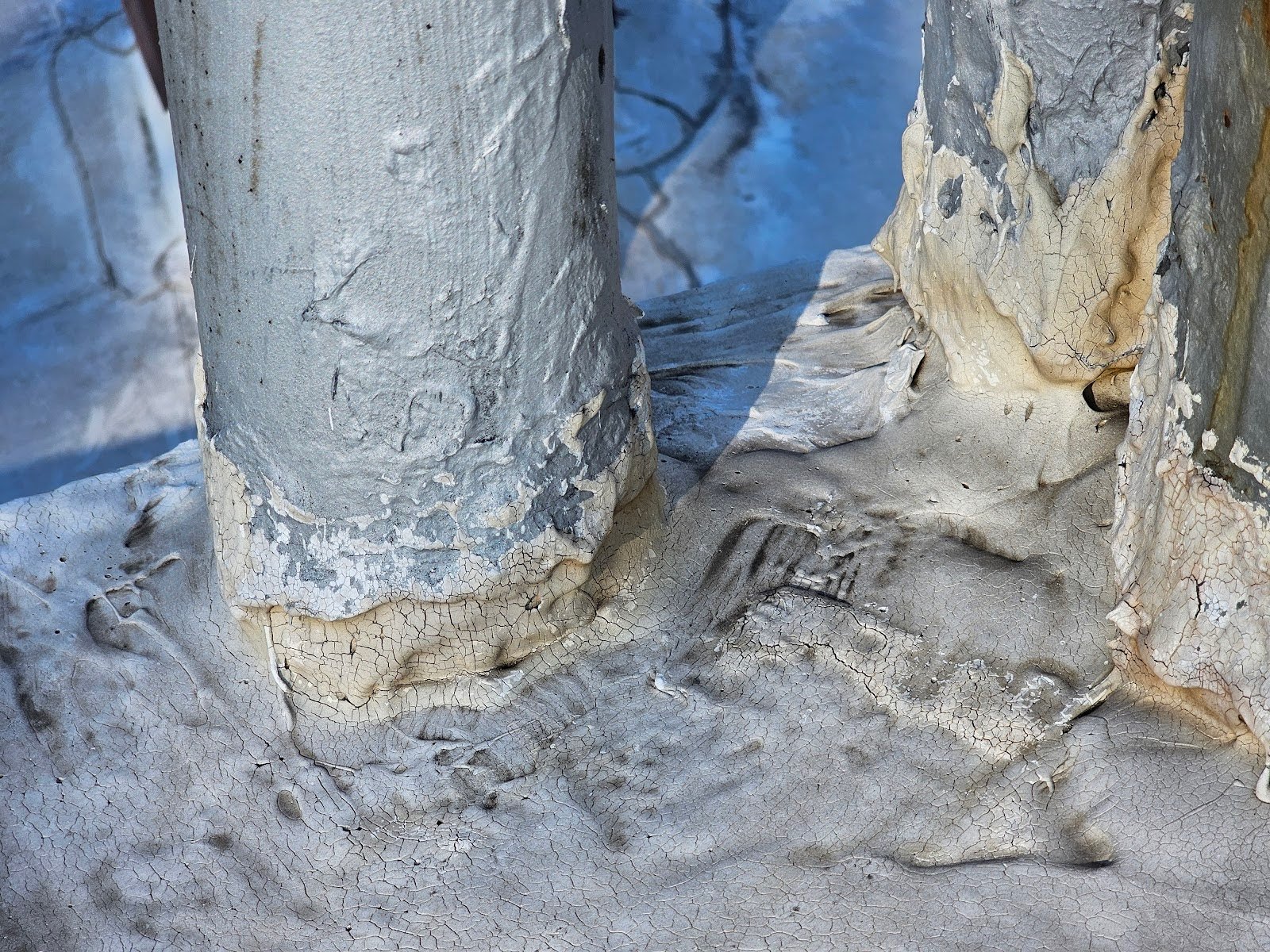
This particular type of duct installation, shown in the pictures above and below, is not totally different from many common types of large HVAC type duct penetrations through a low slope roof. These larger ducts are rarely used in typical row home installations for basic exhaust air. Instead, they are used for the HVAC systems to heat and cool a building. We would roughly estimate that only about 10% of the buildings here in Washington DC use this type of rooftop ducted HVAC system.
We would also strongly recommend against their use because they are typically fraught with problems. Generally, they convey tempered air in either the return or supply ducts to and from the furnace or air handler units. Unlike exhaust gas or combustion air used in larger commercial systems, these ducts move the air for heating and cooling the building. When people choose to put these type of ducts on top of a roof, they’re generally doing it to avoid having to run bulkheads or chases through the interior of the building.
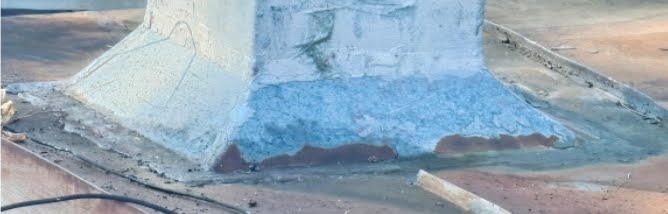
In the first article in this series, we looked at an installation similar to the one shown below. In the first installation we looked at only two ducts were installed into the one curb area. Here there are three but they’re slightly farther apart. Even though they’re farther apart, it’s still not enough space to be able to conveniently flash around each of the individual penetrations. More space makes it easier to detail this work well.
We explained that it’s difficult for materials used in most roofing systems to bend around odd shaped elements. The one we looked at before was two ducts next to each other kind of like a figure 8 type of context. One of the reasons it is difficult for those materials to function well when they’re installed in an odd shape is that these materials all move with temperature fluctuations. When materials are bent in odd contours that have both concave and convex elements, those materials will often end up separating and pulling away from the substrate as they move through thermal expansion and contraction.
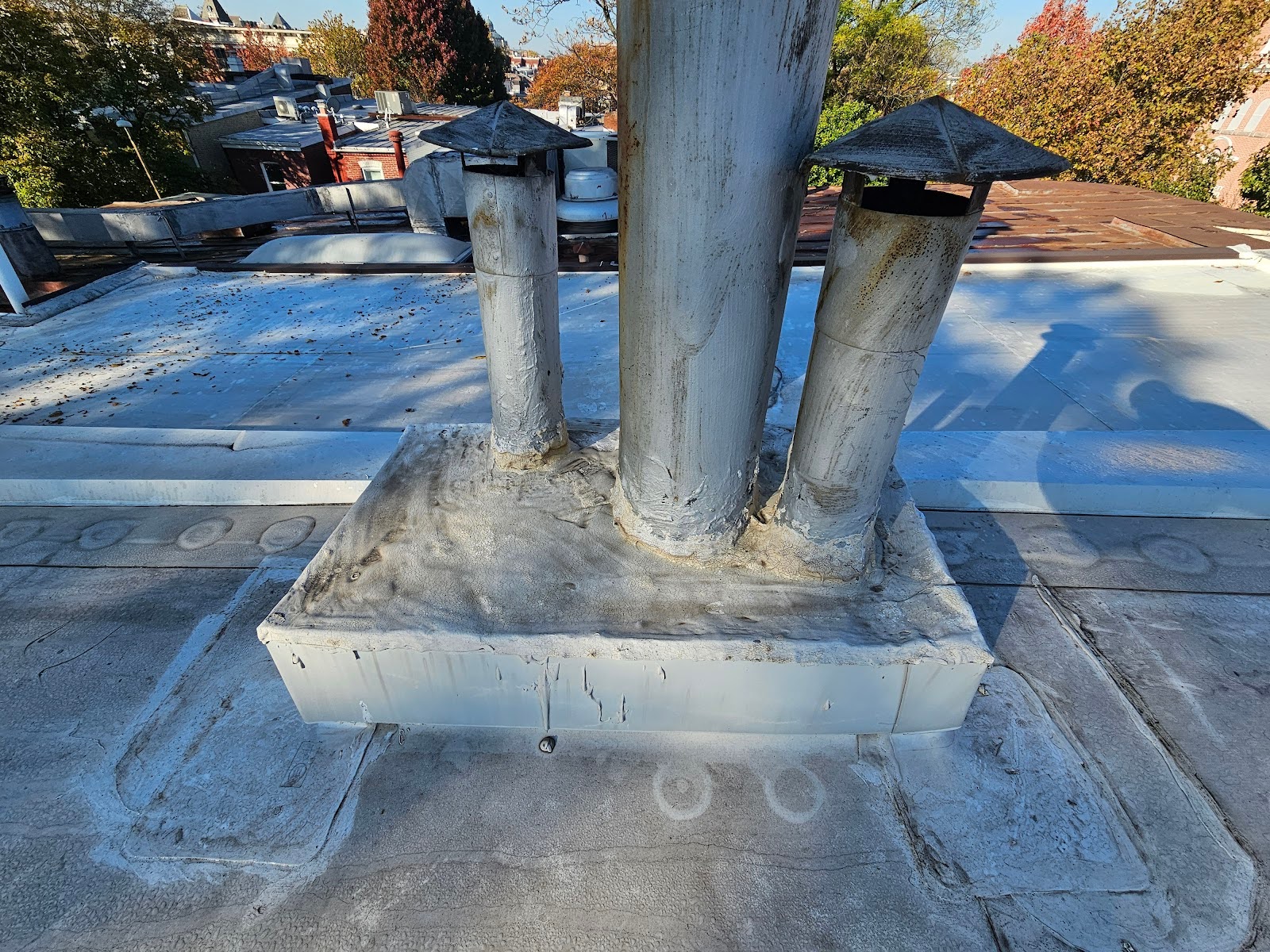
For the most part, HVAC systems ostensibly have little to do with roofing systems. Here though, at this interface they become interrelated. It’s very rare that roofing issues cause problems for HVAC systems. Unfortunately, its common for improper of HVAC system installations to cause leakage through the roof. Often, parts that are penetrations through the roof that go into the building will leak and channel water into the building.
In other words, even if it’s not the responsibility of the roofer or part of the roof itself, HVAC systems can lead to leakage that appears to be related to the roof. In reality though, in most cases, these leaks are related to leaks and parts of the HVAC system itself.
The picture below, for example, shows a picture of the sheet metal at the top of one of the ganged penetration locations of ducts.
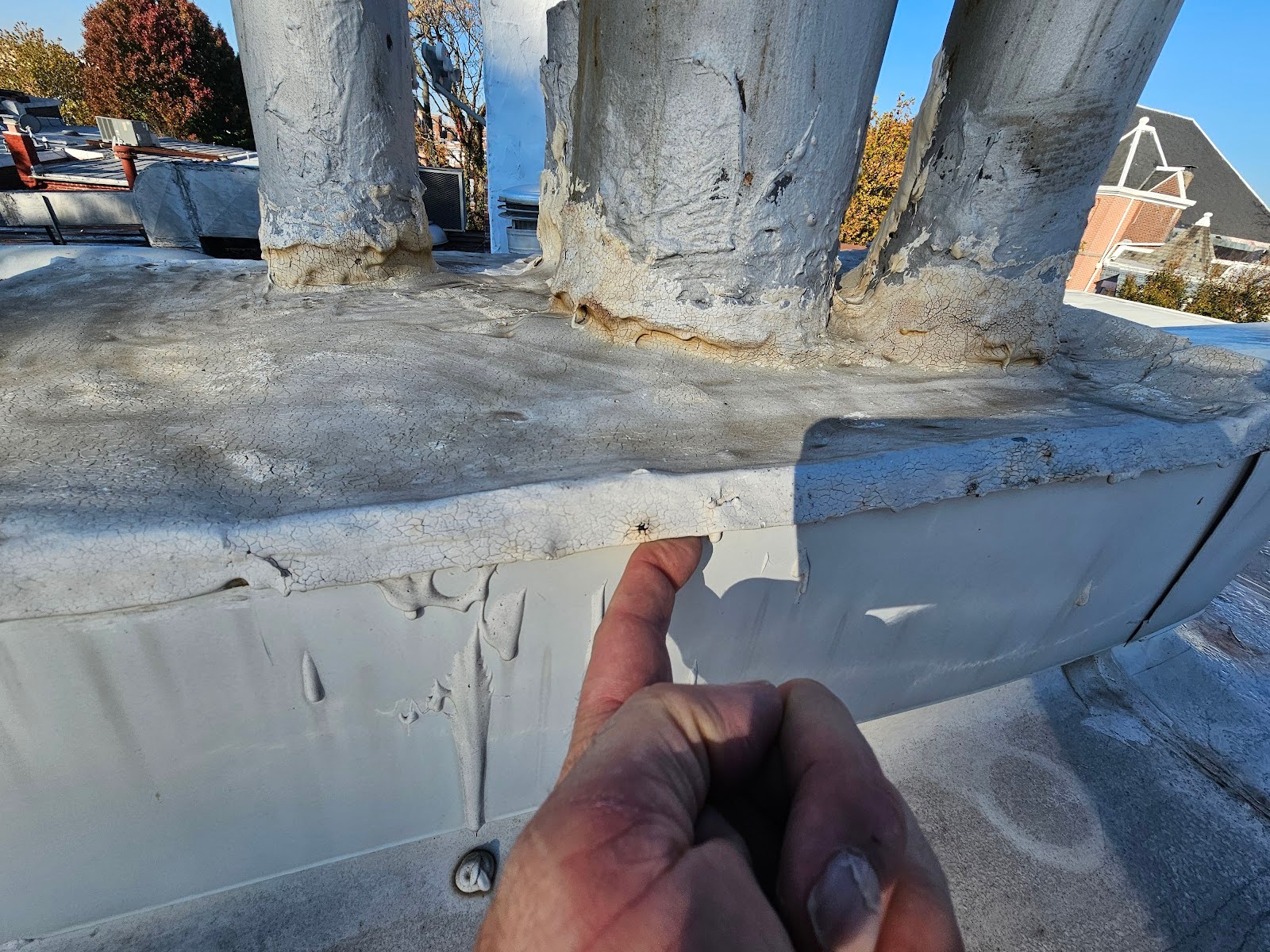
In a typical pitch pocket the sealant seals both to the side walls of the pipes and or wires and/or ducts that penetrate through the roof.
In contrast, here the sealant is applied between the top of the sheet metal cap and the sides of these ducts. It’s not exactly the same because the area of contact is significantly less in a circumstance like this. That gives less opportunity to apply support where there is thermal movement. Also, as you can see in the picture above, the sheet metal here is overlapped onto the sidewalls of the curb. In itself, that’s not a bad detail. That works fine in most circumstances.
However, when there is ice and snow buildup and temperatures that hover around 32 degrees Fahrenheit for days of time coincident with precipitation, there’s a high chance of ice damming which can lead to water entry at these types of joints. At minimum, since this is already an existing condition, we would recommend overlaying the top of this curb with an elastomeric high strength fluid applied coating.
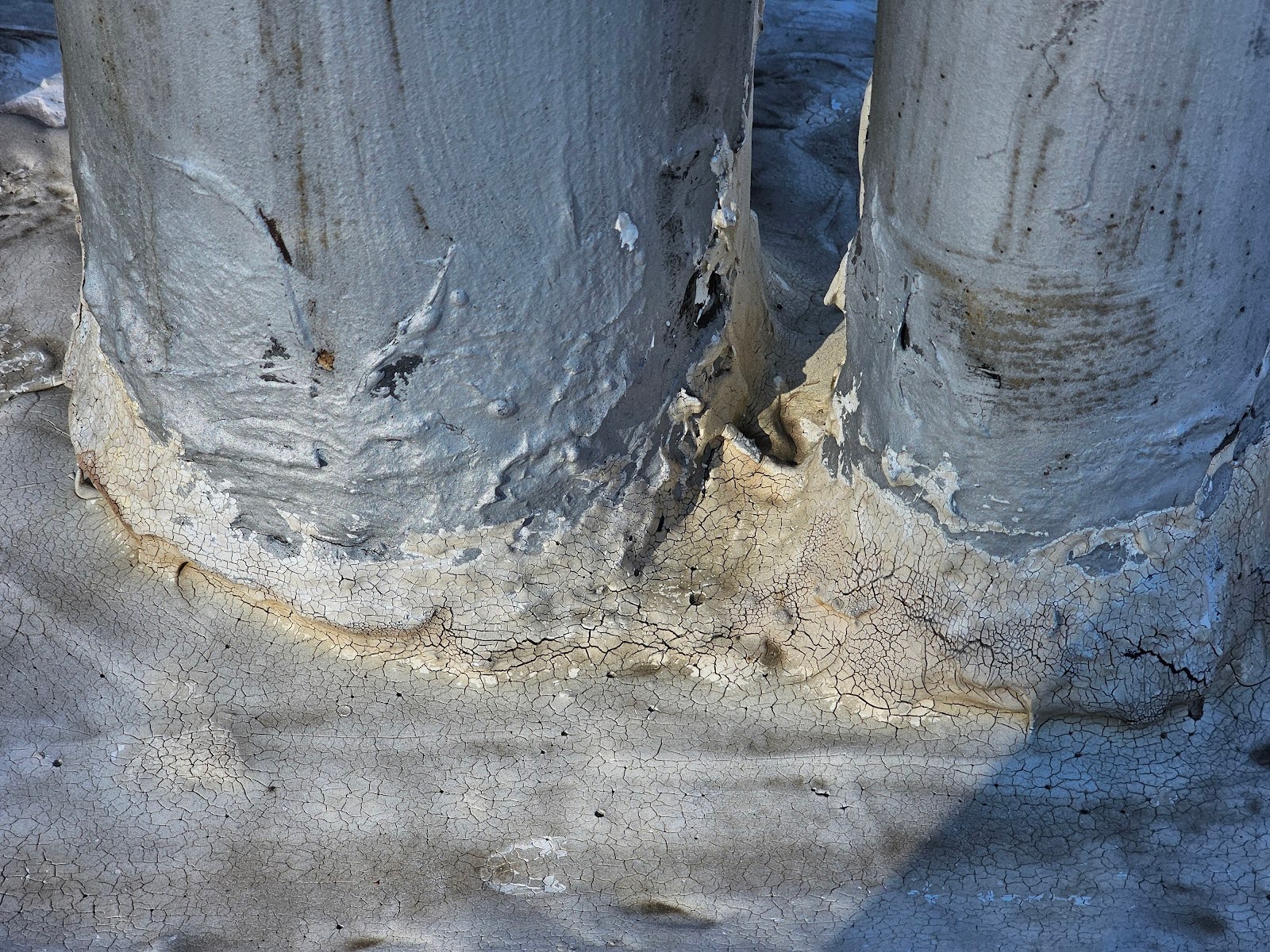
That type of application is one of the best options for something like this. It is a makeshift repair or reinforcement to a compromised circumstance. The existing context is complicated. It’s complicated not just by the material compatibility issues but also by the physical context.
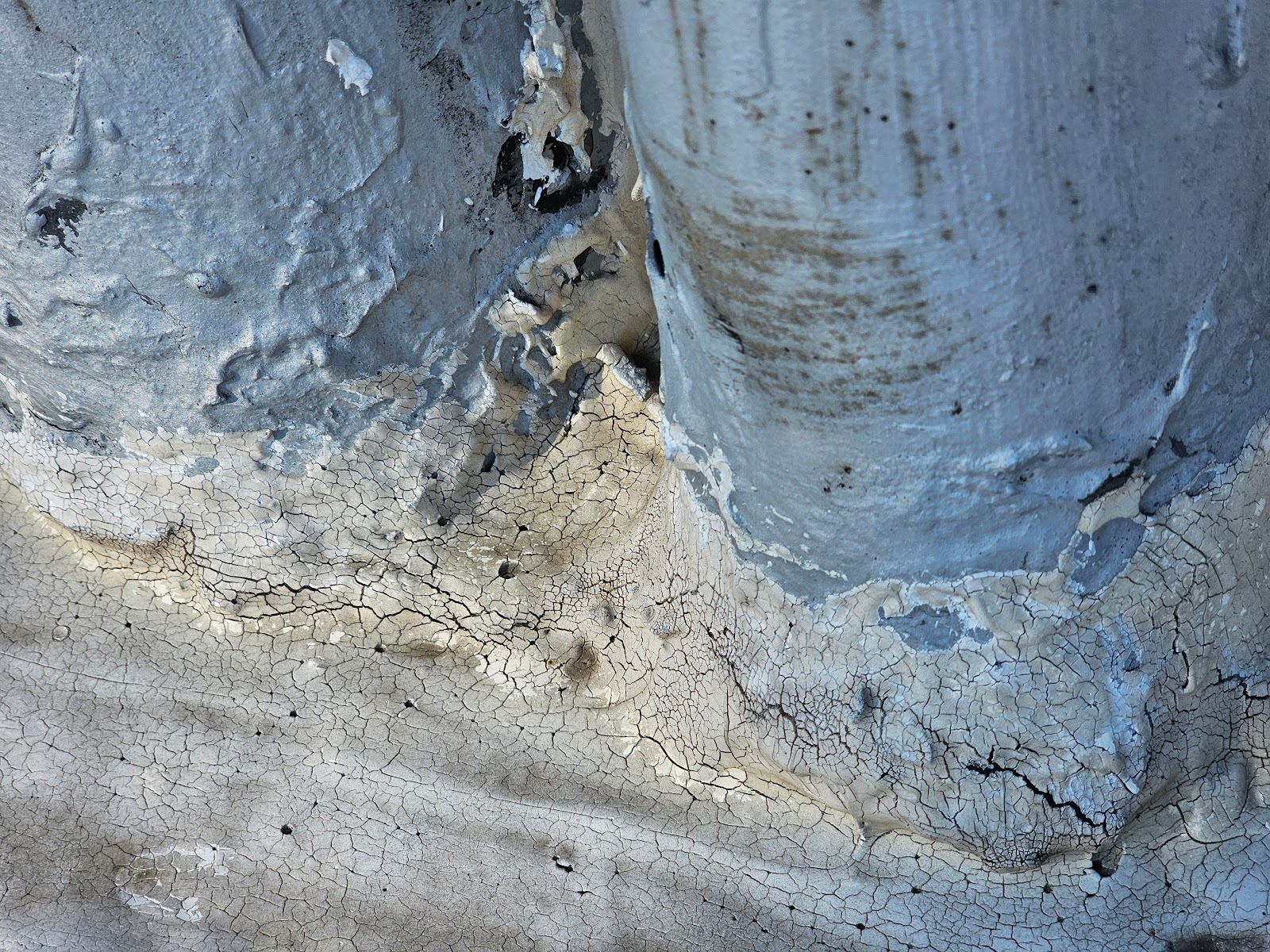
A roll type applied membrane would be near impossible to fit around these tight details with proper securement and attachment. For that reason, fluid applied systems may be one of the best alternatives. The only problem that remains with that type of solution is that not many people are well trained on how to properly apply fluid applied systems. They’re often not just a single application and require relatively extensive preparation to the substrate before applications begin.
We provide this information here on our blog, and our website, to help our customers and future clients, and we recommend every building owner in DC who values the longevity of their roof (and their investments) and building use a contractor who values the simple and important principles of proper roof construction like Dupont Roofing DC. Our company specializes in flat roofing here in Washington DC and we’re happy to help building owners of almost all types.
Learn more about our company and the proper techniques of working with roofing on historic buildings in Washington DC here on our blog at DupontRoofingDC.com, and you can call us at (202) 840-8698 and email us at dupontroofingdc@gmail.com. We are happy to help and at least talk through options.