Understanding Rooftop Lightning Protection Systems
We have looked at several different types of commercial or industrial roofs here on our website and our blog. We’ve also looked at many different historic row home roofs in the city as well. These different types of flat roofs are very similar, in fact they’re both commercial types of systems. The main differences though come in the overall type of perimeters terminations, scale or size, deck substrate materials, types of drains, and particularly lightning protection systems. Generally, residential roofs, even when built with commercial products, are not built with lightning protection systems.
Commercial roofs are often built with lightning protection systems. Generally, commercial roofs might be a little bit higher. Sometimes, they are much higher, even skyscrapers. Here in Washington DC, even the high-rise buildings are generally built at 110 ft above sea level or lower, they may be required to have rooftop lighting protection. There are imposed constraints here in DC.
Today we’re looking at this issue that mostly applies to those types of roofs. Without lighting protections installed, lightning can seriously damage buildings, it can also lead to fires. The picture below shows a rooftop parapet. This really isn’t completely different from a typical flat roof row home parapet. At a glance though, as you look down below the parapet, you can get a glimpse of the exposed portion of the building facade. It’s very clear that this is not the same type of facade you would find on a typical historic row home here in Washington DC. This is clearly a high-rise commercial building.
They’re different types of high-rise commercial building facades. One of the common types is a curtain wall system. In a curtain wall system the entirety of the exterior shell may be separated from the vapor barrier which is installed as a substrate below the actual exterior skin.
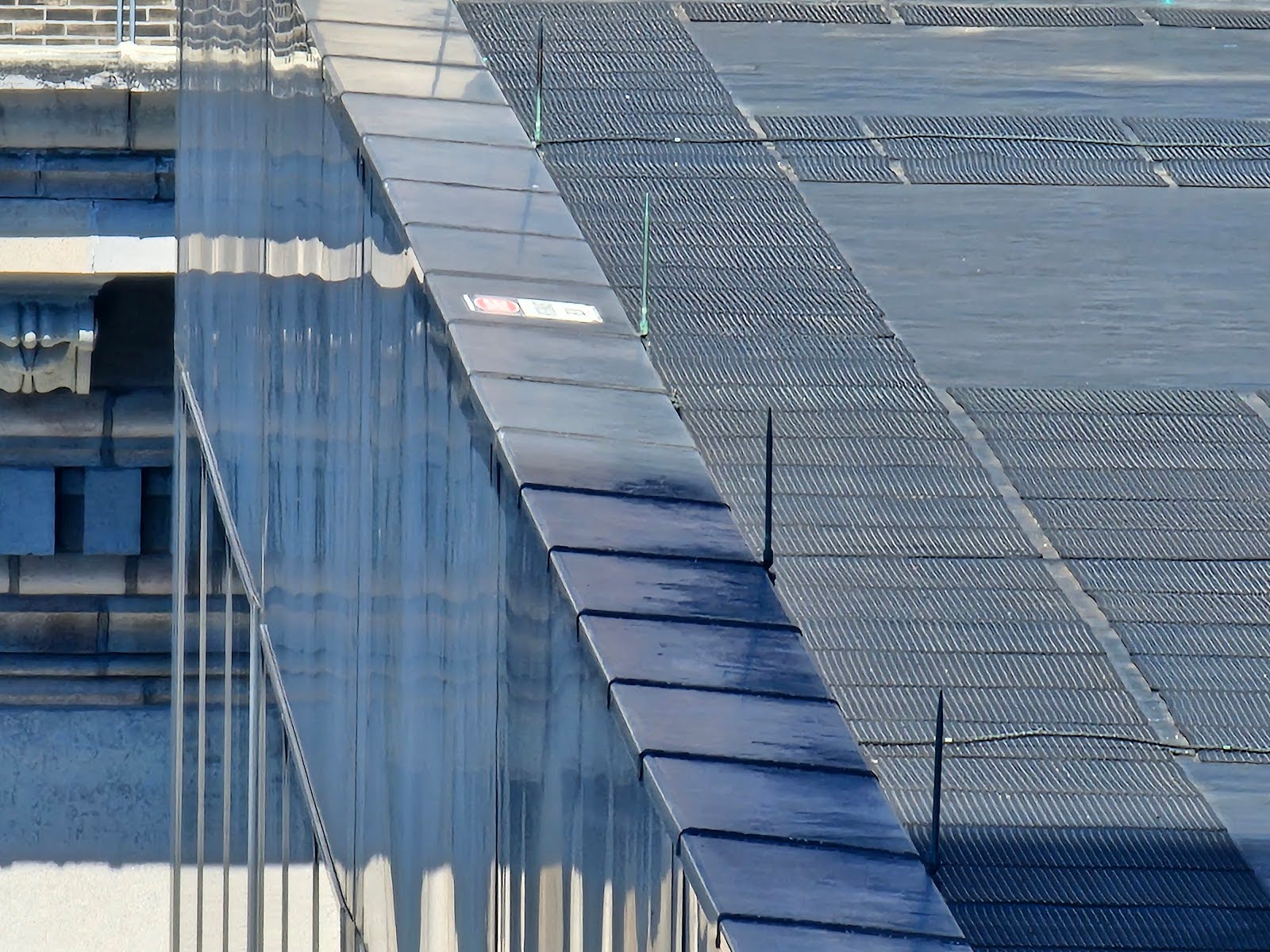
As a side note, just inside of the parapet, you may notice a polymer mat that runs along the perimeter of the roof. That’s a protective or sacrificial type of material applied on top of the roofing to allow a walking path to not wear out the substrate roof membrane. We’ll talk more about this in the future article.
Right away, you can also notice that there are many individual segments of the parapet coping. That detail also makes this roof a little bit different than the typical low slope roof. Often, typical flat roof construction copings will be made from, essentially, long rolls of relatively wide aluminum sheet metal materials. In some cases other metals like copper or even ferrous metal alloys were used. The ferrous metal alloys are often seen from historic applications, for example. Since this sheet metal is manufactured in rolls, the seams can be minimized and long pieces of coping can be built without interruption.
Here, instead though, this coping was built with many smaller pieces of seamed metals. In this case, you can see the real reason though is because the curtain wall is continuous through the facade until it wraps over the parapet. This isn’t a common type of assembly, in this case, it works though.
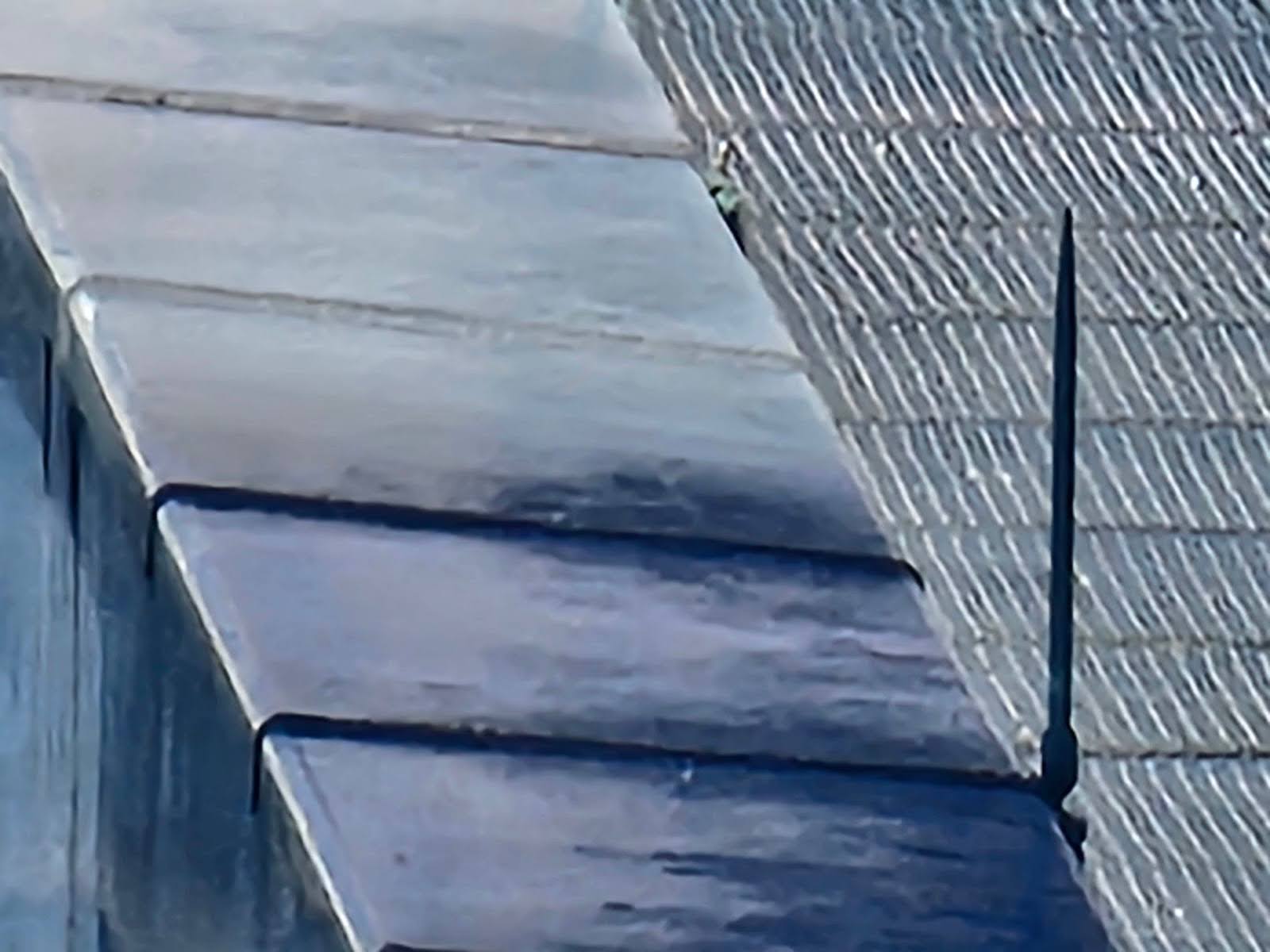
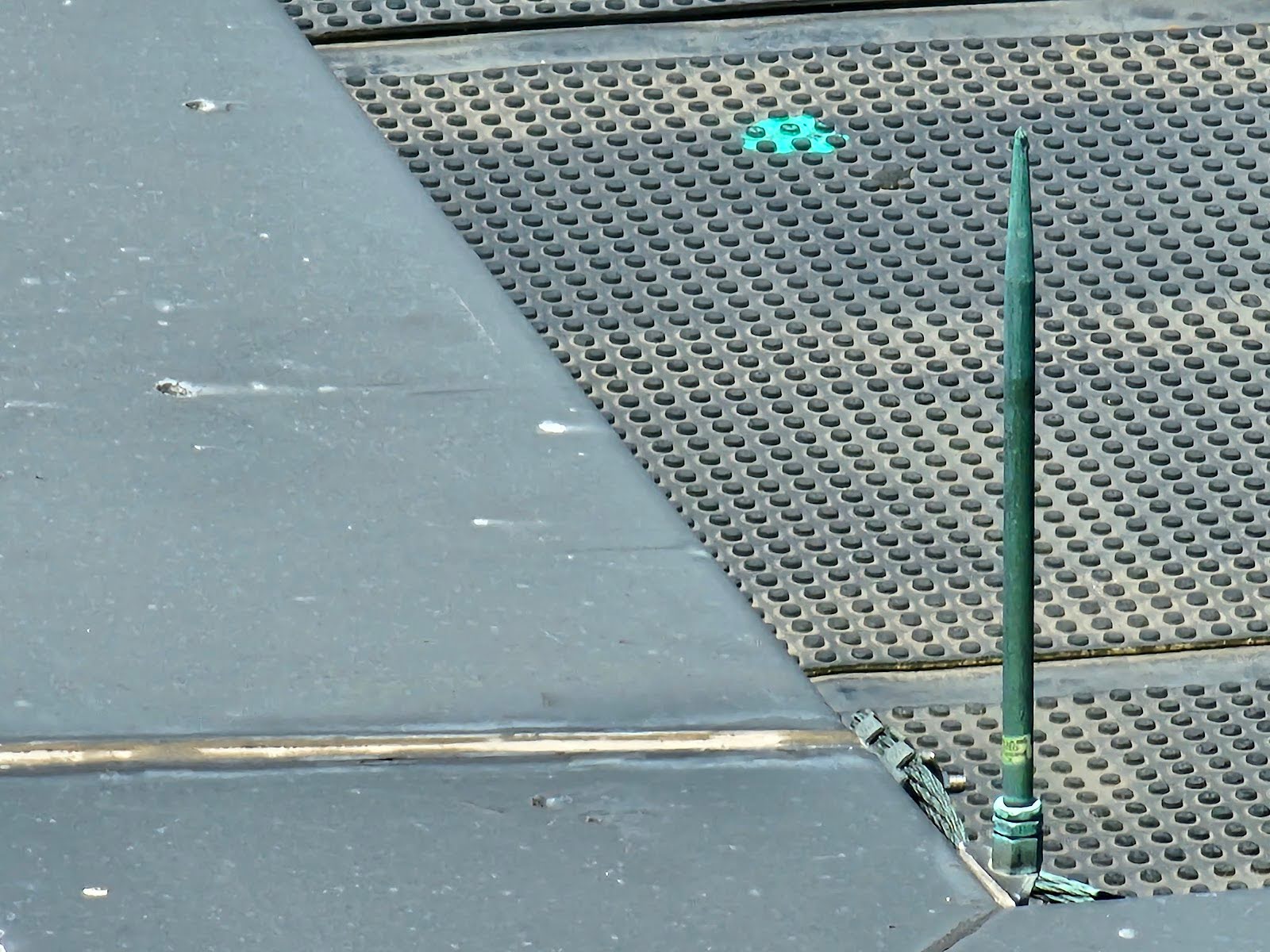
The particular devices shown around this rooftop parapet coping are technically called air terminals. They’re similiar 5p lightning rods though. Instead of having just one lightning rod like you might expect to see on an old barn though, here there are multiple different air terminals. You can think of lightning and the electromagnetic potential for lightning more like a ball or cloud of energy than just a point that reaches the apex of a roof. When storms create that mess of electrostatic build-up, it approaches the building in a way that’s more like a giant invisible ball.
These air terminals create a network around the perimeter of the parts that are conductive and will essentially not attract the lightning itself, but let the lightning find his path of least resistance more easily.
This helps minimize the risk of fires caused by lightning. Essentially, the building is required to be bonded and grounded. That connectivity between all of these conductive elements goes down to an earth ground. Generally the Earth ground is below the building. In some cases, where there is relatively high resistance in the underground surroundings, bonding and electrical grounds will be treated through the actual foundation footing instead of through individual separate ground rods outside of the building perimeter.
We provide this information here on our blog, and our website, to help our customers and future clients, and we recommend every building owner in DC who values the longevity of their roof (and their investments) and building use a contractor who values the simple and important principles of proper roof construction like Dupont Roofing DC.
Our company specializes in flat roofing here in Washington DC and we’re happy to help building owners of almost all types. Learn more about our company and the proper techniques of working with roofing on historic buildings in Washington DC here on our blog at DupontRoofingDC.com, and you can call us at (202) 840-8698 and email us at dupontroofingdc@gmail.com. We are happy to help and at least talk through options.