How Shiners Affect Horizontal Roof Surfaces – Part II
This past week we looked at a flat roof where some residential roof installer came and installed a roof boot intended to be used on a single roof. That type of material doesn’t work on a low-slope roof because it can’t be properly laid into the roof in a way where it is sealed directly. There are minimally invasive ways to make repairs to these types of bad installations, but really it would have been best to simply avoid the original contractor because it looks like they didn’t have any idea what they were supposed to do.
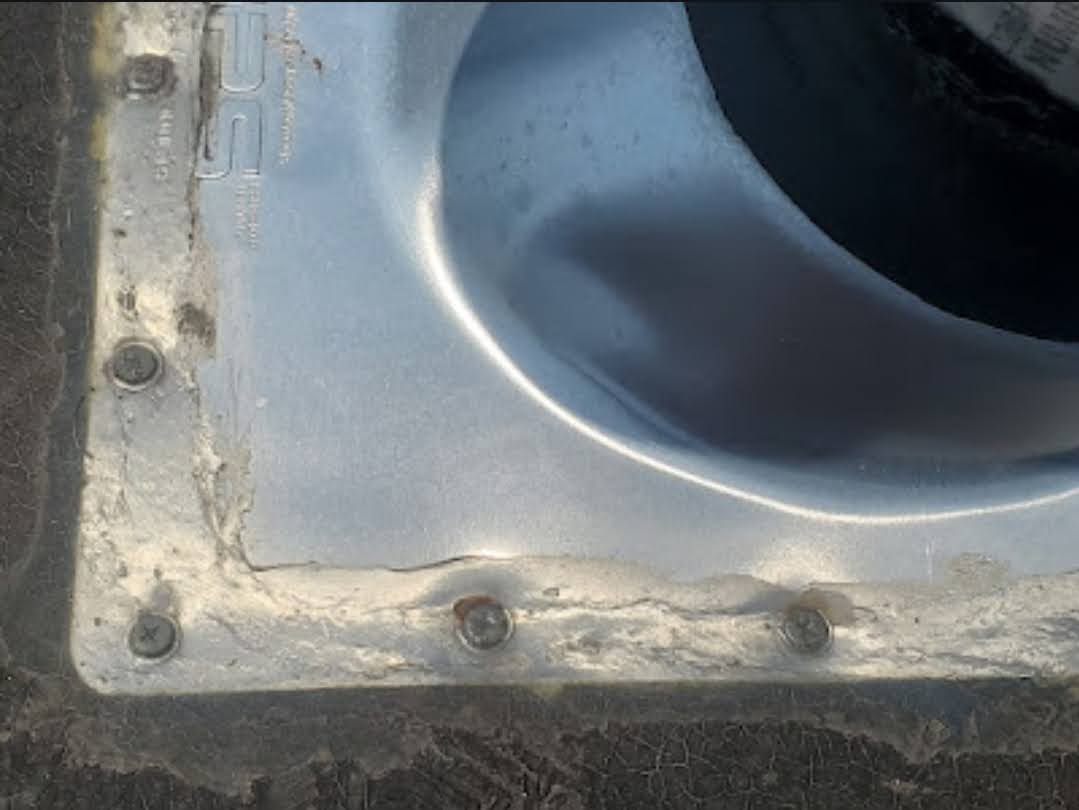
As you can see the picture below, this type of installation, without courses or rows of shingles, leaves the fastener heads exposed. Here they applied a clear caulking right on top of the fastener heads as a way to try to seal it up better than just leaving them uncovered, but it won’t work for a long period of time. Instead, that caulk will deteriorate rapidly through exposure to ultraviolet rays, in typical sunlight.
Once the caulking deteriorates, without a proper overlay on top, water will be able to enter through the area around the nail heads and then pass through the holes in the flashing, through the substrate roof membrane, and then from there into the interior of the building. That’s the type of problem or issue that every proper roof installation should be intended to avoid. All types of penetrations through the field of a flat roof of a building, needs to be able to be covered and sealed for a period of time commensurate with the intended life of the roof system.
The picture below shows the lower left corner of the integral aluminum flashing of the roof boot. Around the perimeter of the roof boot, they have driven deck screws right down through the roof membrane. There’s nothing wrong with driving nails through a shingle roof, where they will be covered by the roof system, but here it creates a big problem. Often, flanges on items or materials that connect or seal around piping will have factory made perforations. Here, the roof boot has those types of factory indentation to mark the location of the fasteners, intended to be pierced with fasteners applied in the configuration that fits the installation.
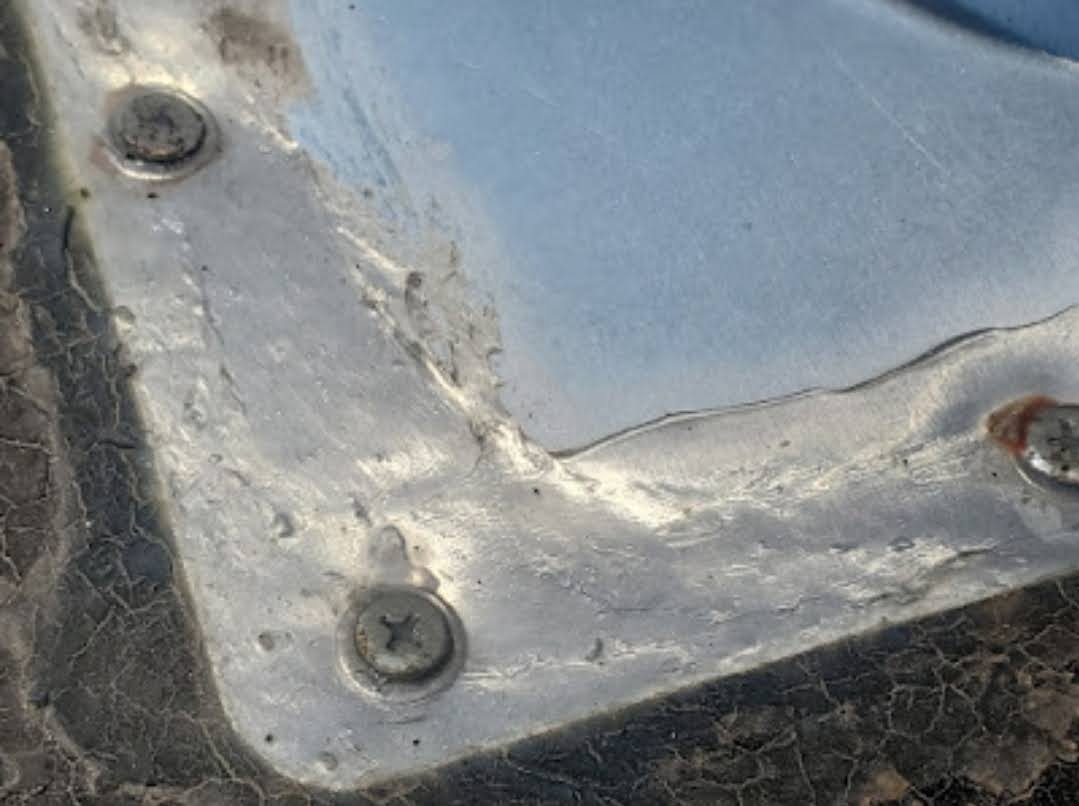
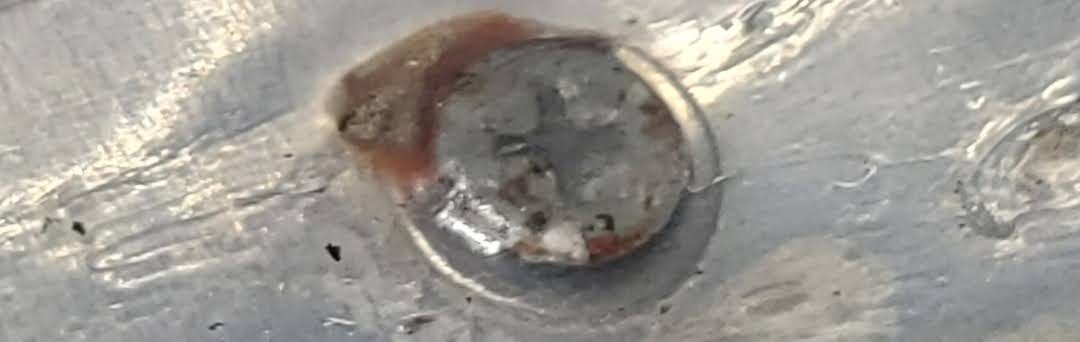
The picture below shows an even closer view. When you look at the nail heads, you can see there are areas of oxidation. Essentially, the steel nail heads are subjected to a degree of moisture and rusting on to the edge of the aluminum flanges. Aluminum itself can oxidize but unlike iron and steel, aluminum doesn’t deteriorate nearly as quickly when exposed to moisture which accelerates the oxidation. Here, the screw heads are literally rusting beyond and deeper into the core of the fastener. Through excessive exposure to moisture, when moisture seeps beyond the surface of a steel or iron material, it will eventually lead to severe and complete decomposition and deterioration.
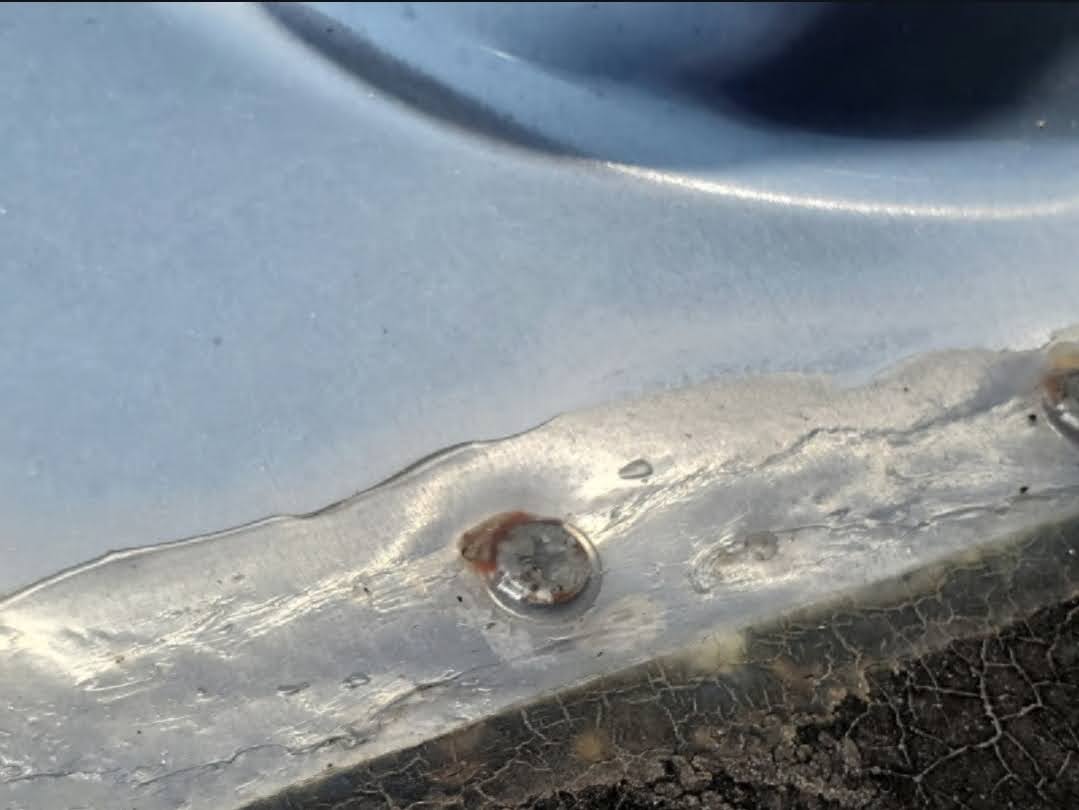
This oxidation doesn’t happen in the absence of moisture. The big point here is that even though they smeared caulk on top of the fastener heads, moisture is still getting in. The area of the roof substrate decking now has a hole that leads right through the roof membrane and that covering isn’t keeping it completely sealed. Some moisture has gotten through and caused the fastener heads to rust.
The exposure to ultraviolet rays will have a powerful destructive force on materials like this in a relatively limited amount of time. These materials will begin to break down and separate at a molecular level. It will pretty quickly lead to holes and openings, on a microscopic level first. Then later it will even lead to delamination of the surface of these materials.
This is one of the many reasons why this type of application doesn’t work for a flat roof installation. In the picture below, you can see rust deposits that have pooled up on the edge of the aluminum base flashing sheet. Even though the aluminum itself isn’t rusting, that steel fastener head has begun to deteriorate and oxidize. That oxidation has built up on the edge of the aluminum sheet metal.
We provide this information here on our blog, and our website, to help our customers and future clients, and we recommend every building owner in DC who values the longevity of their roof (and their investments) and building use a contractor who values the simple and important principles of proper roof construction like Dupont Roofing DC. Our company specializes in flat roofing here in Washington DC and we’re happy to help building owners of almost all types.
Learn more about our company and the proper techniques of working with roofing on historic buildings in Washington DC here on our blog at DupontRoofingDC.com, and you can call us at (202) 840-8698 and email us at dupontroofingdc@gmail.com. We are happy to help and at least talk through options.