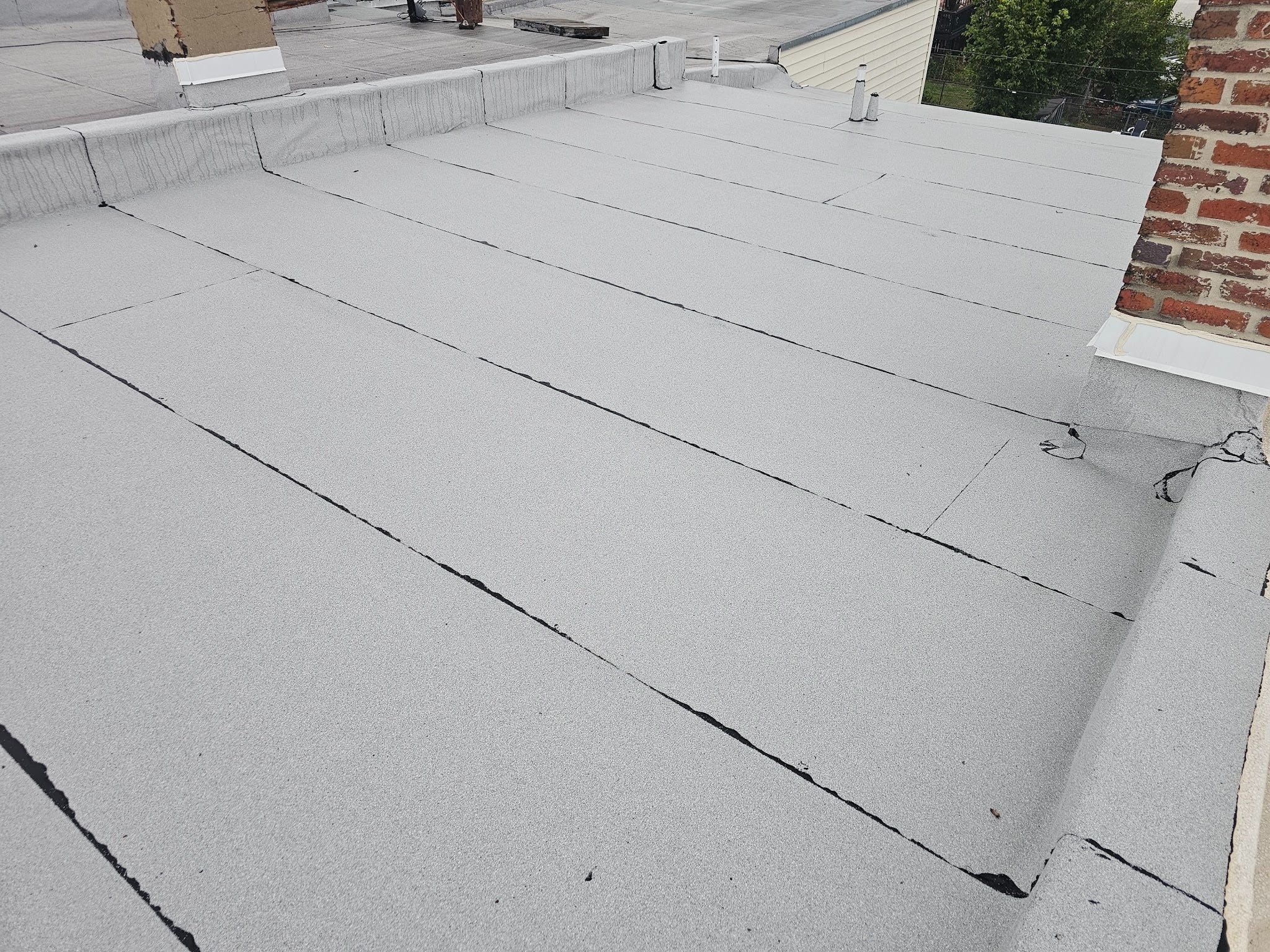
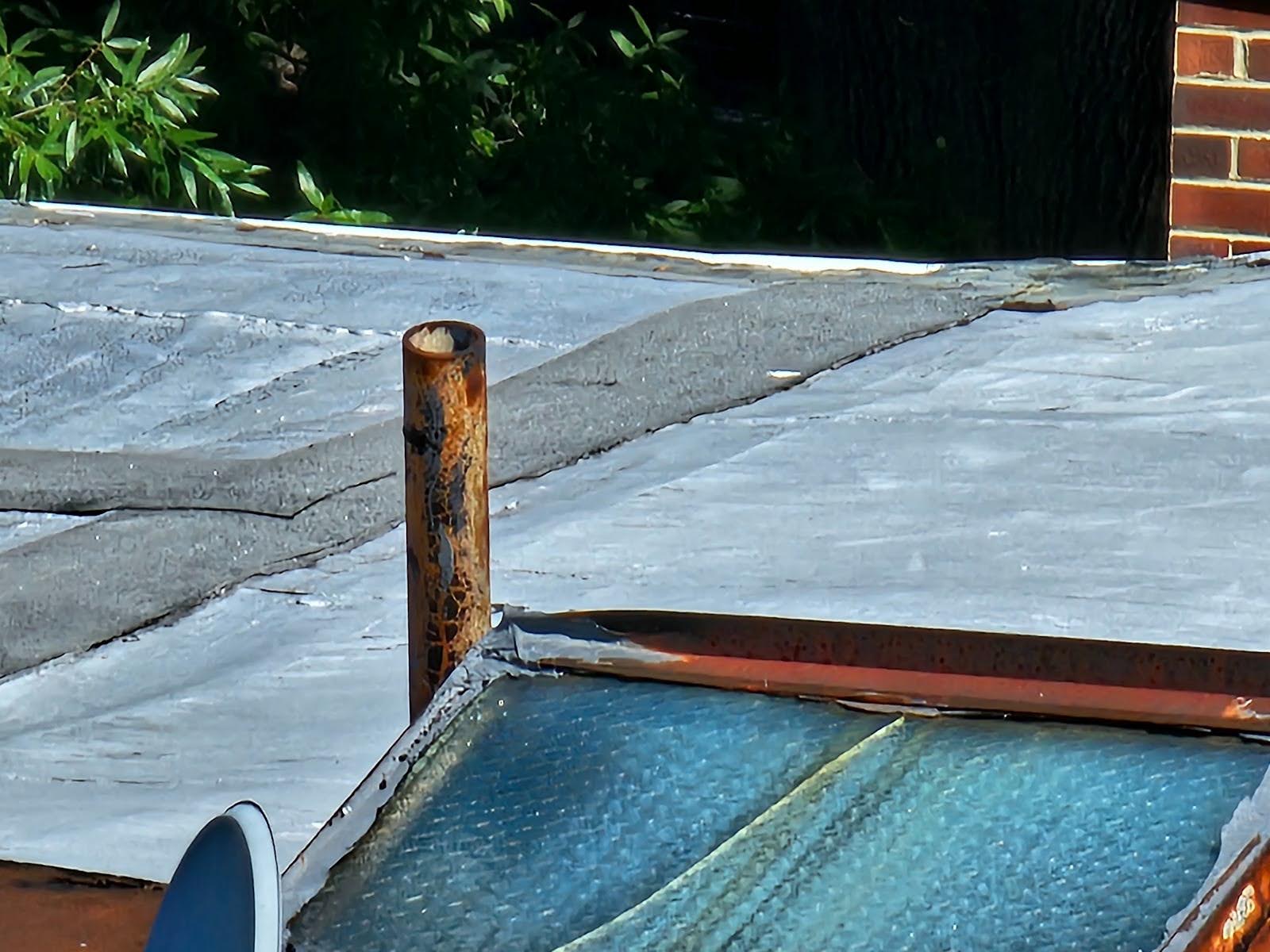
Roof Parapet Coping Installation & Maintenance Tips
This past week, we looked at examples and explained how aluminum sheet metal is used to cover parapets. This type of covering is a form of flashing known as a coping. One of the most important roles of coping metals like this is to cover the top of the parapet where the joint from the termination or demarcation of one roof and property line begins and ends onto another in side by side row home construction. The picture below shows an example of the lap joint from one section of coping on top of another.
The portion to the right and the majority of the frame of the picture is the upper portion of the coping. The lower portion is shown at the very edge of the photograph on the left side of the seam. There are a handful of problems evident just from this photo alone.
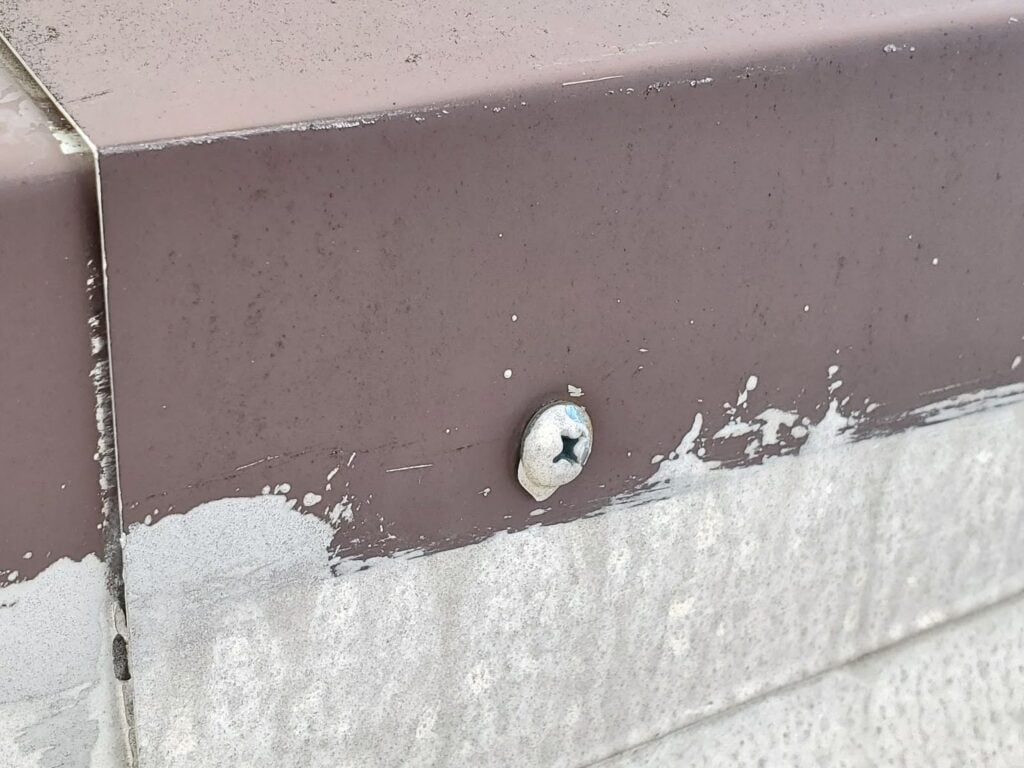
We’ll go through some of the problems with this coping installation, one by one. We aren’t suggesting that coping should be installed like this, instead we’re looking at these problems as a set of lessons that people can learn from. You can see what to do to avoid these types of installation defects.
- Dry joint
- Incorrect fastener
- Unsealed fastener
- Overlap dimensions
- Lifted edge
Starting with the first item on the list, there’s a dry joint between the overlapped proportion of the coping and the substrate underlying edge of the lower coping. When we say that is dry, we don’t really mean that it’s dry in terms of not being wet, what we really mean is that It hasn’t been filled with a sealant filling up the joint. Instead, it is just wide open.
It’s not open in terms of being a large space, but if you take something small like the edge of a piece of paper you can slide it right through the joint. That means that water can also follow the same pathway and go right into the area between the two layers of open materials.
Once water runs through that gap, it will go into an area It will stay trapped and continue hydrating the substrate building materials. It leads to full saturation and will eventually leak into other parts of the interior of the building. This is how water causes material damage.
The picture below shows a place where somebody went and smeared asphaltic mastic all over the lap joint in the coping. We weren’t there to see, but we’re pretty sure this application wasn’t done during the initial installation. When they installed the coping they just left it dry without any sealants or mastics. They really should have used two beads of sealant between the two different sections of coping at the lap joint. You should have also been a lap of at least 3 inches.
That 3 inch space gives enough room to apply two beads and have them smushed out in both directions as they’re flattened between the two layers of aluminum sheet metal. The building code doesn’t specifically require that the ceiling oozes out to the edge, but we generally prefer because it makes it easier to check and confirm the installation was done properly after the fact.
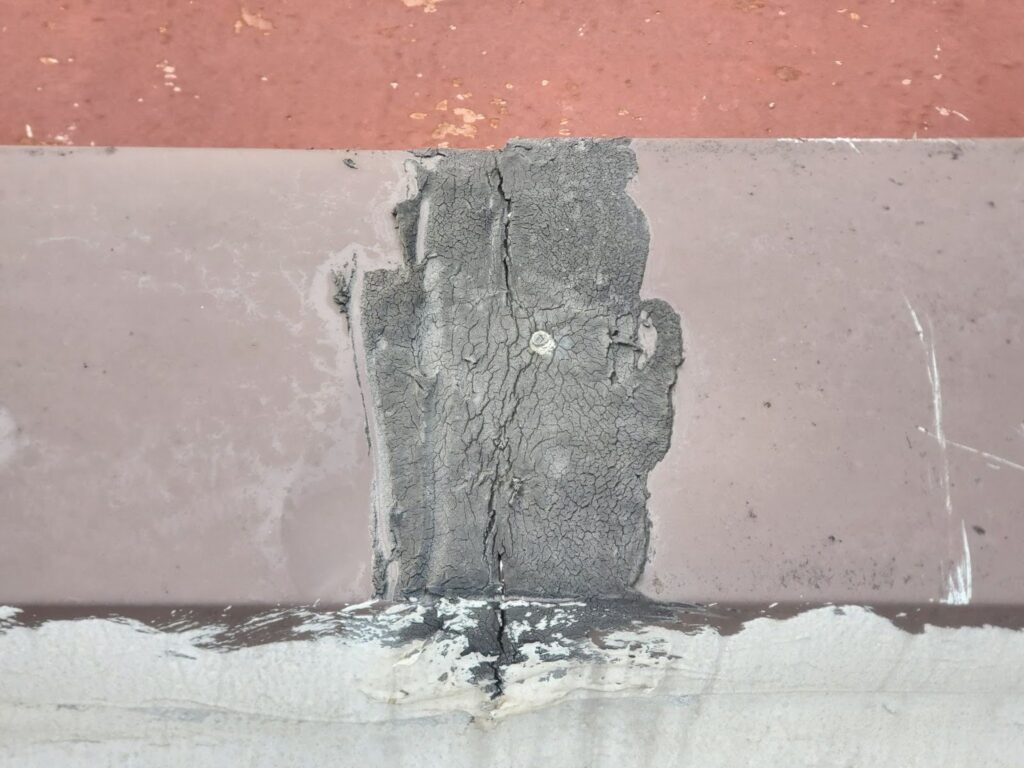
Asphaltic mastic like this has a purpose in the roofing industry, but this is not it. It’s not meant to be used like this. It’s meant to be used for emergency type repairs. Unlike most polyurethane based, polymer, or elastomeric sealants, asphaltic mastic type materials are not supposed to have much intrinsic or integral resistance to exposure to ultraviolet. That means that even though asphaltic mastic can be used for emergency quick patches, it can’t really sit out in the sun afterwards. It needs to be covered with a proper roofing material or needs to be replaced with an appropriate material after environmental conditions such as precipitation have dissipated enough to allow the joint to be fully dried.
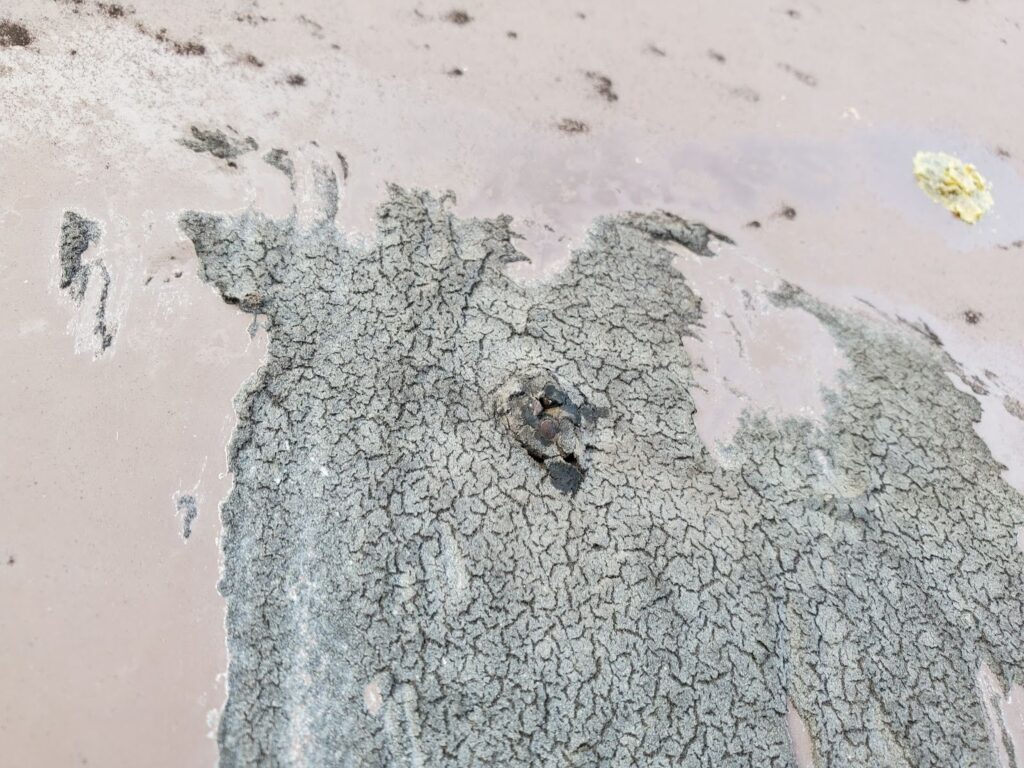
The second problem in our list is that they didn’t use the proper type of fastener. This particular fastener passes through the aluminum coping, then through the modified bitumen membrane and then into a masonry substrate. The type of screw used here is made for wood, not masonry. This fastener also isn’t really intended for exterior exposure and it doesn’t have an integral gasket to seal when driven into compression. Often, even people who work in construction for a living, will confuse electro-galvanization from hot-dipped galvanized metals. Electrio-galvanized metals will not hold up in a permanently exterior installation.
In fact, you can think of that type of electro-galvanized coating as something made to allow a screw to be protected from rust during storage and transportation and shipping. Once it’s been used and installed in a permanently affixed location, it will deteriorate at an accelerated rate. Hot-dipped galvanized fasteners or alternatives such as stainless steel should be used instead.
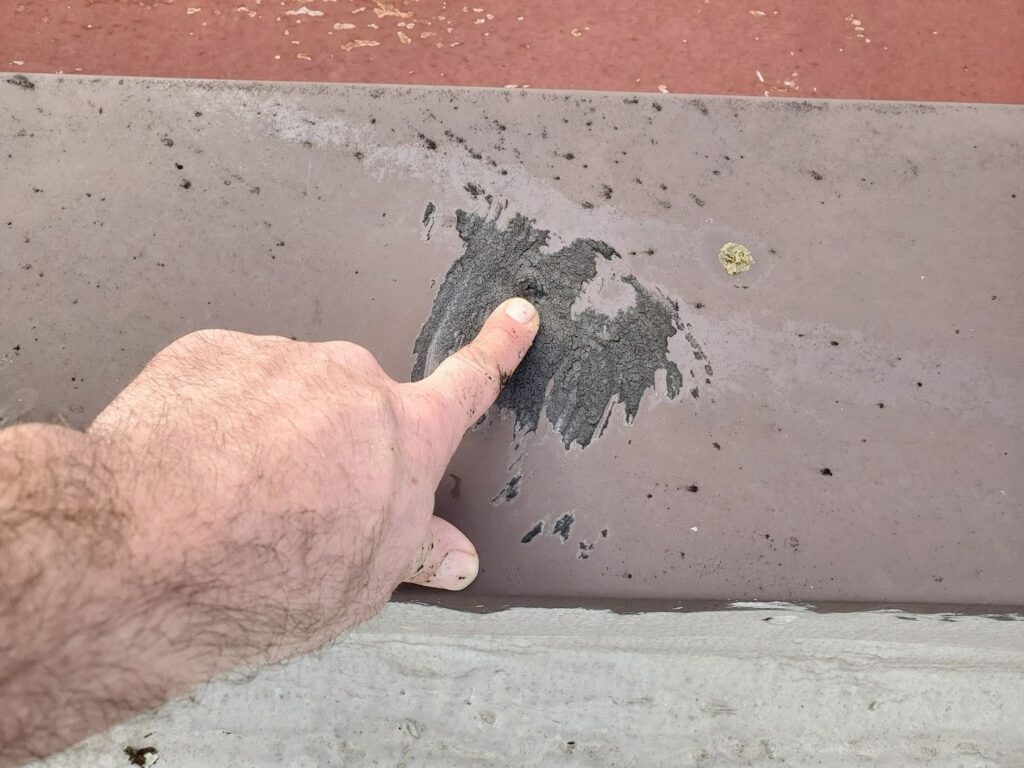
We mentioned that the joint was left unsealed, but the joint was also too far apart. The metal should have been installed tighter together so that there isn’t a wide open space. That wide open space allows for water to enter with ease.
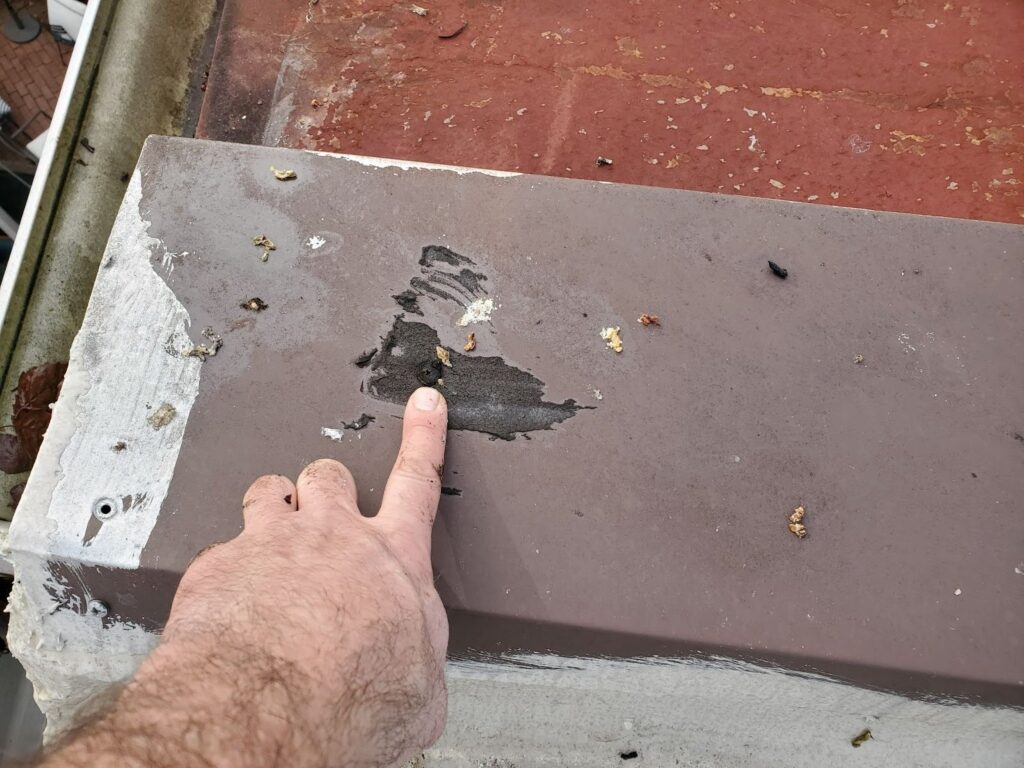
In the picture above and the picture below you can see that they’ve also installed Fasteners in the horizontal plane of the coping. All fasteners like this should be installed at the sides in the vertical faces of the coping, not through the top. The top is near horizontal, even with a little bit of slope and will allow water to pool and pond.
When water pools up at a location where a fastener has created a hole through the top of the aluminum, it will result in leakage. At this point, they could at least cover it with a proper material such as a fluid applied membrane or an overlay of a proper membrane flashing tape. Neither of those things have been done here though.
We provide this information here on our blog, and our website, to help our customers and future clients, and we recommend every building owner in DC who values the longevity of their roof (and their investments) and building use a contractor who values the simple and important principles of proper roof construction like Dupont Roofing DC.
Our company specializes in flat roofing here in Washington DC and we’re happy to help building owners of almost all types. Learn more about our company and the proper techniques of working with roofing on historic buildings in Washington DC here on our blog, and you can call us at (202) 840-8698 and email us at dupontroofingdc@gmail.com. We are happy to help and at least talk through options.