Roof Parapet Coping Installation and Maintenance Guide
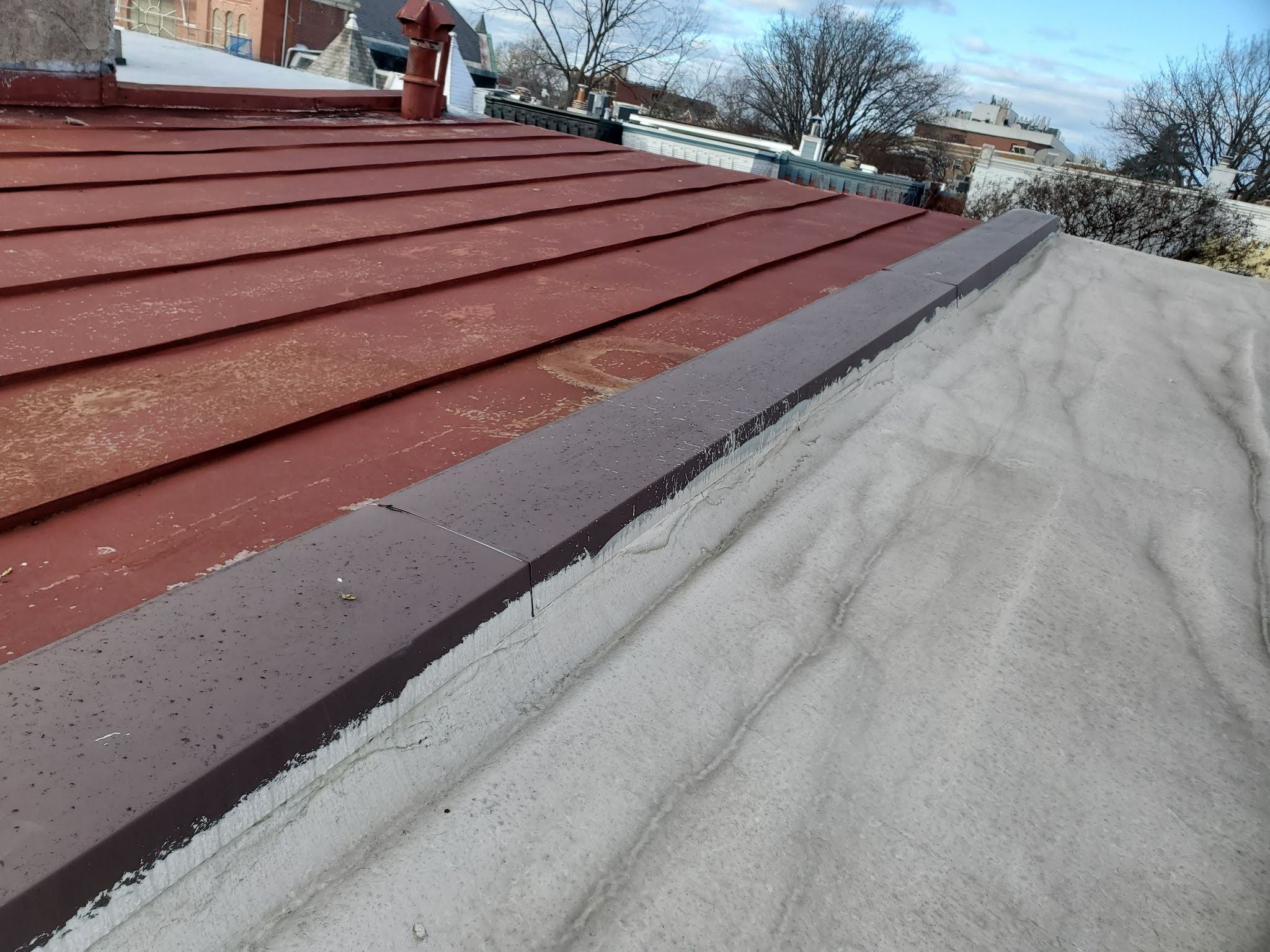
We happen to look at and show lots of different roofs here on our website. You can go to our blog section and find almost every type of low slope roof in Washington DC represented and or at least mentioned here on our website. In the picture below, for example, you can see an example of a silver painted moderate reflectivity modified bitumen roof on one side of a demising parapet wall. A standing seam metal roof is on the other side. The largest material type used throughout the city is overwhelmingly modified bitumen. (That doesn’t necessarily mean it’s the best roof material type though. We happen to think there are much better types available).
Standing seam metal roofs are installed very infrequently today, in fact there’s not many of them left. There used to be many, though. They’ve largely or almost entirely been replaced by more modern types of roofing at this point though.
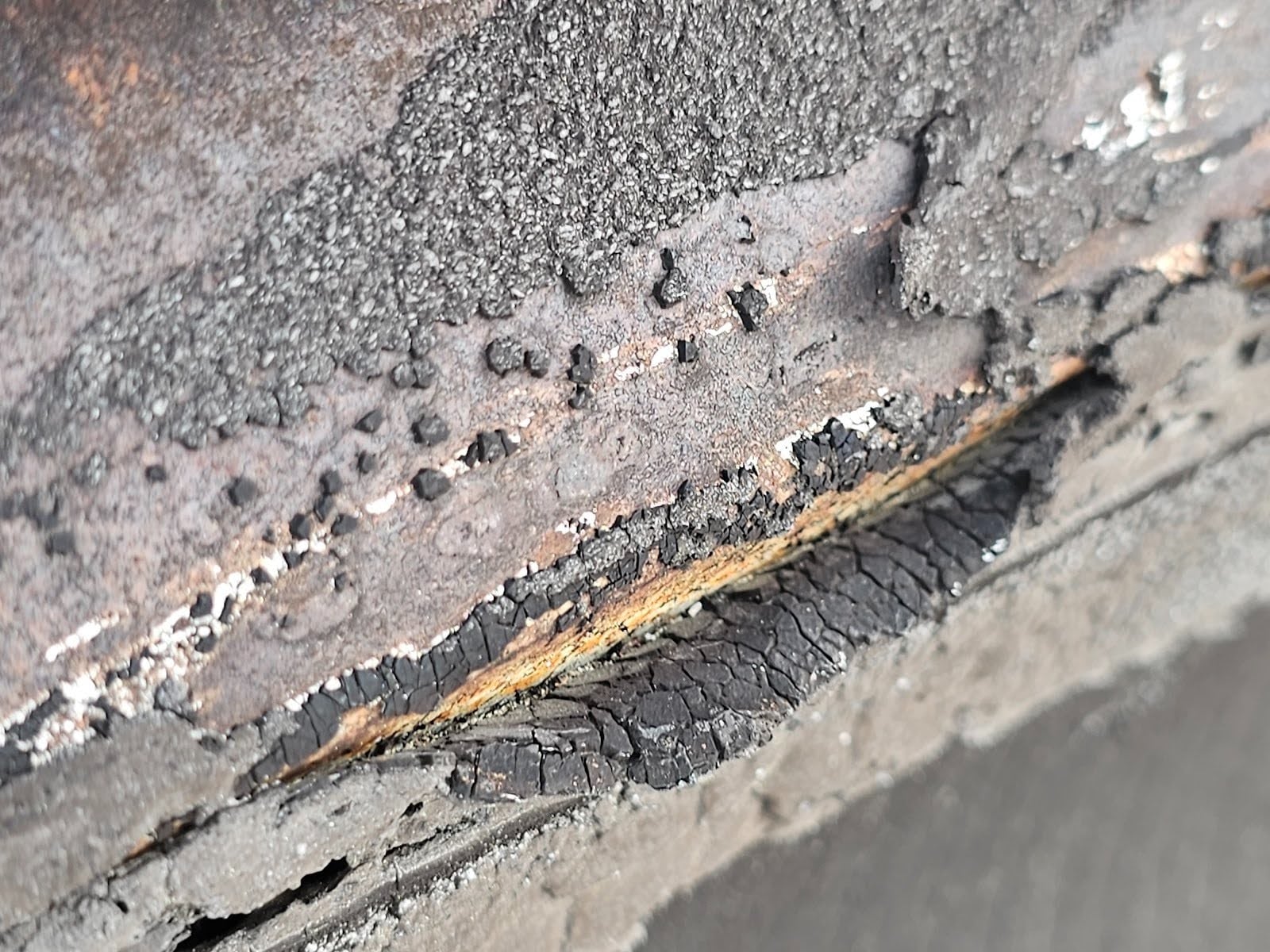
The vast majority of historic standing seam metal roofs were made with ferrous metal alloys. Ferrous metal is a bit different than most types of contemporary copings. Ferrous metal has steel or iron as one of the subcomponents. In historic times, lead was generally used as one of the other subcomponents together in ferrous alloys. Lead is toxic and can lead to lead poisoning if misused or handled improperly. In roofing though, lead was actually beneficial in some ways because it would make the overall metal alloy withstand exposure to the exterior elements better without the same level of accelerated deterioration.
Just a few years back, lead was required to be removed from most of the common types of sheet metals used for most types of roofing. Now ferrous metal roof systems have less lead but it doesn’t necessarily perform better. In fact, ferrous metal alloys without lead, used in roofing, generally perform worse. This is one of the reasons that sheet metal roofs are much less common here in Washington DC, in modern times. In fact if the roof is in a location where it cannot be viewed as part of the typical architecture of the building, most commonly, a roll type roofing is used instead, in today’s times.
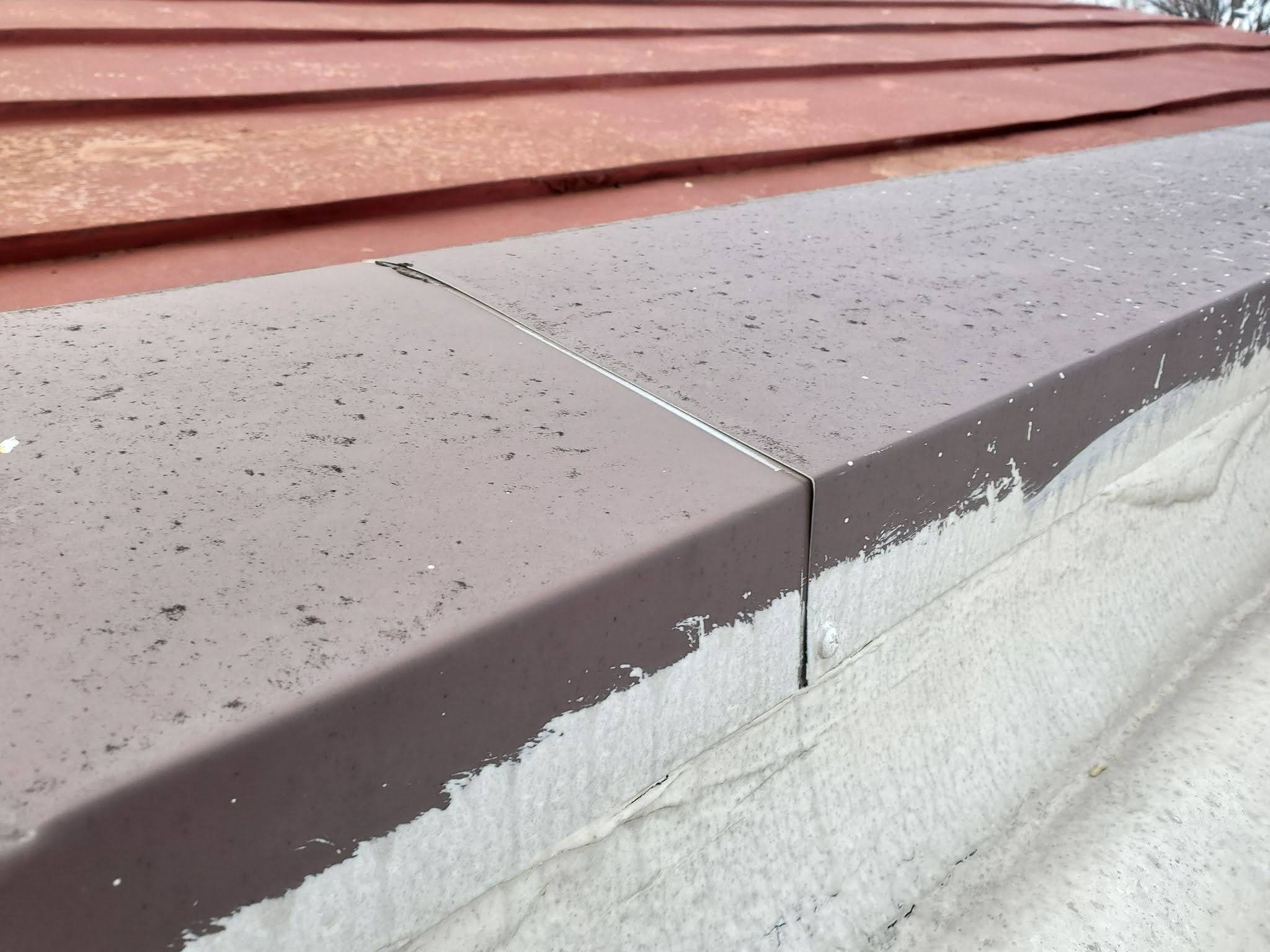
Whether it’s a modified bitumen roof, a polymer type synthetic material, or even a different type of historic material, it’s very common that the material is covered with a sheet metal at the parapet. The parapet is generally the demarcation point where the property line changes at the side of a roof. One of the best ways, in this type of configuration where properties are aligned, side by side, to transition between two different roof systems, is on top of a parapet.
If installed properly, one roof membrane can overlap and terminate on top of another. The inherent redundancy for crossing or being redundantly joined by coping at the top of a parapet is helpful because it is intended to eliminate the coincidence of leakage at the terminations.
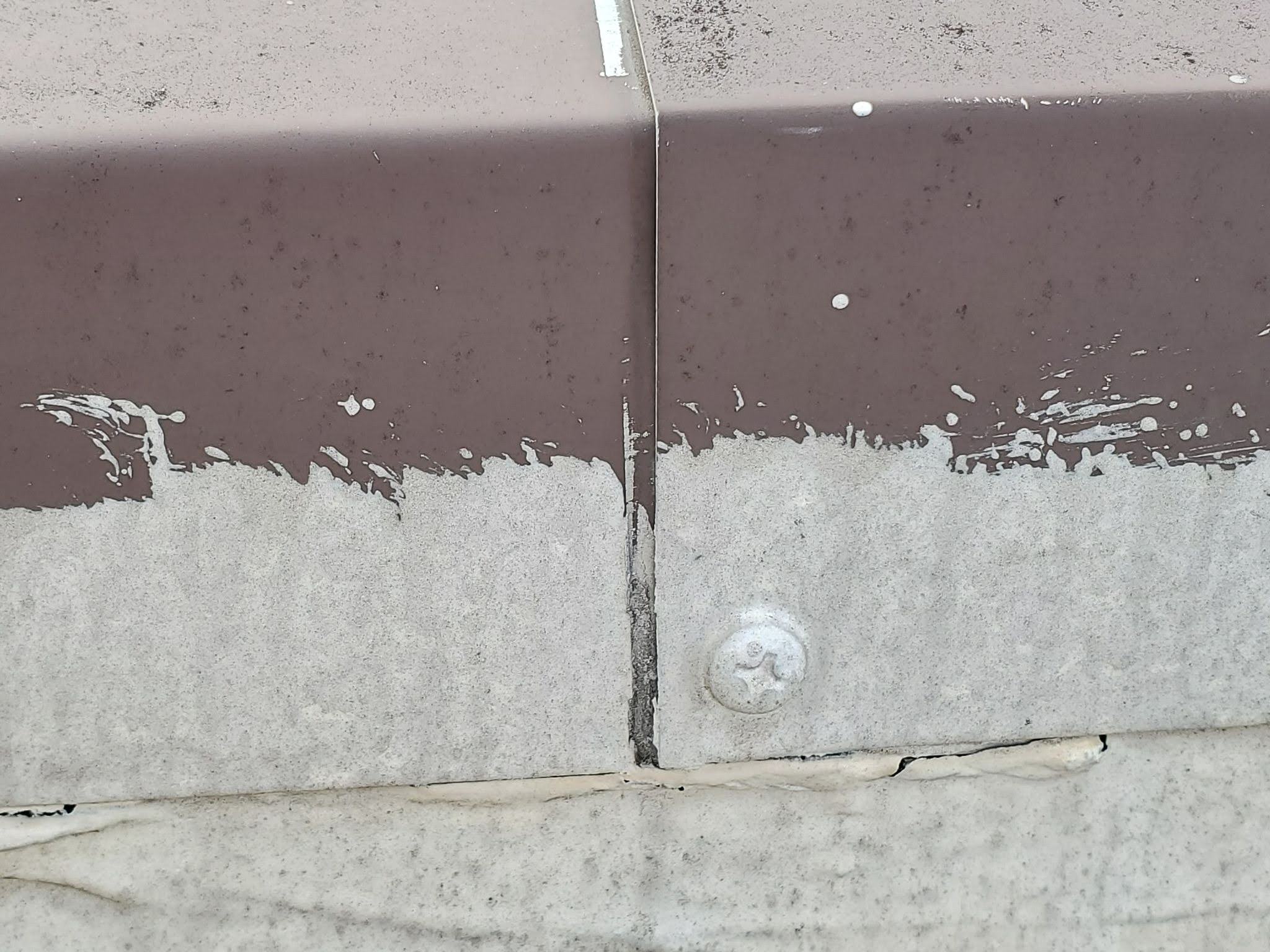
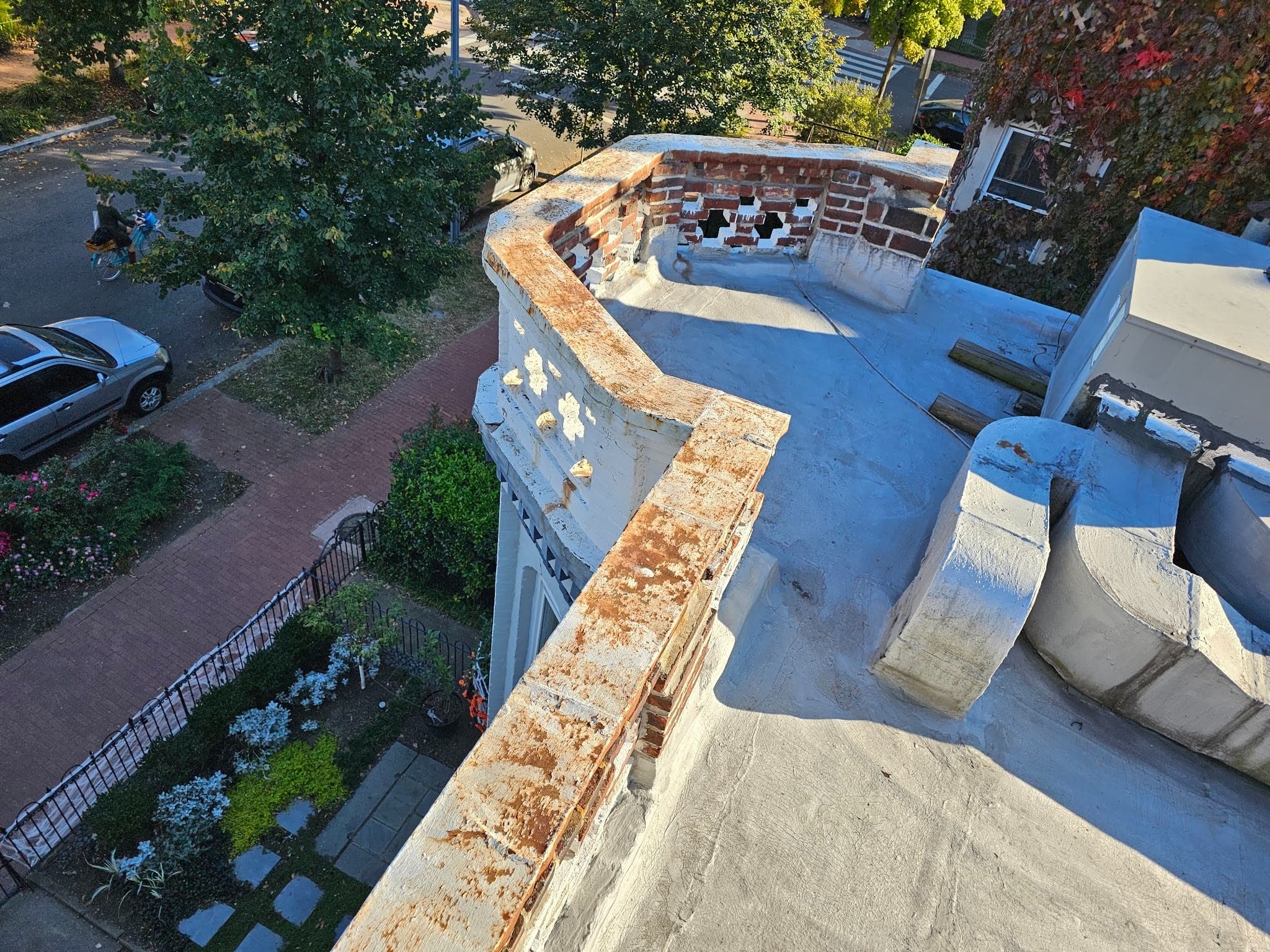
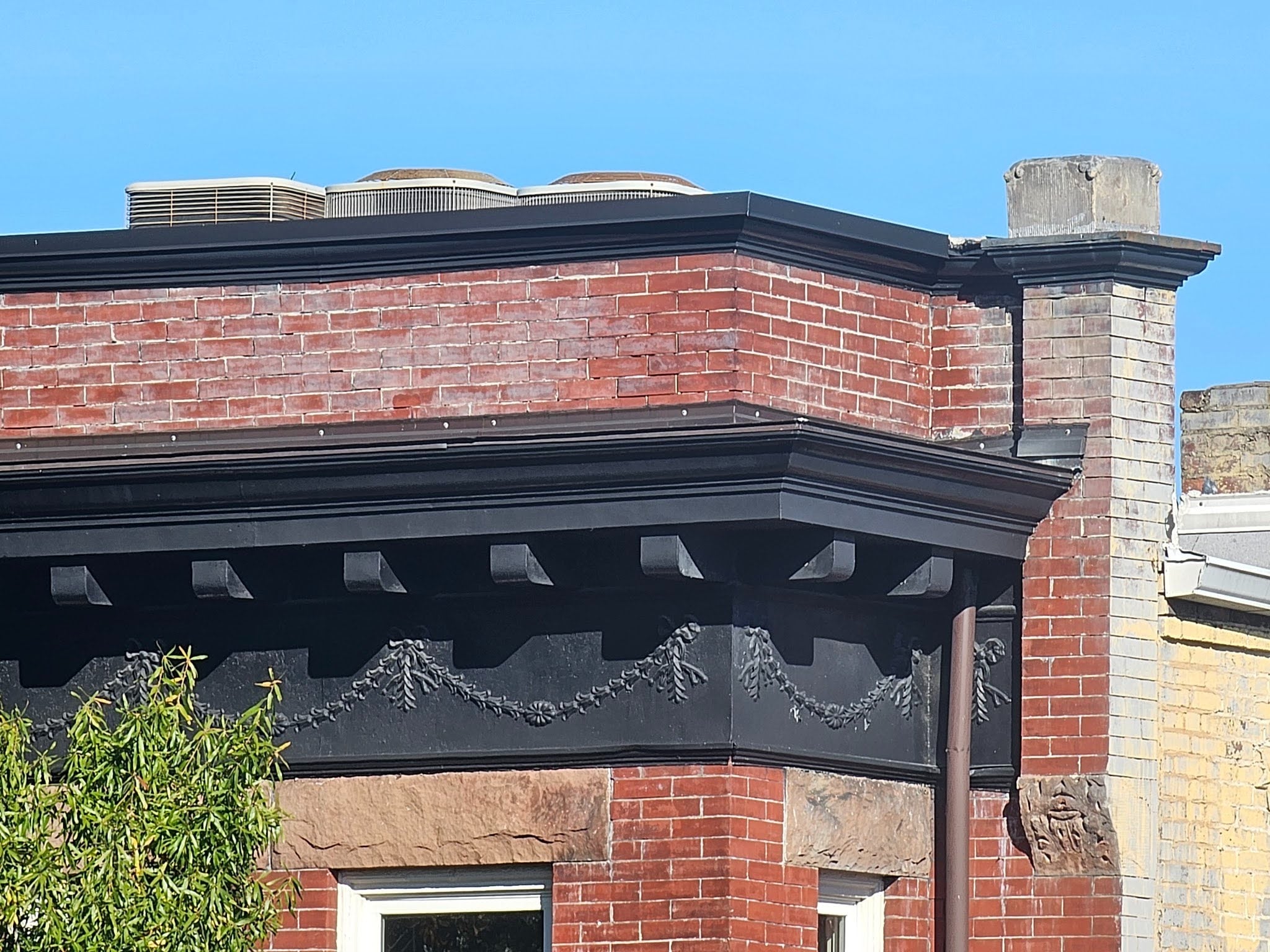
There’s a handful of rules that go back to the building code for proper installation of rooftop parapet coping. As we discussed, the parapet is the very short wall that runs above most low slope roofs where buildings are joined side by side. The coping is the metal or whatever type of impermeable material that spans on top of the parapet wall. Coping, in historic times, even before the construction of the majority of the buildings here in Washington DC, we’re often made with stone or other types of material. Here in Washington DC, we often will find a few rare but interesting copings made with terracotta materials.
Terracotta is a type of clay that is fired to become at least partially semi-vitreous. When terracotta materials or masonry stone are built on top of a parapet wall, it can protect the substrate masonry.
In the beginning of rowhome construction here in Washington DC, it was very common for ferrous sheet metals to be used as coping over the many decades since that original time though most of those materials have deteriorated and rusted through or become largely defunct. Over the generations, as the roofs have been replaced the copings have also been replaced and in most cases now aluminum sheet metal is used instead of ferrous alloy sheet metal.
This coming week, we’ll talk about some of the requirements for installation of coping metals. The rules are not highly stringent nor highly onerous. Coping installation is relatively straightforward, yet is something that most roofing contractors do not put much energy or effort into doing right. We see problems with others’ coping installations so commonly. We will show some examples in this coming week.
We provide this information here on our blog, and our website, to help our customers and future clients, and we recommend every building owner in DC who values the longevity of their roof (and their investments) and building use a contractor who values the simple and important principles of proper roof construction like Dupont Roofing DC.
Our company specializes in flat roofing here in Washington DC and we’re happy to help building owners of almost all types. Learn more about our company and the proper techniques of working with roofing on historic buildings in Washington DC here on our blog at DupontRoofingDC.com, and you can call us at (202) 840-8698 and email us at dupontroofingdc@gmail.com. We are happy to help and at least talk through options.