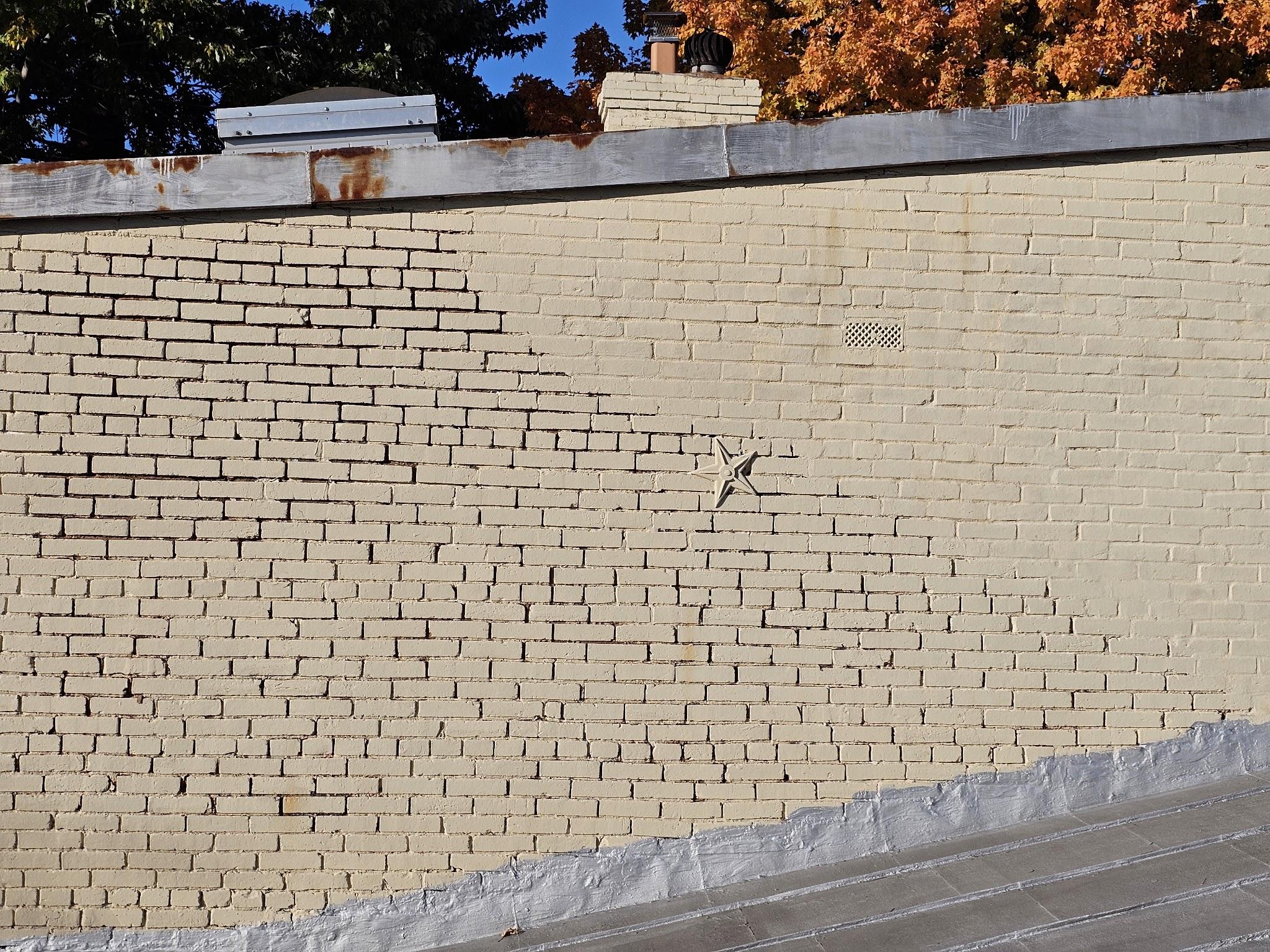
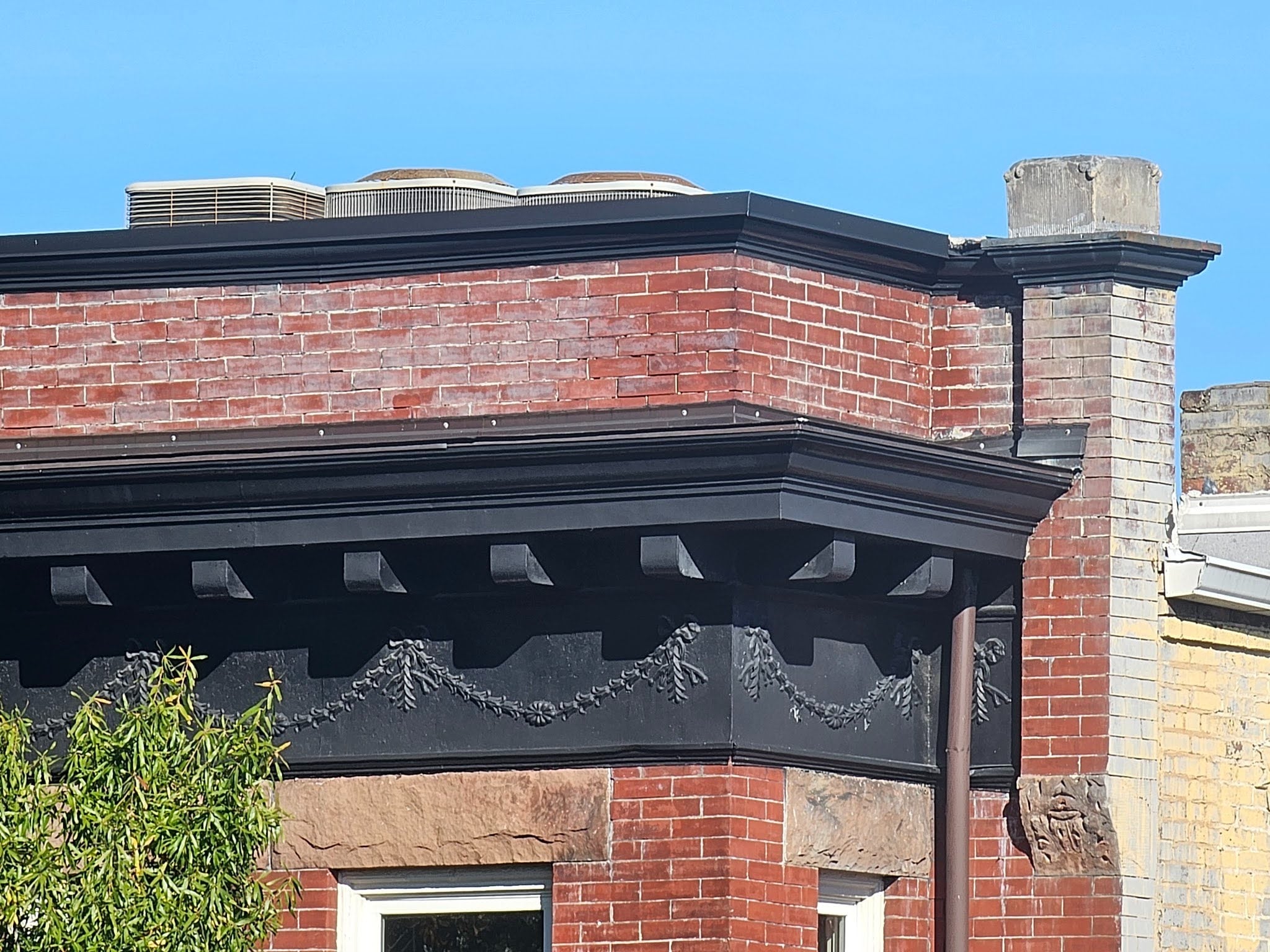
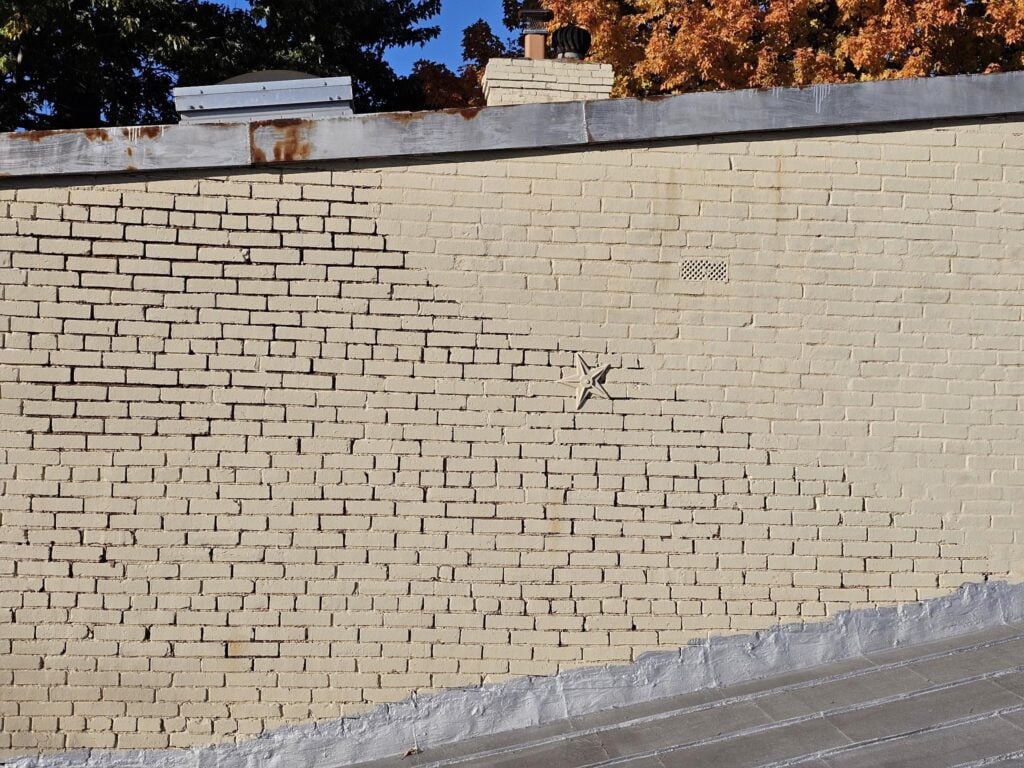
In most cases, the use of ferrous metals have been removed or replaced in the roofing industry in recent generations. There are many cases though, particularly for contractors like ourselves who specialize in the roofs of historic buildings here in Washington DC, where ferrous metals are still in place. It’s not that they’re currently being used prolifically, but where they were installed generations ago, they may still be in place. In many cases we have to interface or work with those old ferrous metals because, by today, they’ve mostly begun to deteriorate. In some cases though the extent of that type of deterioration may be significant.
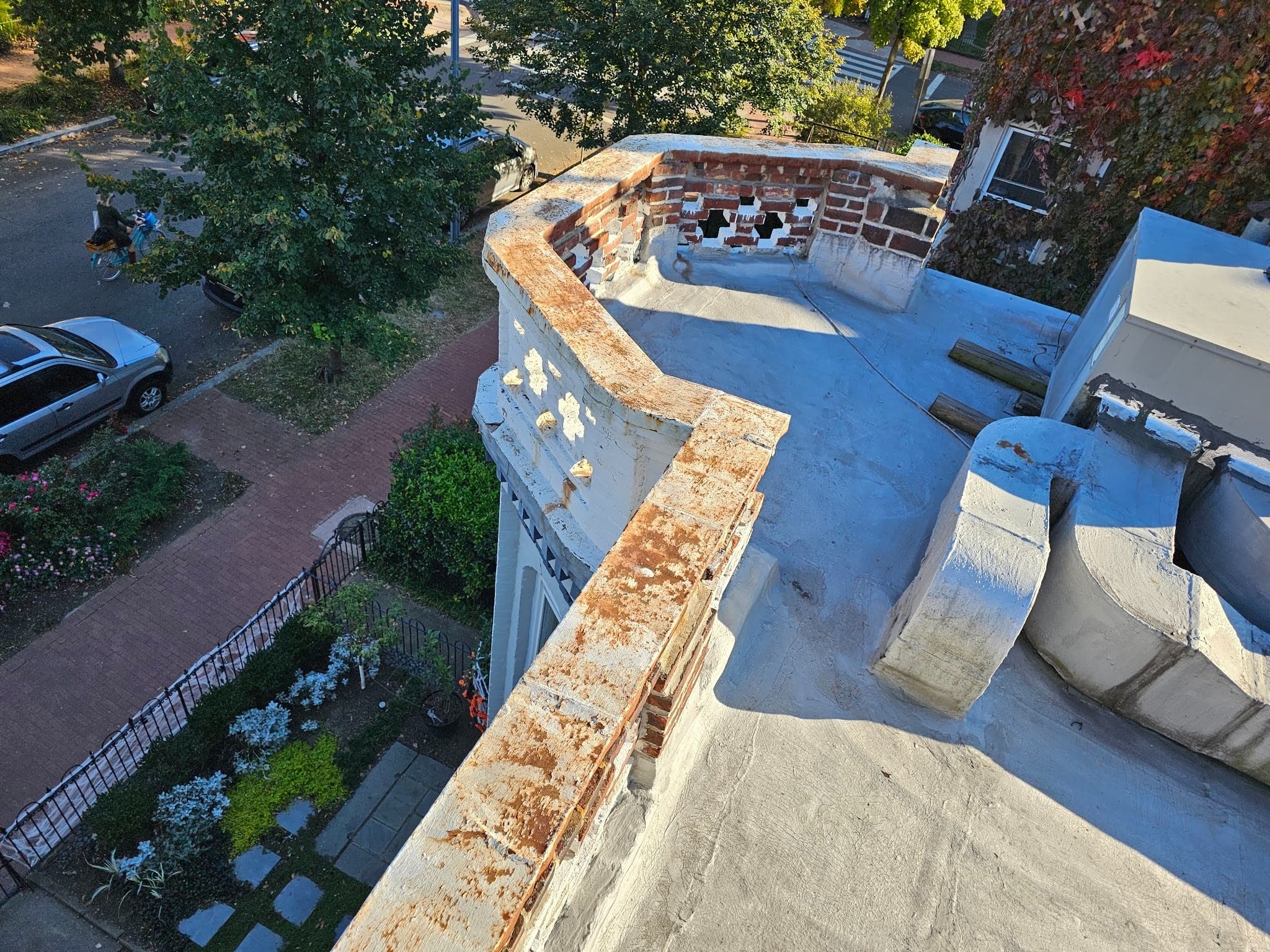
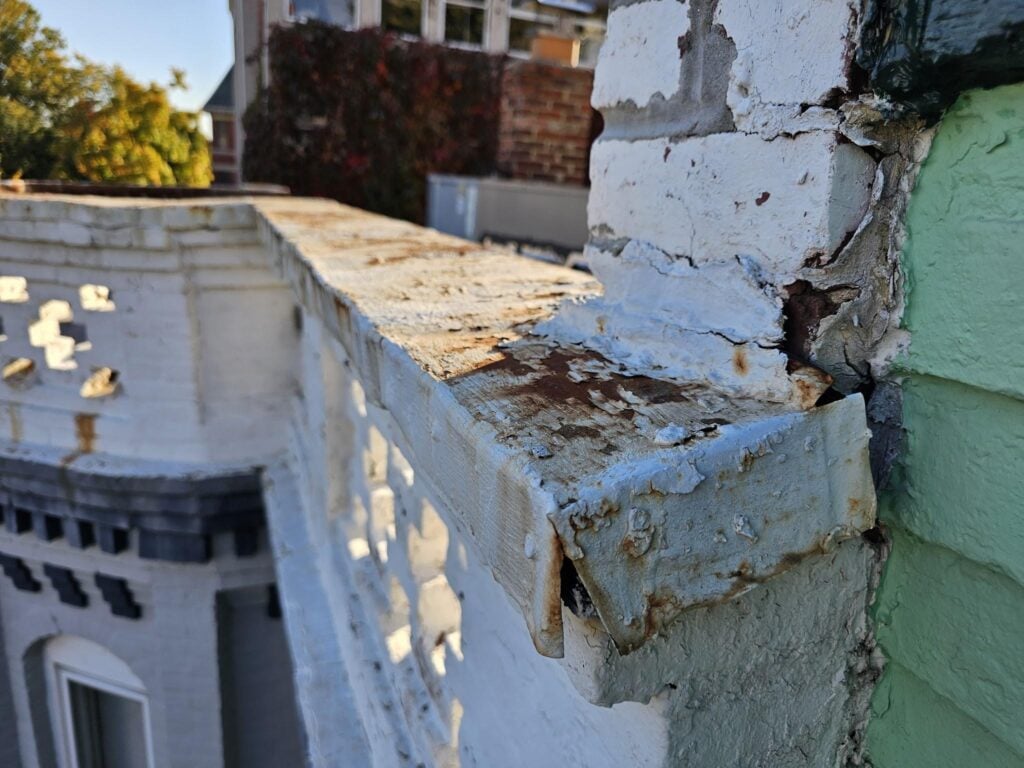
In the picture below, you can see a coping at the side edge of a historic building, where the roof terminates at the parapet. You can’t see the roof side, in this picture, from this angle. We know that the roof runs at a low slope angle, parallel and just below the height on the other side of that coping.
From a different angle, you can see the top of the front facade, in this case, above the height of the roof line. Here, the masonry has decorative cross-shaped type openings to create a type of aesthetic embellishment. The ferrous metal coping on top of this masonry wall extension has red rust and oxidation visually apparent at the surface of the coping metal. The coping metal, in this case, is important because it protects the masonry, at a horizontal shelf type configuration, from excessive ingress of moisture.
At horizontal surfaces like this, the top of the masonry, made in mass production, in brick units, has a flat top surface. That flat top surface will pool and puddle moisture. Over time as slow and small deterioration begins to occur, there will be divots and recesses into the upper surface, particularly concentrated around the brick-to-brick mortar joints. As the deterioration occurs, water will continue to cause more deterioration and water will enter deeper and deeper into the masonry. Without a protective covering like this ferrous metal coping, the damage will get worse and worse faster and faster as time goes by.
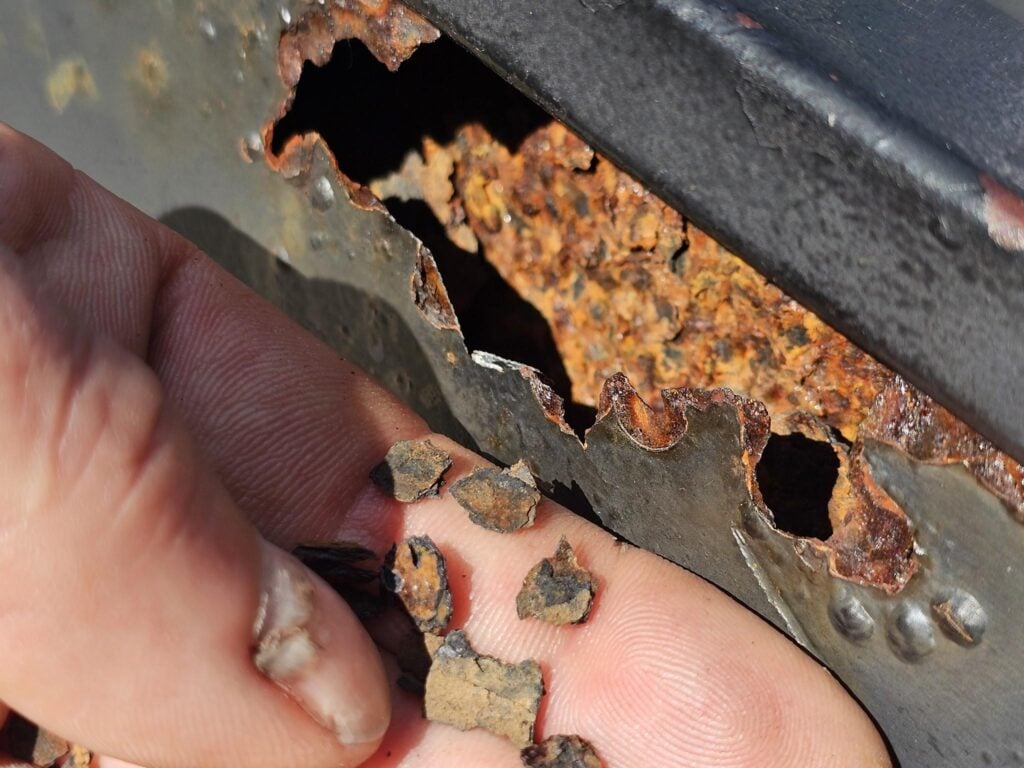
You can see up close for you of how ferrous metals just crumble into disintegrated particles over time without proper coatings. This is an extreme extent of oxidation.
From the angle in the picture below, slightly closer to the edge or face of the facade, you can see that this coping metal has slightly pulled away from the vertical wall substrate. The coping has an upturn where it meets the demising wall between the property where it is installed and the adjacent joining property. That upturn extends just about an inch or so. It doesn’t, however, extend into the mortar joint. It should. The building code actually requires that copings with metals like this have an accompanying counter flashing that is inserted into the mortar joint of the masonry above. There are acceptable alternatives to cutting raggles or reglets into masonry for the purpose of the insertion.
In some cases, depending on the material and roofing system type, termination bars may be applied directly against the vertical surface of the masonry. There is neither a counter flashing nor a termination bar here. Instead, the coping has pulled away from the substrate and left an open gap. That open gap is problematic. As water enters into the interstitial space between the underside of the protective metal and the masonry substrate, that water festers. It permeates or seeps into the brickwork. Once the area below the surface becomes excessively hydrated, it leads to accelerated oxidation and deterioration.
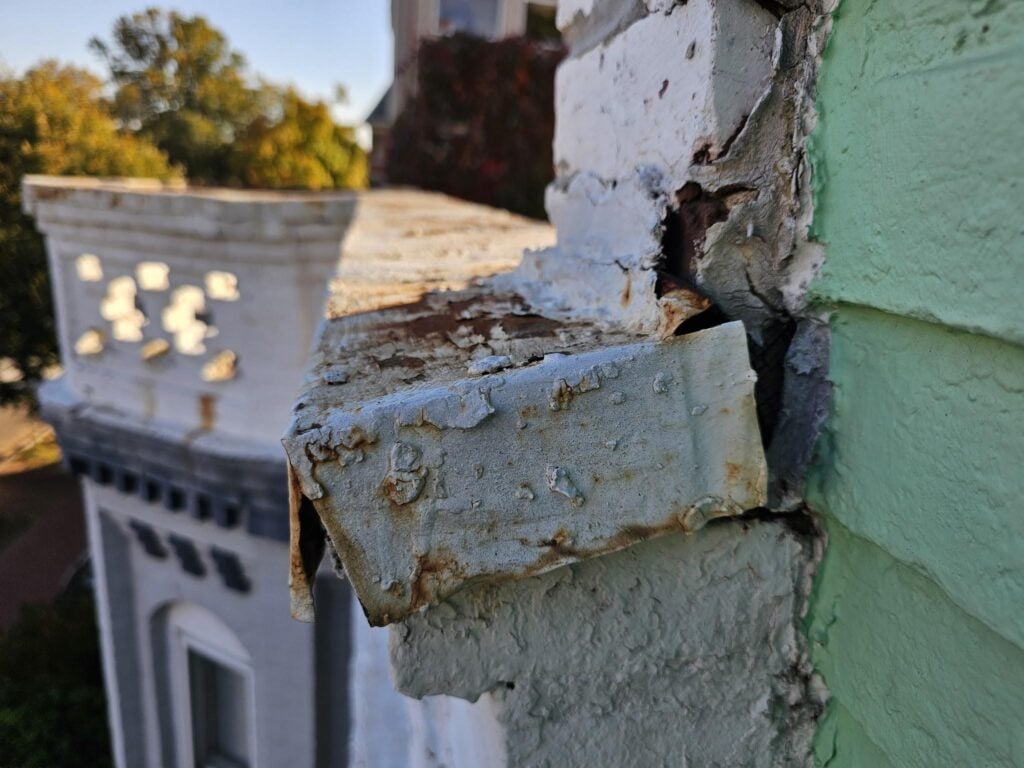
In many cases, especially where the copings are cappings are particularly ornate or decorative, it may be worth expensive cost of special ferrous metal restoration materials and the tedious labor required to prep and coat the substrate in an effort to forestall or postpone the replacement of the metals.
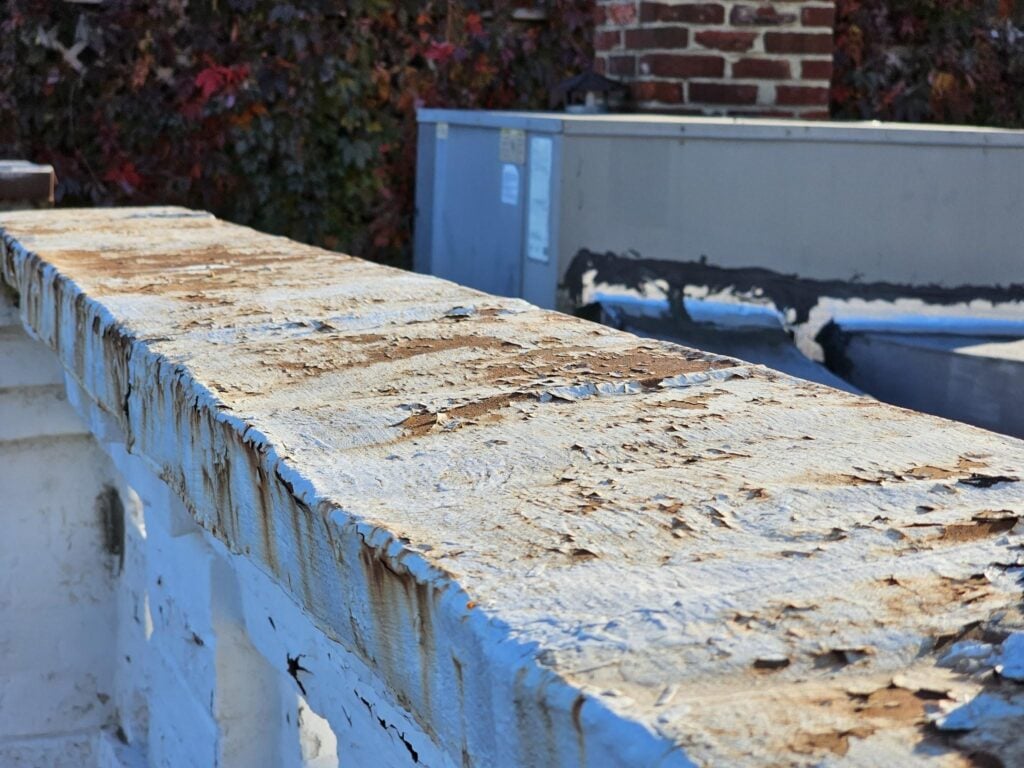
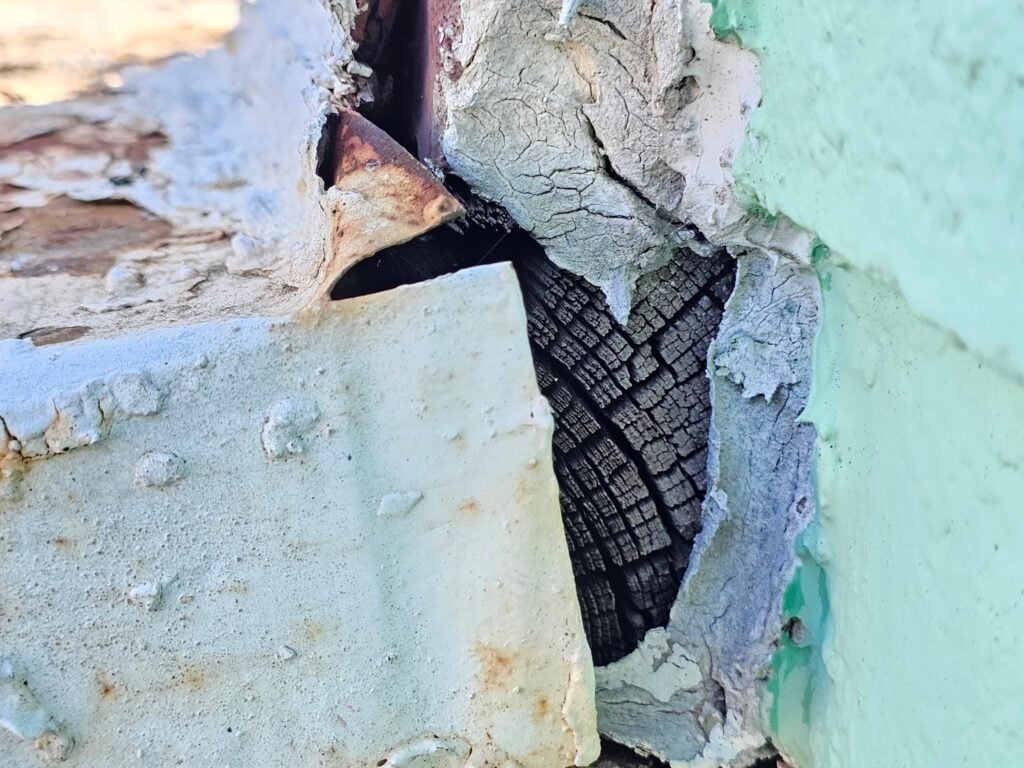
We talked about the details of deterioration and oxidation like rust that happens where water enters into areas between building materials. There’s another element that we haven’t discussed yet, here. Wooden nailer boards were used to anchor the fasteners holding the metal copings and flashings in place. The edge of those wooden nailers are particularly susceptible to exposure to moisture. With the coating not properly set in place, that wood end grain has become dangerously exposed.
When wood end grain is exposed to excessive amounts of moisture and even atmospheric vapor, it will swell and expand leading to increased and further separation of the intended protective materials. In time, all of these interconnected effects and actions lead to deterioration and destruction.
We provide this information here on our blog, and our website, to help our customers and future clients, and we recommend every building owner in DC who values the longevity of their roof (and their investments) and building use a contractor who values the simple and important principles of proper roof construction like Dupont Roofing DC.
Our company specializes in flat roofing here in Washington DC and we’re happy to help building owners of almost all types.
Learn more about our company and the proper techniques of working with roofing on historic buildings in Washington DC here on our blog at DupontRoofingDC.com, and you can call us at (202) 840-8698 and email us at dupontroofingdc@gmail.com. We are happy to help and at least talk through options.