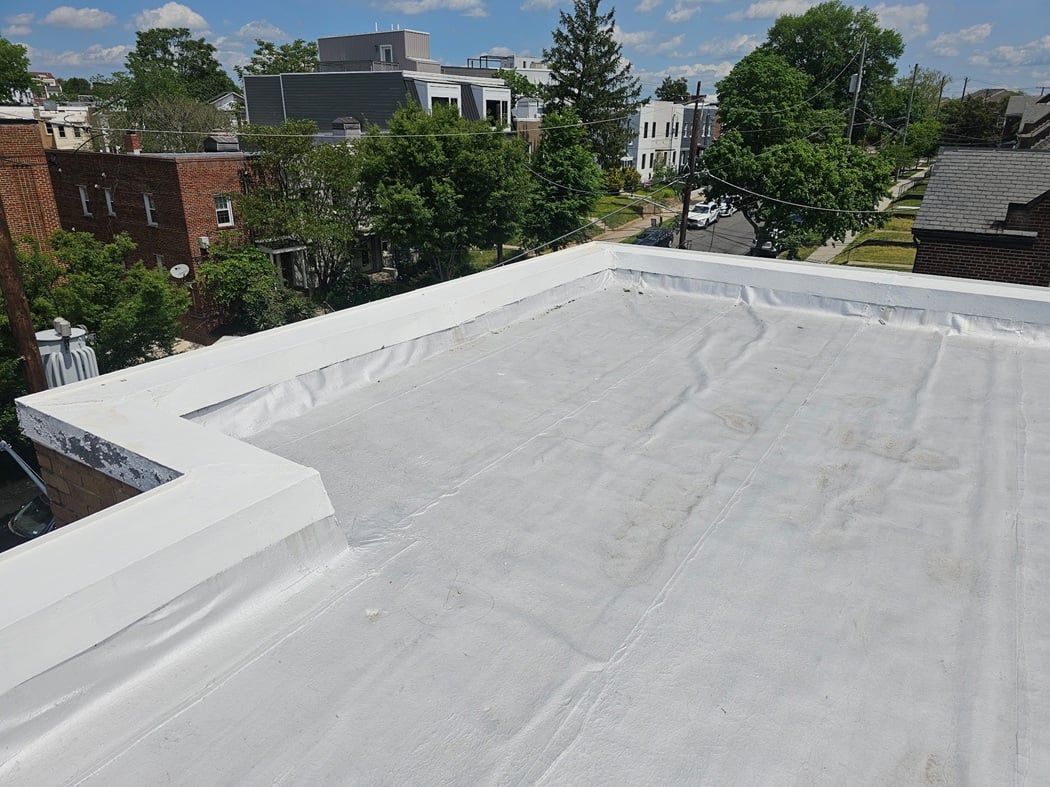
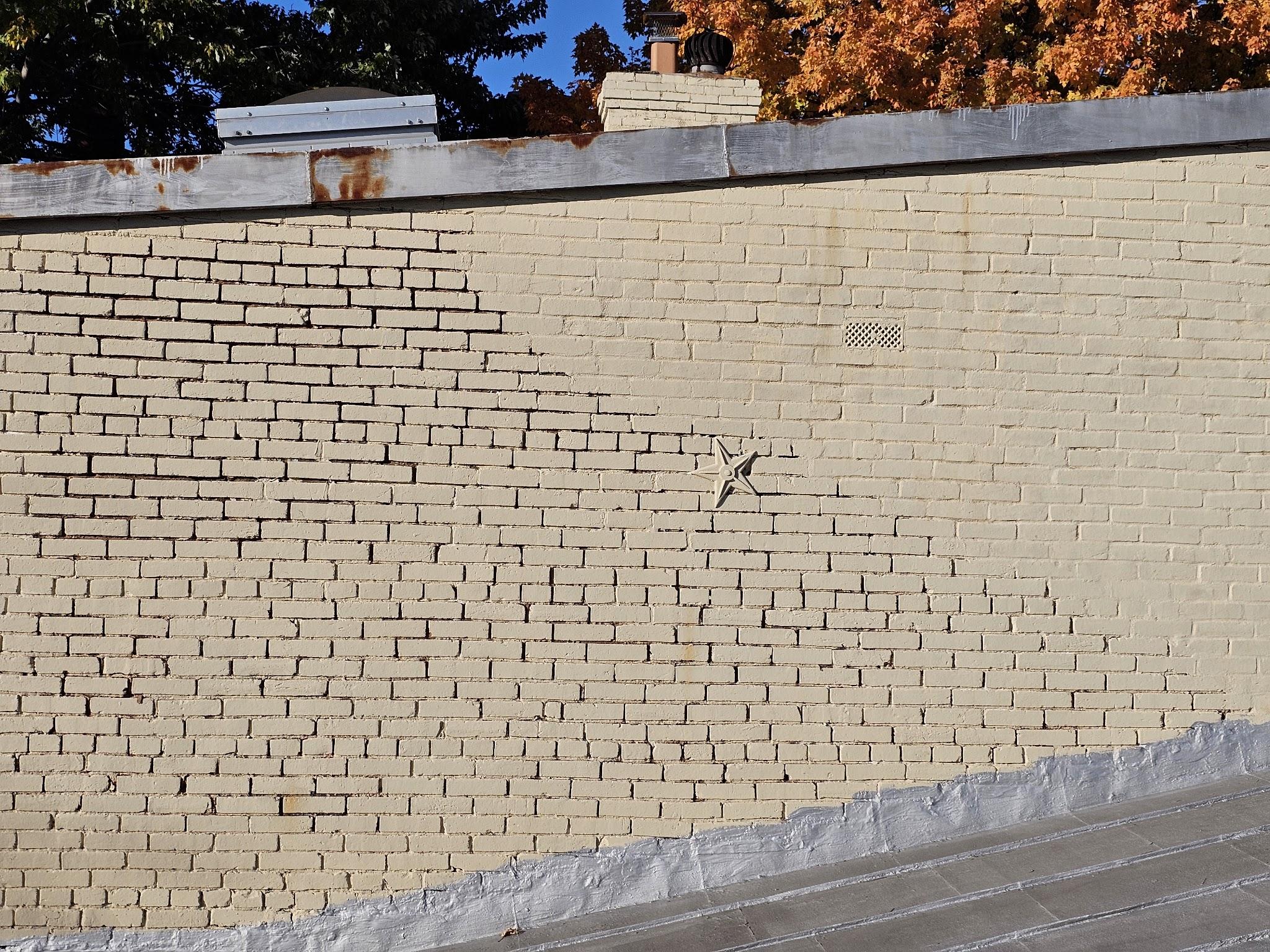
We’re looking at a modified bitumen roof that has been relatively well maintained and although it has a few defects which go back to installation, it’s not in terrible shape. Our job here was to fix specific items and provide an overhaul that would extend the life of this roof. We found several different types of both defects and damage and addressed them one by one.
Today, we’re looking at a specific area of impact damage and will explain how we think this type of damage occurred: This is a commercial roof. It is slightly different in scale and size because it’s much larger than a typical Washington DC row home roof, but the composition of the roof is very similar in many ways.
The picture below looks at an area of the low slope main field of the roof. You can see the upturn at the base of the parapet in the back of the photograph. This roof has been largely painted with an aluminum coating. The aluminum coating is a solvent-based type of paint with actual metal, in the form of pure aluminum in the paint solution.
As a quick side note, aluminum is a really interesting material. It is highly abundant on the surface of our planet but cannot be easily harvested in all areas. We commonly use ferrous metals in building construction, but aluminum is only about 1/3 of the volumetrically comparable weight and has an inherent resistance to exposure to moisture. Steel and iron, in comparison, will rust and deteriorate very quickly when exposed to environments of high moisture.
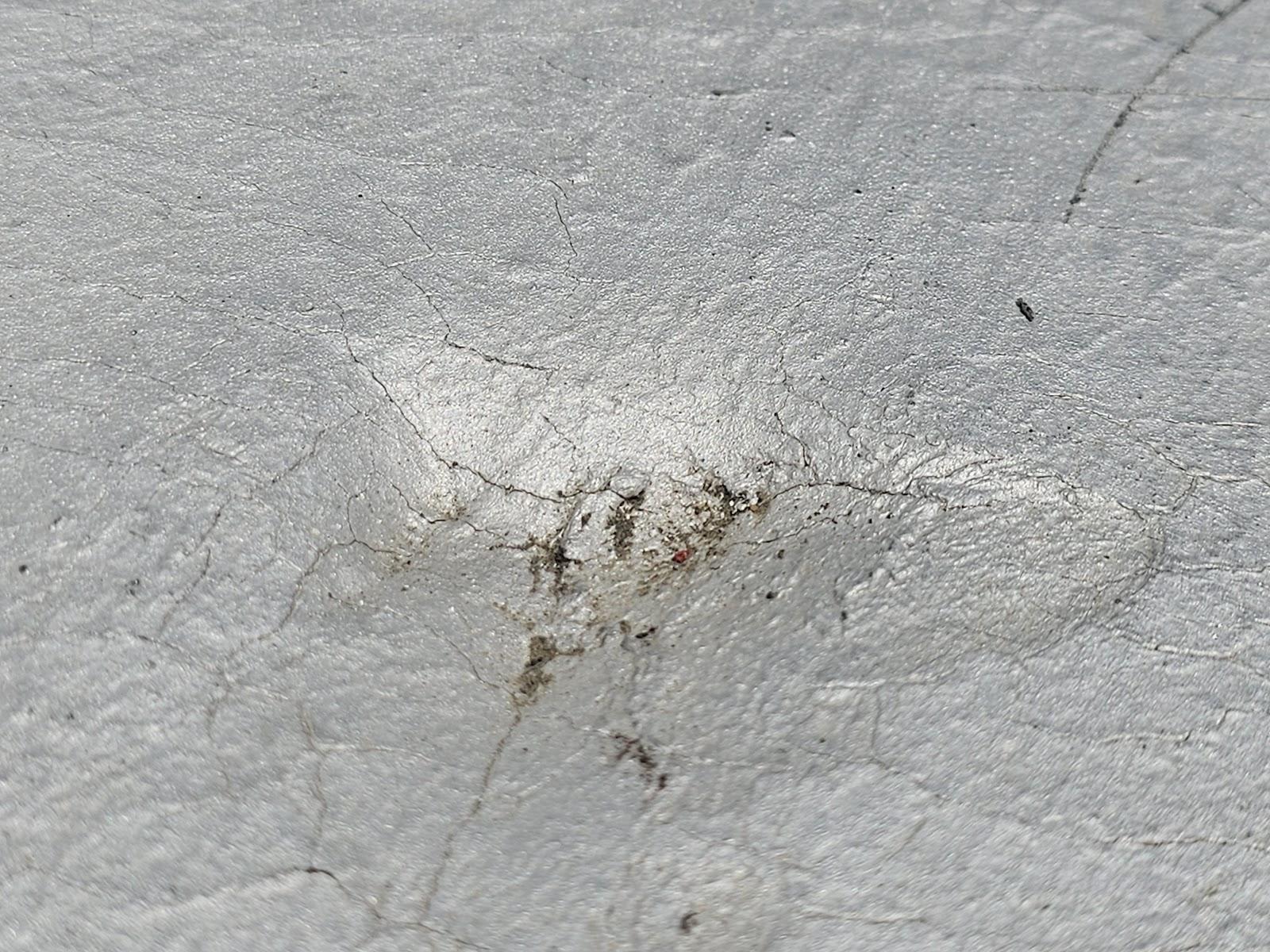
So this aluminum coating has been applied all over the roof to protect it from the ultraviolet exposure found in every day sunlight. That UV, in sunlight, will destroy the roof relatively quickly if it’s not covered with a protective coating like this. If you look closely at the picture below, you may notice there’s a divot that’s just a few inches wide in the field of the roof membrane. This particular type of roof is generally built with a homosote or poly-iso or even polystyrene underlayment below the roof membrane.
Polyisocyanurate is one of our particular preferences because it is durable from a heat exposure type perspective and has less risk of damage related to moisture exposure that you would find with the material like homosote, for example.
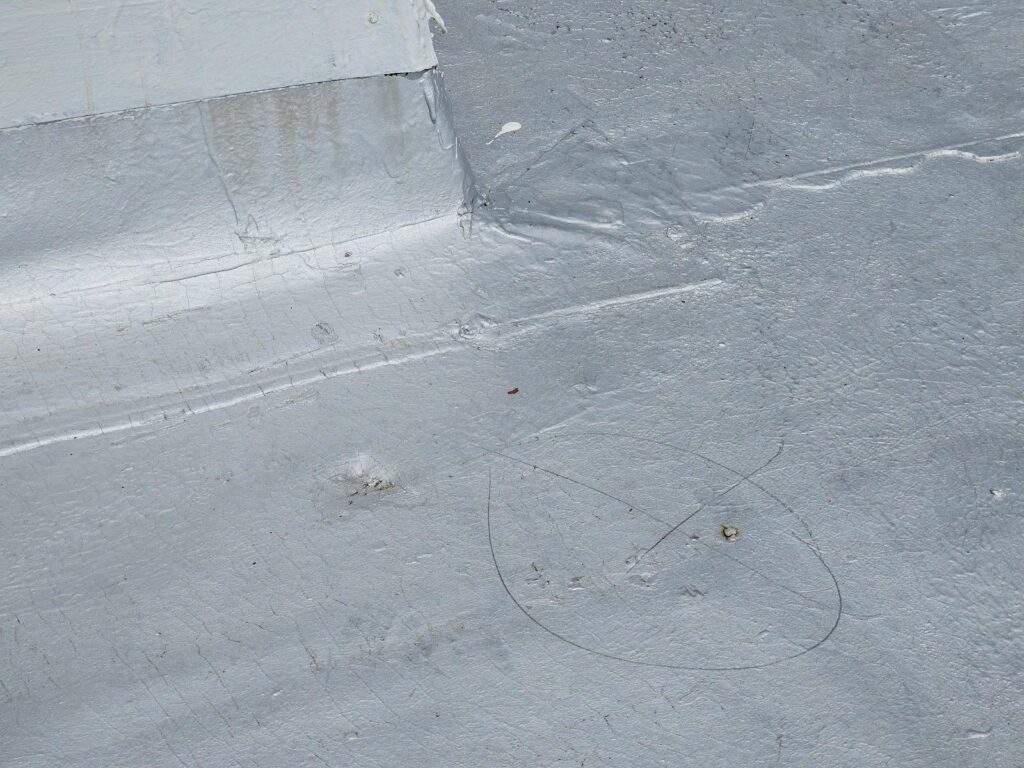
This past week we looked at areas where somebody had went through, way prior to us, likely years ago, and installed nails through the top of the roof membrane. That was an entirely bad idea. Roof membranes like this should never have fasteners installed directly through the low slope membrane without being covered with an additional layer of membrane. It’s also possible that these nails wiggled and work their way up slowly, bit by bit, from the substrate layers of membrane but even in the cases where they would have been used to secure underlayment, they should have been fitted with a large fender washers or similar type washers at every location of installation
There are certain conditions where it’s not as bad to install fasteners through a vertical portion of a similar type of membrane, but this is right in the low slope field. We will show several examples of nail pops like this coming through the roof and leaving it exposed to points of leakage. Repairing those nail holes through overlay was part of our scope of work in this work order.
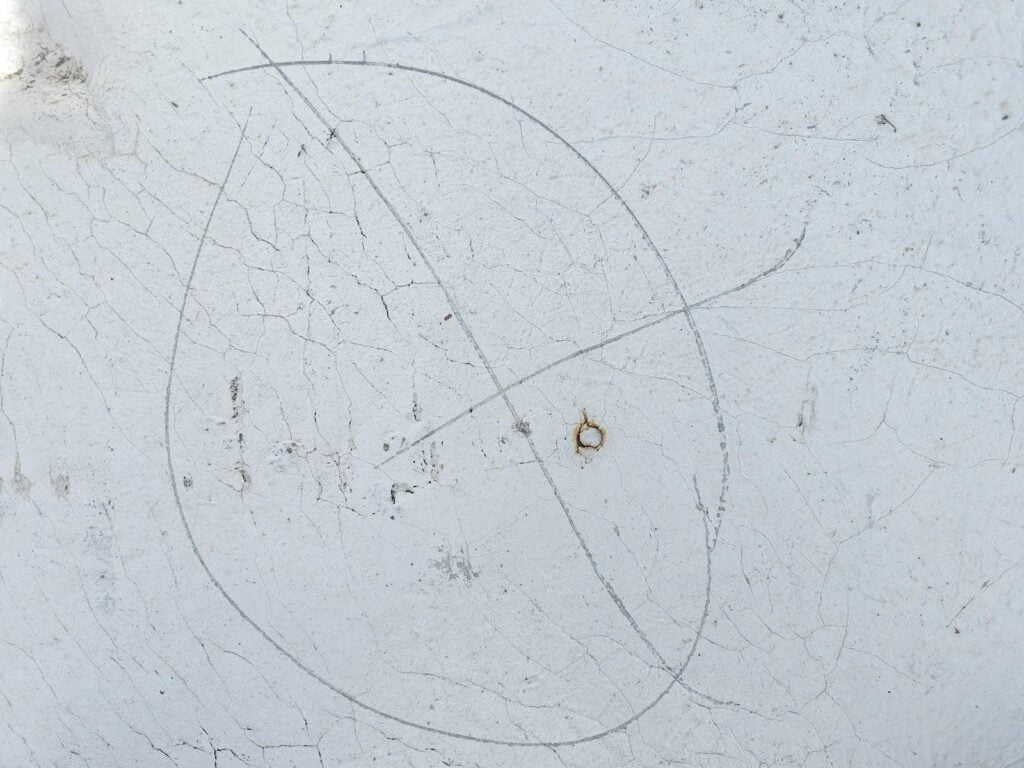
We also overlaid the area of the divot because we were concerned there were areas of tears or separation in the membrane just below the surface of the aluminum paint. Although the aluminum paint helps the roof, overall, one of the downsides to application of material like this is that it hides some types of substrate defects. We want them all to be exposed so we can see them clearly and identify them easily. Even with the coating applied though, we can still get a sense of where problems have occurred.
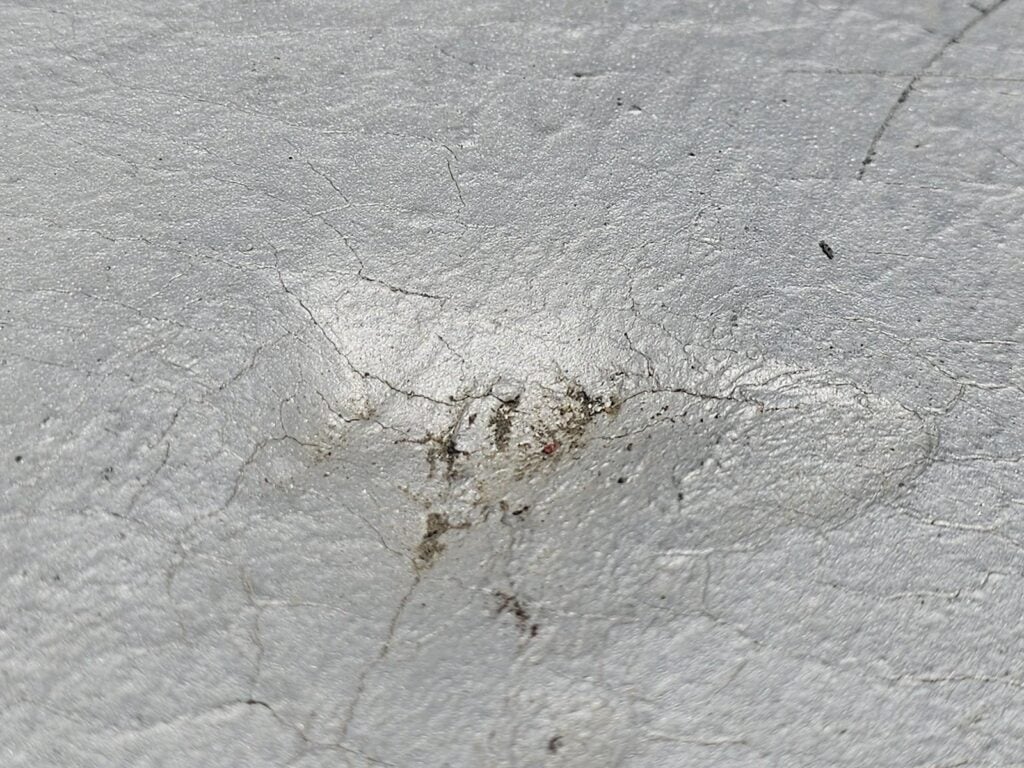
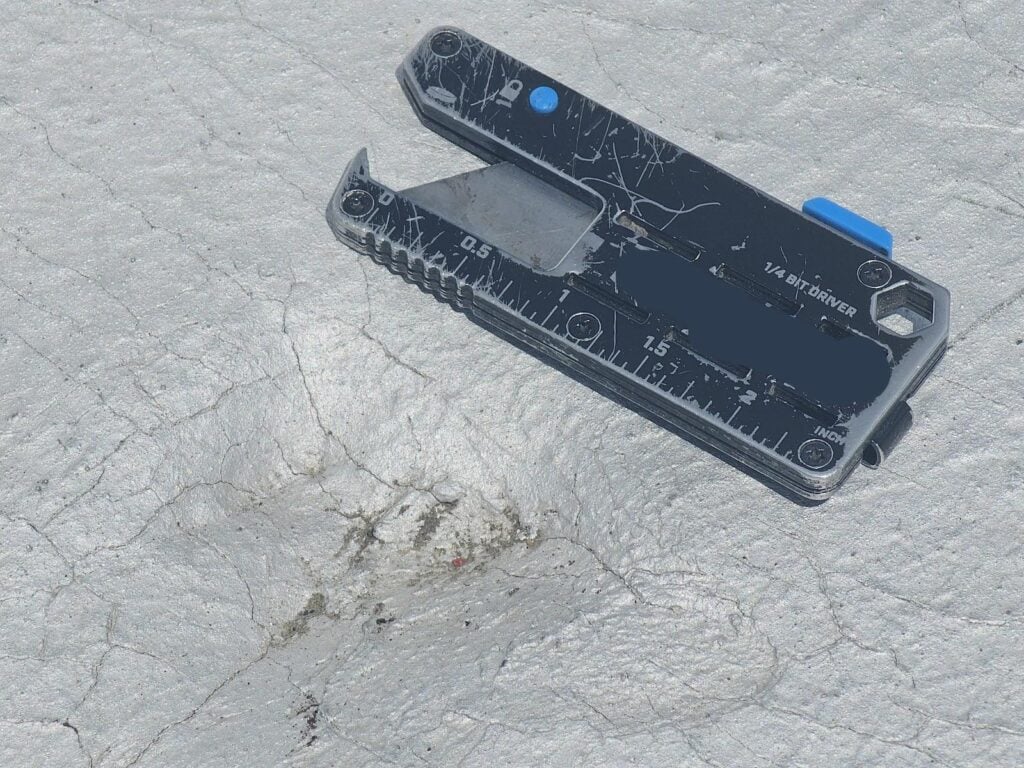
This particular divot is roughly 2 inches in length. It’s likely that this damage occurred when the HVAC contractors were installing rooftop AC units. We believe there’s another membrane of a roofing system below this top layer, likely made from built up materials instead of another substrate layer of modified bitumen. In modern installations, even without layers of roofing below, we would recommend the installation of insulation board, both for its insulative properties but also to prevent or resist some types of impact damage. There are other reasons why insulation or recovery board is useful, but not all contractors use it. We think they should though.
We provide this information here on our blog, and our website, to help our customers and future clients, and we recommend every building owner in DC who values the longevity of their roof (and their investments) and building use a contractor who values the simple and important principles of proper roof construction like Dupont Roofing DC.
Our company specializes in flat roofing here in Washington DC and we’re happy to help building owners of almost all types. Learn more about our company and the proper techniques of working with roofing on historic buildings in Washington DC here on our blog at DupontRoofingDC.com, and you can call us at (202) 840-8698 and email us at dupontroofingdc@gmail.com. We are happy to help and at least talk through options.