Today we’re examining the conditions of a modified bitumen roof membrane that looks relatively consistent overall. At a glance, it looks better than many of the roofs we have to analyze and repair. It’s still not in perfect shape though. There are active leaks and there are defects that go all the way back to the initial installation. We’ll talk about some of those details today. You can see several small areas of substrate buckling and surface undulation. Those areas and concerns of unevenness are relatively limited.
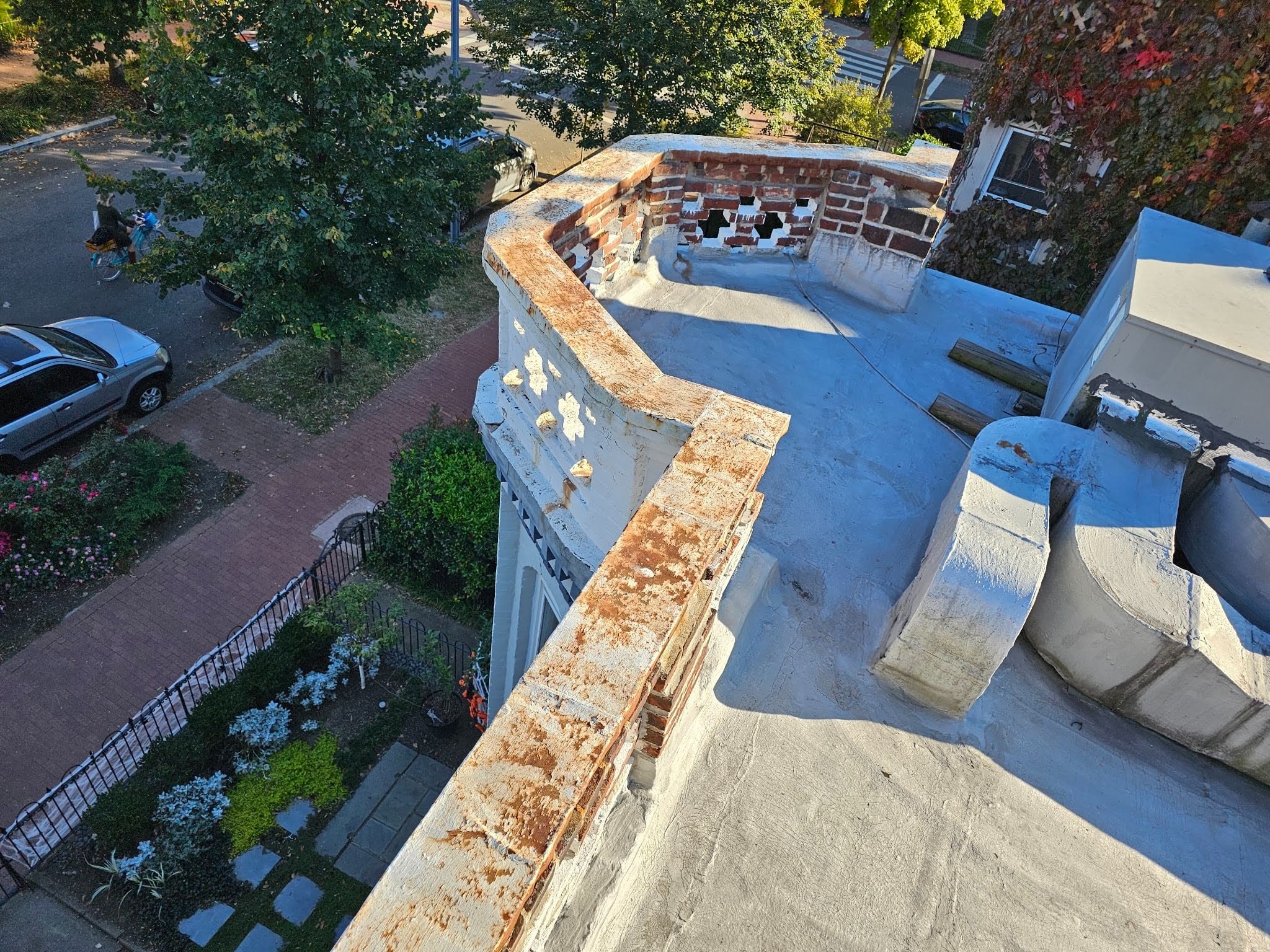
The modified bitumen membrane has a short parapet at three sides and has a metal coping built on top of the surrounding parapet. We’re going to mostly focus on the problems with the roofing membrane itself.
We should mention that even though this parapet coping looks to be in relatively good condition, it’s actually not the typical aluminum coping we find at most more modern roof replacements. Instead, this is a historic ferrous metal coping. Although it looks relatively decent, in good condition today, it has significant wear. It’s just been recently restored.
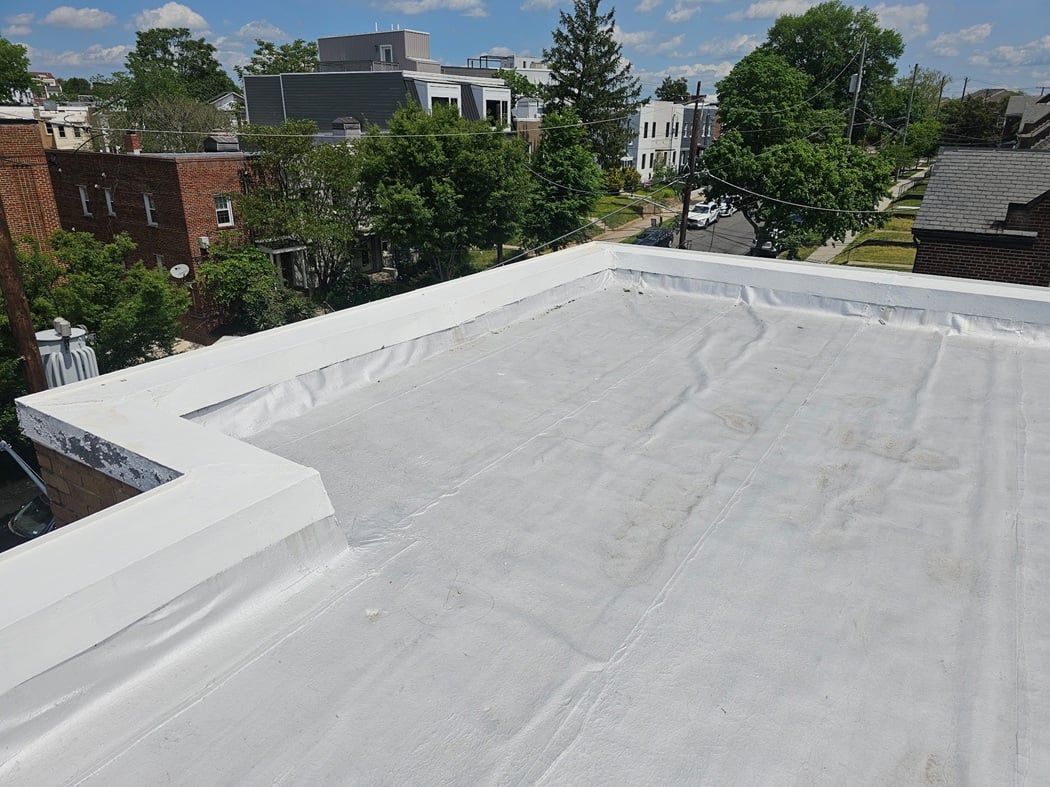
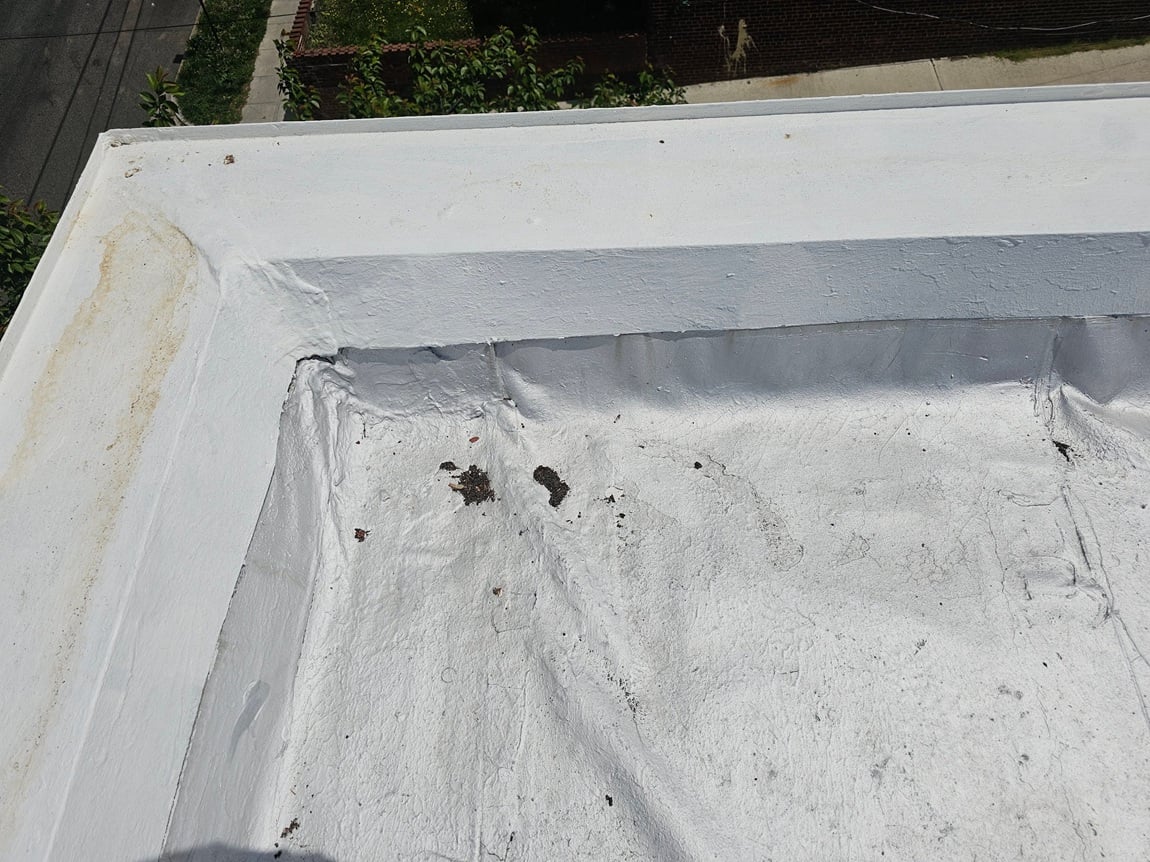
One of the worst cases of separation and undulation of the modified bitumen membrane is happening here in the front corner of the building. This isn’t a relatively small roof, it’s actually quite large. Typical historic row home roofs are somewhere between about 600 to 1,200 square feet on average. This roof happens to be a commercial building and is multiple times larger. It’s right here in the heart of DC though and is a historic building like many of the surrounding buildings.
You can see that there is a raised edge at the outer perimeter of the metal coping. That edge should be set at the base of the highest part of the plane of the coping, yet there is an area of ponding on the far left side shown in the picture below. You can see the shadows-like stains left from debris that have been captured or caught in that ponding area. That area of dirt isn’t actual oxidation, but even with an elastomeric coating on top of the sheet metal coping, it will lead to accelerated deterioration, in time. Most high performance coatings are not completely impermeable.
On a microscopic level, they still can allow some permeation of water. This is one of the many reasons why it’s important to avoid ponding or build up of water on a rooftop by building the substrate framing carefully. Avoiding ponding requires the initial construction to take the grade and slope into consideration at all aspects of the installation. It is generally easier to execute that level of consistency more thoroughly at the initial construction. It becomes compoundingly more difficult as decades and iterations of roof generations pass by in the years to come after the initial installation.
This bit of debris and dirt and shadows in the crevices of the rough texture of the substrate make a little bit difficult to see every little type of anomaly because there are several surface areas with distinct differences that look like potential deviation from an otherwise monolithically smooth and continuous surface of silverish color.
But looking back at the nail head in the next picture below, you can see one of the differences is the color red from oxidation around the Ring of that nail head. It’s the red color that makes this look a little bit different because the other areas of just plain typical dirt and dust build up and accumulation don’t have that red color. You can see that, even when you’re standing at full height with your eye five or six feet away from the surface of the roof.
When you gaze across the surface of the roof, there are several details that appear to look like possible problems, but the majority of them were just dirt that has seeped its way into the crevices in the texture of the surface of the roof. This nail head pop looks actually kind of similar from a distance, it’s only when you look really close that you happen to notice that red oxidation around the rim of the nailhead. A picture of another spot of typical dirt or flaking of paint to expose the modified bitumen membrane below follows in the next picture.
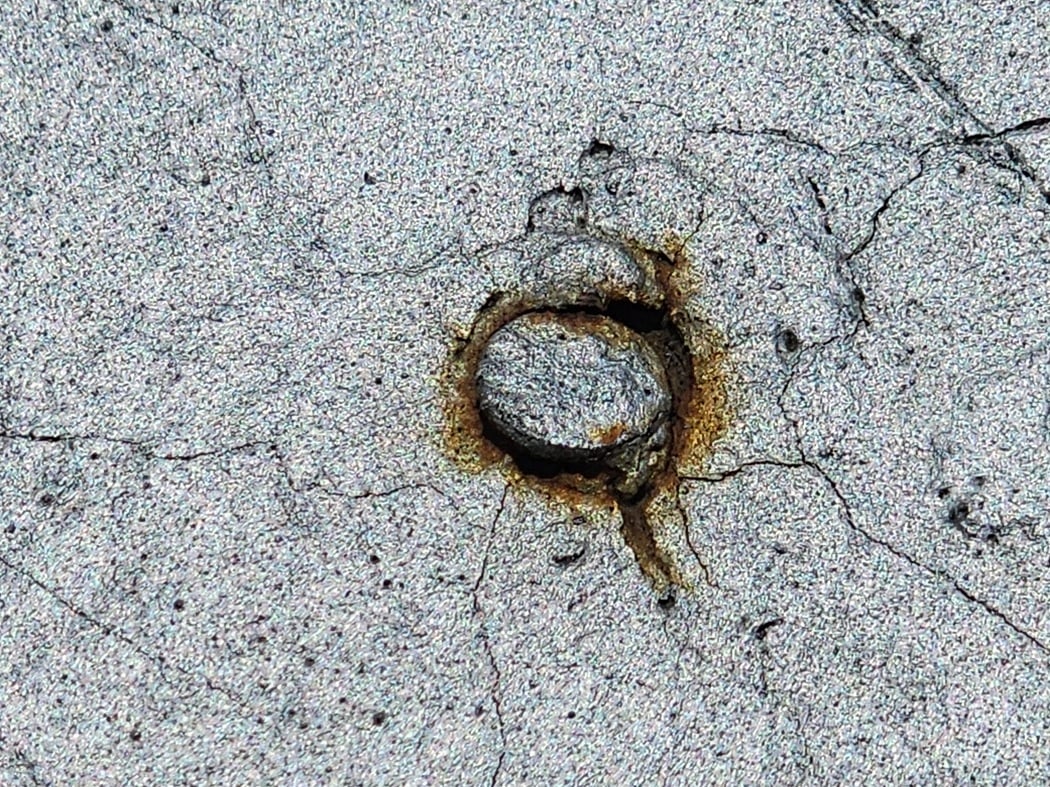
Another example of a nail pop, at an area of more deteriorated but otherwise similarly silver paint coated modif ied bitumen roof membrane, follows in the next picture below.
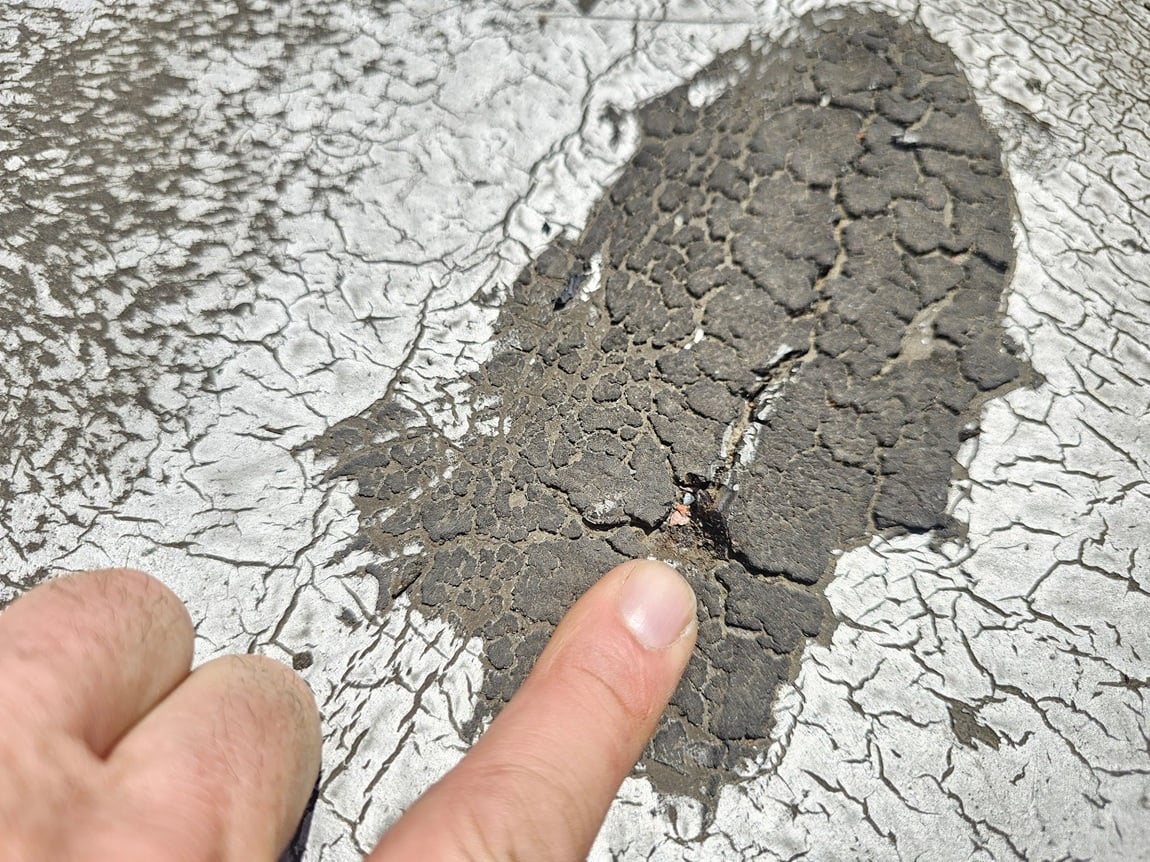
Here, you can see one of the nails that another contractor has left laying about on the rooftop. Often these nails are not making their way upwards, working their head through the surface of the modified bitumen. Instead. When contractors discard debris and leave trash on top of the roof, it can cause serious problems because the people who inadvertently walk on top of this nail heads can unintentionally cause new holes right through the rooftop membrane.
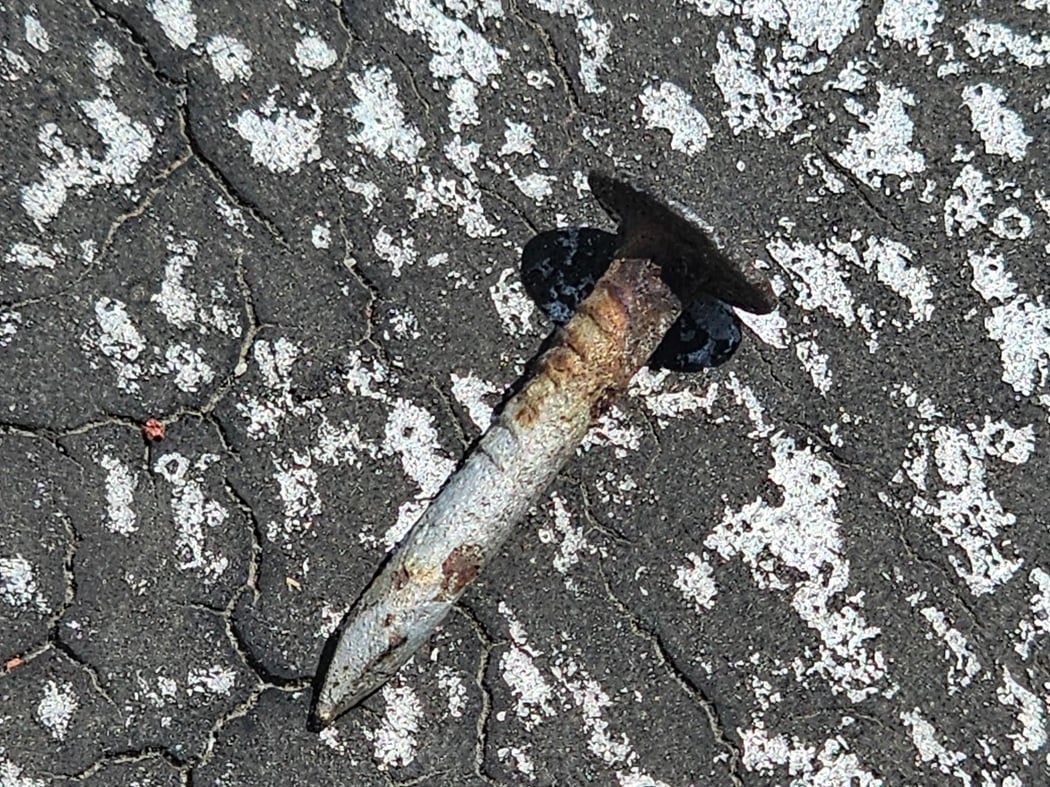
In this coming week, we’re going to look at additional types of damage at this rooftop. In addition to another nail hole left through the membrane, there are also specific parts of suppression, likely caused by impact damage.
We provide this information here on our blog, and our website, to help our customers and future clients, and we recommend every building owner in DC who values the longevity of their roof (and their investments) and building use a contractor who values the simple and important principles of proper roof construction like Dupont Roofing DC.
Our company specializes in flat roofing here in Washington DC and we’re happy to help building owners of almost all types. Learn more about our company and the proper techniques of working with roofing on historic buildings in Washington DC here on our blog at DupontRoofingDC.com, and you can call us at (202) 840-8698 and email us at dupontroofingdc@gmail.com. We are happy to help and at least talk through options.