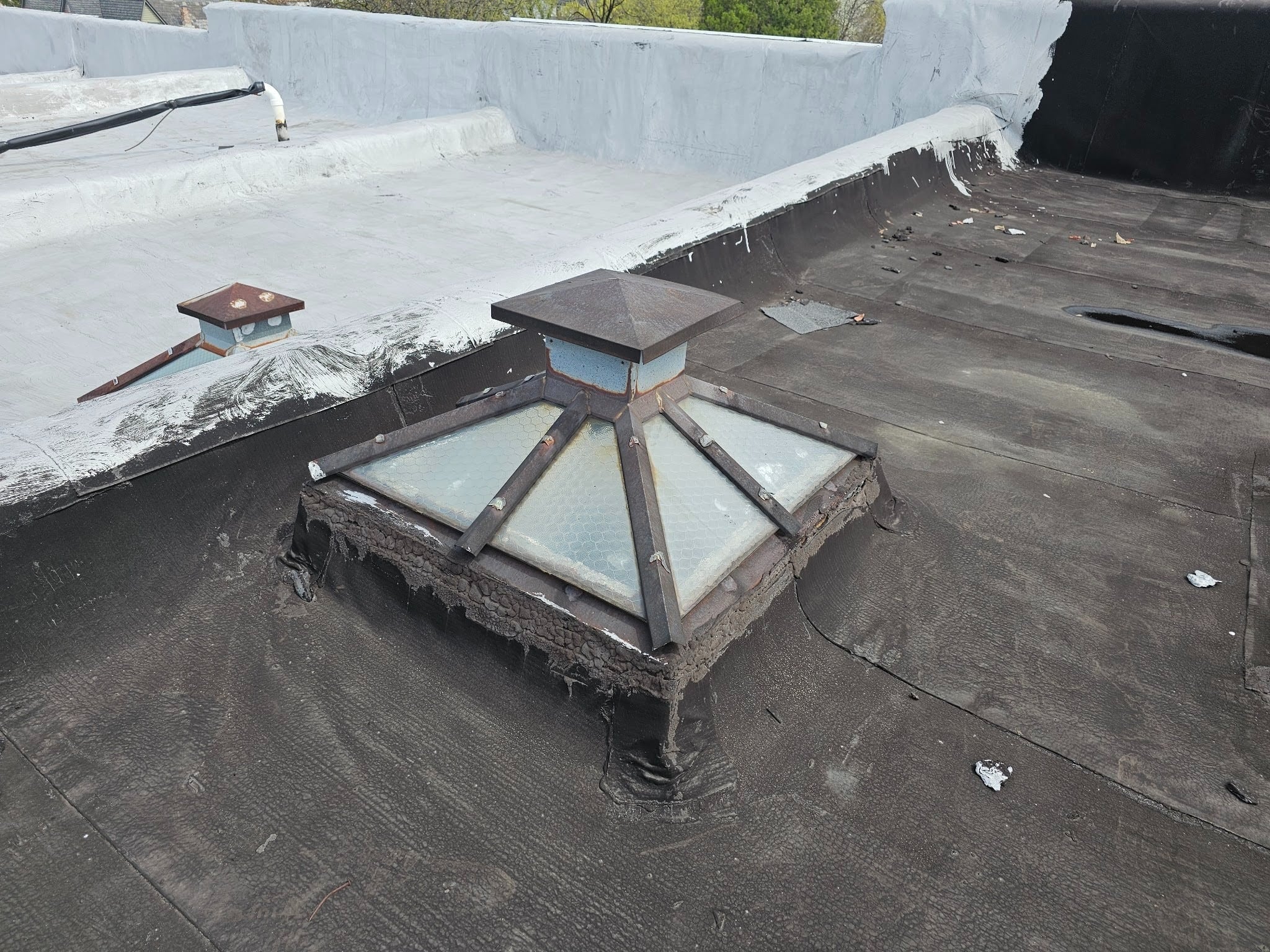
One conversation that comes up with us and our clients all the time is whether or not they should repair their existing roof or get a new roof. The difference is really sometimes the existing old roof is in such bad condition that it’s not worth trying to patch it up more. Instead of continuing to kick the can down the road, sometimes it’s just better to put a new roof on the building. Today we’re going to look at a couple examples of things that are beyond the point of just repair.
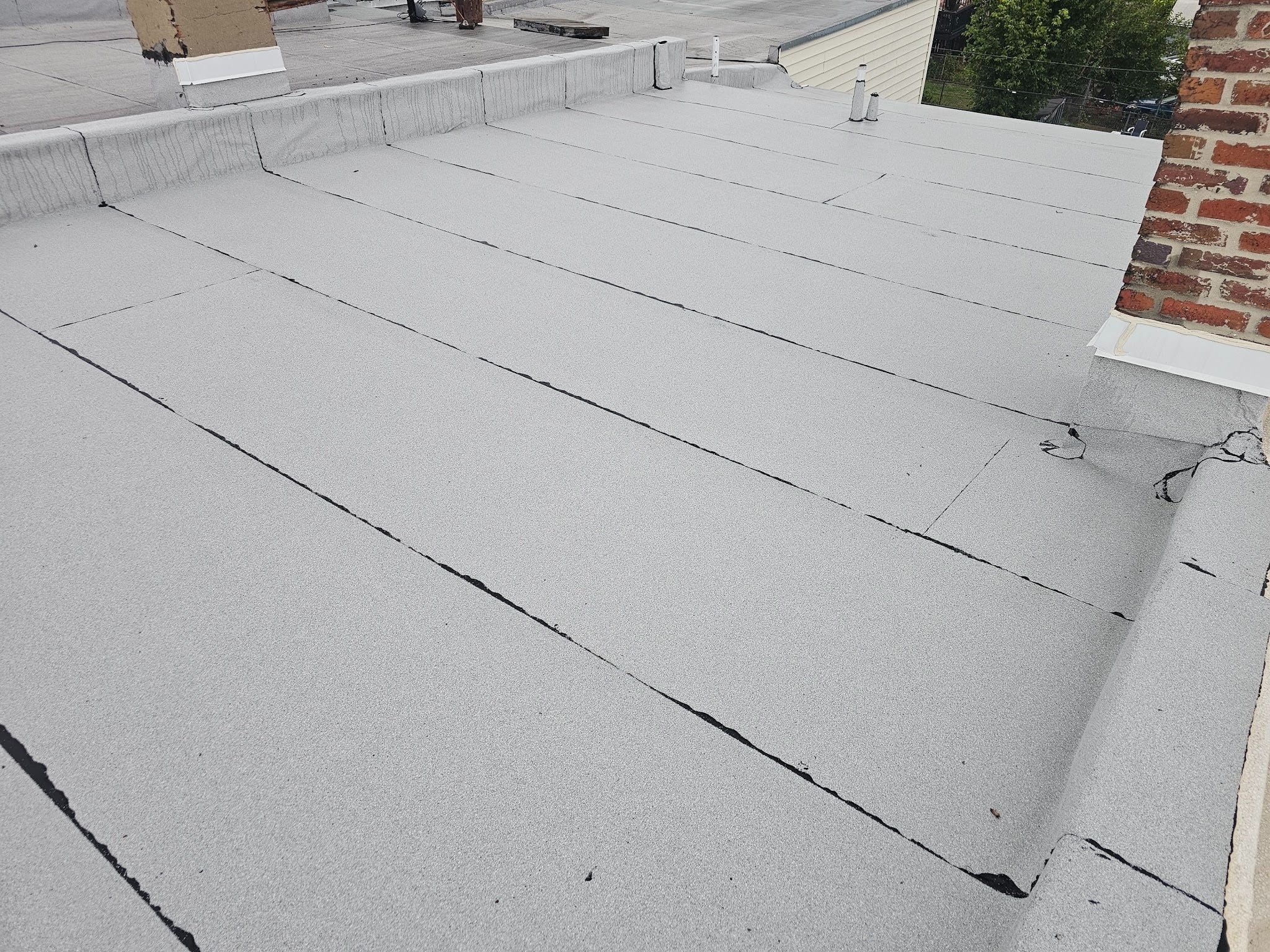
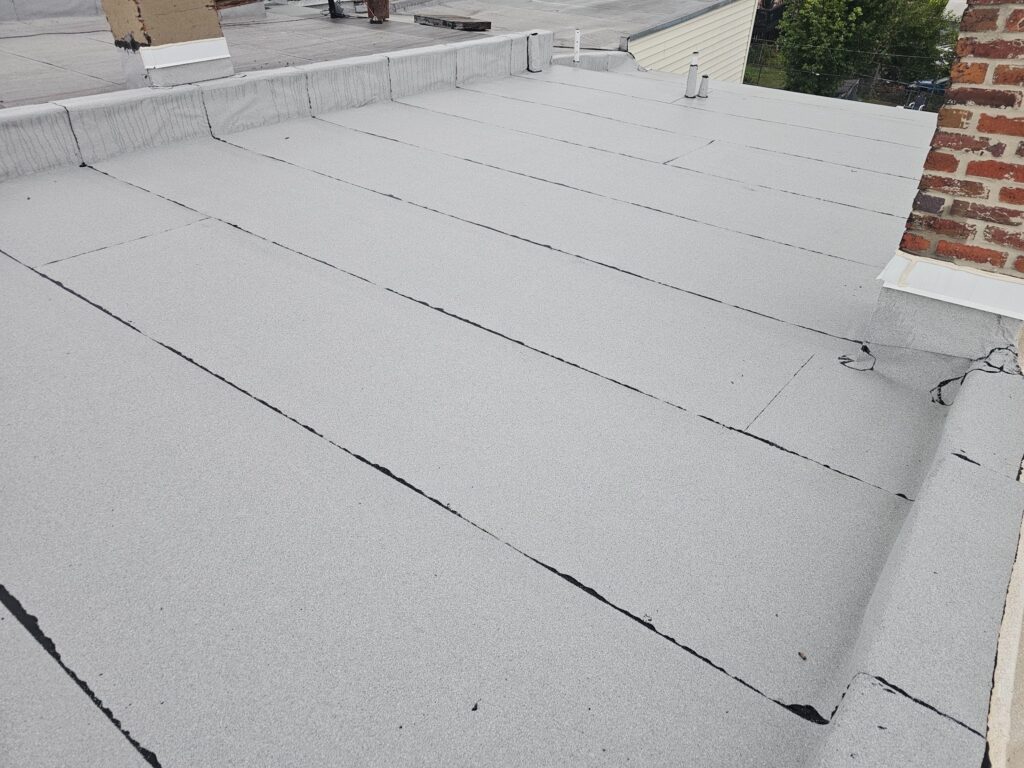
In the picture below, you can see a new modified bitumen granulated style membrane. We generally recommend the use of TPO membranes with a metal coping instead of the slightly older style of modified bitumen. There’s some advantages to new TPO roofs. A new TPO roof can create significant energy savings for a building. People sometimes refer to this as energy efficiency, but a TPO roof reduces heat load gain significantly in the hottest summer months. It can literally reduce cooling cost drastically in the summer. TPO roofs are most commonly a bright white color. In contrast, the modified bitumen roof in the picture below, is a medium grey color. That subtle differences can be significant in terms of solar reflectivity.
Here though, today, we are looking at this new modified bitumen roof as a counterpoint to the older roofs we will look at in this article and series.
The picture below shows an older modified bitumen roof with a black granule instead of a light gray color granule. At a glance this roof might look similar to the new roof. It is actually in very poor condition though. Regretfully, the client had a solar company install solar panels on top of the roof and cause even more damage. First, it would have been good to install a new roof first. Obviously it’s easier to install the roof before the panel system and the panel support system is installed.
If you install the new roof at that point before the panel structure and framework is installed you have free access to move and work across the roof surface. After the solar panel.system is installed, it’s much more difficult to remove an old roof and install a new one. You can no longer access the roof surface freely, instead you have to crawl around and under a bunch of different frames just to get to the roof itself. Once the panel system is installed it’s no longer conducive to upkeep, maintenance. It is definitely not conducive to repairs or replacement.
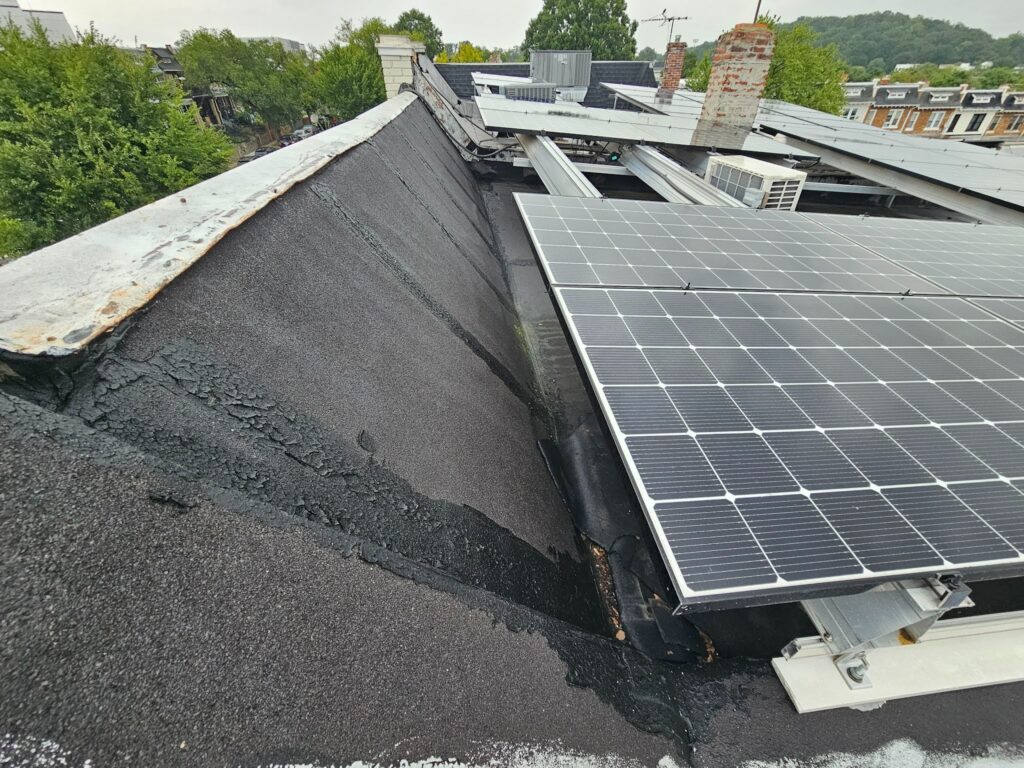
The second reason It’s better repair or replace an old and worn roof before installing solar panels is because the new panels are intended to be in place for many years. Once you put them on, the idea of taking them back off just to do routine maintenance or to remove the roof system is counterproductive. It would be extra work which is costly for no additional benefit.
If you are unclear about why this particular roof may be excessively worn and damaged, we can point out a few details without even zooming-in. This particular current roof, at the time of taking a picture, had been on the building for a while already, but was never really properly installed, even way back in the beginning. Back when they installed it, they didn’t install it correctly because they didn’t properly torch the underside of the modbit membrane.
There are actually several defects that are observable or visually apparent right from the surface. There’s undulation in the surface of the roof membrane which indicates improper adhesion at the time of the initial install. Seams have also been reworked which indicates delamination has occurred which was caused from improper torching.
Just by quickly looking at his roof from a distance, you can see that the seams have been reworked or overlaid or embedded in the interstitial space with an asphaltic mastic after the time of the initial installation. This means that the delamination was discovered and/or concerns for leakage occurred and then this improper type of rework was applied. Both iterations of installation or rework were done incorrectly and the problems have still never been repaired.
Here at this point these compiling conditions have led to more problems. As well, the incorrect treatments have increased the difficulty to repair it properly now that the interstitial overlap has been improperly treated with asphaltic mastics.
Asphaltic mastics work well in an emergency. For example when there’s pouring rain and something needs to be done to stop the inflow of water through a roof system, an asphaltic mastic might be the best choice. Modified bitumen, though, is much better repair using synthetic or polymer materials that have much higher performance than asphaltic materials. Asphaltic materials naturally lack inherent resistance to ultraviolet rays and will not last very long without being recovered themselves.
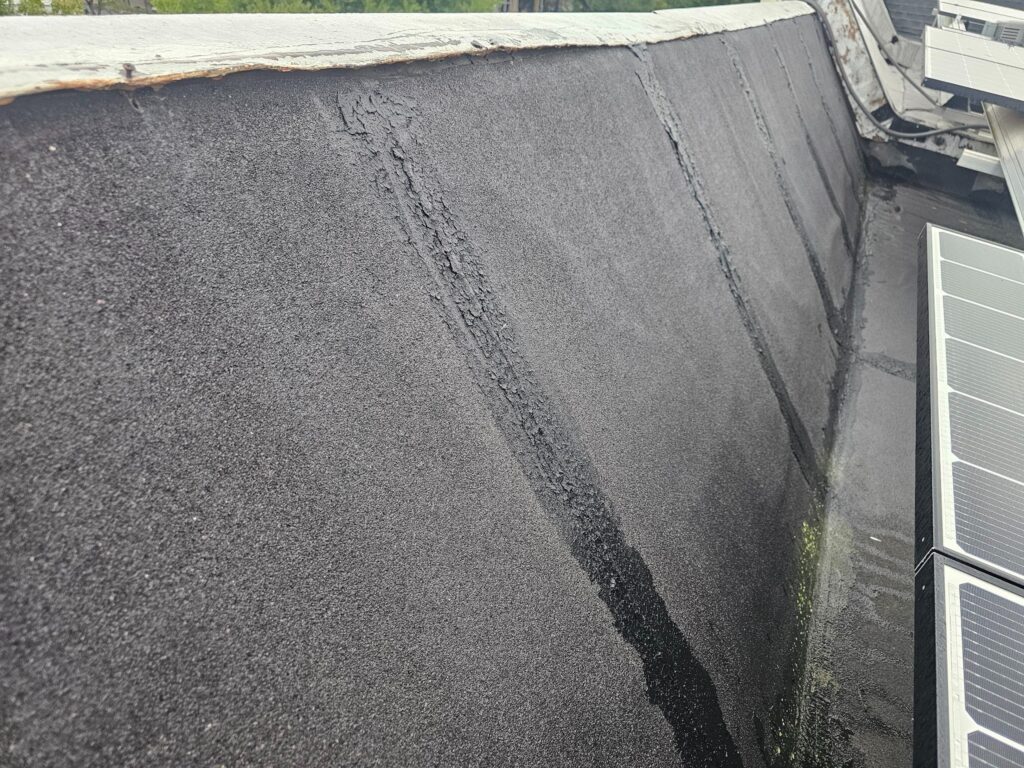
Instead of doing effective repairs on top of the roof that was installed improperly from the first day, and instead of installing solar panels on top of the roof system that’s already in bad shape, we highly recommend a replacement and removal of the old roof first.
It makes a lot more sense to improve the bad roof condition before moving on to something that is intended to economically lock in a bad substrate. Instead of compiling problems, talk to a professional roof company, install a new roof system and save much more in the long term. Repeated unnecessary iterations of rework is highly counterproductive, both in energy, personal patience and also economic efficiency.
In this coming week, we’ll take a look at how solar panels, when installed improperly, can cause significant damage to an otherwise good roof system.
We provide this information here on our blog, and our website, to help our customers and future clients, and we recommend every building owner in DC who values the longevity of their roof (and their investments) and building use a contractor who values the simple and important principles of proper roof construction like Dupont Roofing DC.
Our company specializes in flat roofing here in Washington DC and we’re happy to help building owners of almost all types. Learn more about our company and the proper techniques of working with roofing on historic buildings in Washington DC here on our blog at DupontRoofingDC.com, and you can call us at (202) 840-8698 and email us at dupontroofingdc@gmail.com. We are happy to help and at least talk through options.