Roof Damage from Neighbor’s Trash: Causes, Risks, and Repair Solutions
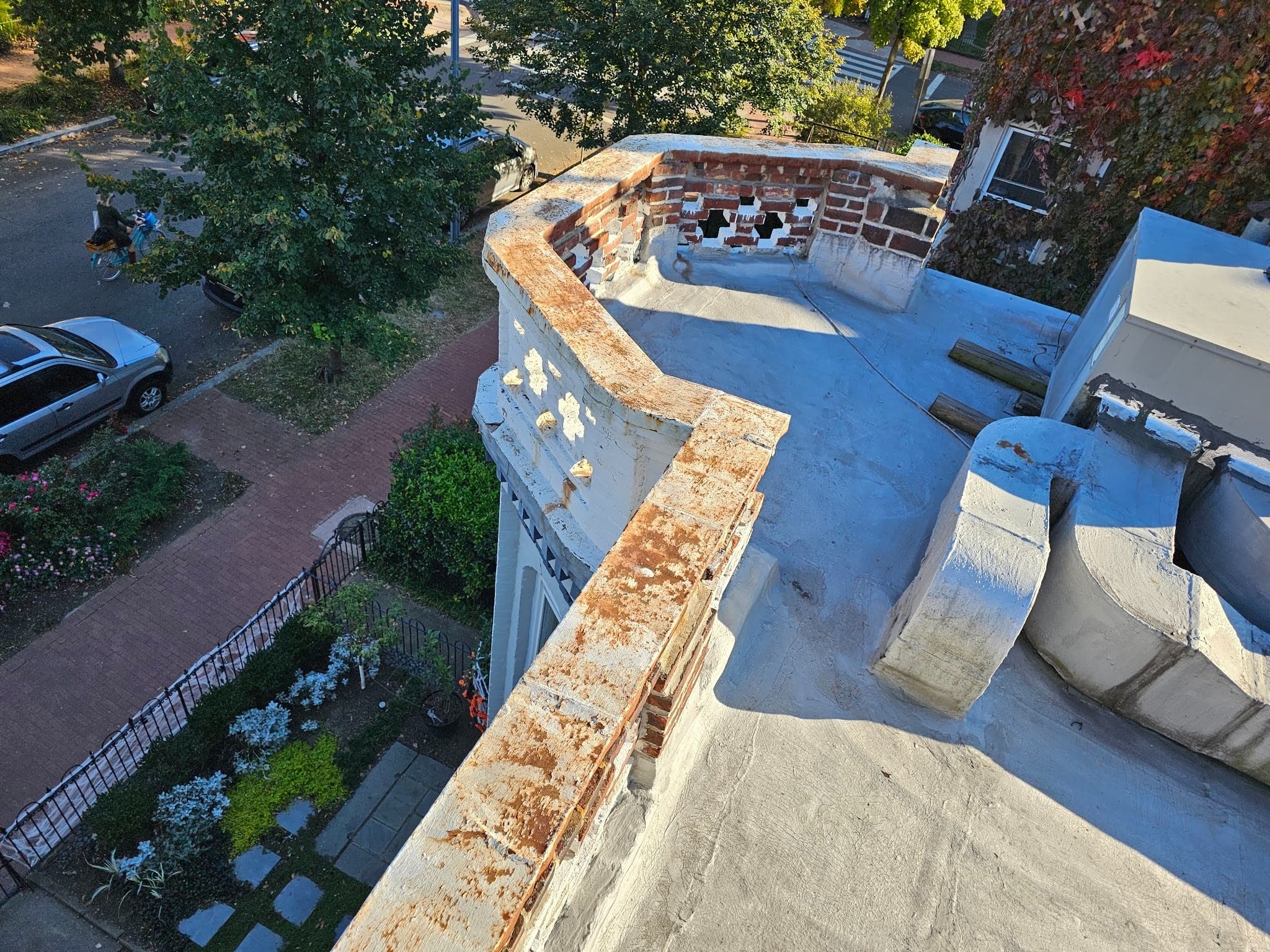
This past week we looked at an example of roof debris discarded all over the roof next to the one where a roof got changed. A building owner’s contractor, essentially, took off one roof and then dumped all that trash on the neighbor’s roof. Then they left it there and we know they got away with it because it’s been there for a while. We can tell by the age and the deteriorated crusty asphalt on the surface of the debris that it wasn’t something done recently.
In the picture below, you can see a single screw that was taken out of the neighbor’s roof and then dropped on the roof next door by the contractor working for the neighbor. This single screw isn’t at all reflective of the large amount of trash they left. It’s just a simple and perfect example of the kind of problems caused by trash left behind. The contractor walked all over on top of the trash they left behind and you can see the damage. Here, this single screw has a threaded shaft and a bugle head.
The bugle head sticks out a bit like a tee just like you would find on a common nail head. Bugle head screws have an even sharper edge around the head of the screw though. Here, since the modified bitumen roof membrane is relatively tough, it can withstand a lot of damage. When somebody puts their weight on a tiny screw head, though, especially with a sharp edge, it can actually cut right through the roof membrane. That’s a big problem.
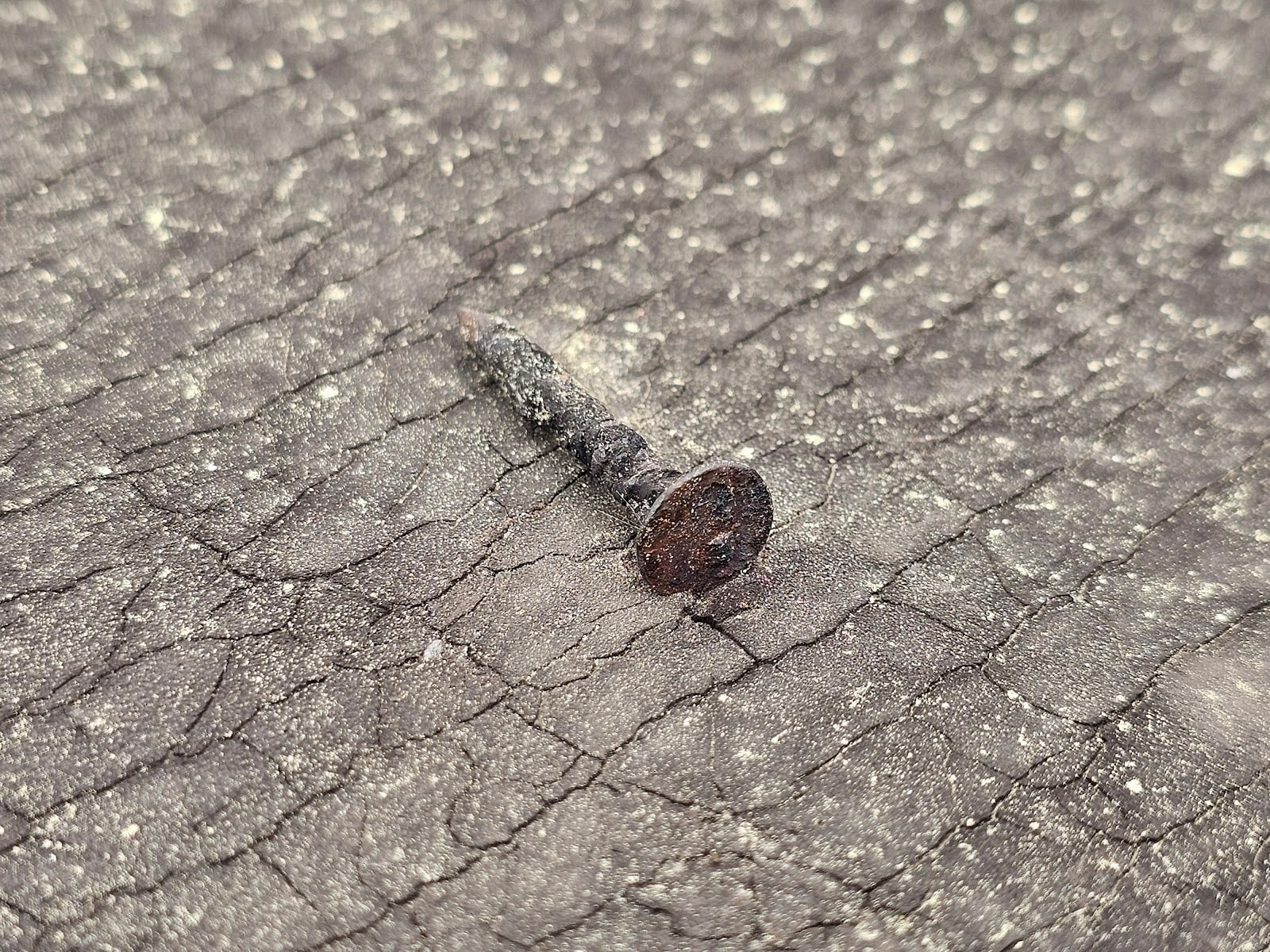
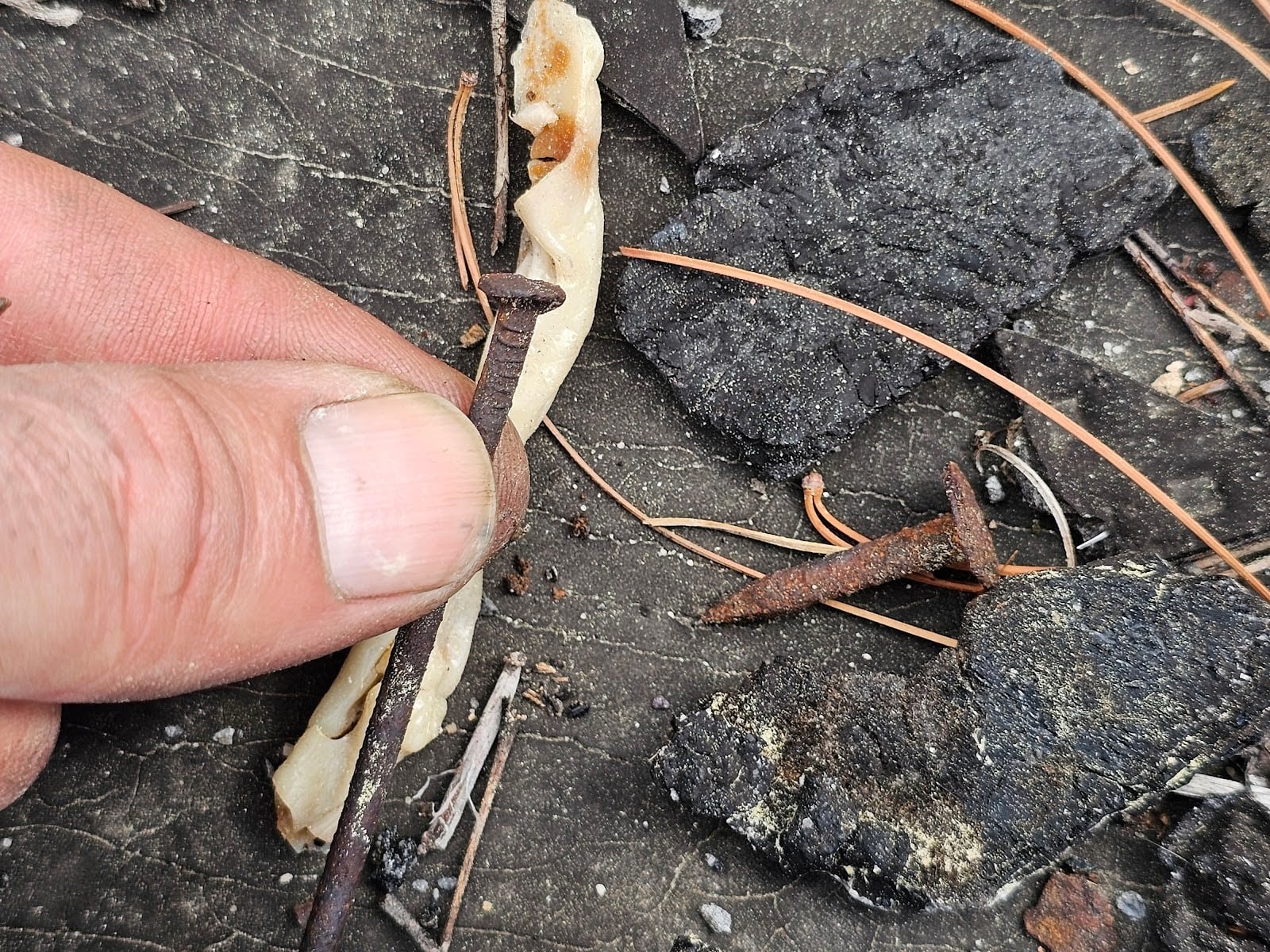
If you look closely at the nail in the picture above, you can see that it has an asphalt coating around the shank of the nail. Sometimes in the construction industry, to really understand how to fix problems effectively, it requires a little bit of defect analysis. Someone could argue this isn’t really defects analysis, it’s damage analysis. We would agree with that. The distinction is just that defect analysis normally applies to errors created by misinstallation, in other words: installation done incorrectly. This happens to be really related to damage that others did to the roof way after the initial installation.
Vandalism needs to be intentional for it to be true vandalism. Here we doubt it was intentional, it’s likely just caused by airheaded roofing contractors trying to cut corners and not caring about their job. In this particular case, the critical difference is between intending to do something bad versus not caring enough to recognize the difference.
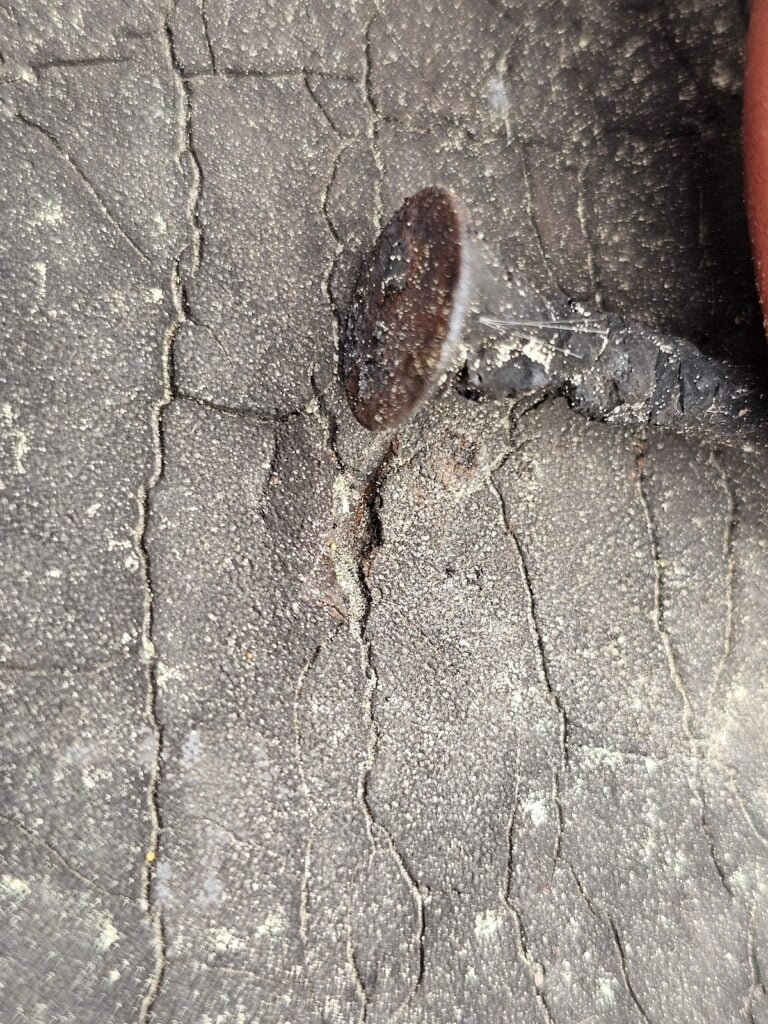
We think this cut looks significant but it gets worse.
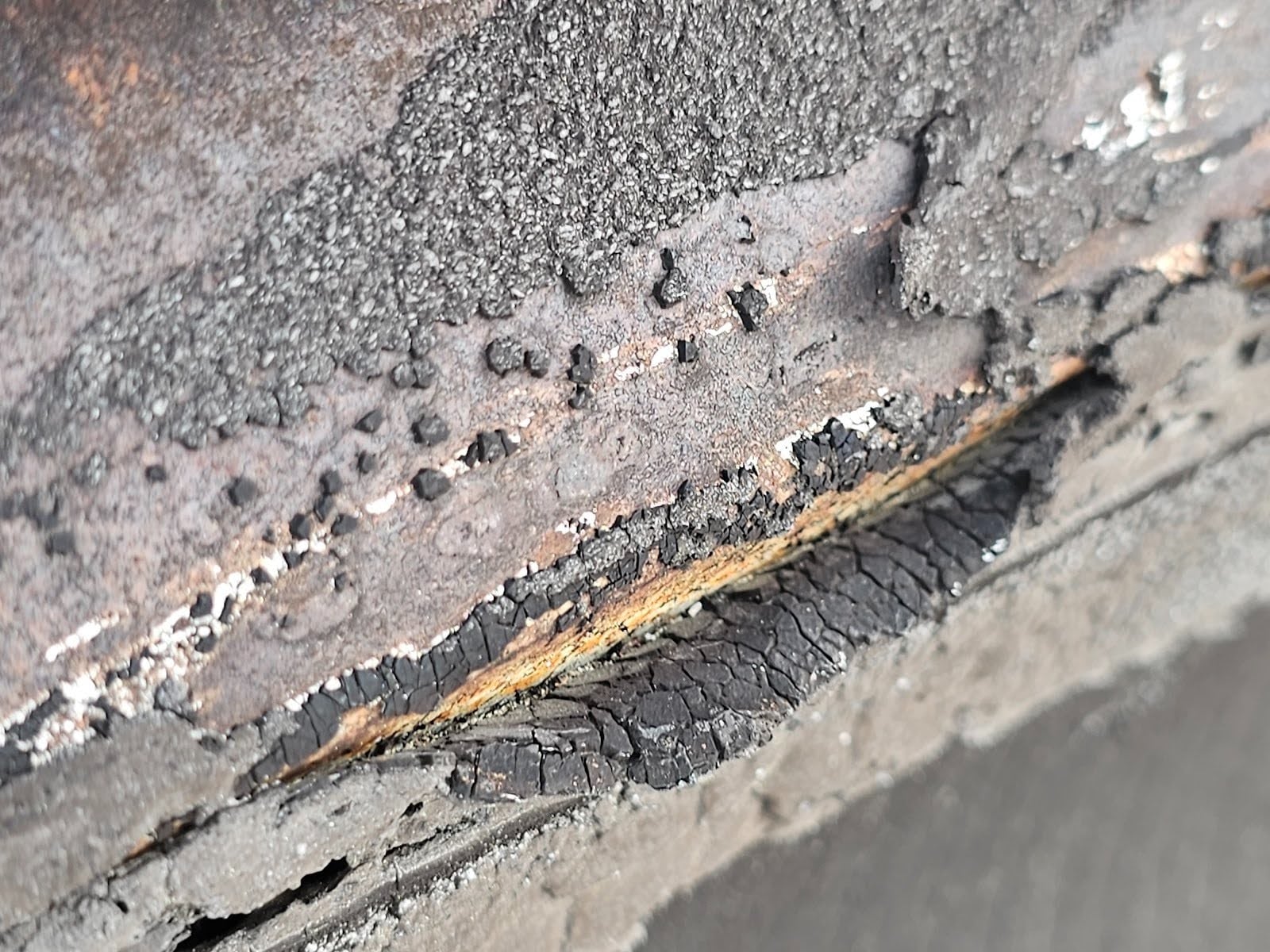
In the picture above, and the next few pictures below, we’re going to look at the particular nailhead from a few different angles to show the damage caused to the roof. It looks like somebody unintentionally stepped on top of his nail head. That nail head, since it has a sharp edge that we mentioned above, cut through the top of the single-ply modified bitumen membrane of roofing materials
The picture below shows a spot where there were a whole bunch of nails and loose fasteners left laying around the roof. Everyone working on these roofs should clean up after themselves. However, the sad reality is that there’s a variety of different trades that have to work on these roofs and a lot of them simply feel like cleaning up is the responsibility of someone else, not themselves. We happen to think that kind of attitude is crazy. It’d be like me walking into their house, a stranger, and eating food or something and throwing the wrapper on the floor. Even if I was a guest that wouldn’t be appropriate. And to us that seems intuitive and obvious.
We know that sometimes there are extenuating circumstances. Some days in the Washington DC summer, working on top of a black modified bitumen roof feels like working inside of an oven. We’ve been there before where sometimes the heat and the dun are just so much that it’s hard to keep track of all the little things on the ground around where you’re working. There are documented examples of black tar like surfaces, in the high heat of summer, reaching temperatures of up to 200° F. That’s enough to call physical injury.
So we have a little bit of tolerance for some honest mistakes of leaving a few types of trash behind by accident. Here though it’s different. They literally dumped their trash directly on top of this rooftop. And indirectly, by doing so, they caused holes in the roof that led the leakage through the roof.
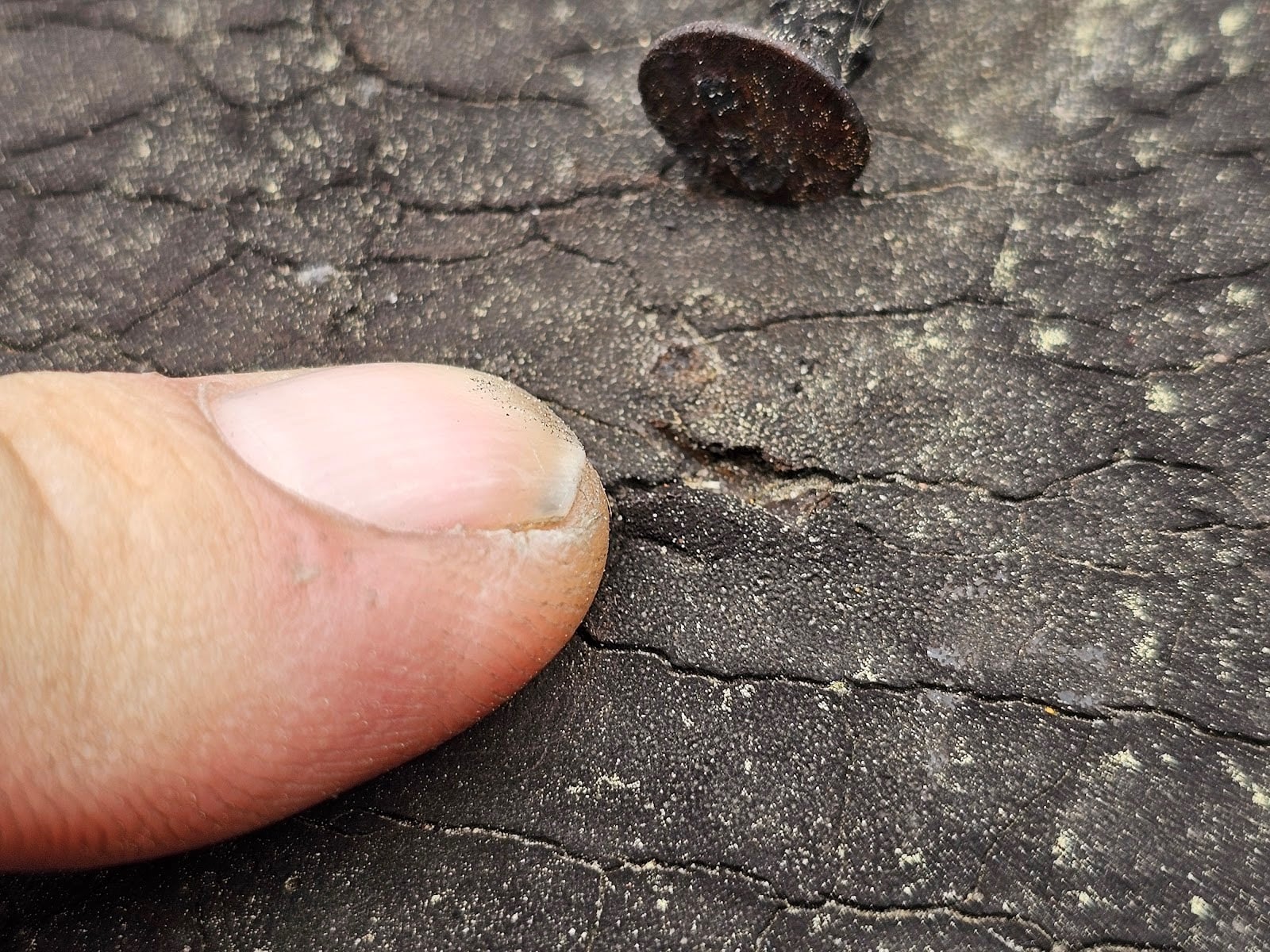
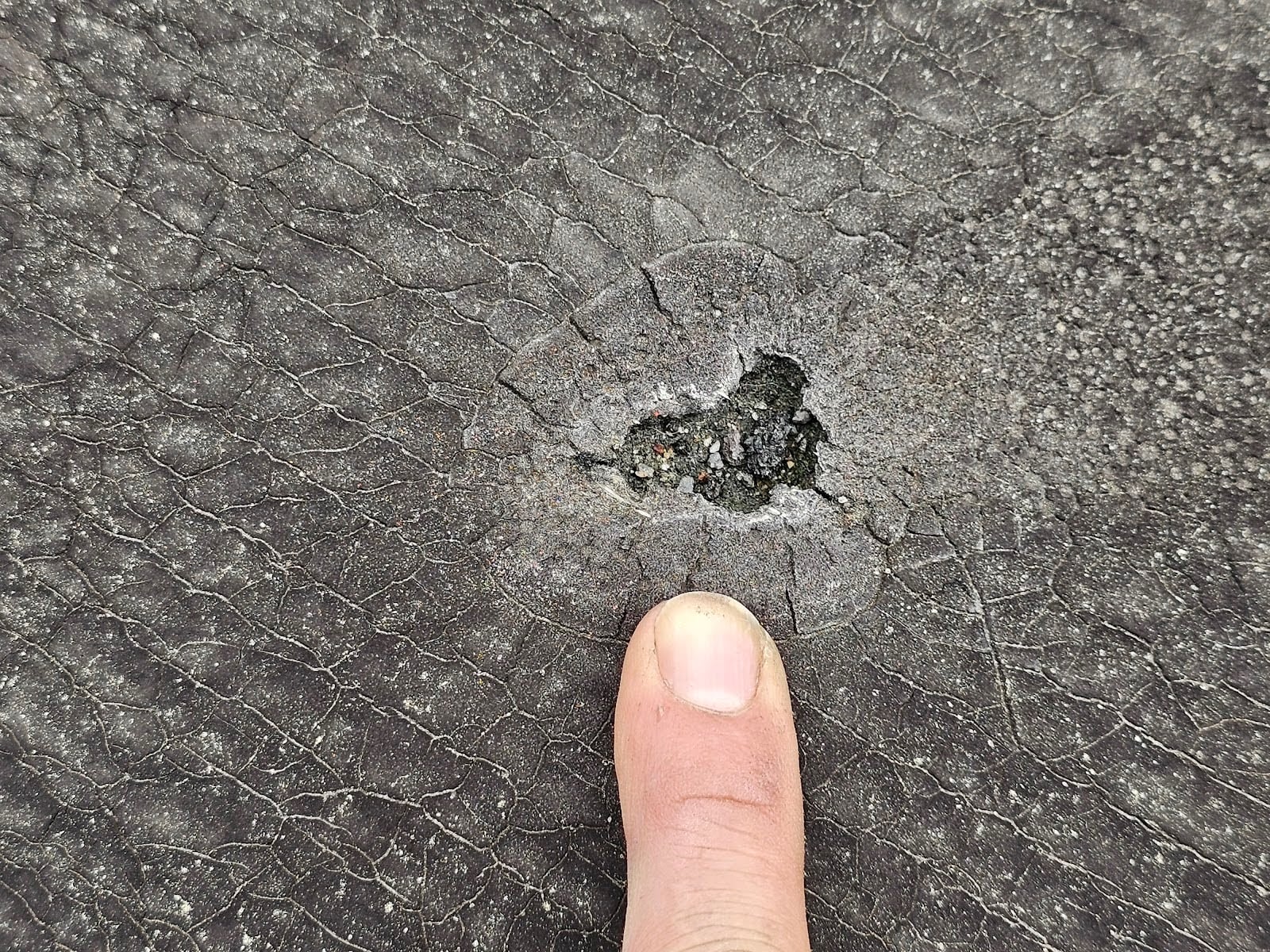
You can see one of those holes, caused by a nail head or a screw head being stepped on on top of the flat roof. The hole is wider than the screw head or nail head itself because after the roof membrane became punctured, water built up inside the crevice around that small hole and led to more damage.
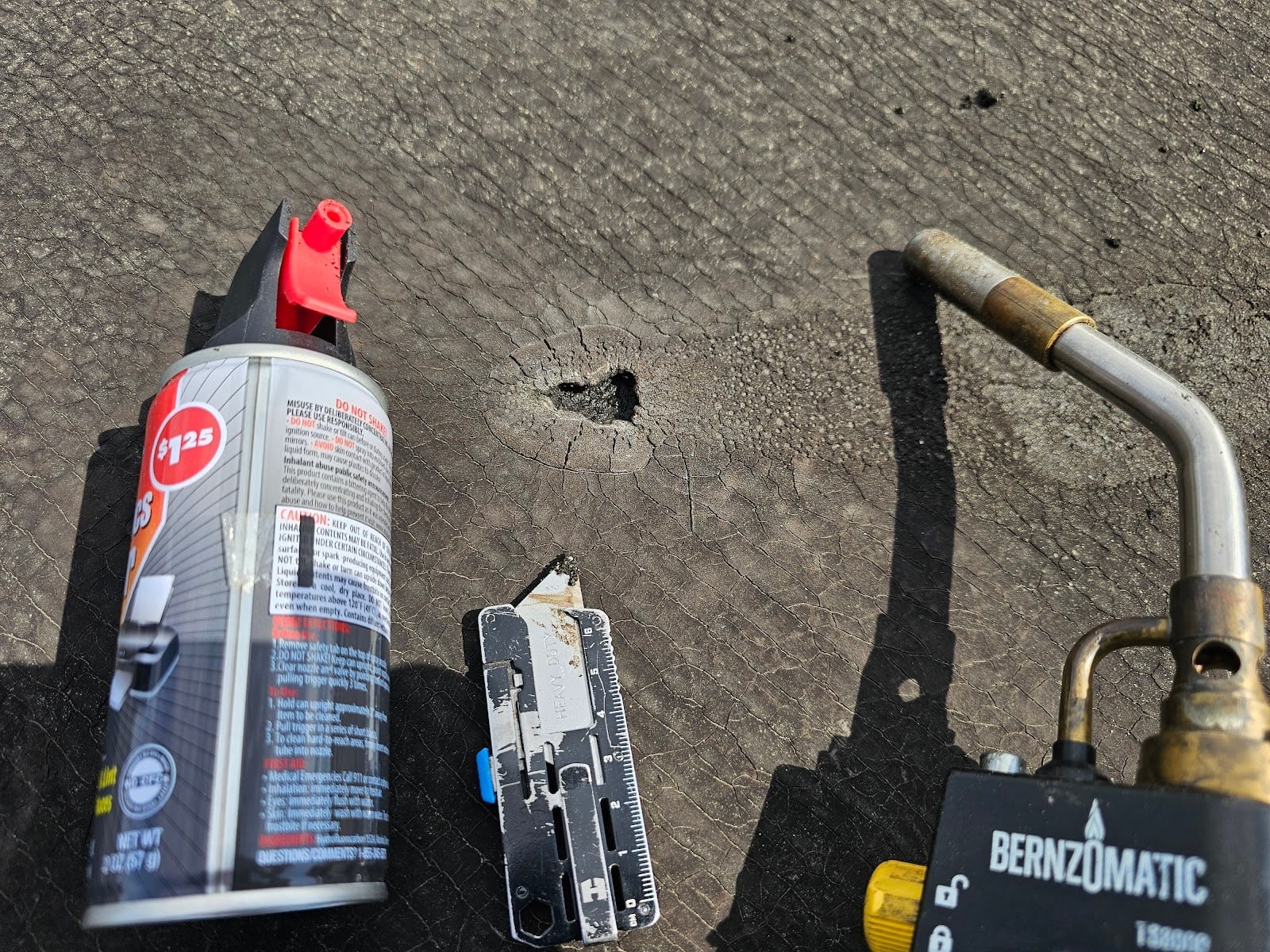
For the next picture below, using someone’s fingertip for scale, you can see the holes about 1 inch wide. In the picture below above, you can see some of the tools we use to prepare an area of roof like this. The can of compressed air is used to clean out any dust. The small propane torch is used in a way that’s similar to a roofing torch, but this is different because it’s just for repair. In this case, we use that small torch to prep the area by melting the perimeter of the opening so that it’s more pliable and easier to be worked when patching.
We provide this information here on our blog, and our website, to help our customers and future clients, and we recommend every building owner in DC who values the longevity of their roof (and their investments) and building use a contractor who values the simple and important principles of proper roof construction like Dupont Roofing DC.
Our company specializes in flat roofing here in Washington DC and we’re happy to help building owners of almost all types. Learn more about our company and the proper techniques of working with roofing on historic buildings in Washington DC here on our blog at DupontRoofingDC.com, and you can call us at (202) 840-8698 and email us at dupontroofingdc@gmail.com. We are happy to help and at least talk through options.