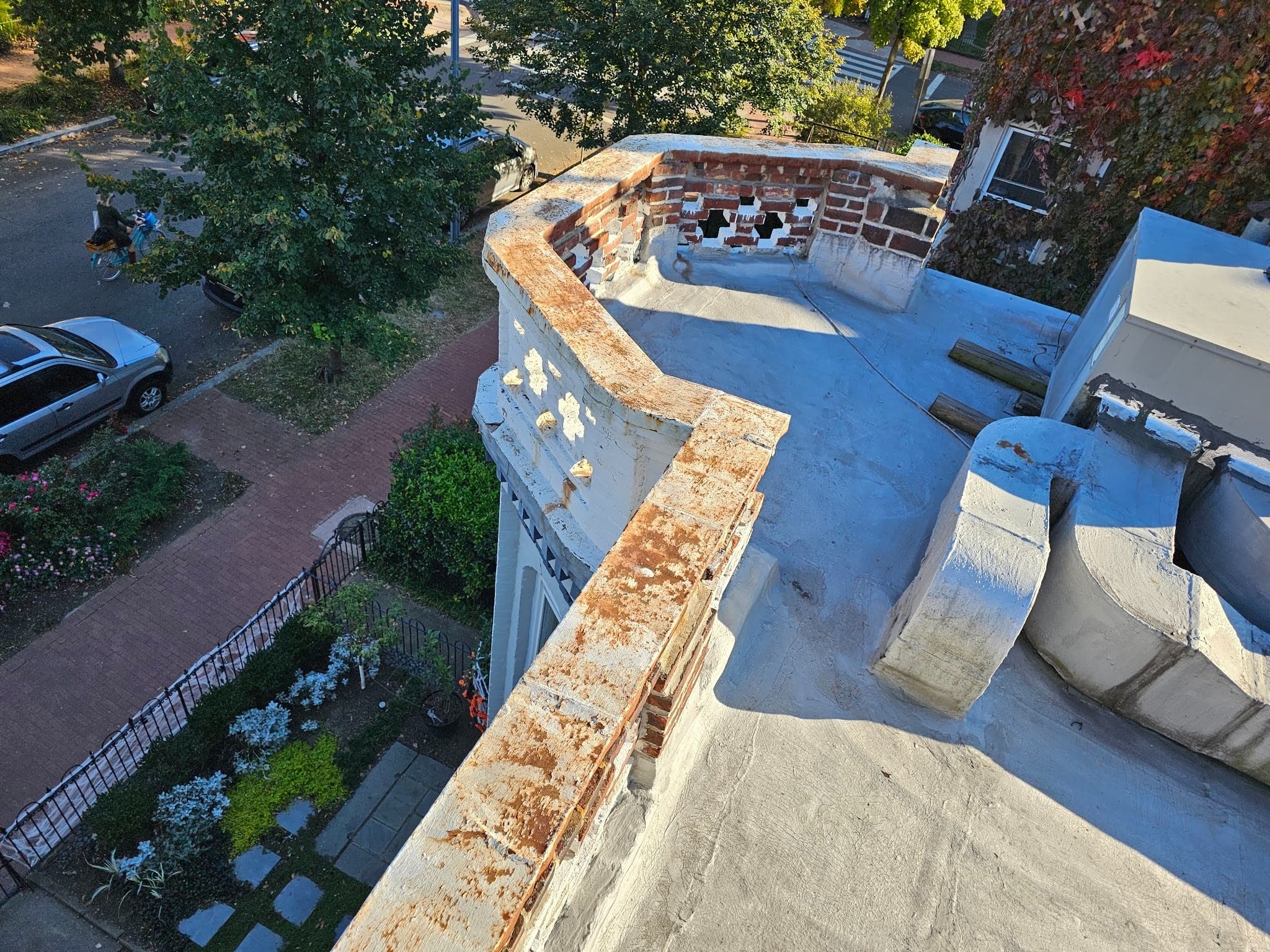
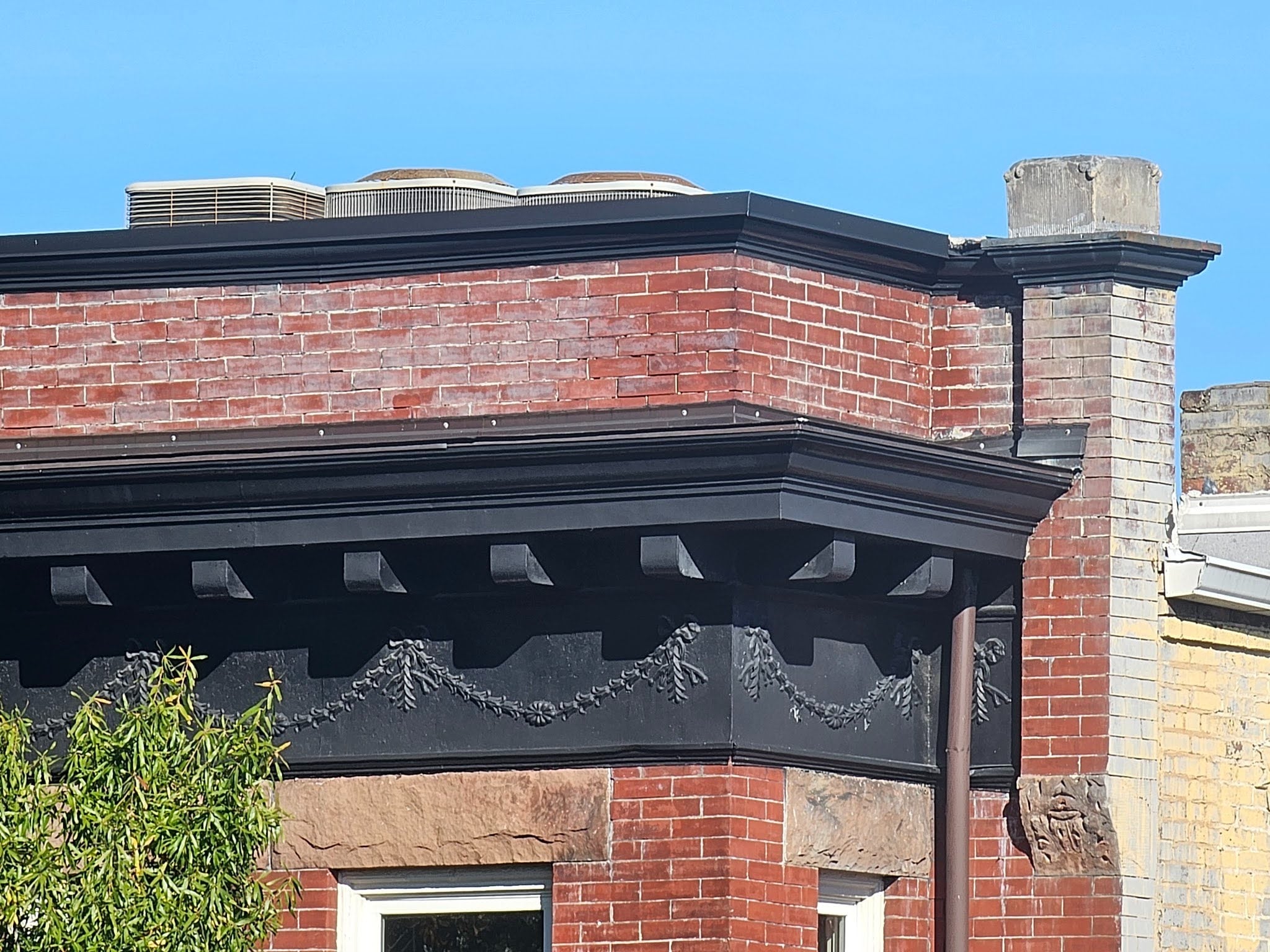
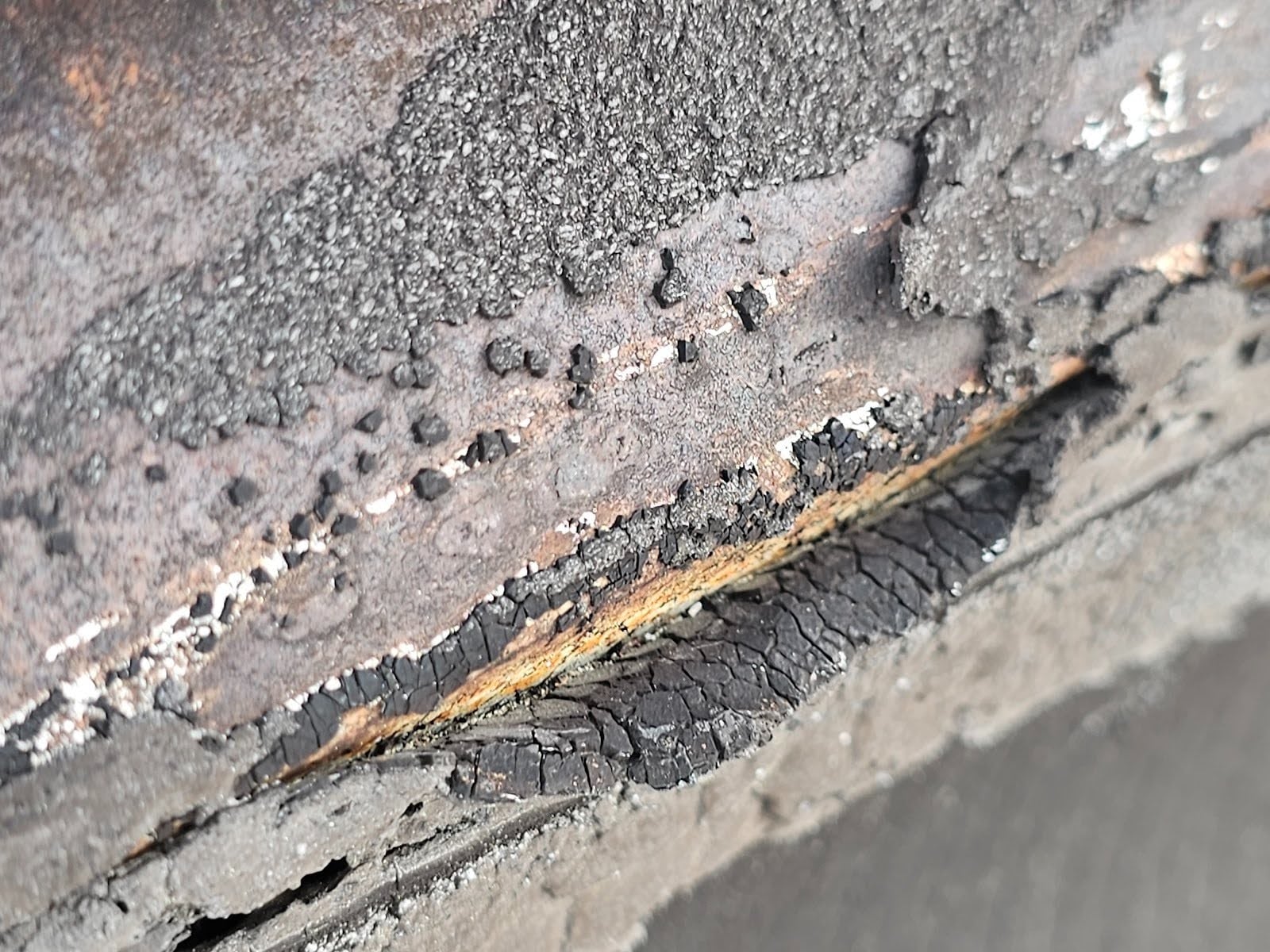
This past week, we looked at a block wall where water was originally being directed right down from the coping onto the surface of the exterior part of the block masonry. It was causing not just tons of water trails and water flows that left unsightly stains on the facade but also led to leakage into the block and the building, We will look at a photographs of a building built with a similar type of setup, a coping that extended off the edge of the building onto the top of a masonry wall. That second building we looked at had a stucco covering on top of the masonry.
Another photo of that building area follows in the picture below. You can see there is a chimney that essentially terminates the coping. In some cases, low slope roofs will have a coping that’s almost flat. The low slope roof will sometimes be referred to as a flat roof but will almost always have a continuous slope from the front part of the building downward towards the rear part of the building. The parapet may or may not be built to have the same degree of slope. In this case, the parapet does have slope towards the rear. That slope makes the water run down the coping and hit against the chimney. In some cases, the coping on top of the parapet will be built with a higher edge at the outer side of the parapet wall. That outer edge directs the water to flow downward. Here though, where it’s hitting against the chimney it’s not being sufficiently directed back towards the roof surface. Instead, the water is running against the chimney and then down over the coping onto the wall below. You can see a dark water stain in the corner between the projection of the chimney and the adjacent flat vertical wall.
It would be much better and work much more properly if the water was instead directed back towards the rooftop. At the base of the chimney, where the chimney meets the parapet, it should have both a base flashing which runs from the lower coping position upwards and a counter flashing which is installed into the brickwork on top of the brick work and from there runs downward on top of the base flashing. The edge of the coping itself has to be high enough to redirect the flowing water back from where it hits the chimney and downward away from the coping, back towards the roof surface. In this case, that redirecting standing edge is not built sufficiently tall. Instead the water overflows the coping and then is directed to run down the wall. That’s causing problems. The stucco application on the surface of the masonry helps deter from excessive deterioration at the mortar joints of the individual masonry units. It’s not enough though.
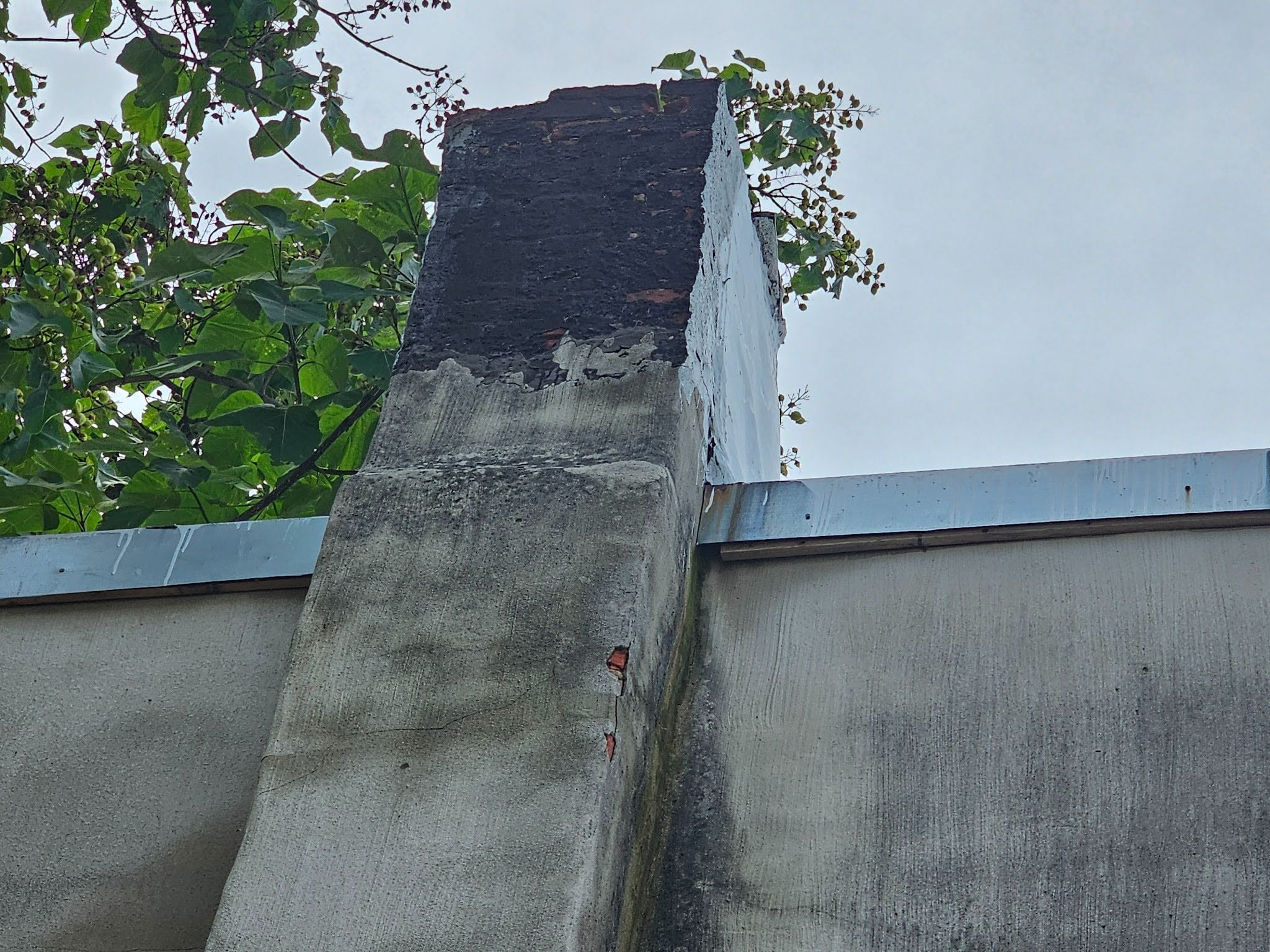
In the next picture below, you can see the lower section of the base of the chimney. It projects not just outward but also wider towards the sides of the upper chimney that area creates a ledge. That ledge should be built with a cant or bevel. A significant cant or bevel will allow the water to flow off of a masonry ledge without causing or allowing for significant buildup.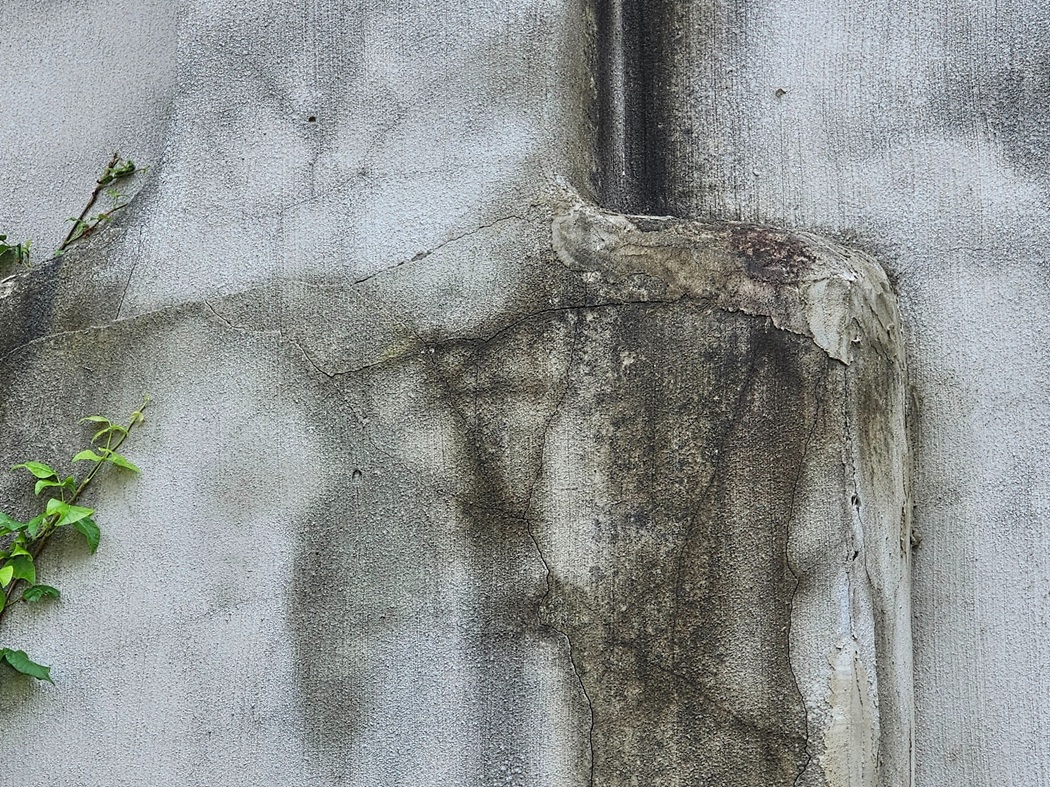
When you look at the exterior walls of this chimney though, particularly at the area concentrated around the underside of the ledge, you can see the stucco’s cracking up. The area is darker because it’s been wet and has some mildew growth happening on the surface of the cement. There is a spider web sort of network of cracks that have happened from excessive hydration of the cementitious mortar. This sort of excessive hydration isn’t causing just damage to the exterior of the stucco application, it’s seeping inward through those cracks and permeating through the stucco towards the substrate masonry. That substrate masonry therein is becoming excessively hydrated as well. The excessive hydration leads to breakdown of the masonry. As the masonry breaks down, it lets the water infiltrate farther and deeper into the mortar joints in the masonry units. Through successive repetitions of freeze-thaw cycles, the excessive hydration is causing not just leaching of the internal components of the cementitious materials, but it’s also causing damage and breakdown of the masonry units.
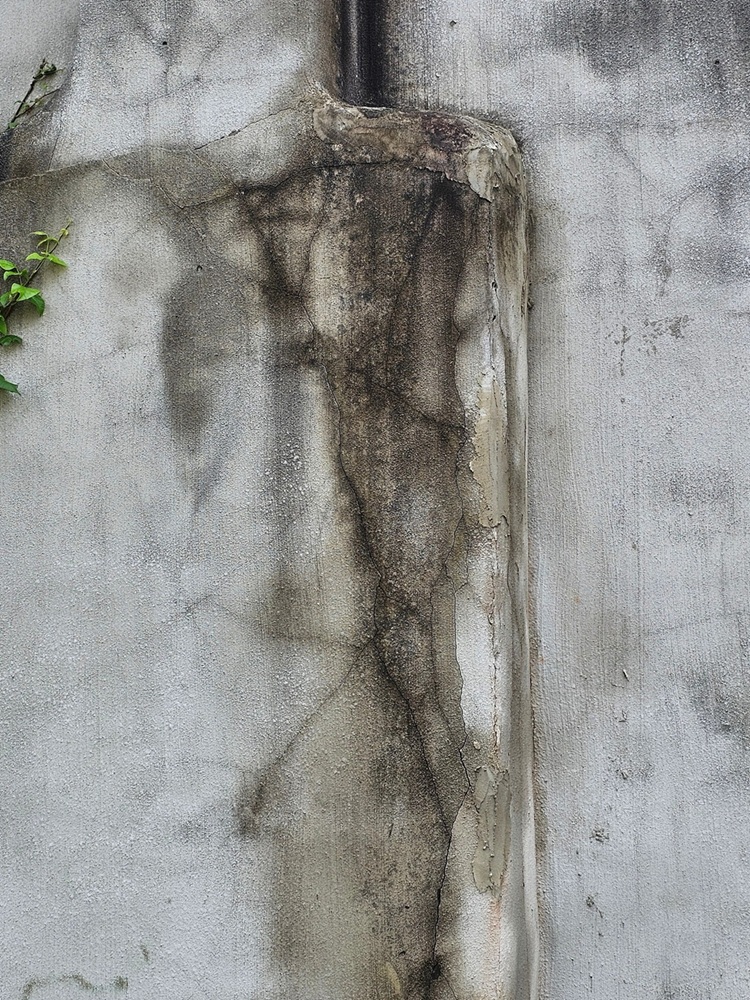
Even after the initial application, it looks like additional repairs have been applied to the exterior of the masonry wall. The building managers have recognized the damage that’s being caused but they haven’t fixed the root cause. Instead, up to this point, they have just applied little bandages to the symptoms. The roof here is the actual cause of this damage.
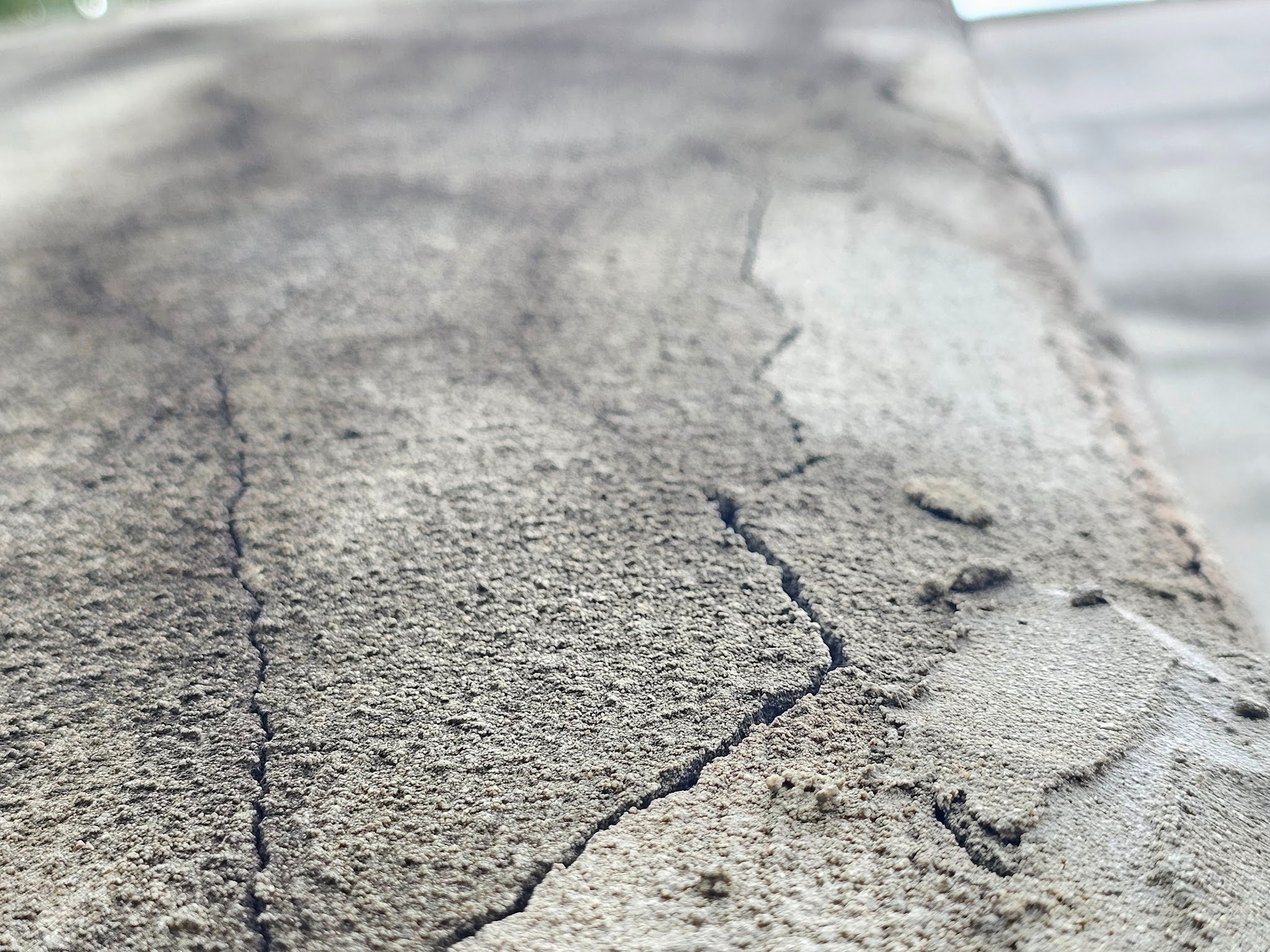
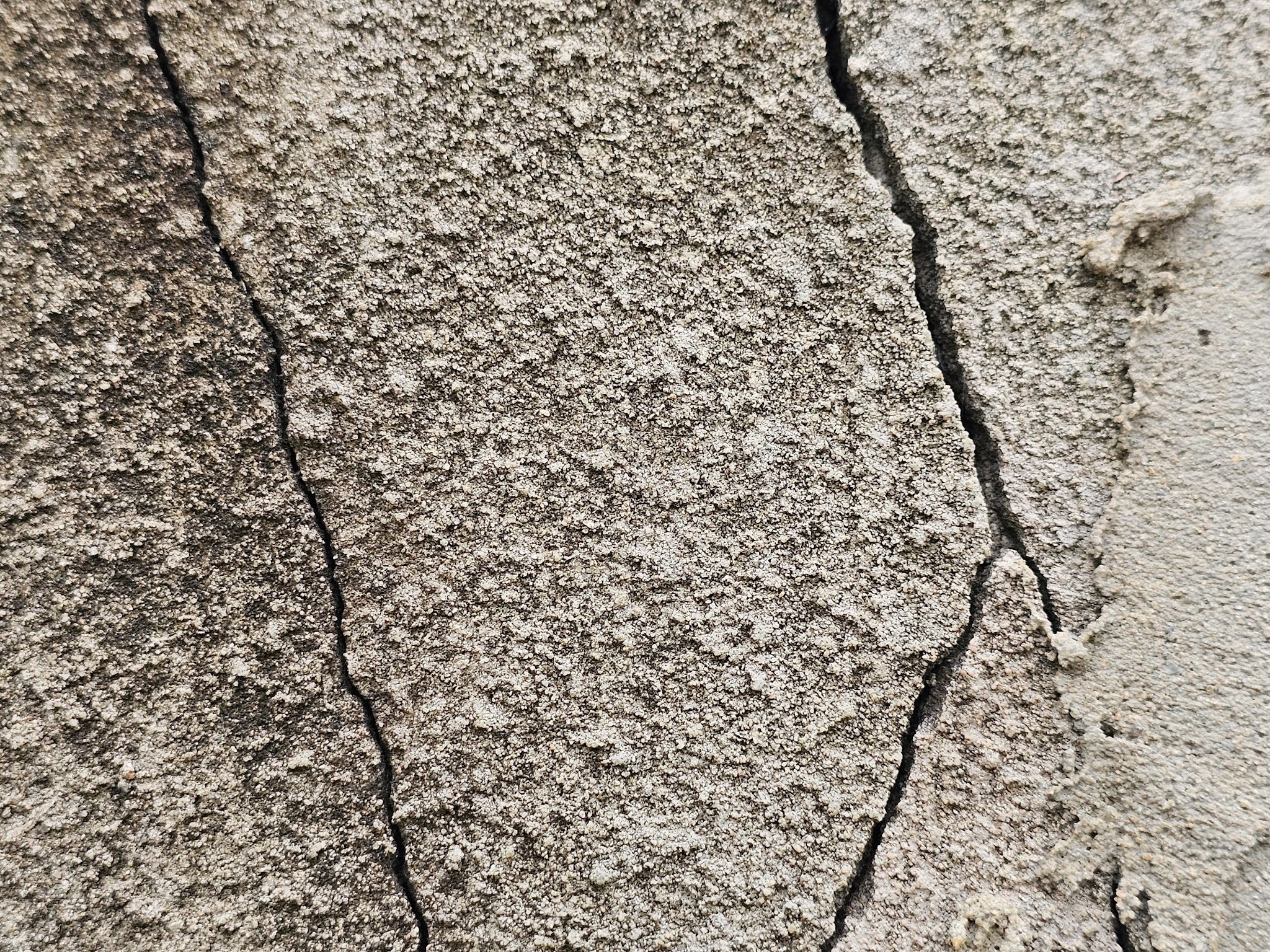
If you look closely at the surface of the cracks, you can see that those cracks are large enough for a significant amount of water to seep in. As that water seeps past the exterior of the masonry covering, it gets trapped in that space. It doesn’t dry out nor relieve itself quickly. Instead, it festers.
We drew markings on the photo below to show the issues. The green marking shows the coping that should be sloped towards the internal part of the roof. The top of the parapet wall may be relatively flat, but the coping can be built up to have a little bit of a bevel to drain water naturally, through gravity alone, back towards the roof membrane. The red area instead is being hit with an excessive amount of water flowing down at each significant iteration of precipitation.
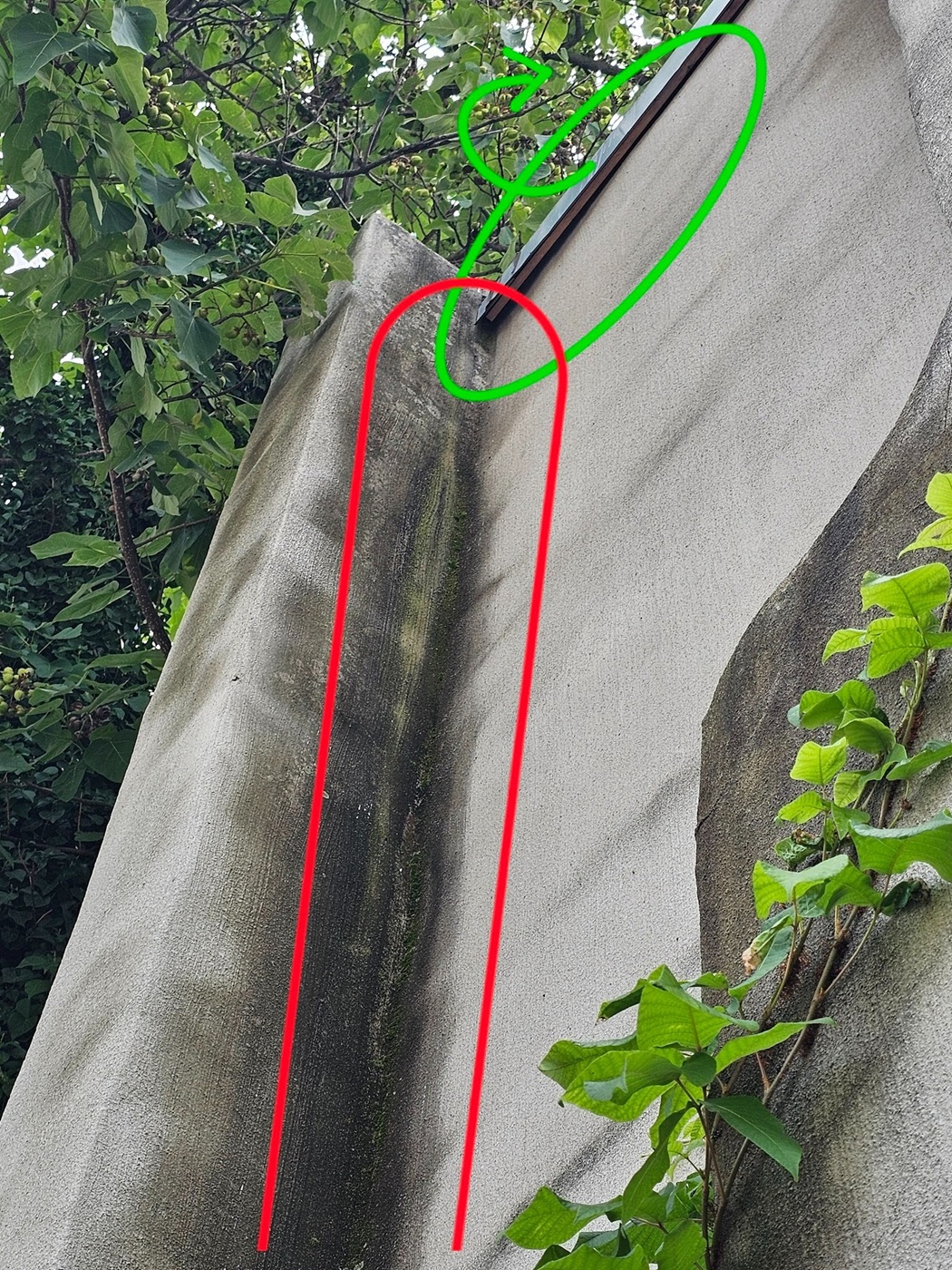
This water isn’t running down just from the coping itself, but where it hits the side of that masonry chimney, it is flowing back down between the wall and the chimney on the exterior of the building.
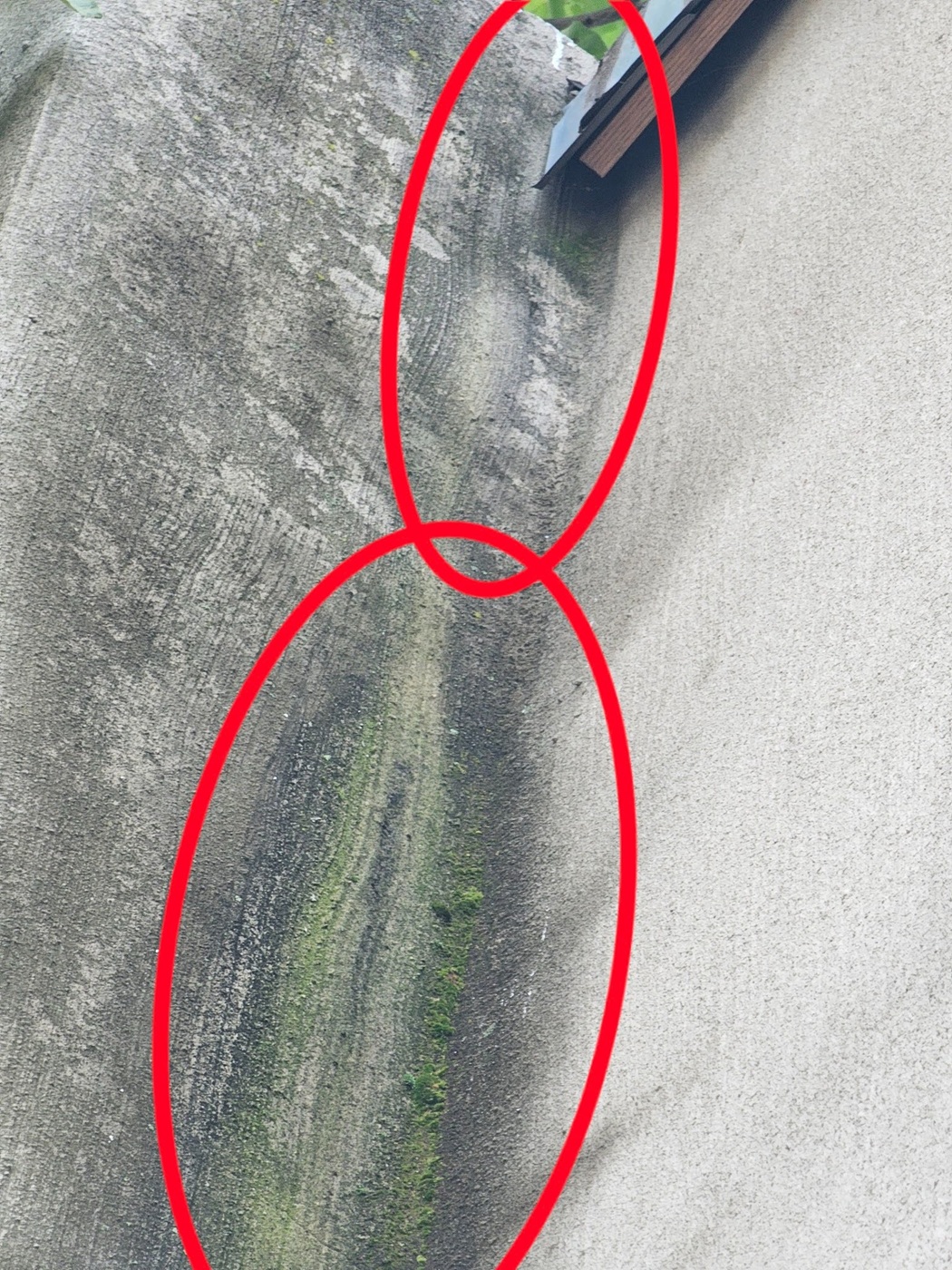
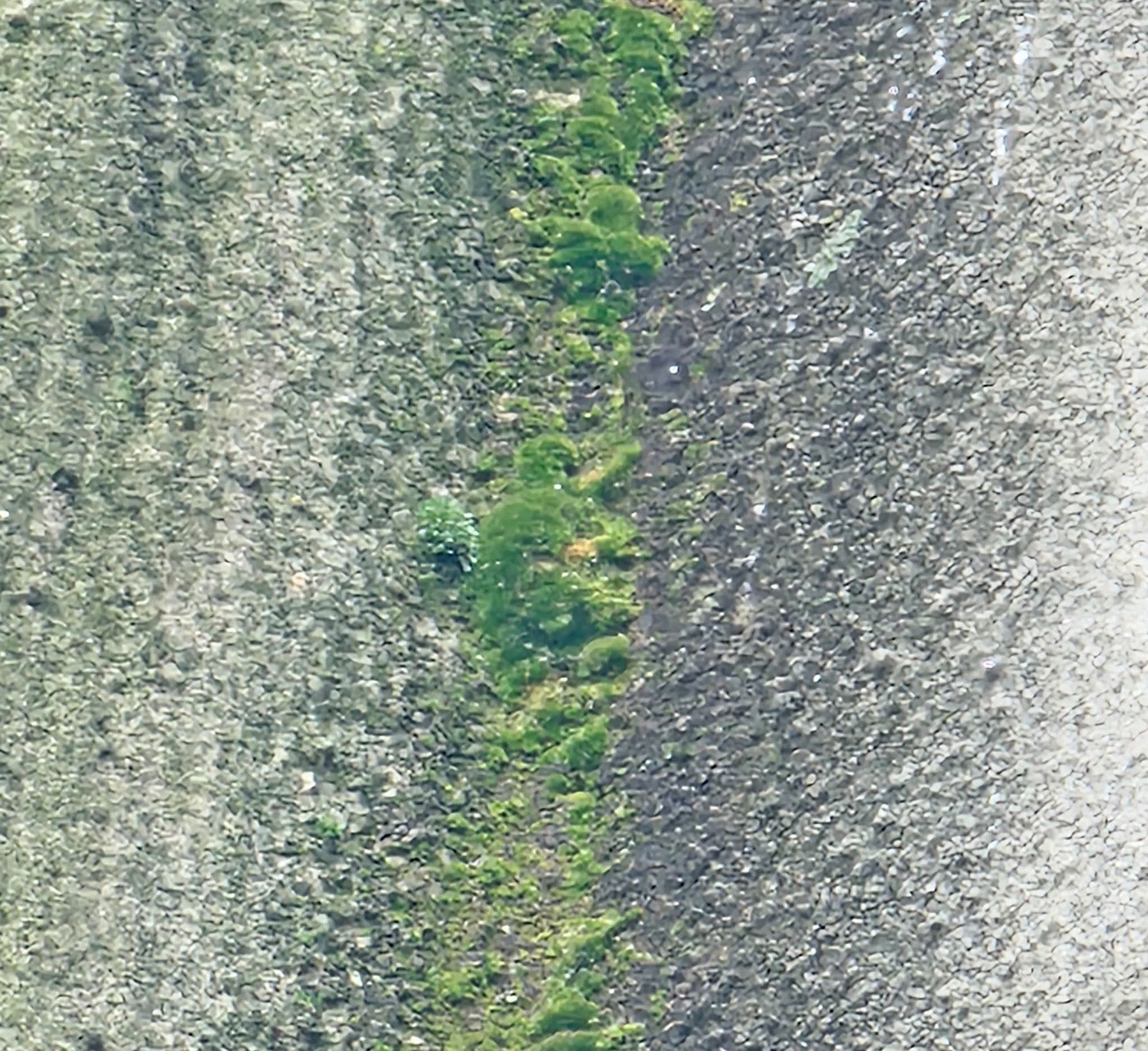
Here in the joint between the chimney and the remainder of the main wall, the moisture is so bad that it’s led to biocolonization in the form of moss and mildew.
We provide this information here on our blog, and our website, to help our customers and future clients, and we recommend every building owner in DC who values the longevity of their roof (and their investments) and building use a contractor who values the simple and important principles of proper roof construction like Dupont Roofing DC. Our company specializes in flat roofing here in Washington DC and we’re happy to help building owners of almost all types.
Learn more about our company and the proper techniques of working with roofing on historic buildings in Washington DC here on our blog at DupontRoofingDC.com, and you can call us at (202) 840-8698 and email us at dupontroofingdc@gmail.com. We are happy to help and at least talk through options.