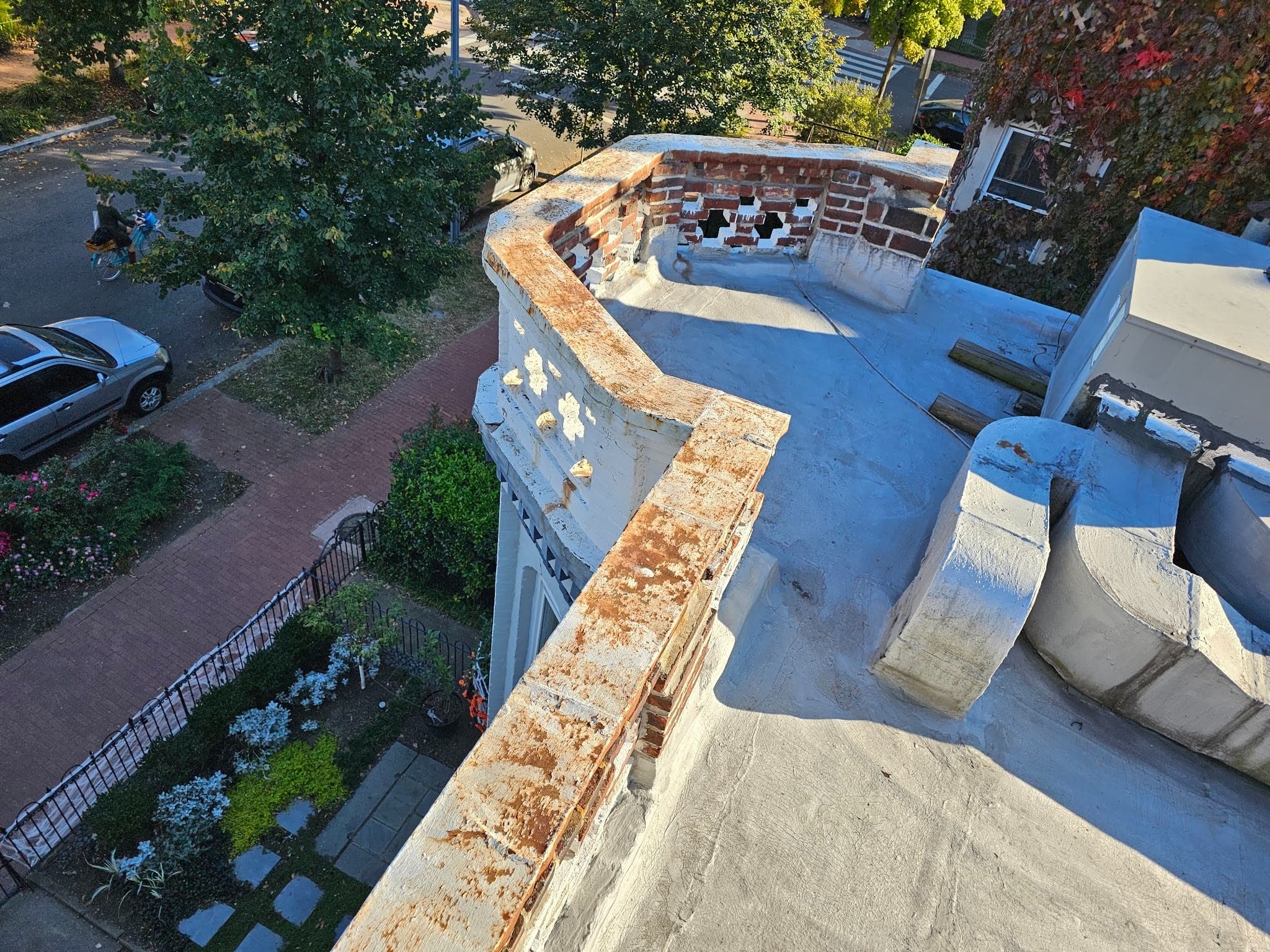
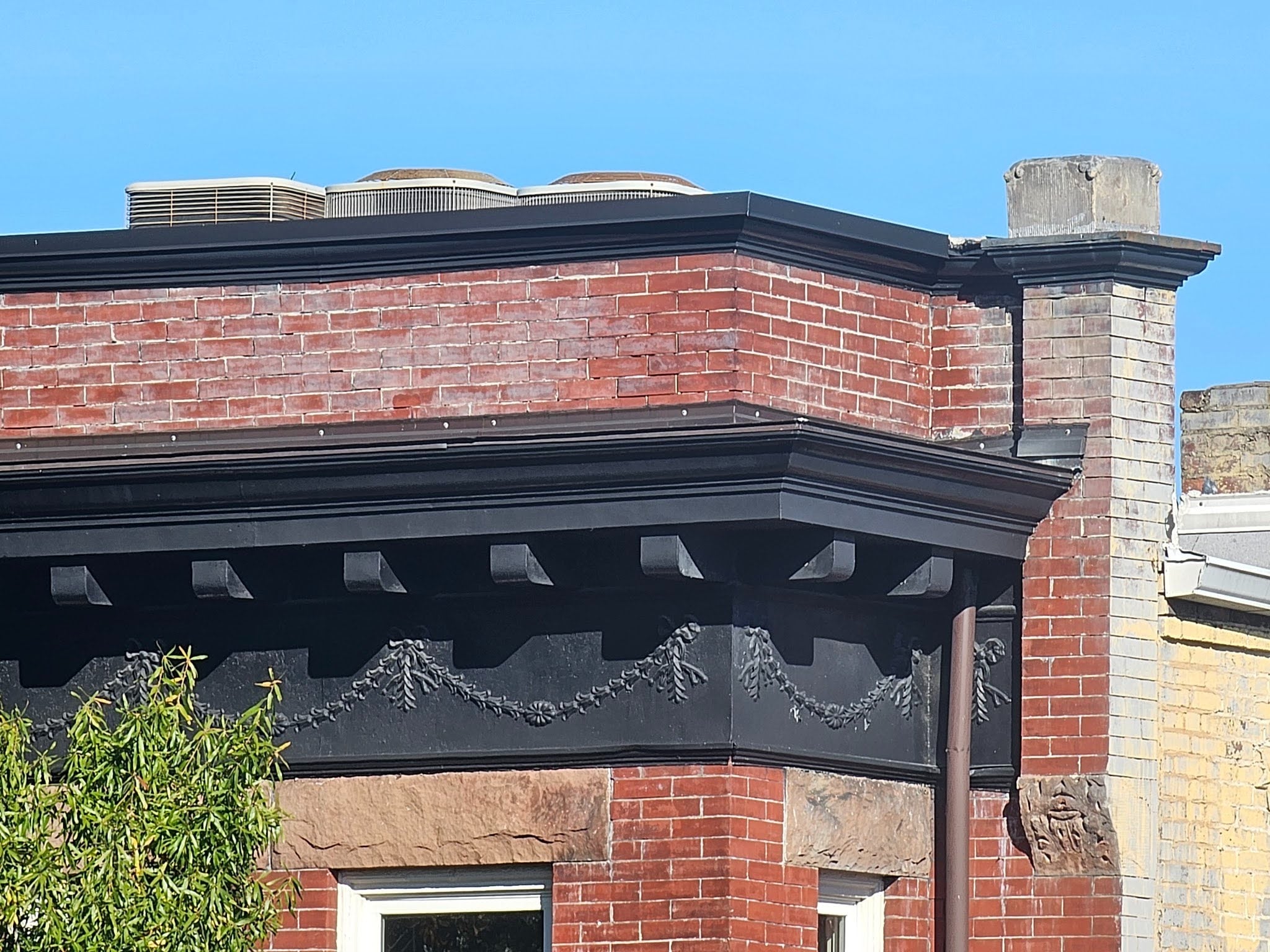
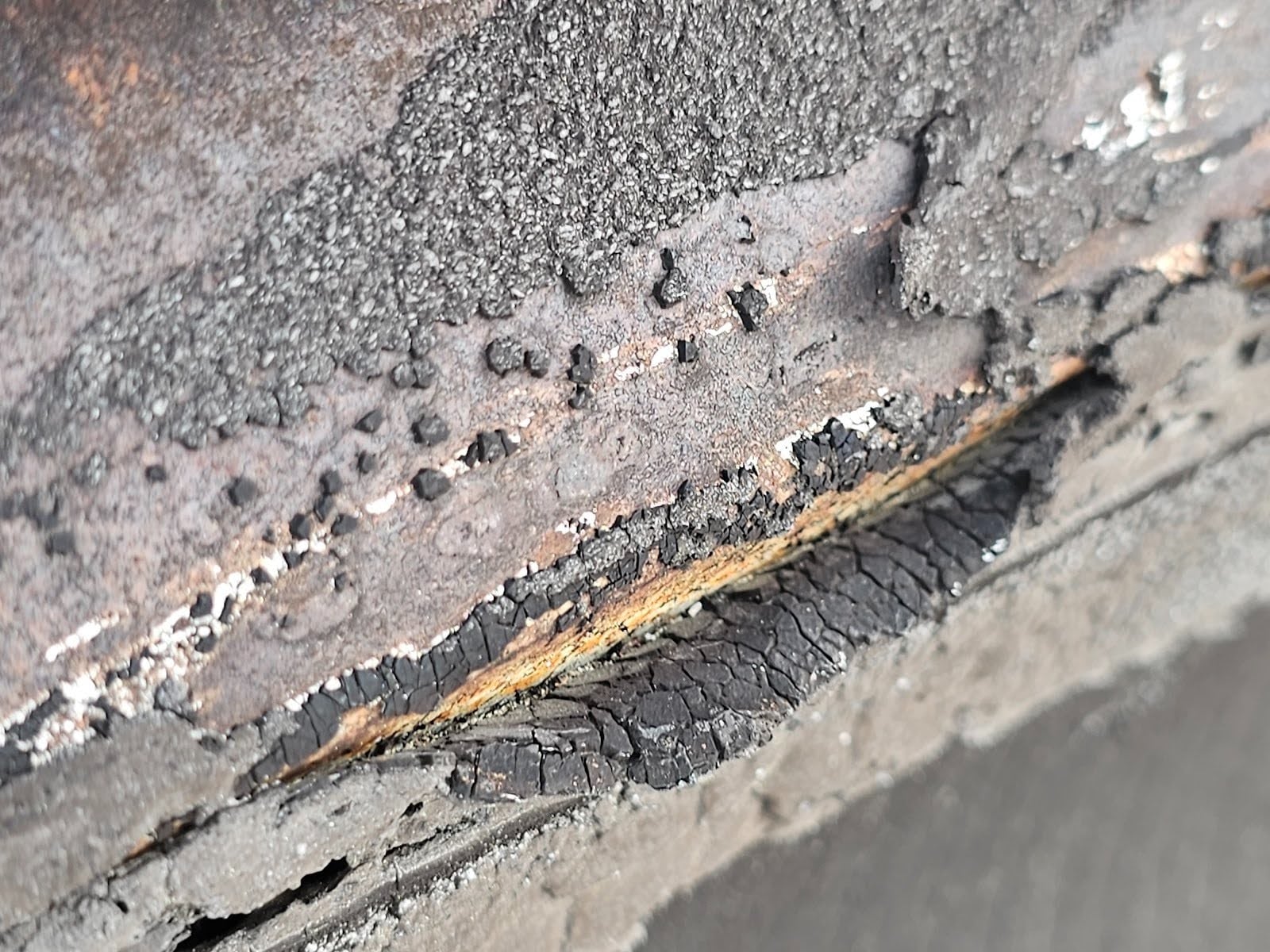
There may have been a time when you were young and a sibling or schoolmate did something wrong and you got the blame. This happens. It never feels good though. Sometimes it feels like it’s a little bit unjust. Here, the masonry wall was leaking, but the root cause of the problem came from the roof. This happens often, not just the roof causing problems that look like they are the responsibility or cause of the masonry, but with other disciplines of construction as well. They’re often many systems installed on top of rooftops.
Those systems, such as HVAC, electrical, plumbing, fire suppression systems, solar panel systems and many other things can all then cause leakage through the roof system and people naturally first think the problem is in the roof itself. In many of those cases though the roof membrane may be working exactly as intended but the other systems have problems that lead to leakage. It’s intuitive or natural to first check and or assume the roof itself is the problem but often isn’t. In this particular case though, that we’re looking at today, the roof was the problem.
To clarify, we’ll refer to it here as the fault or culpability of the roof, but it isn’t fully accurate to say or imply the masonry didn’t also have its own problems. The problem here is that the roof coping was built without a significant drip edge and water written down the masonry wall face. If the roof coping, at the parapet, was built with a more significant drip edge, the majority or at least a significant proportion of the water that ran off of that coping would have been directed slightly away from the wall face. That would have helped, at least at the upper portions, the wall stay more dry in typical precipitation events.
The other problem with this particular coping is that it’s not well sealed at the seams between individual segments of the sheet metal. It also does not have a standing fin at the outer edge, like a gravel stop. The type of wall shown in the picture below is referred to as CMU. That stands for concrete masonry units. In more lay-person terms, it is often referred to as cinder block. This type of wall is mostly made from cement which has a relatively high resistance to permeability or moisture, but not completely impermeable. Over time, water will enter into the surface of the block and cause deterioration of the wall. The dark water trails running down the face of the block are signs that an excessive amount of water is residually in contact with the wall surface.
After many iterations of leakage and water entry through the block, into the internal parts of the building, an extension of the original flashing at the coping drip edge was installed. In this particular case the extension top was installed up underneath the bottom of the original coping. A coping should have at least a few inches of overlap onto the face of a protected substrate wall. The bottom of that coping should be bent outward, like a typical flashing drip edge.

In the case described above, it’s not that the blockwork shouldn’t have been treated or finished differently, it should have had either a stucco application or a block-fill type coating applied. But it wasn’t really the block’s fault that there was such a high amount of water issues. The problem was that the roof coping wasn’t built properly. That coping was sending an inordinately high amount of water down onto the face of the block.
In this coming week we’re going to look at the block wall shown in the next picture below. That particular wall happens to build a little bit differently because it does have a stucco application applied onto the surface of the masonry. The issue here appears almost similar from a distance, but it’s slightly different. The issue is still caused by a misdirected coping. And even though the stucco here has been applied which helps the masonry surface, it isn’t perfect. It still leaves areas where water can enter into the building.

We provide this information here on our blog, and our website, to help our customers and future clients, and we recommend every building owner in DC who values the longevity of their roof (and their investments) and building use a contractor who values the simple and important principles of proper roof construction like Dupont Roofing DC. Our company specializes in flat roofing here in Washington DC and we’re happy to help building owners of almost all types. Learn more about our company and the proper techniques of working with roofing on historic buildings in Washington DC here on our blog at DupontRoofingDC.com, and you can call us at (202) 840-8698 and email us at dupontroofingdc@gmail.com. We are happy to help and at least talk through options.