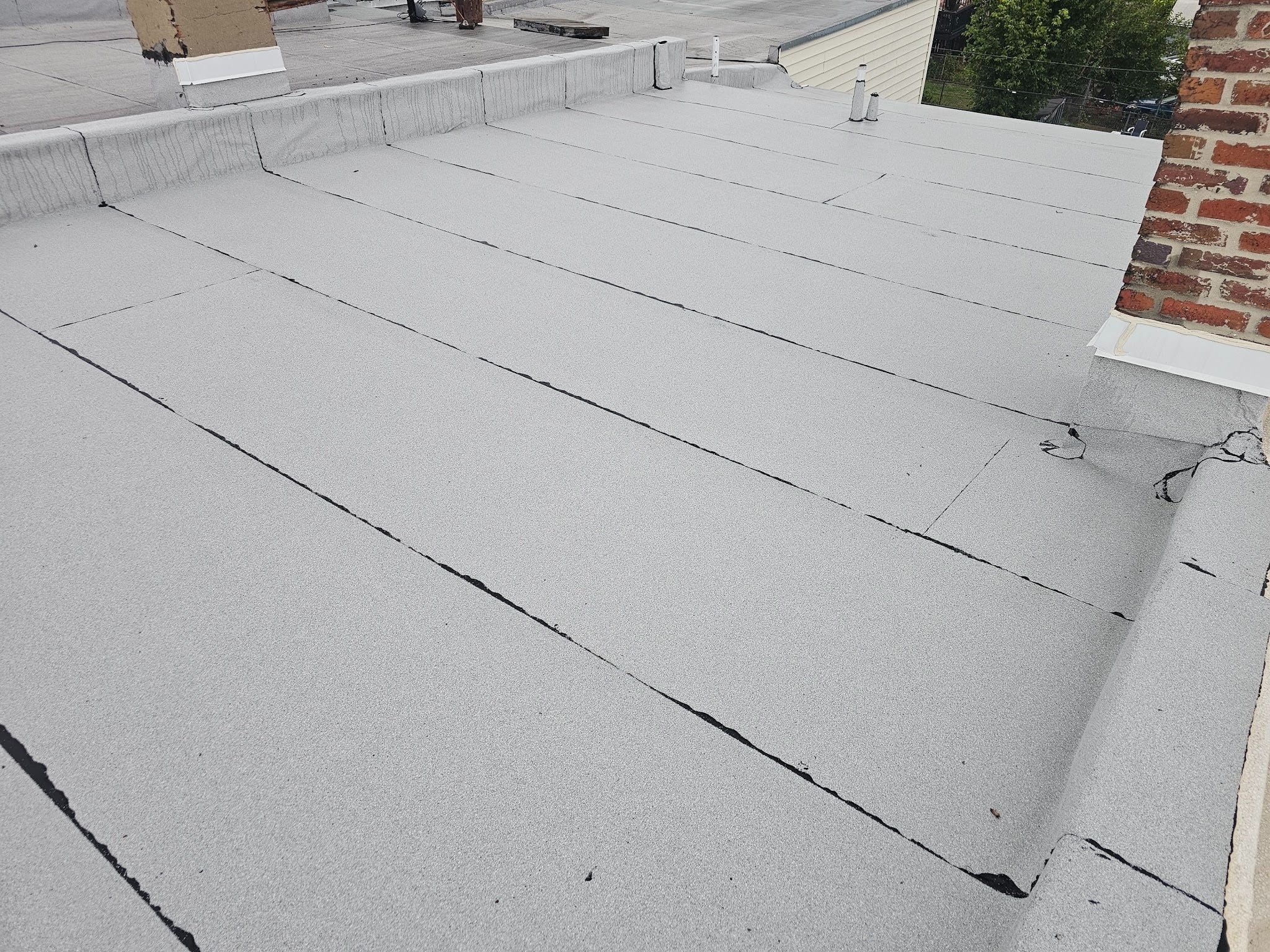
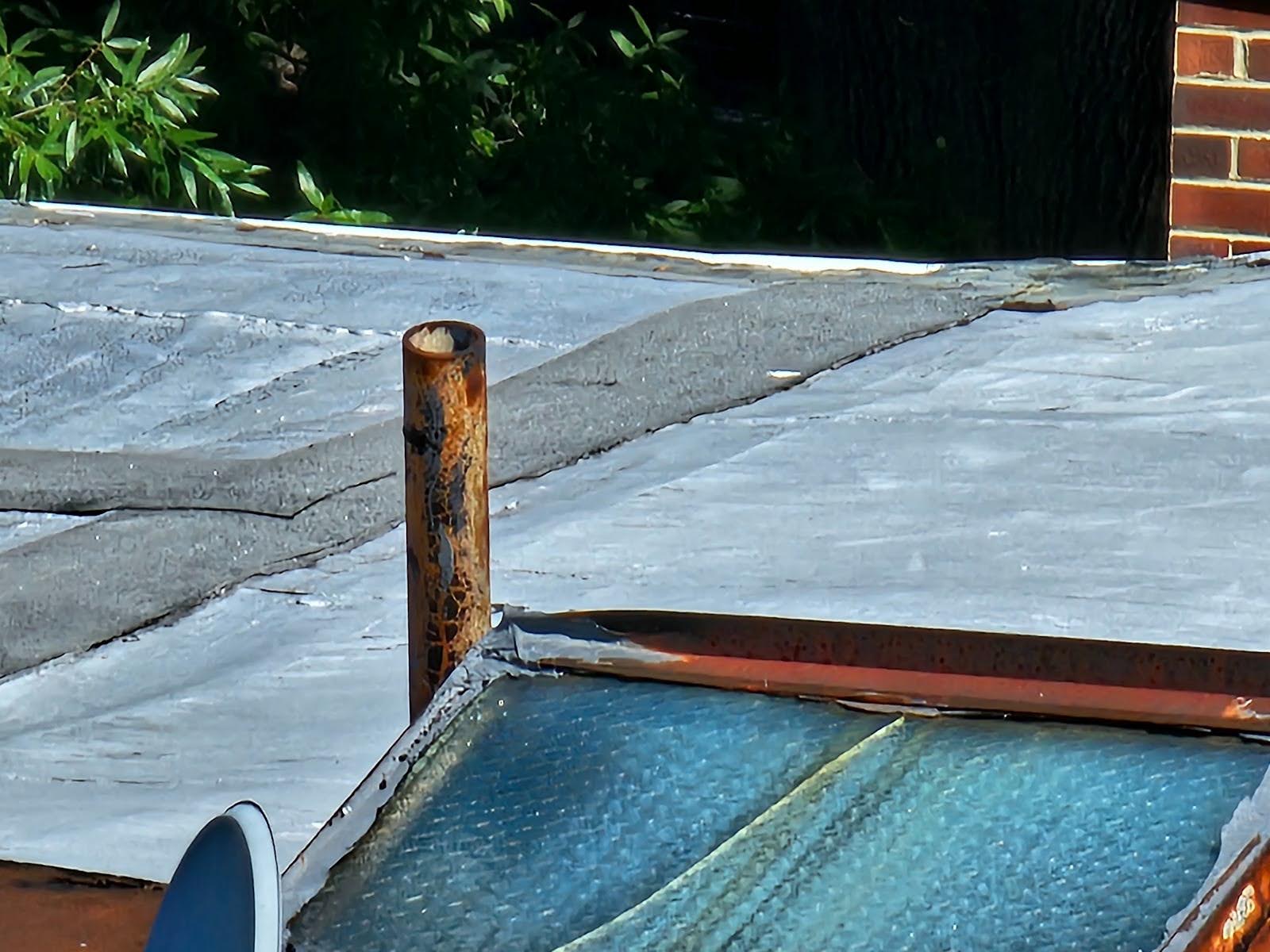
Commercial Roof Leak Containment System – Part II
This past week we began looking at a really interesting containment system. It isn’t often that leak containment systems are needed, because normally you just go right ahead and fix the leak itself. Sometimes though it’s not that simple. We explained last week, that in some cases leaks can be caused by a multitude of different factors. Separating those potential sources from one another is not always straightforward.
In some cases, individual systems need to be isolated and tested individually so that they can be disambiguated from the other adjacent systems. In the example of a leak containment system shown in the picture below, overhead above the space shown, there are multiple systems. For example, in a typical building you may have HVAC systems, plumbing systems, roofing systems, and even other systems such as sprinklers or irrigation. All of these systems contain, create and or commute water in a way that could lead to leakage. When the systems are all built in the same area, it may be better to test them one by one instead of tearing everything apart to start.
The option for testing may be particularly important where a space is used for retail or commercial purposes. It’s particularly costly to shut down and rebuild everything in a commercial or retail space because the business or use may require it to be open. A leak capturing collection or containment system like the one we’re looking at last weekend today will help prevent excessive damage from testing, to isolate and discover the source of the leakage. The picture below shows a temporary redundant capture sheet installed under the area of leakage used to capture any water which might fall from above after it leaves the primary collection.
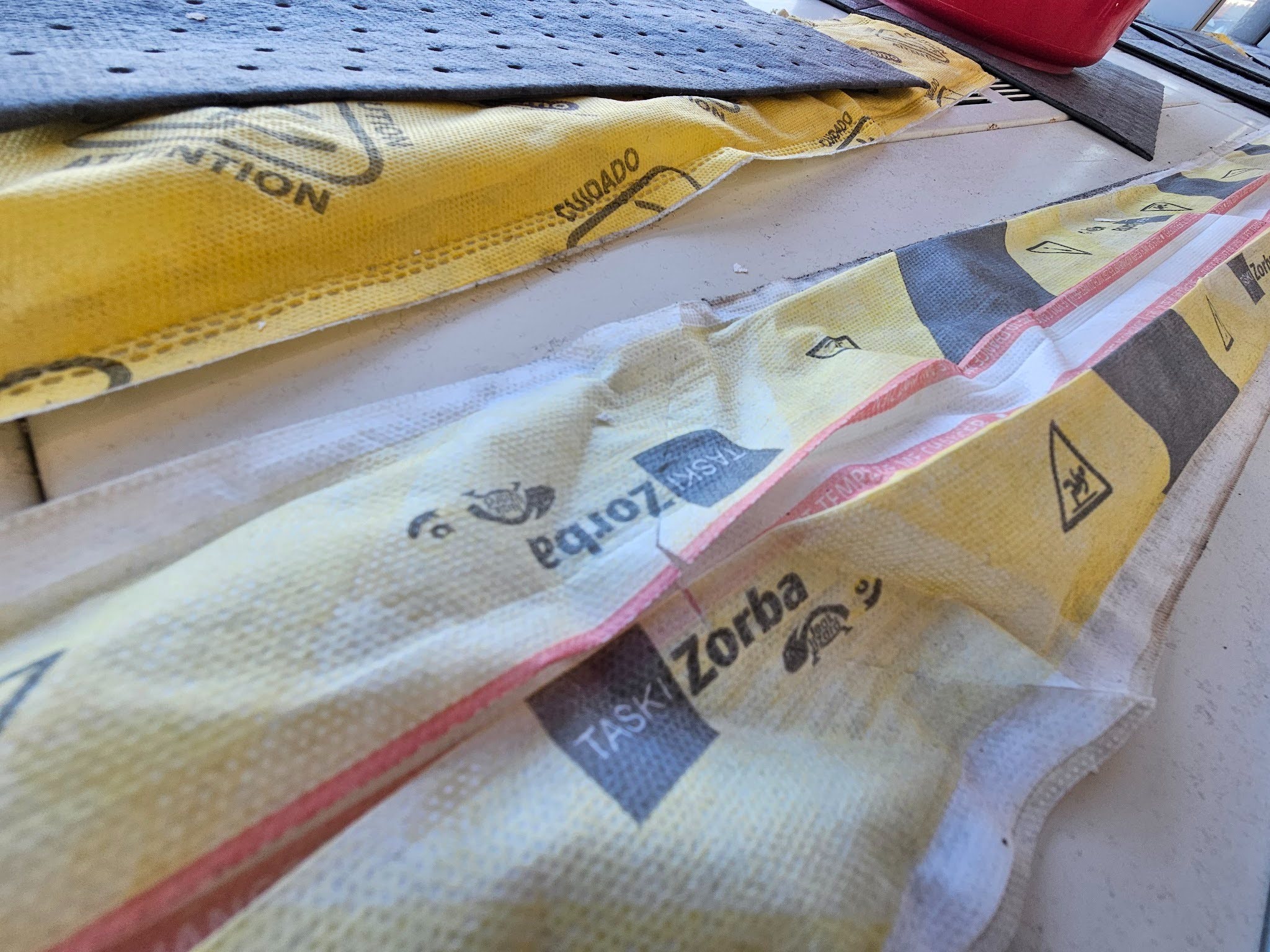
Any water that escapes capture from the primary membrane above will drip down and land onto this membrane which will contain the leak. The membrane is impermeable so as water is collected it will not seep through.
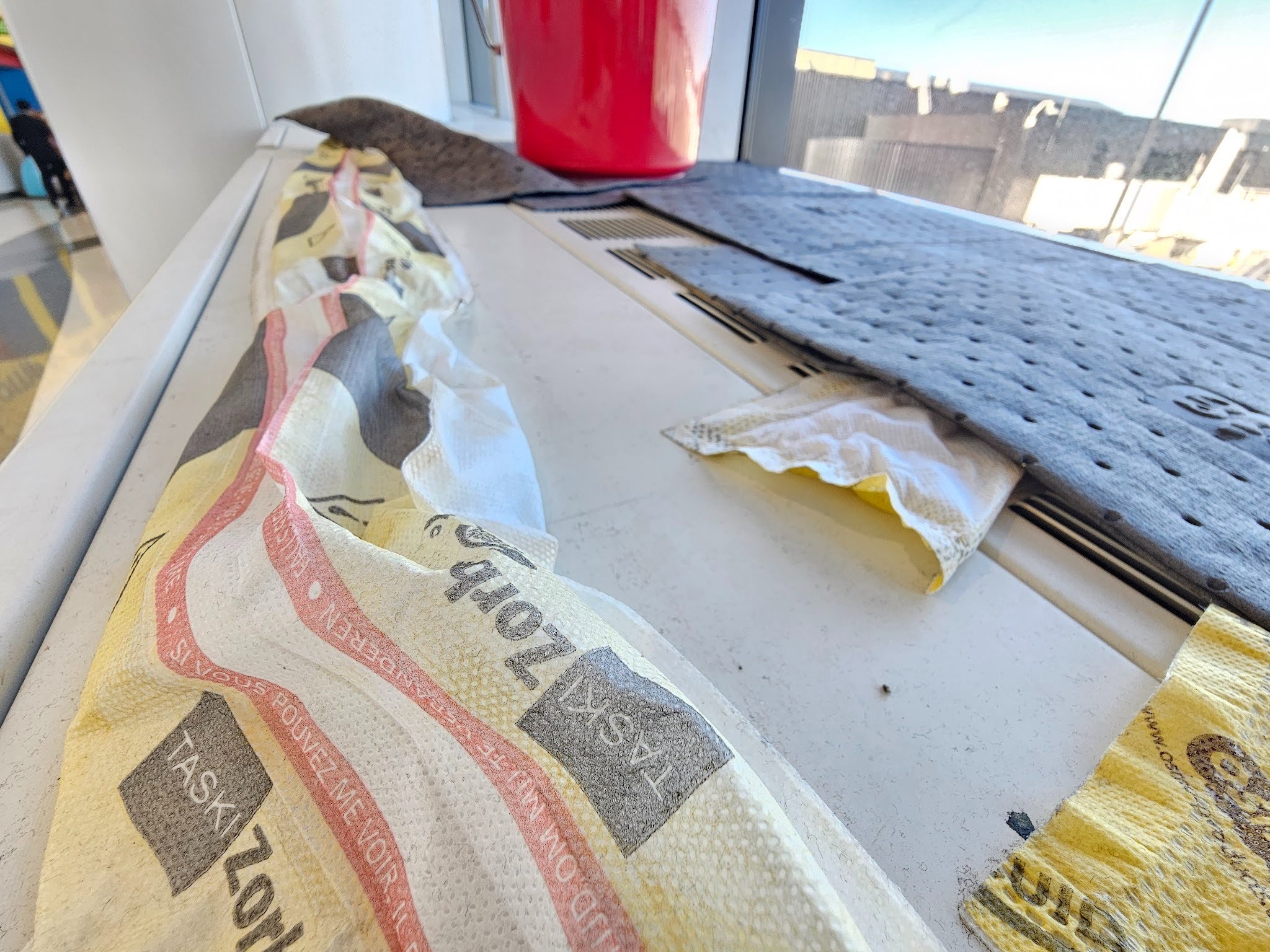
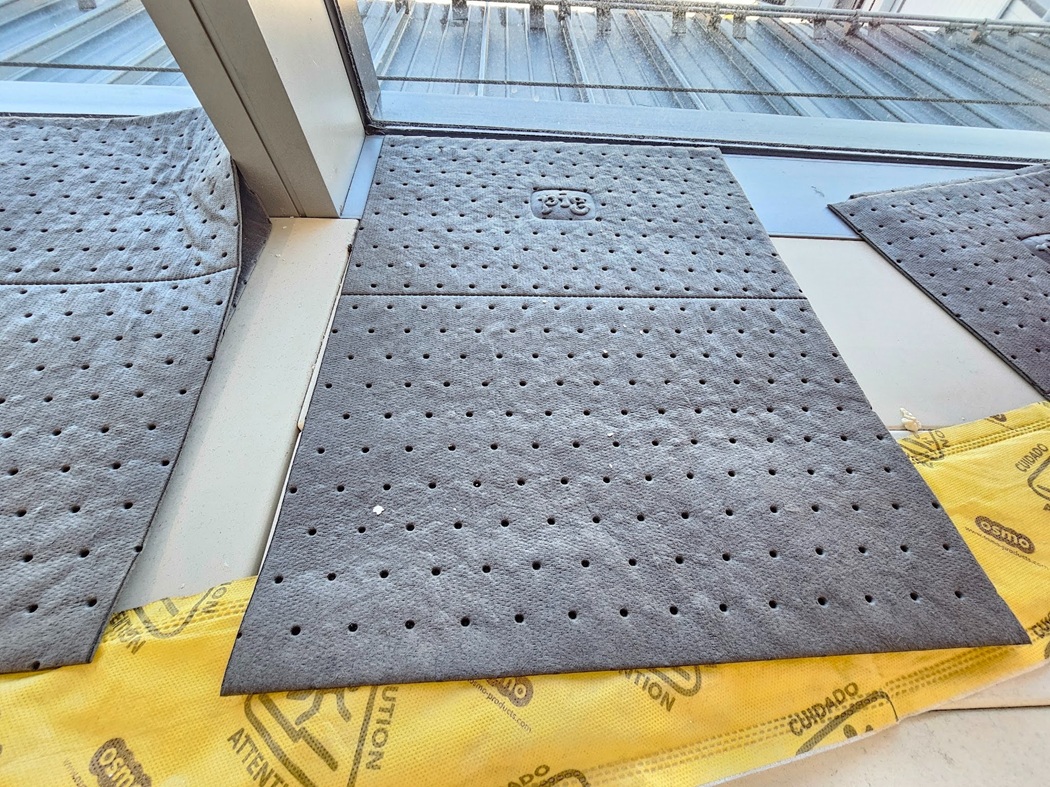
Rubber mats which are also impermeable, to a high degree, have been placed at the edges to work like a weight to hold the plastic sheeting in place.
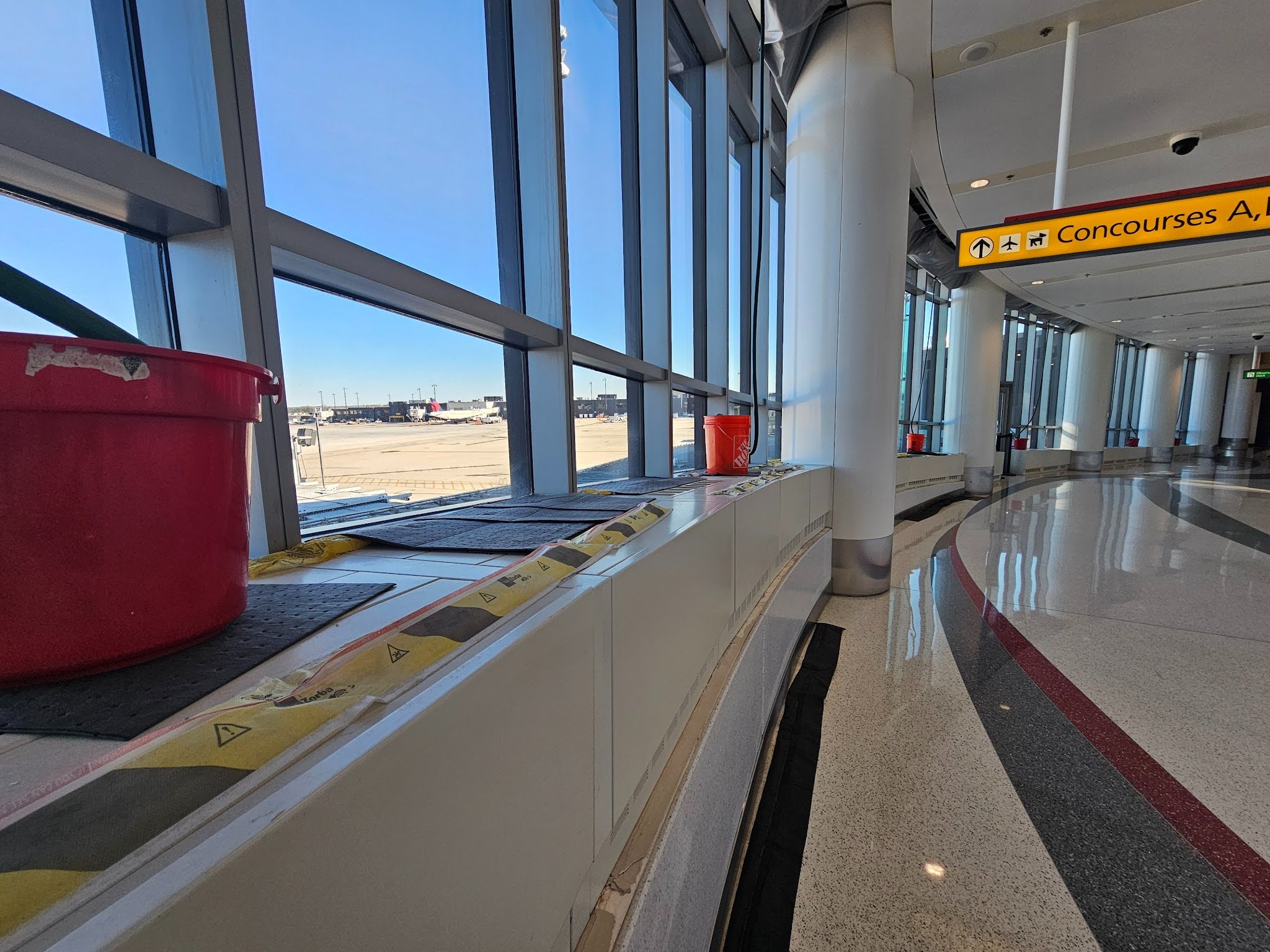
The upper part of this system is connected, similarly but set to drain through hoses which run to buckets below.
You can see the hoses connected to the drains at the bottom of the collection system above.
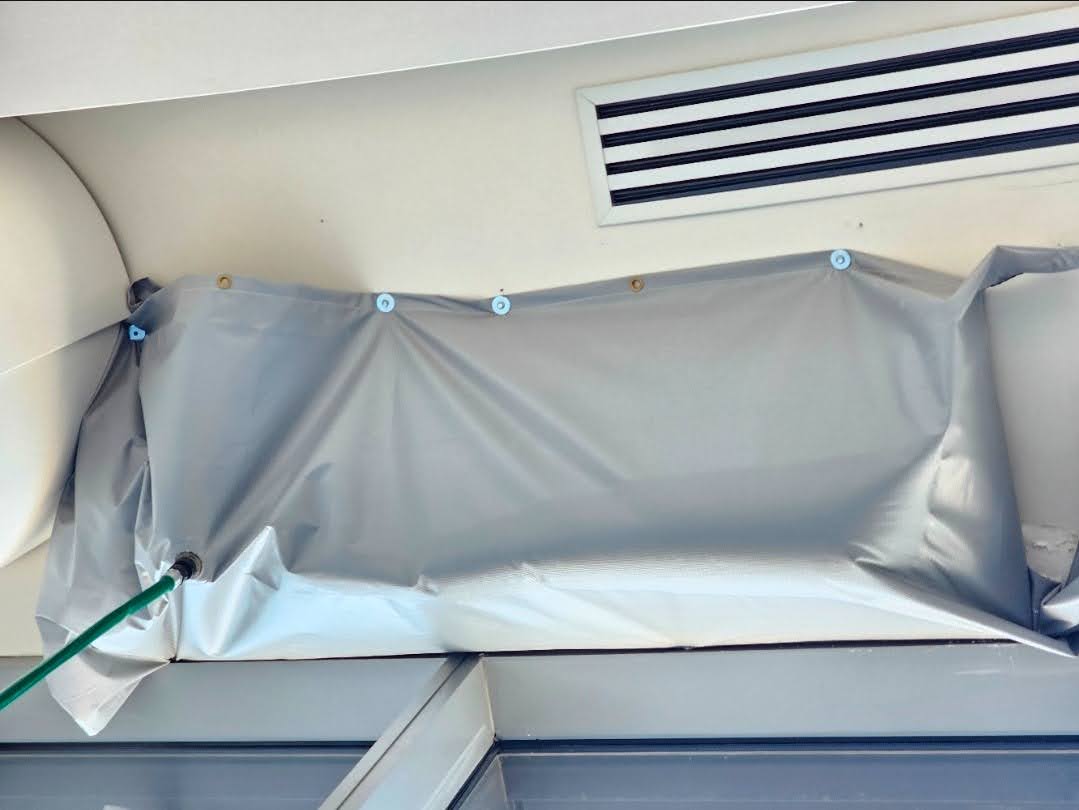
A simple and common standard 3/4 inch coarse thread drain termination has been sewn into the collection sheeting. As water fills up into that area like a reservoir, it is graded slightly so it will run down towards that drain. Once the water reaches the drain it then runs through the hose to buckets below. During testing and or areas of hydration, the buckets must be monitored and emptied.
Like many types of typical tarps, this particular temporary membrane is reinforced with polyester or similar threads that run in a multi-ply pattern throughout the vapor barrier. The collection sheeting is basically made with multiple of these plies which are laid and joined on top of each other. This provides additional strength and reinforcement. For example, you can see, in the picture above that fasteners have been installed with fender washers, through the sheeting into the ceiling finish and into the ceiling framing above.
The strength of the substrate, from a resistance perspective, is in the framing elements. Here, like many commercial or retail spaces, the framing is built with metal stud work. Light gauge bent metal framing members can have a high resistance for the framing and forming of walls. When the screw is fastened through the metal stud work, it also has high resistance from shearing or withdrawal. Withdrawal resistances are a factor of both the shank of the screw and also the threads of the screw. When installed into a metal stud, most thread patterns have a high withdrawal resistance.
In roofing, we have to know a little bit about the use of temporary tarps and methods of moisture resistance. Here, the multiple plies of the membrane and the reinforcement helps resist care of the fabric where the weight is concentrated on a single fastener shaft. In the case of a typical tarp, grommets can also be used at the corners to expand the area of resistance.
We provide this information here on our blog, and our website, to help our customers and future clients, and we recommend every building owner in DC who values the longevity of their roof (and their investments) and building use a contractor who values the simple and important principles of proper roof construction like Dupont Roofing DC.
Our company specializes in flat roofing here in Washington DC and we’re happy to help building owners of almost all types. Learn more about our company and the proper techniques of working with roofing on historic buildings in Washington DC here on our blog at DupontRoofingDC.com, and you can call us at (202) 840-8698 and email us at dupontroofingdc@gmail.com. We are happy to help and at least talk through options.