Abandoned Roof Trash in Washington DC – What It Reveals
A while back, we were on a roof and saw that the previous contractor had left abandoned trash all over the rooftop. This isn’t completely uncommon but is completely unprofessional. Roofing contractors should do a better job. Simply cleaning up their own trash when they finish their work shouldn’t be too much to expect. Roofing happens to be one of those subsets of the construction industry though that has the widest range of quality in contractors. Here in Washington DC, we won’t really blame the low quality on DC homeowners because flat roof repair isn’t something that homeowners often do themselves.
Normally they hire out even when money is tight and they can’t afford extensive and good quality repairs. Instead, we think homeowners are often getting swindled by contractors who appear dirt cheap but then don’t do the work fully nor properly. We strongly recommend DC building owners hire a flat roof contractor such as ourselves and get their work done properly.
While we’re up here though, we figured we would take a look at some of the details and explain so that our readers can learn from some of the nuances and details of the roofing systems. It can be interesting to examine this trash, a bit like a detective, to go back and analyze and consider at who may have left all this trash up here.
In the picture below, you can see there are two different rooftops. Both have been built with a modified bitumen membrane to the left has not been painted, ever, and it’s lifespan. The one to the right has been painted with an aluminum paint.
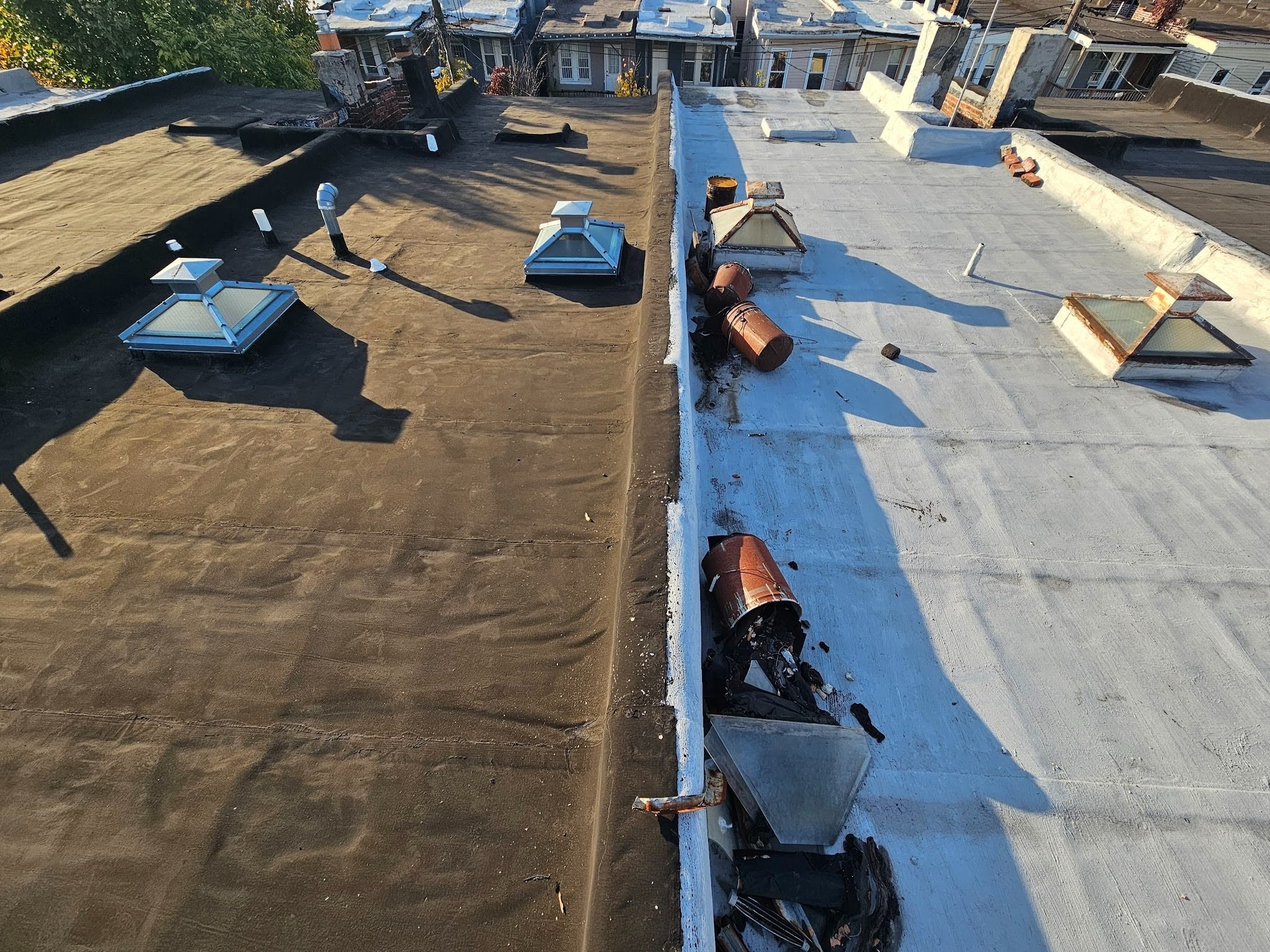
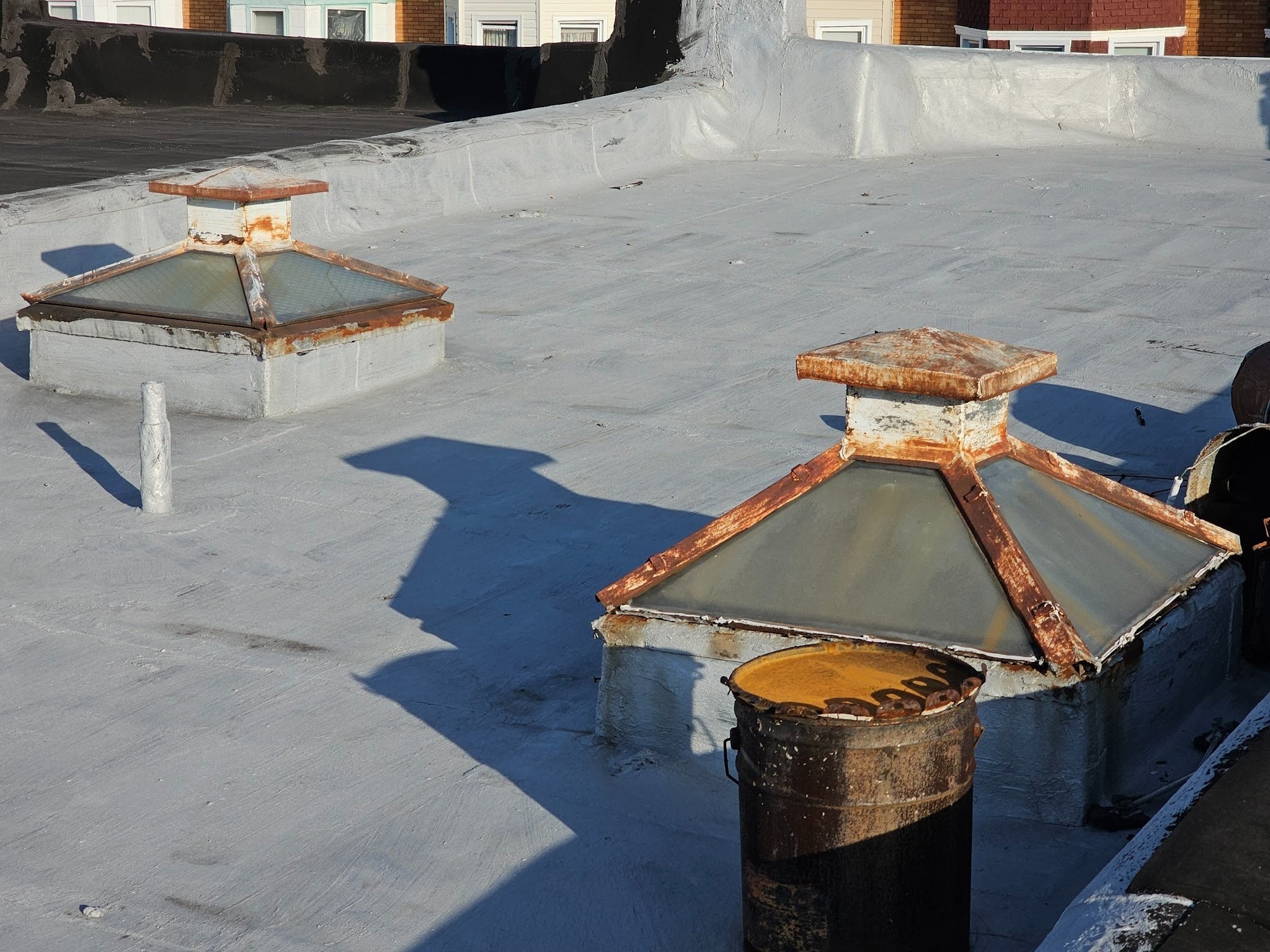
Here in this picture, we’re showing the painted roof. This is a fiber modified aluminum paint. We’re unable to read the old metal buckets left behind because they have rusted almost entirely.
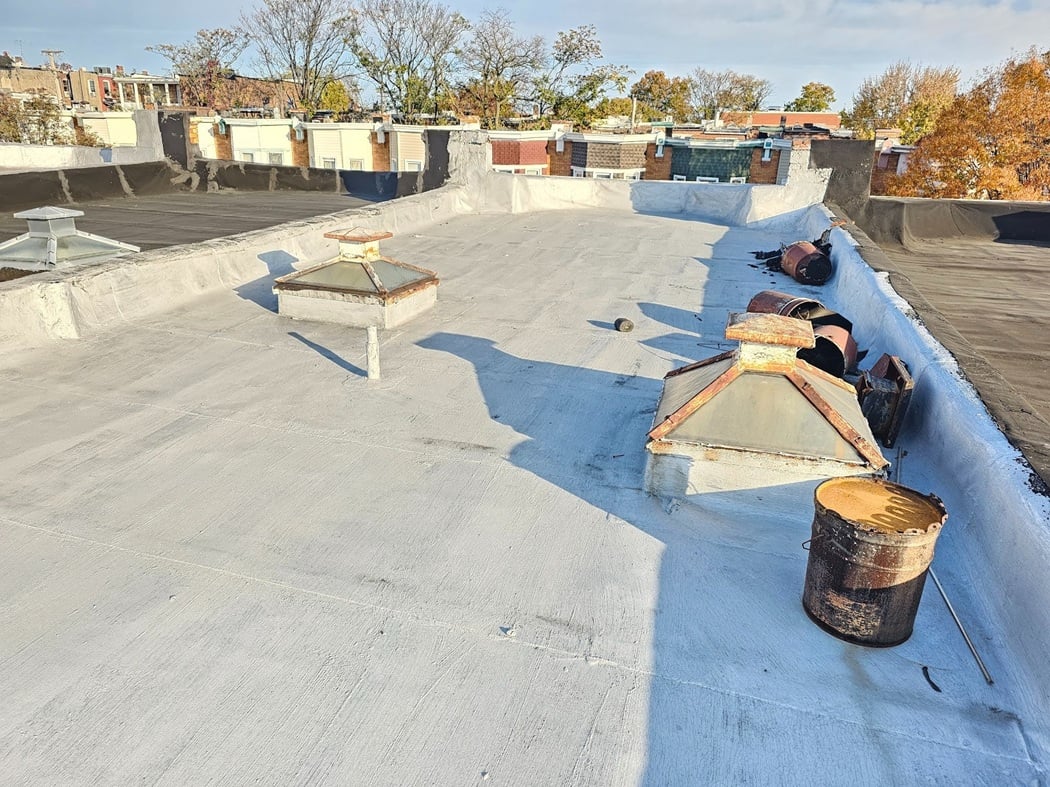
Here you can see, the previous contractor just left everything behind and didn’t take any of their trash away.
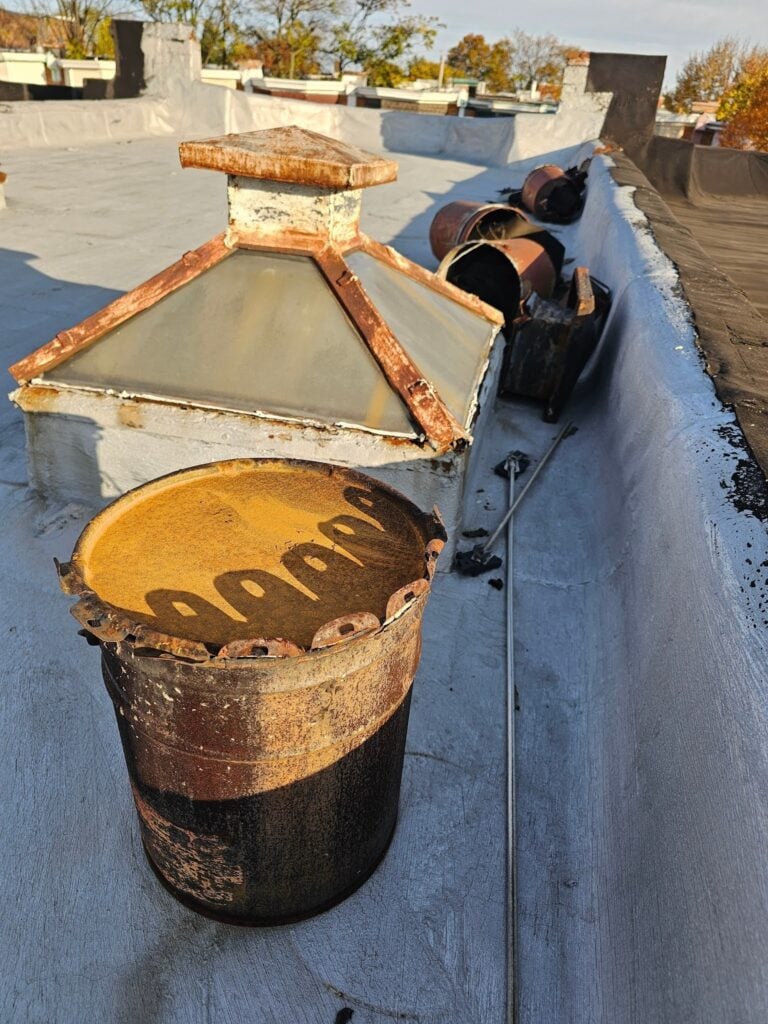
Buckets are strewn about. Even the buckets themselves have been stuffed with trash. The buckets originally contained a type of paint. Although the original paint had been used and the buckets were then emptied, they went back and stuffed more trash inside of the then empty buckets.
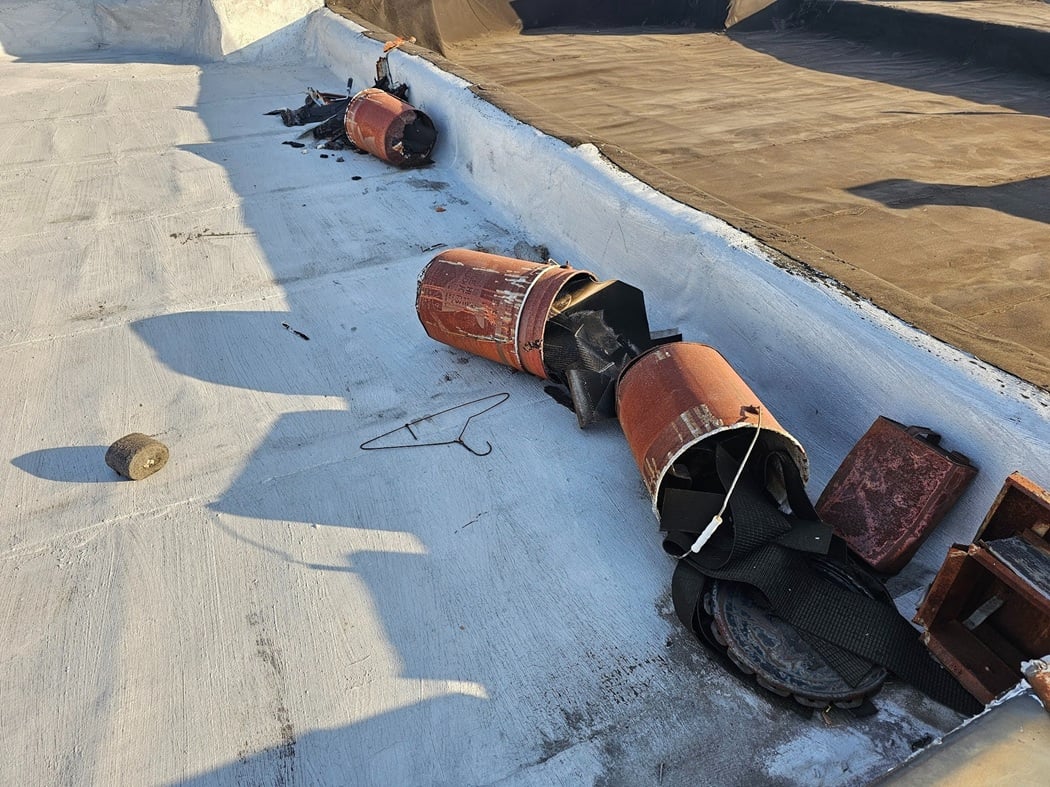
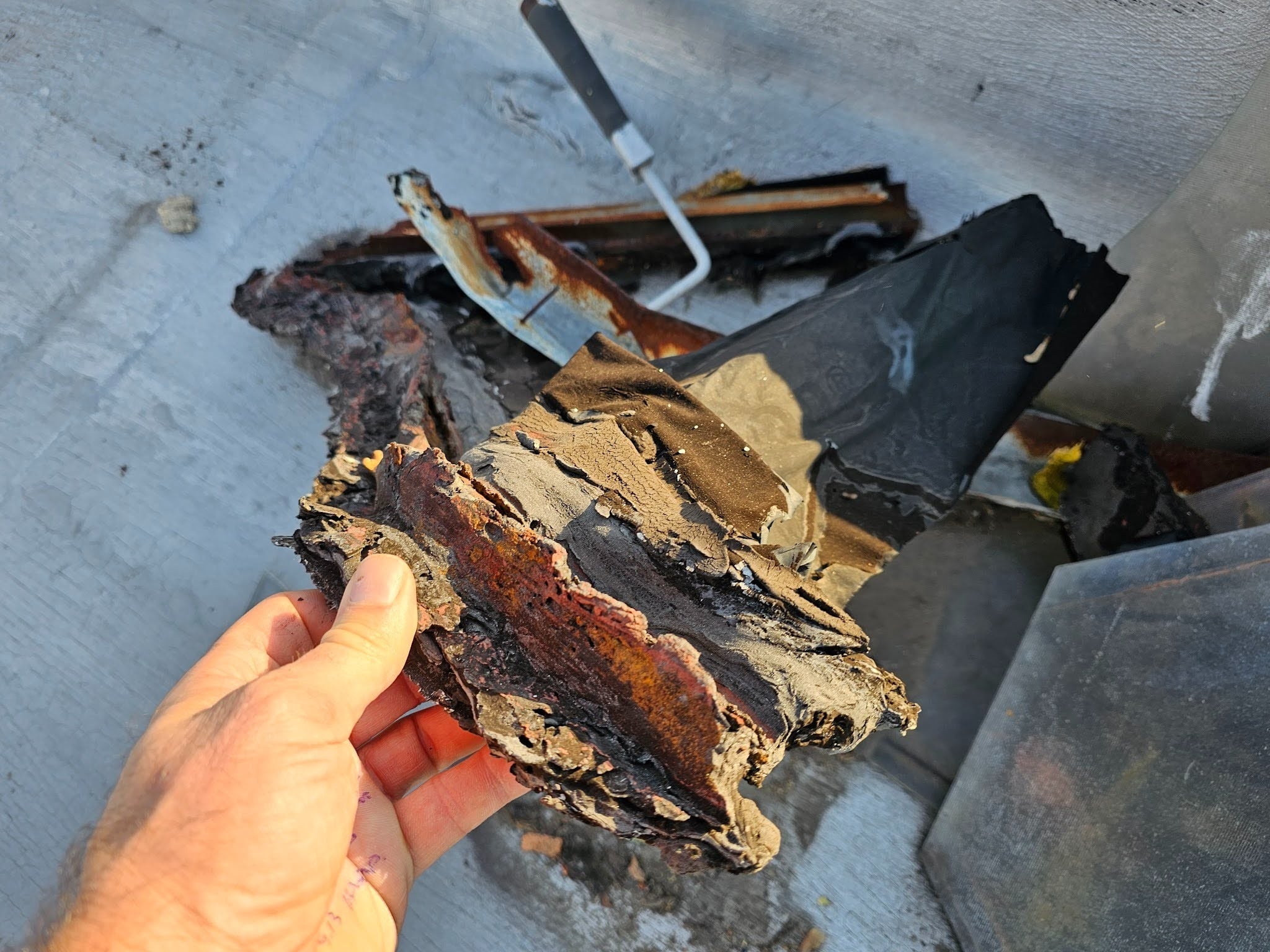
The material, that you can see, in the pictures below, inside of the buckets, is modified bitumen roofing materials. These are the scraps cut off of the individual larger pieces. When installing a roofing membrane, the edges need to be cut to fit the shape of the roofing substrate. When there is excess, the roll roofing material must be trimmed to fit the shape and size of the needed area of application. The cutoff extra pieces, in this case, were discarded inside of these buckets of older trash.
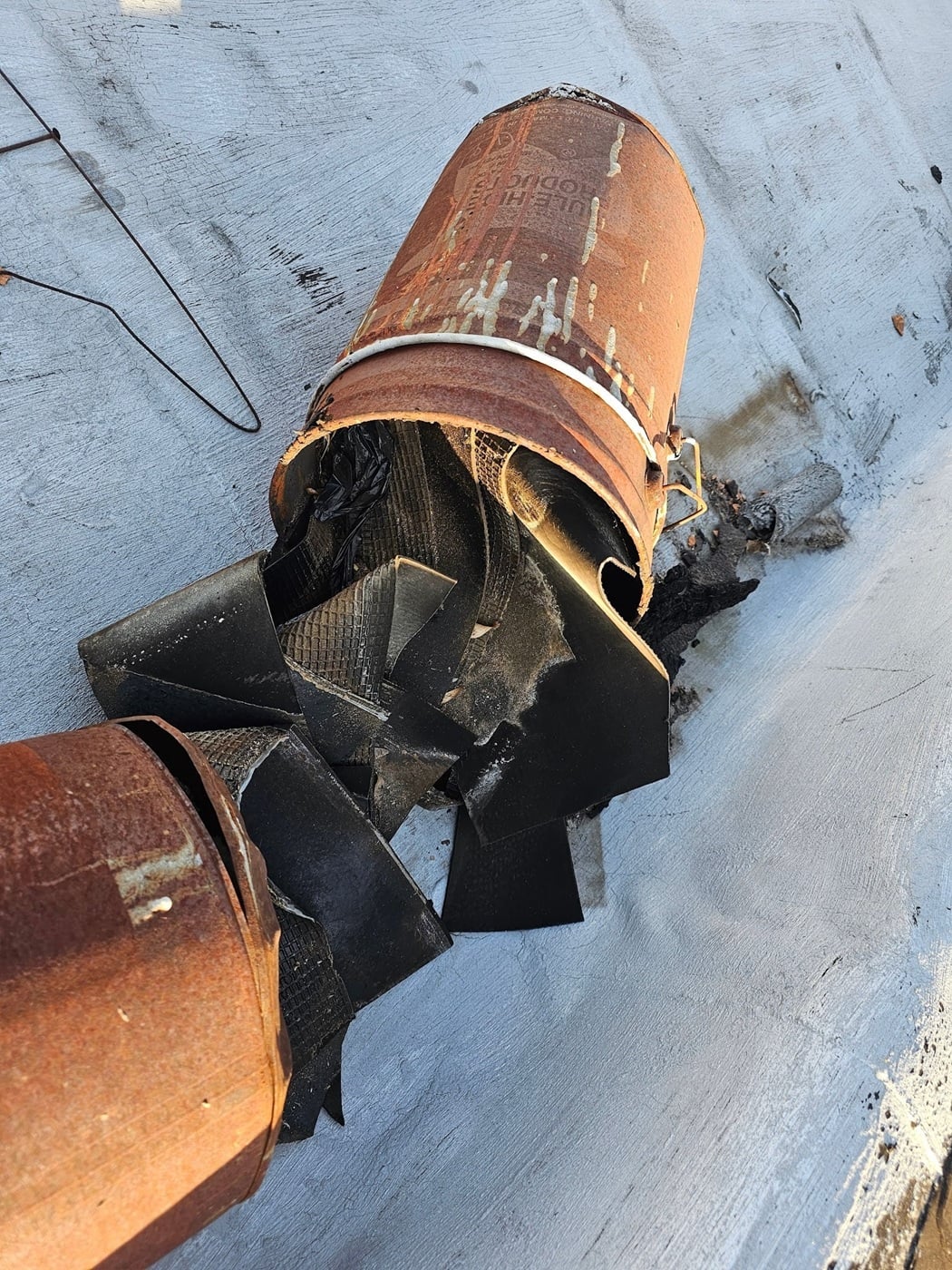
In the next picture below though, you can see different types of trash. There are scraps from the old skylight curbs. You can tell that this is a material from the old skylight curbs because it is built up thick and in the shape of a corner where the modified bitumen roofing material would round over top of the edge of the curb. In most cases, the modified bitumen roof membrane is installed in a planar configuration, but where it meets the base of the curb, the modified bitumen roof turns upward and is overlapped at the corners to have a continuous seal around the edges.
By creating that continuous seal, the membrane is also built up thicker because there are areas of doubling of the membrane where it is overlapped. The same thing then happens again at the top of the curb where the membrane runs upward in a vertical position and then turns back horizontal on top of the edge of the curb. When installed properly, the skylight seats around the top of the curb and therefore creates a self rimming type of concentric overlap.
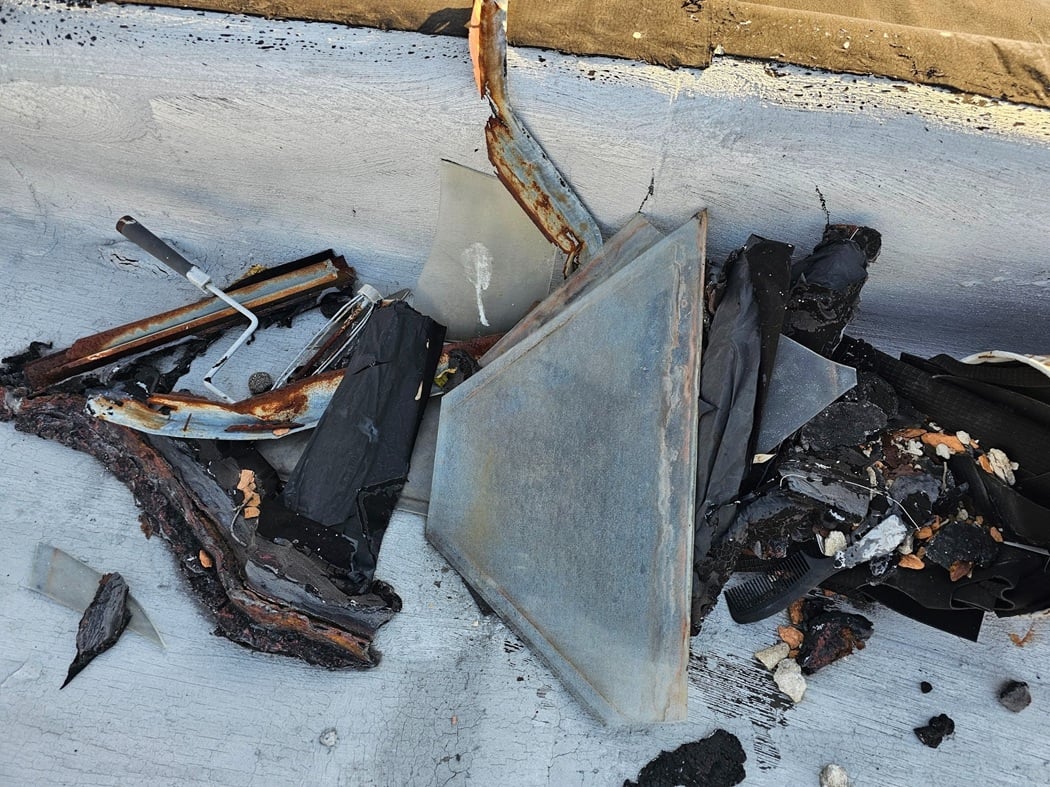
When you look at this trash, you can tell that the materials that are discarded here were from old skylights.
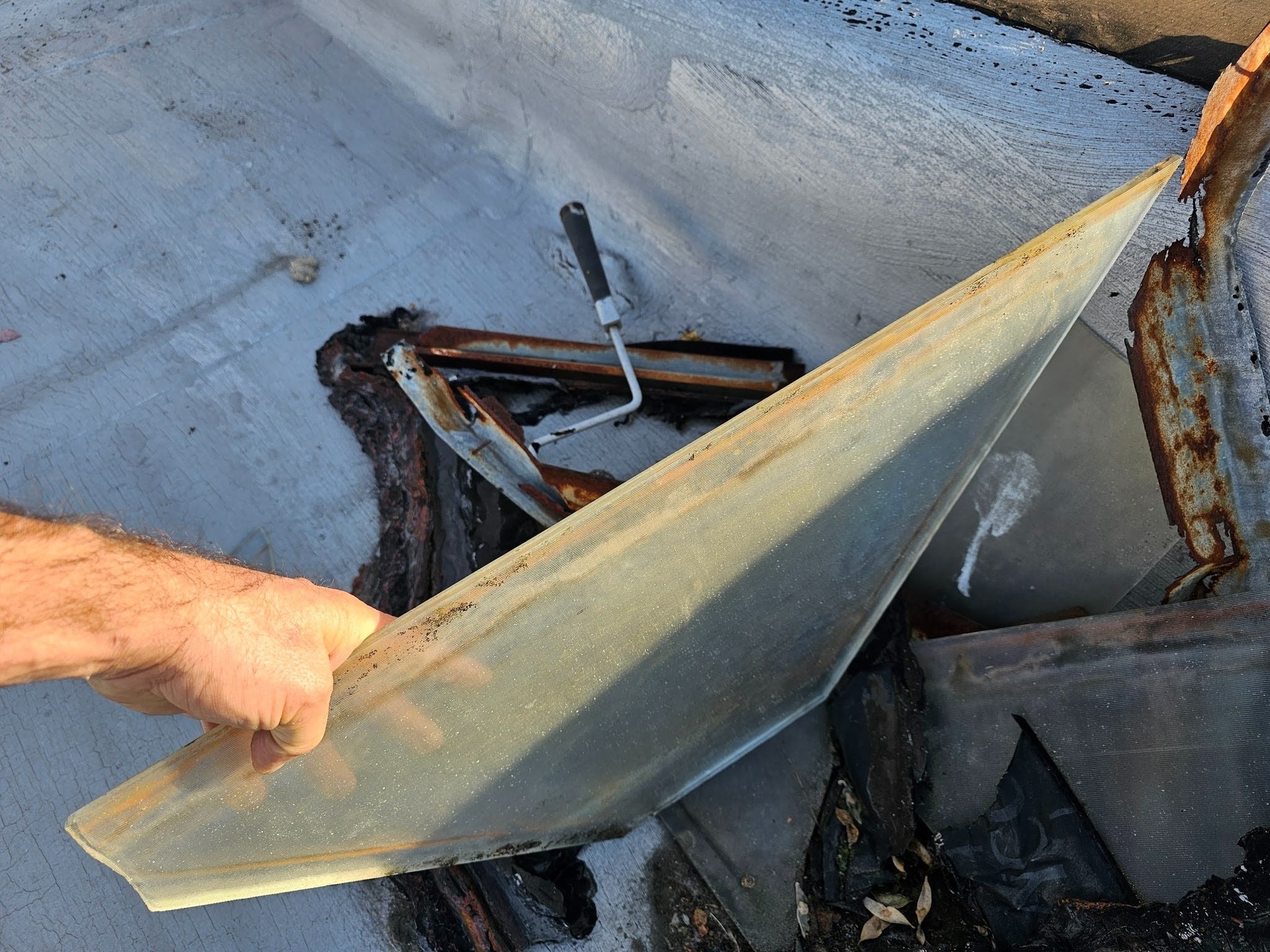
Here, you can even see the old glass panels that were part of the old skylight. Today, float glass is used in most types of construction, and the type of glass used in most skylights today will not have a texture like this old thicker 3/16 inch glass. From this alone, we can tell that this glass is likely historic.
Interestingly though, when you look at the painted rooftop skylights, you can see that they’re not new, they are covered in rust because they’re made with a frame built from ferrous oxide alloy metals and they have significant age and deterioration.
In this coming week we’re going to show more details of the type of trash that was found at the bottom of those buckets and connect the dots to explain how this ended up being done in this way.
We provide this information here on our blog, and our website, to help our customers and future clients, and we recommend every building owner in DC who values the longevity of their roof (and their investments) and building use a contractor who values the simple and important principles of proper roof construction like Dupont Roofing DC.
Our company specializes in flat roofing here in Washington DC and we’re happy to help building owners of almost all types. Learn more about our company and the proper techniques of working with roofing on historic buildings in Washington DC here on our blog at DupontRoofingDC.com, and you can call us at (202) 840-8698 and email us at dupontroofingdc@gmail.com. We are happy to help and at least talk through options.