Understanding Ballasted Flat Roof Systems – Part I
Flat roofs are a bit more modern than the more traditional sloped roofs. Sloped roofs work in a simpler and easier way, from some perspectives, because they allow gravity to more easily shed water from a roof surface. The angle or slope of a pitched roof also helps because it can allow for materials that are not as well sealed between a multitude of smaller individual pieces.
Essentially, in a sloped roof, one small piece can be set on top of the next and as water flows to the edge of the one piece it can shed away with gravity alone on top of a lower piece of roofing. Flat roofs are different though. They require a more continuous membrane.
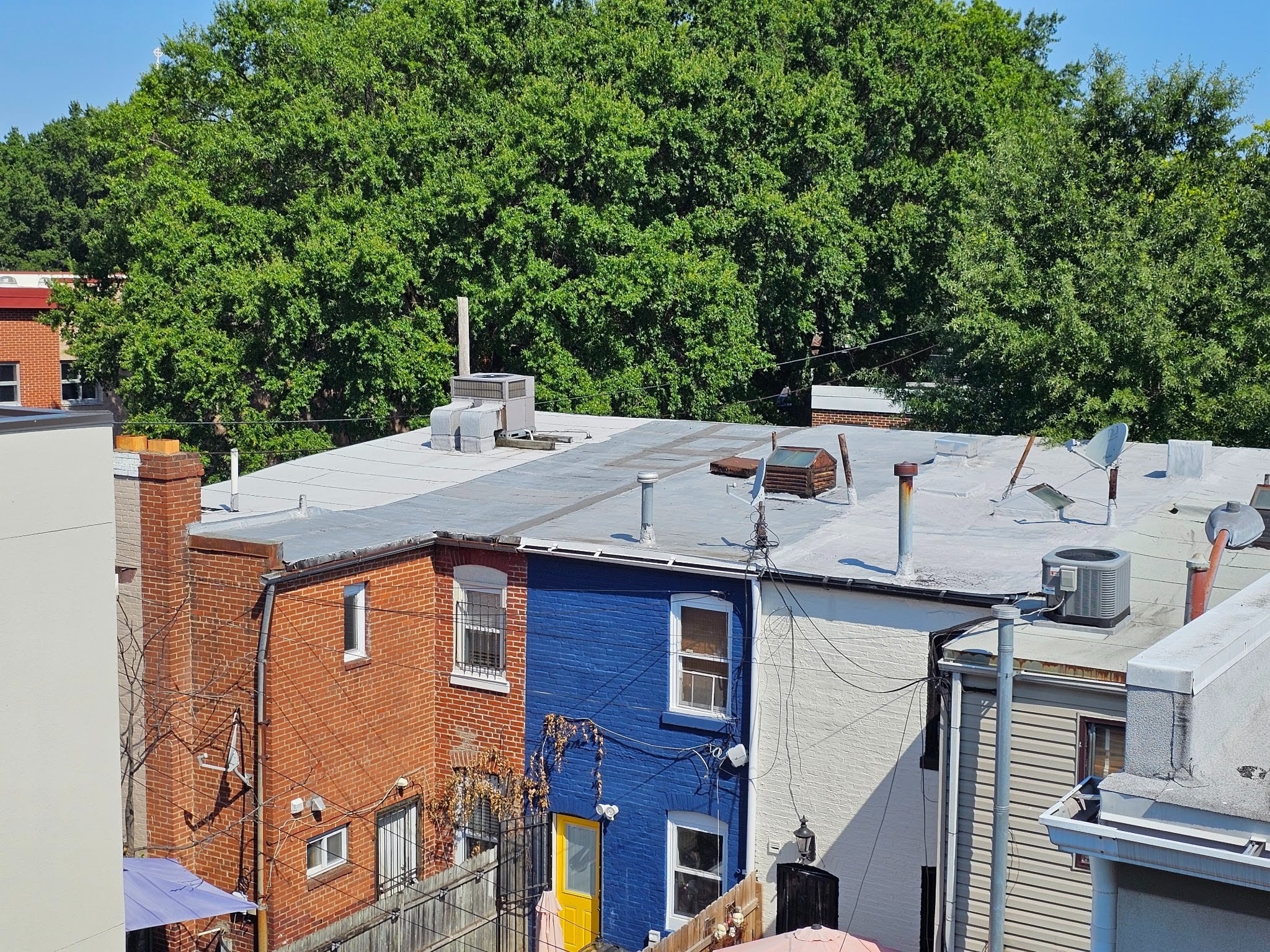
In the larger span of the evolution of construction, although flat roofs are a bit newer, they’ve still been around here in Washington DC for well over a hundred years. During that time, of the past century or so, the technology and materials used for flat roofing has evolved considerably. One of the older material types used was called built-up roofing. This is an asphaltic / bitumen type material that was hot mopped or poured onto several plies of mesh like material. Each ply is essentially soaked in an individual layer of hot liquid tar.
The liquid tar used has a degree of adhesion and cohesion to bond the substrate materials together, but it doesn’t really have a permanent adhesion to the substrate wood decking. As the bitumen materials cool, it can often also maintain a degree of flexibility. That flexibility helps a lot with the seasonal and even daily thermal changes.
On a hot day in the summer the temperature can start at around 60° F and get as high as over 100° F. That temperature range can be over 50° F. That’s a lot of variance for most materials to handle, well. For a material to perform well in those types of wide-ranging conditions, the material has to have a degree of flexibility. Flexibility is one of the inherent positive qualities of asphaltic or bitumen materials.
There’s a trade-off though with using these historic type materials. They, at times, depending on the fluctuations of temperatures, can also become comparatively rigid. When the material becomes comparatively rigid, it can delaminate from the substrate. Essentially, it can lose its bonding characteristics, to an extent. During those conditions, the roof membrane has to be able to resist the uplift pressures from high winds. Asphaltic or bitumen materials do not do that well at all times.
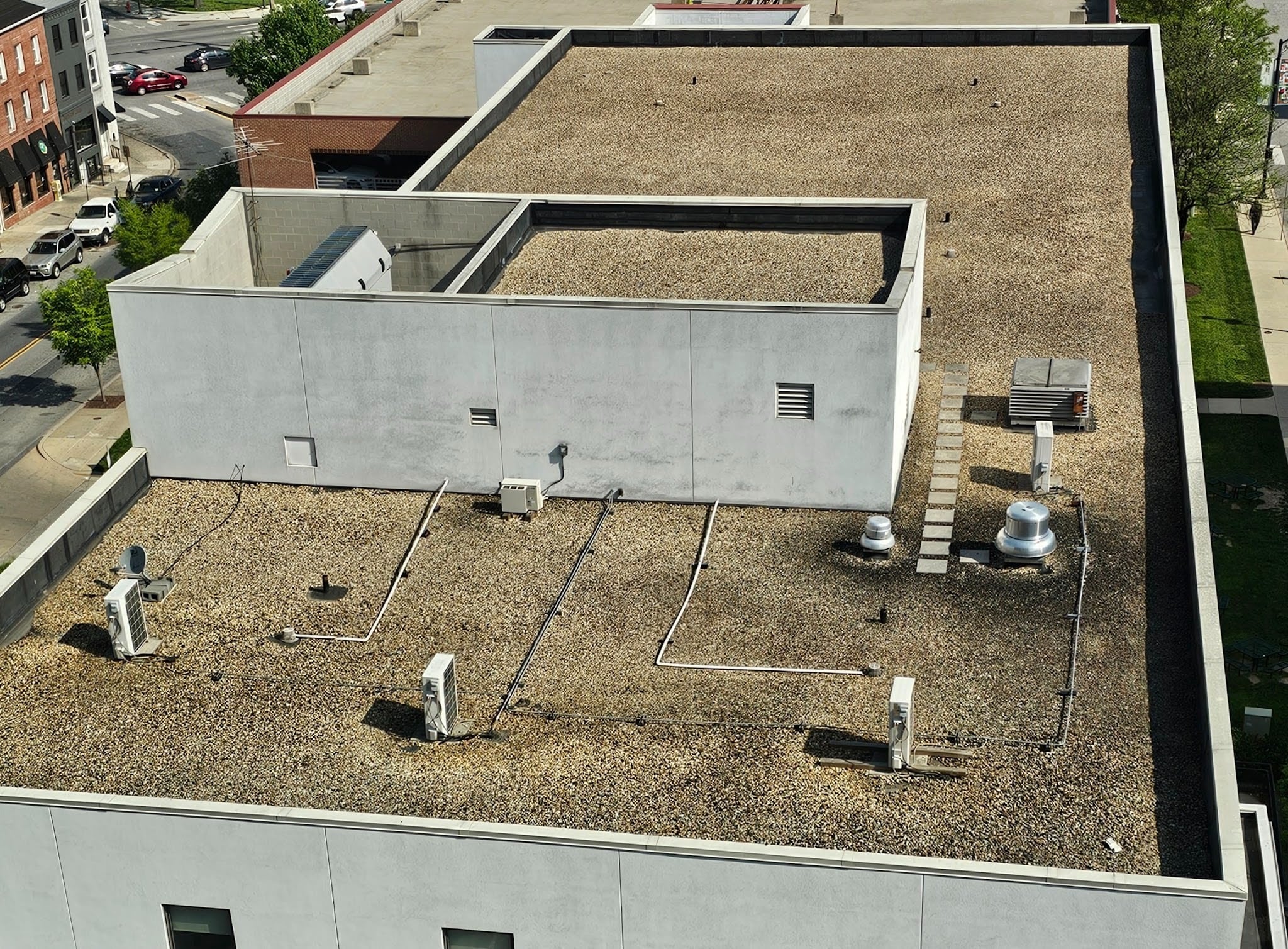
To help the roof materials like this stay in place, often a ballast or cap sheet is used. Here, an aggregate stone has been spread around the roof to essentially weigh it down. That aggregate stone, in this case, is also often referred to as a ballast. Essentially a ballast is a weight to hold something in place. Here, the aggregate stone ballast helps keep the roof positioned as needed, but it also does something else positive to help the roof system.
UV rays will deteriorate many types of building materials. Wood, for example, will deteriorate very quickly because of the effects of both moisture and ultraviolet. When wood turns gray and begins to fall apart, it’s generally a result of exposure to ultraviolet. Ultraviolet rays are present in everyday sunlight and over years of exposure, the wood materials will fall apart. The same type of thing happens to roofing materials made from asphalt or bitumen.
The stone materials, here on top of this roof, as a ballast, will also help the roof be protected from exposure to ultraviolet. The stone, similar to brickwork, barely deteriorates at all from intense and prolonged exposure to ultraviolet. Even though, at the roof, the stone is just on top of the roof membrane, it can absorb those ultraviolet rays without letting the rays pass through to the roof membrane. Instead the roof membrane basically sits just below the stone but is well shaded by the stone.
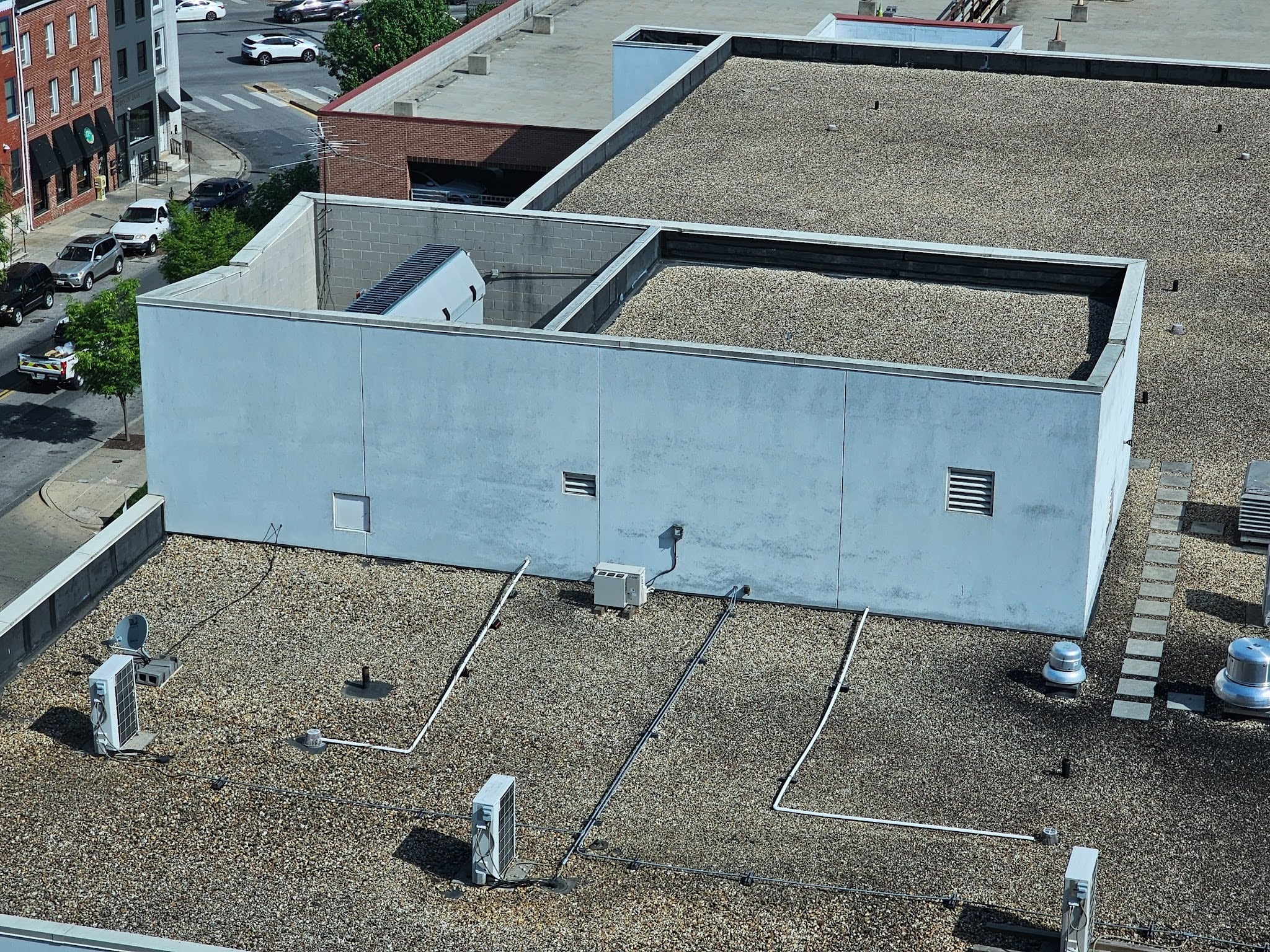
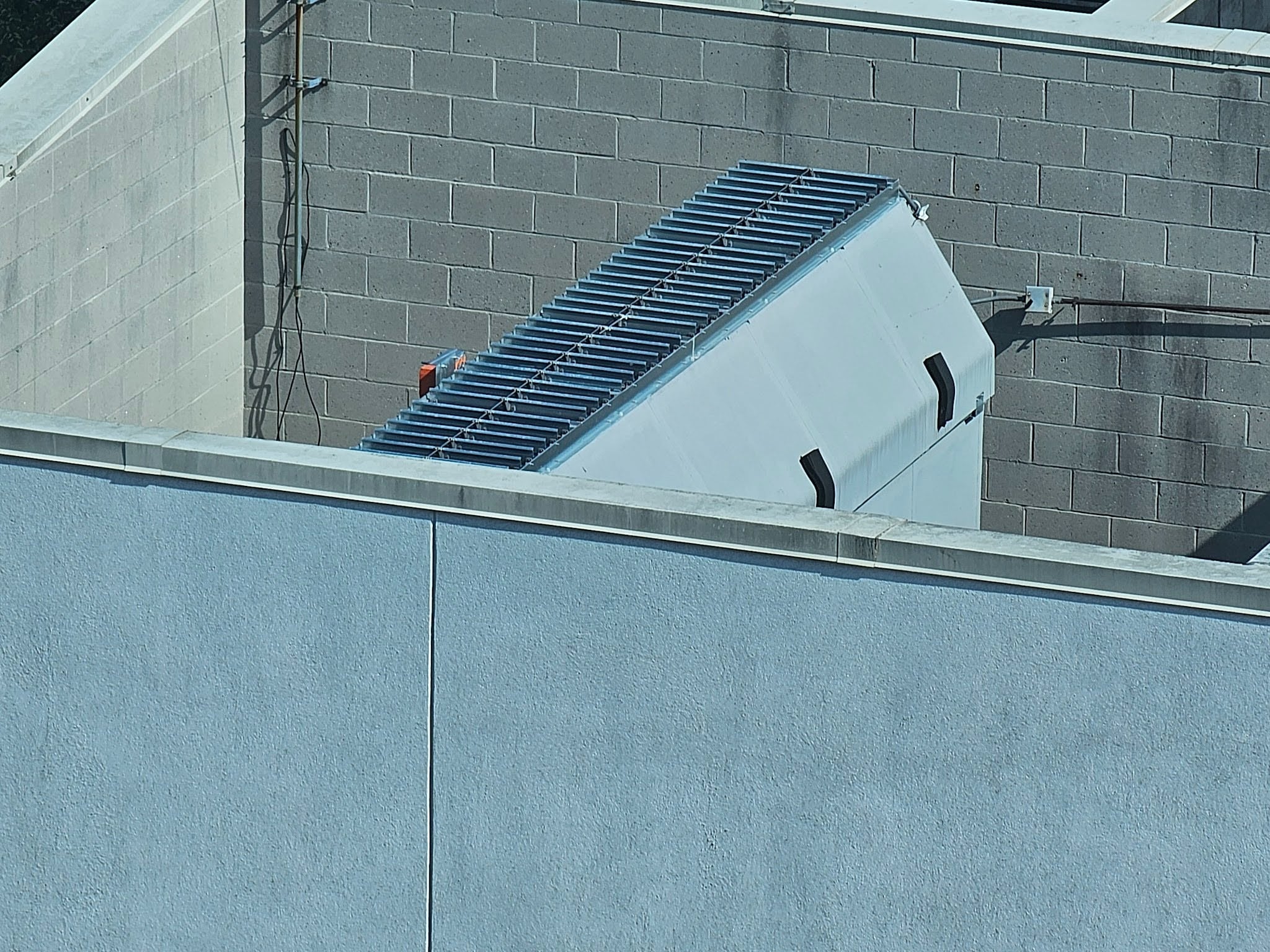
In the coming week we’ll talk about some of the other systems that are part of the roof. They’re not part of the roof membrane itself, but there are HVAC systems, piping, and even high power mechanical units up on top of this roof membrane. All of those things, even though not part of the roof itself, need to be taken into consideration because sealing and providing bearing points must be coordinated with the roof membrane.
We provide this information here on our blog, and our website, to help our customers and future clients, and we recommend every building owner in DC who values the longevity of their roof (and their investments) and building use a contractor who values the simple and important principles of proper roof construction like Dupont Roofing DC.
Our company specializes in flat roofing here in Washington DC and we’re happy to help building owners of almost all types. Learn more about our company and the proper techniques of working with roofing on historic buildings in Washington DC here on our blog at DupontRoofingDC.com, and you can call us at (202) 840-8698 and email us at dupontroofingdc@gmail.com. We are happy to help and at least talk through options.