Roof HVAC and Duct Flashing Problems in DC Homes
Here in the past, on our website, we’ve seen many examples of complicated duct and HVAC or mechanical systems on rooftops. These systems themselves are not just complicated, but the maintenance and longevity of the associated roof system and components themselves is more complicated by the presence of a mechanical system on top of it. The efforts to maintain a roof are essential to maximizing building system efficiency and longevity. Longevity generally applies to the life of something and here of course the roof is actually alive, but it’s a system that has an intended lifespan.
When trunk and branch components of a mechanical system are installed on a roof, they can often be positioned just above the roof plane or lifted higher with stand-offs. In some cases it depends on the system class, and the cost of the framework or dunnage infrastructure requires additional cost to be built higher. A mechanical condenser unit can often be installed on the roof with just a simple dunnage system, especially if unducted.
The dunnage system is basically like a frame or shelf, like a deck, used to mount the unit. With a mounting system like that and just a few elements that penetrate through the roof membrane, a condenser unit, by itself, may have a relatively small footprint on the roof system. In that case, it is still a slight impediment to proactive and efficient care on the roof, but it can be managed. The point is that that type of system is one of the lightest type footprints which a mechanical system can impose on a roof system. We discussed these details, here, basically as just a frame of reference.
The picture below shows the opposite extreme. This particular mechanical system here is extensive and expansive. It includes several long runs of ductwork that create several penetrations through the roof system membrane and also make it more difficult to access parts of the roof because the ductwork is installed both in a large area and also relatively low to the roof surface. It’s very hard to work under something that is just leaving a tiny space to reach into. That limited clearance makes it both difficult to manipulate tools with your hands and also to get your eyes underneath the duct and or mechanical elements to see and observe the conditions of the work.
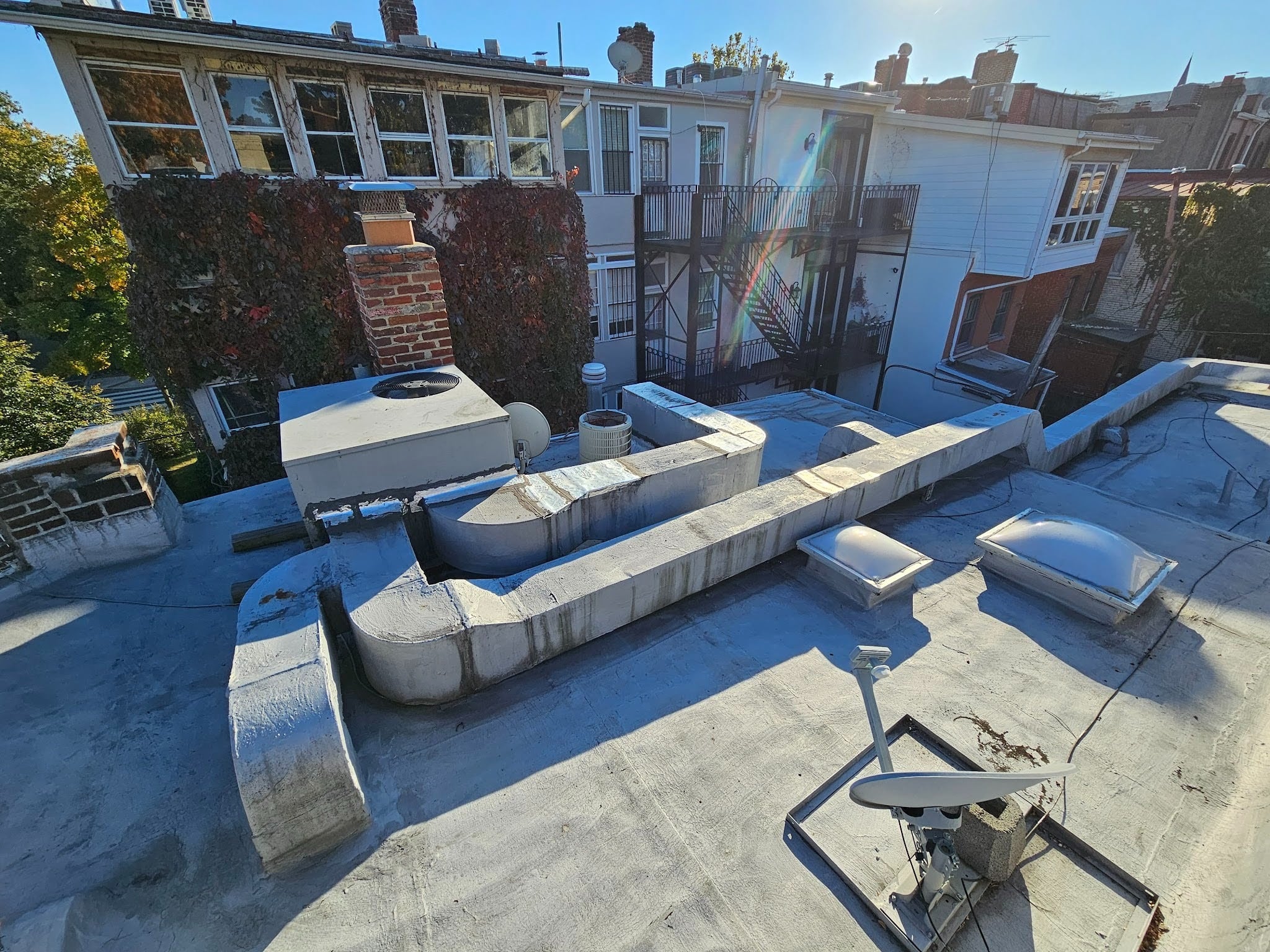
While the HVAC system is creating many types of new problems to the roof, It’s also solving problems too. The interior ceilings of the buildings would be significantly complicated by the ductwork, if there were not, Alternatively, here running all the ductwork on the outside of the roof. As well, depending on the particular layout, it’s very likely that the new ductwork would require adding elements to consume interior volumetric space at parts of the interior. In most cases, these ductwork paths would require obnoxious looking bulkheads in the ceiling.
We think it’s important for people to understand that by installing rooftop ductwork it doesn’t completely alleviate the need for ducts on the inside of buildings. It just reduces the amount of overall ductwork needed on the interior. Essentially, the distribution that runs around the roof allows points to alleviate the horizontal pathways, to an extent. From those penetration points ductwork can run downward and if well coordinated can possibly just run in vertical chases with minimal distribution In horizontal locations such as interior ceilings.
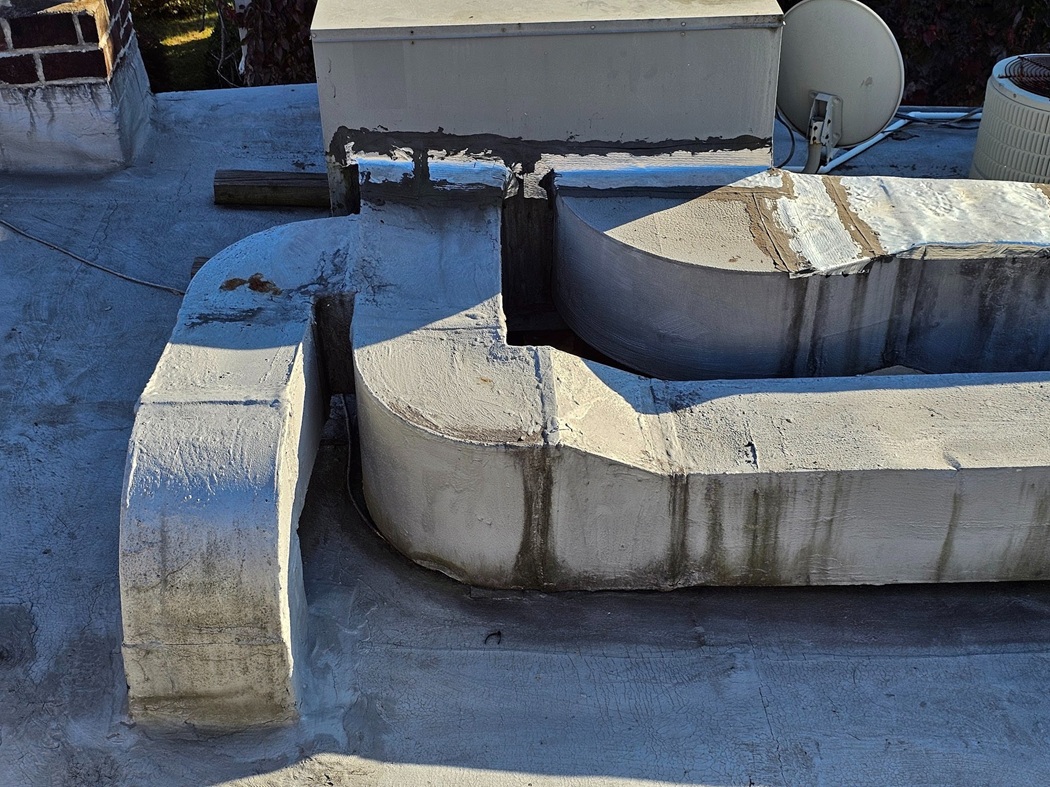
So far we talked about a couple of different issues created by ductwork installed on a low slope roof system. We talked about how multiple added penetrations are difficult to maintain. Essentially, these penetration points are creating several other additional areas of otherwise unnecessary detailing of the roof flashing. These additional penetrations create additional weak links in the chain of the roof system. Creating additional up-turns around ductwork and having to seal these additional points adds considerable lifecycle complication. There’s a bit of origami-like wrapping needed to seal around the ductworks. Even though ductwork can be a planar type of material, sheet metal isn’t perfectly consistent.
The second reason mechanical systems on low-slope roofs create complications is because it limits access to roof surfaces. Sometimes, these roof surfaces are critical parts of the overall roof system. There’s a third reason why ductwork and mechanical systems can be problematic for the health and longevity of the roof itself.
The ducts and mechanical systems are really separate and unrelated to the roof itself, but they impose a set of risks and problems on the roof. Even if the roof happens to be perfect, even if all the ductwork is installed and well sealed at the penetrations, these factors make it more difficult to maintain the roof. Even in situations where water does leak into the ductwork, even if water does not leak through the roof membrane itself, the water can follow a pathway that runs like water through a straw down into the ductwork and then through the ductwork into the building.
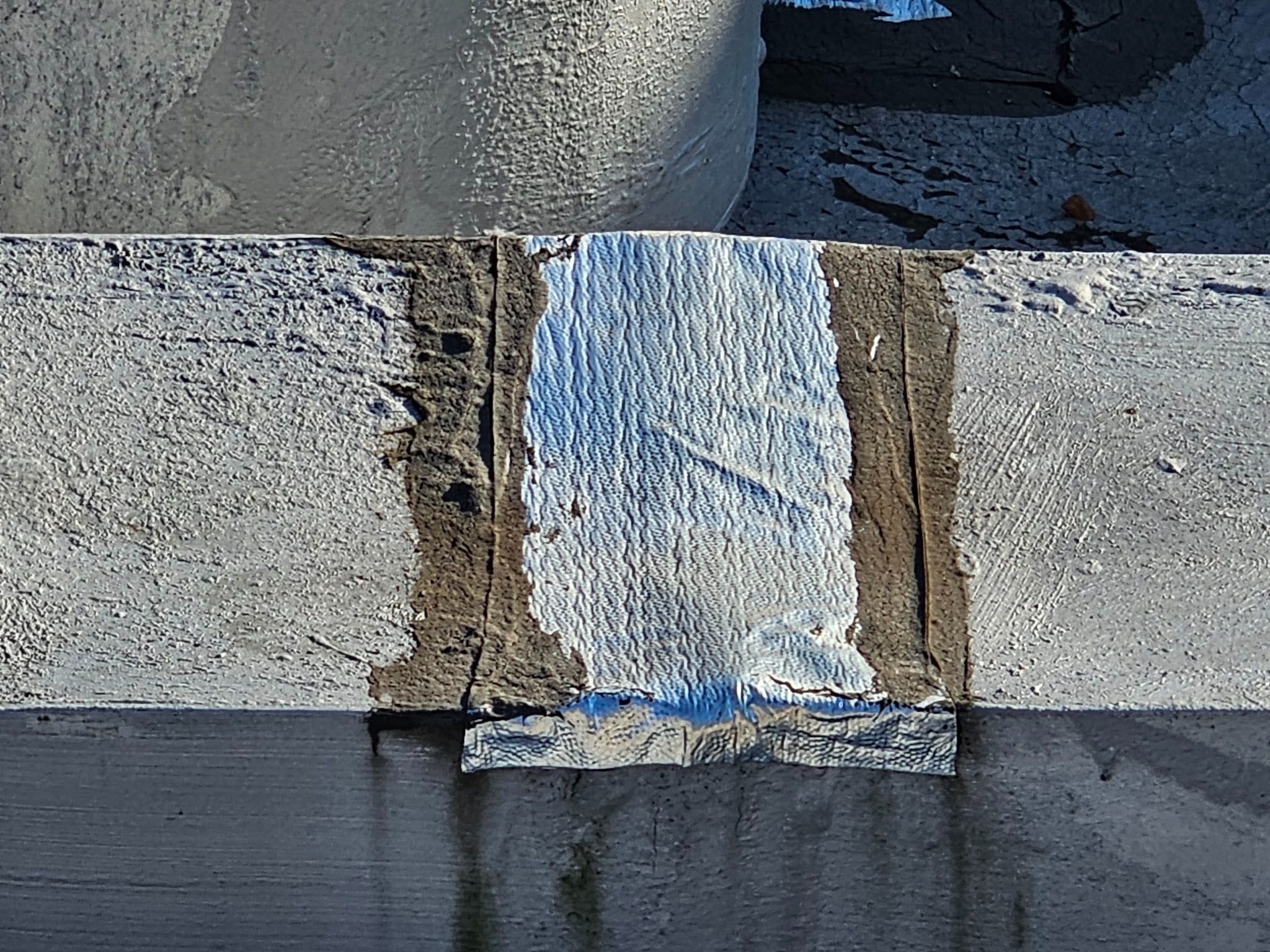
In this coming week, we will talk more about how duct joints, with improper or inadequate sealants, can lead to leakage. As we started discussing this week, leaks can enter through the joints from the outside. However ducts can also create condensation which results in a fourth type of leakage problem.
We provide this information here on our blog, and our website, to help our customers and future clients, and we recommend every building owner in DC who values the longevity of their roof (and their investments) and building use a contractor who values the simple and important principles of proper roof construction like Dupont Roofing DC.
Our company specializes in flat roofing here in Washington DC and we’re happy to help building owners of almost all types. Learn more about our company and the proper techniques of working with roofing on historic buildings in Washington DC here on our blog at DupontRoofingDC.com, and you can call us at (202) 840-8698 and email us at dupontroofingdc@gmail.com. We are happy to help and at least talk through options.