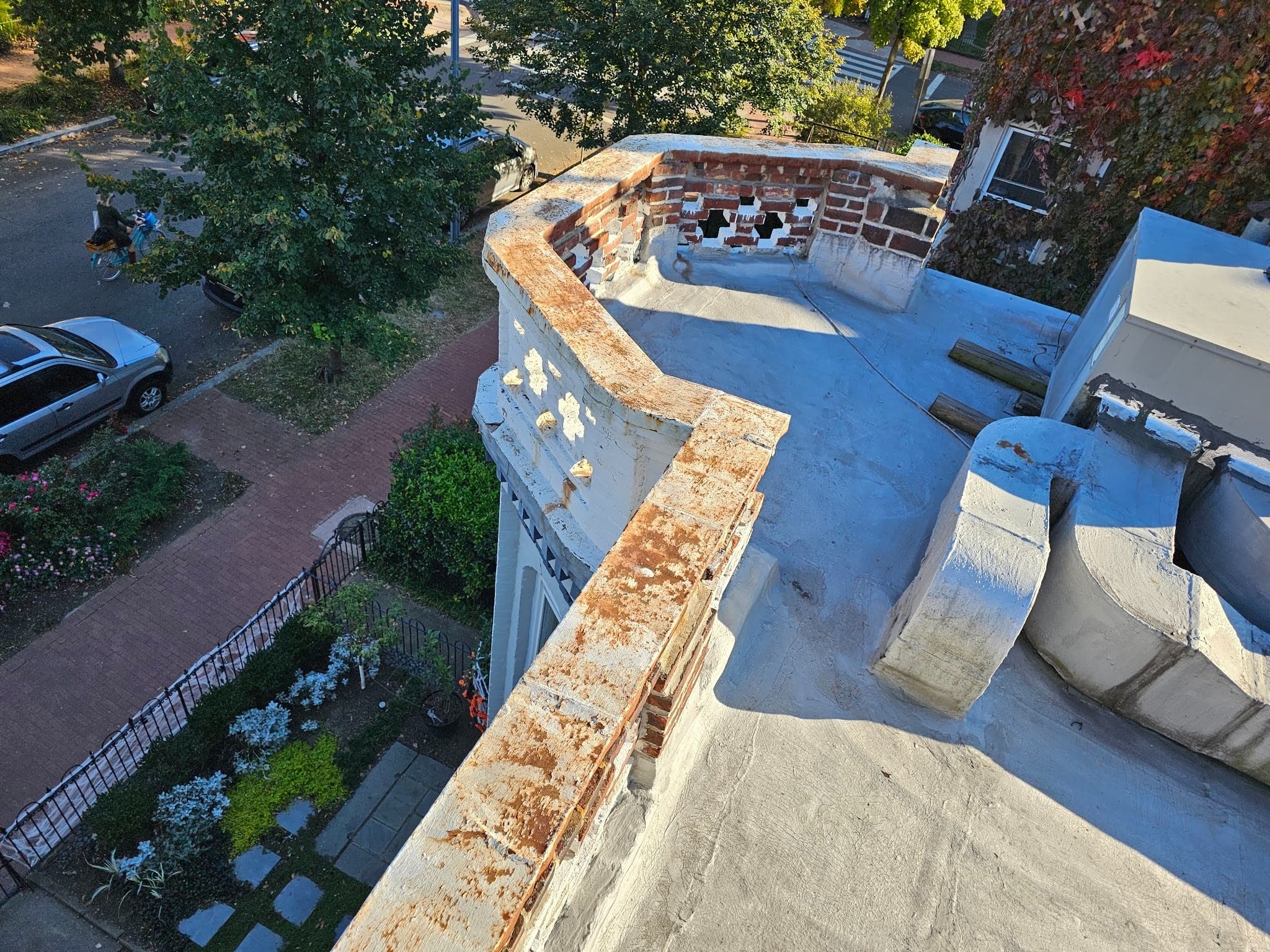
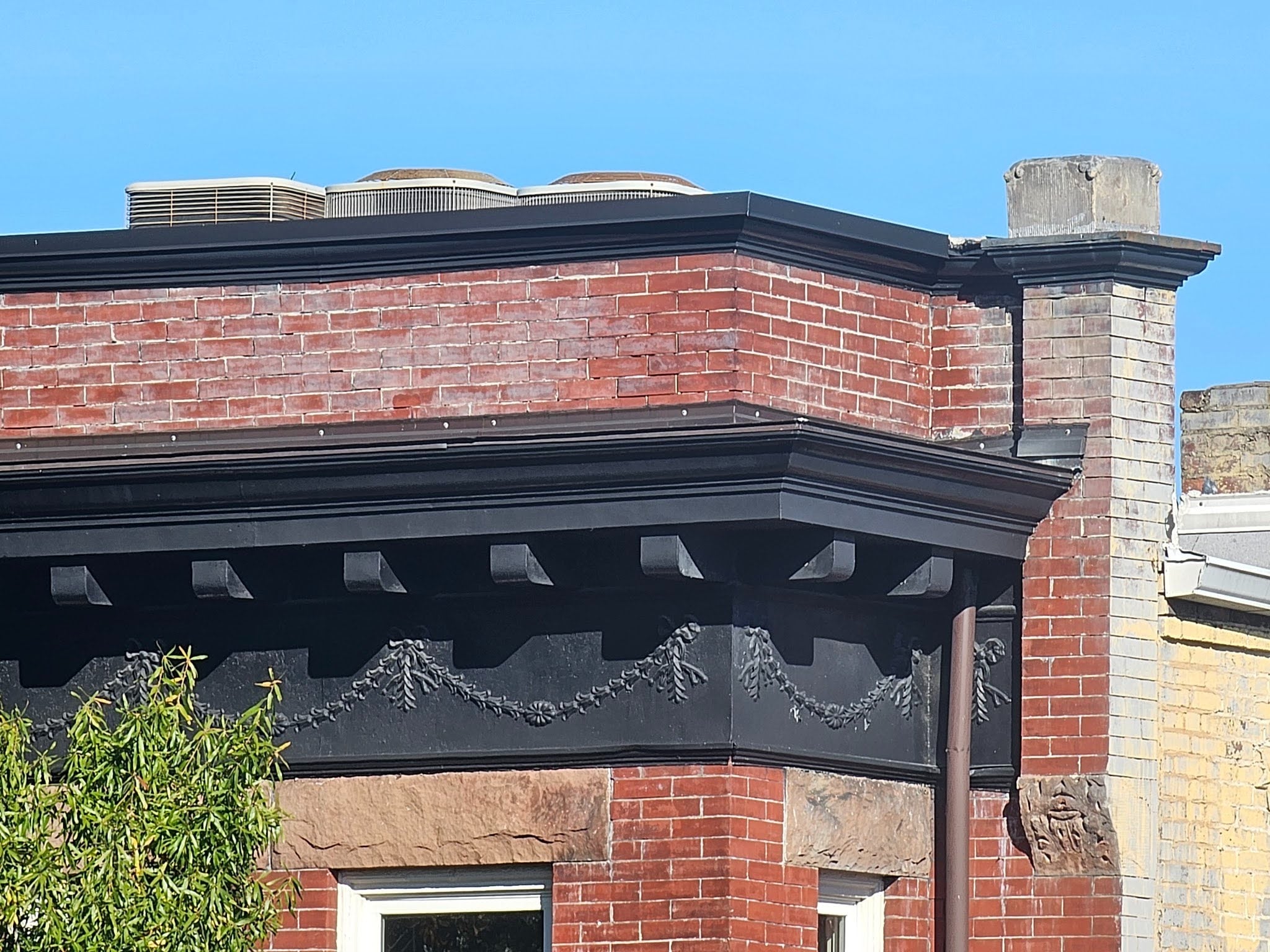
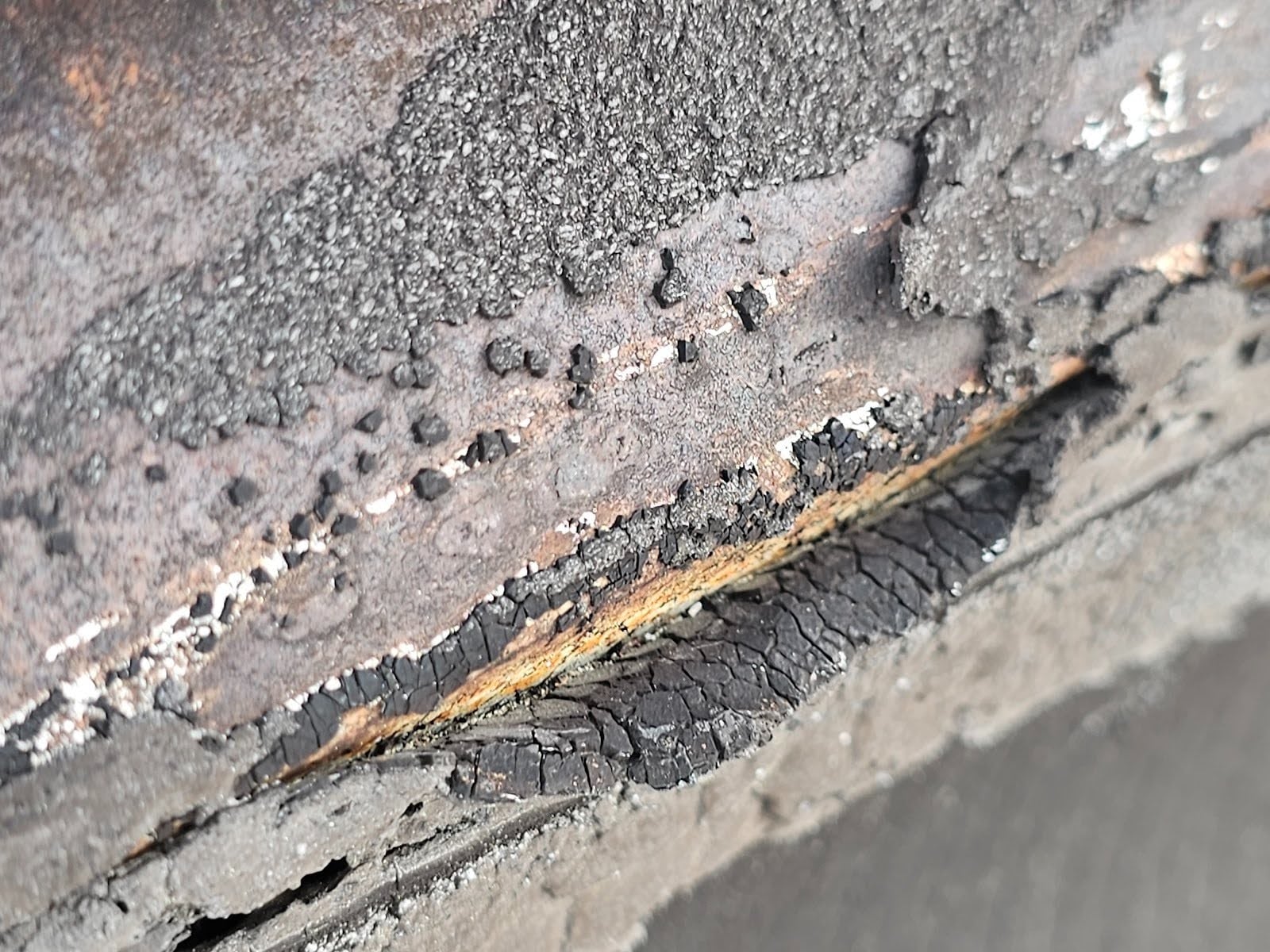
We took a road trip recently out beyond the Washington DC limits to see the architecture of a historic mansion. In the vast majority of cases, we work on flat roofs, here in the heart of Washington DC. There are some exceptions and once in a while we will work on a pitched roof as well. Pitched roofs are built differently. They use different materials and have a whole different set of building material assemblies.
Today we’re looking at a really cool old historic stick framed building way out in the countryside outside of the city. Without neighbors close by it’s the same as you might expect to find out beyond most of the urban sprawl. (At least it feels that way. The sad truth is that the urban sprawl and traffic nightmares outside of Washington DC go on for hours, even once you leave the city. Rush hour traffic is generally backed up for the better part of 100 miles in every direction.
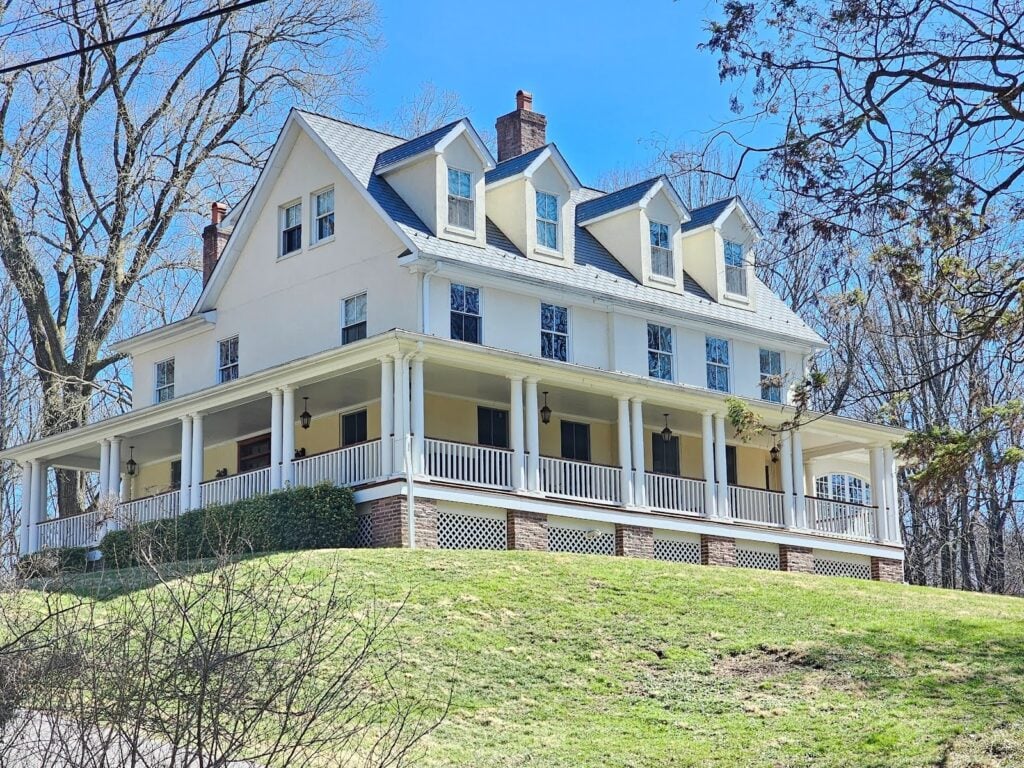
Like a colonial style historic building, this particular colonial revival style is similar. It has the elements of symmetry that you could expect to find in a typical colonial style building. This particular style also emphasizes grand entrances, openings and large windows. This particular building has a large gable roof with numerous dormers that are also topped with small gable roofs at each respective dormer. The particular slate tile happens to be similar to a historic Spanish slate.
It might be hard to guess by looking at the appearance, but this building was built a few hundred years ago. It’s in great condition, considering its age. It’s obvious there’s been some renovations done here and this roof has also been replaced in the lifespan of the building. One of the particular architectural details that really the building apart from an architectural style is that the porch wraps around the building. You don’t normally get that in typical Washington DC row homes.
Once in a while on a really well built row home, you might see a porch that goes across the front and continues across along the side of the building as well. You don’t get that in the middle of a row of homes though because the sides of the buildings are not accessible when they are co-joined with another building beside them. Here, this building is standalone and completely independent.
There are no other buildings attached to it. It is a country house so it has the advantage of being set on a large property with no neighboring buildings touching, beside it. Working and living in the city for so many years, sometimes the massive country homes seem appealing until you remember they also are far away from everything and everyone else.
There are homes built with similar architectural elements and styles, right here in Washington DC. Instead of having a typical attic with a top floor ceiling below, in line with the top of the highest exterior wall, this roof has a vaulted ceiling. The attic to be used as interior space. That under roof space is generally the hottest part of a home in the summer and can become quite uncomfortable. The gable vents, a ridge vent and the dormer windows can help a lot. As well, the dormer windows allow fenestration in an otherwise dark space.
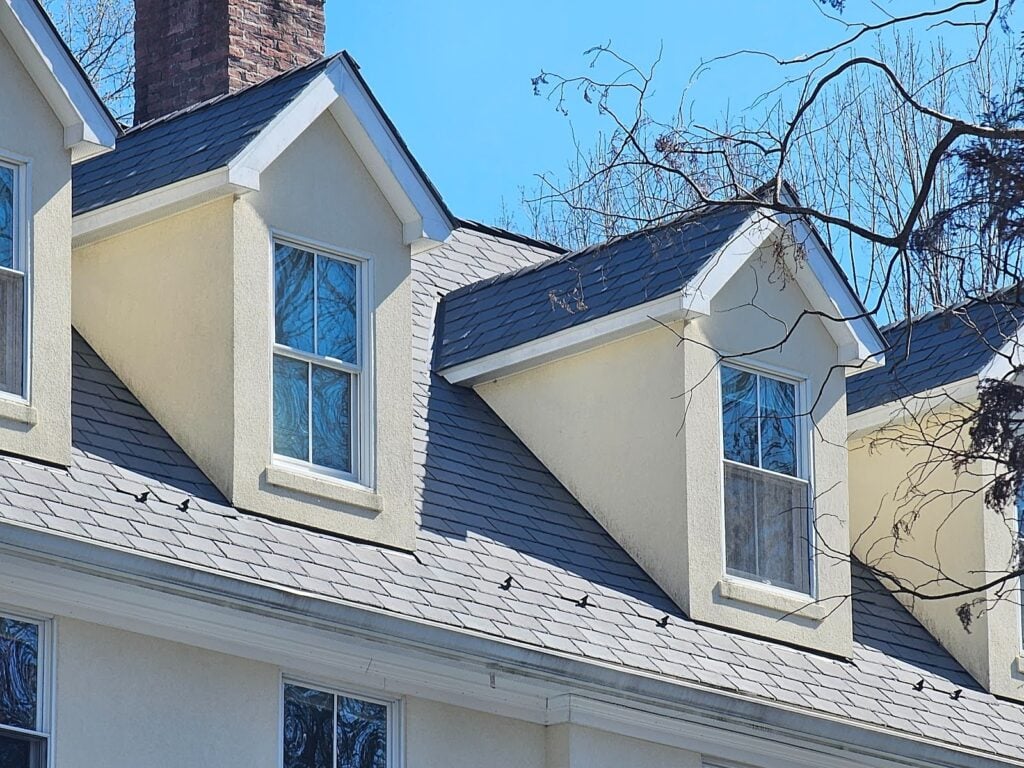
For people who think that this type of roof in a flat roof have little in common, they are correct in some ways, but they’re missing the big picture. Even though they’re mostly different materials and different configurations, these roofs do have some fundamental similarities. It’s important to understand those details. For example, there is a ridge cap at each of these individual dormers. The main roof as well, as you can see in the first picture of this article, also has a ridge cap. That ridge cap prevents water from entering in between the roof at the two different sides of the dormer gables and the main gable.
Those gables are part of the same roof, but there independently covering each side in this case each plane could almost be considered its own roof because each planar surface has to work together. At their perimeter edges. Around each individual plane, they must be flashed to meet and prevent leakage where they join different systems and / or different planes of the roof. Flat roofs are similar in that way, but it is easier to lay a continuous flat roof membrane over a valley. Below these individual shingles, a valley will also be covered with a continuous run of underlayment paper. That underlayment paper works as a continuous backbone for a pitch roof.
One of the big differences here though is that in a valley, for example, the shingles will also be set on top of a solid piece of metal flashing. The material for the valley flashing doesn’t always have to be made of metal, but in most cases metal is one of the preferred options. Metal has the malleability and flexibility to be bent and yet still remain continuous. A slate shingle cannot be bent, for example.
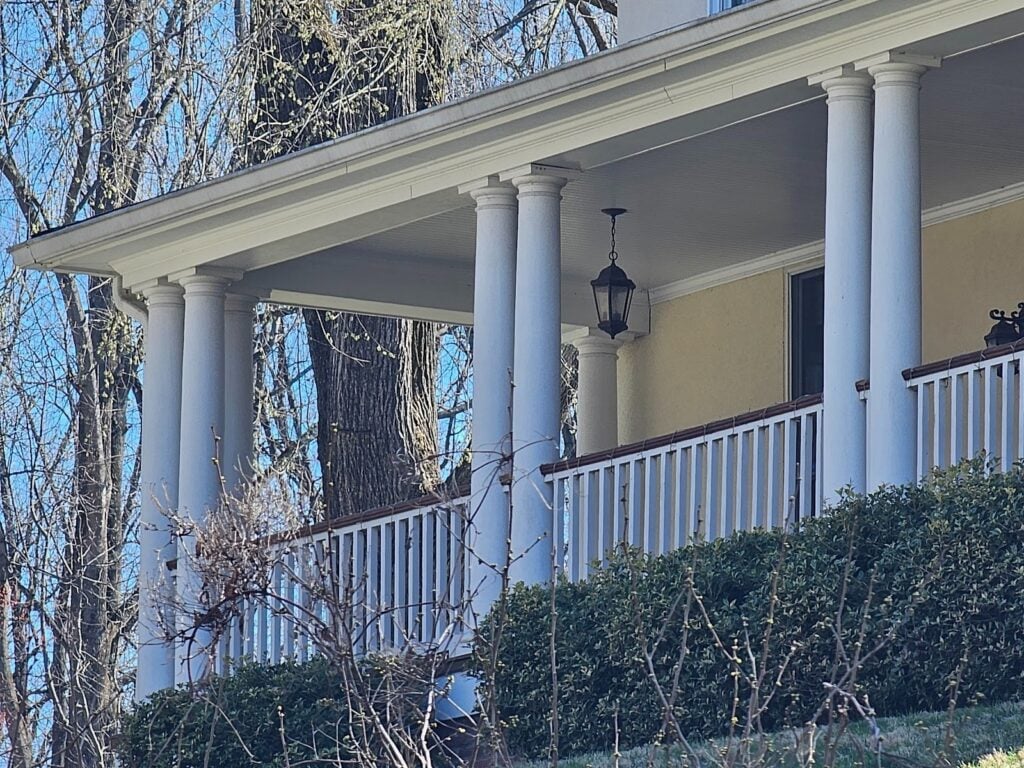
The porch roof of this building is shown in the next picture above. Although there are elements that are unique to stick framed stand-alone homes, there are also many similarities.
We provide this information here on our blog, and our website, to help our customers and future clients, and we recommend every building owner in DC who values the longevity of their roof (and their investments) and building use a contractor who values the simple and important principles of proper roof construction like Dupont Roofing DC.
Our company specializes in flat roofing here in Washington DC and we’re happy to help building owners of almost all types. Learn more about our company and the proper techniques of working with roofing on historic buildings in Washington DC here on our blog at DupontRoofingDC.com, and you can call us at (202) 840-8698 and email us at dupontroofingdc@gmail.com. We are happy to help and at least talk through options.