Professional Leaking Flat Roof Penetration Repair in Washington, DC
This past week, we took a look at some pictures of some old repairs done by some type of low quality contractor. We recommend never making repairs like that and today we’re going to show how we fixed their bad work of the past. We’re showing the way it should be done, to do it correctly. We should mention though, with flat roof repair and many different types of construction, there’s generally more than one way to do things right and sometimes it does depend a little bit on the circumstance. We don’t actually have a time machine or the ability to find the people who did these repairs.
If we could talk to them we might ask them what they were doing and why they did it like this. It doesn’t seem to make much sense to us but it could be that they have a legitimate excuse.
Sometimes we will actually recommend the use of a trowel applied mastic like this, especially when there’s an active leak in the middle of an ongoing precipitation event. Often the synthetic and polymer type materials can’t actually make adhesion on a wet substrate and during an active storm, you can’t just easily dry a wet surface. Sometimes you actually have to apply something like this just to make it stop leaking into the interior, in a temporary type of way. Here they didn’t do it temporarily though. Either the steward of the building or the property owner or someone else who was in charge was probably or possibly supposed to make sure a more permanent repair was made later.
It was never done though, here, in this example. They applied this quick and cheap temporary type application and never fixed it by removing it and replacing it or overlaying it with a proper type of application.
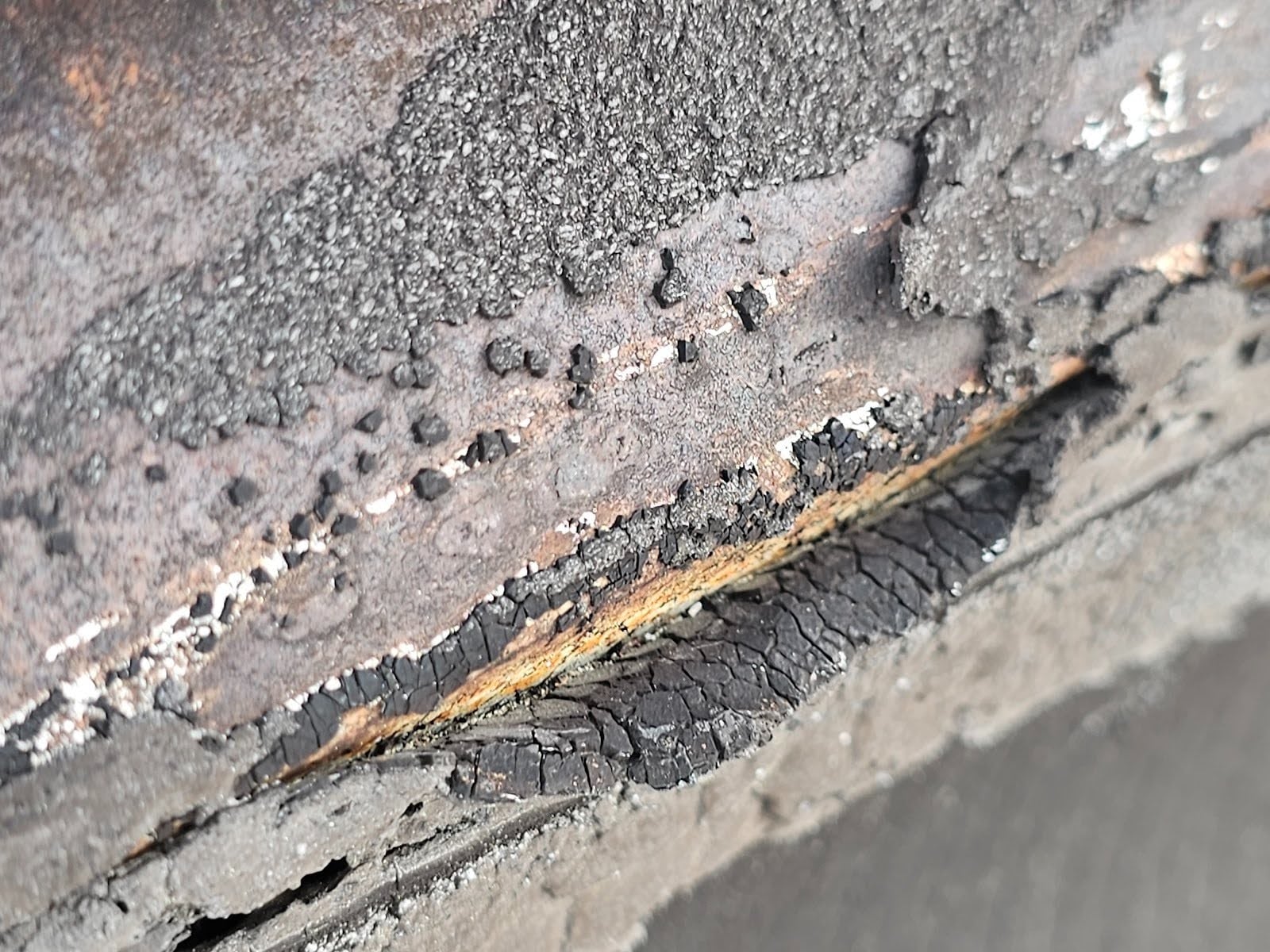
By comparison, this particular type of modified bitumen roof doesn’t have an inherent method of protection from ultraviolet exposure. Instead roofs like this are supposed to be painted repeatedly throughout the lifespan of the roof system. The paint used must be one that provides a reflectivity and protection from UV. They didn’t do that here. You can tell, in the adjacent areas of the roof, that it’s never been painted before. And this particular roof system isn’t new.
It’s probably been here for about 15 years or more. We can get a sense of the age by the amount of cracking. In this case, we are not referring to the cracking at the overlay of tar, but the cracking in the field areas of the modified bitumen membrane.
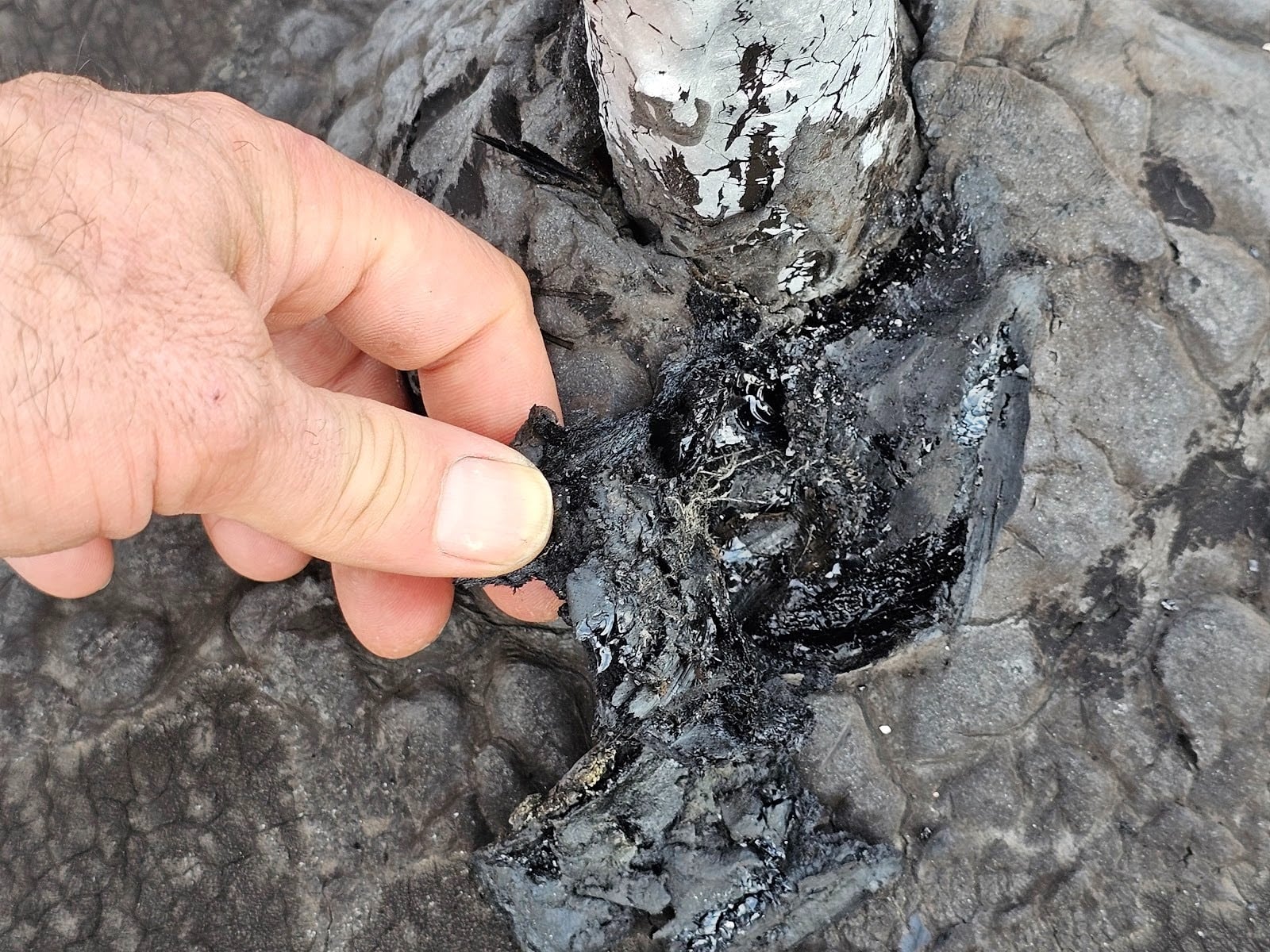
Here, the next picture below, you can see, even though these materials are tough and hard to remove, once we started peeling it apart and got trowel knife underneath of the top layer, we started being able to unravel it, piece by piece.
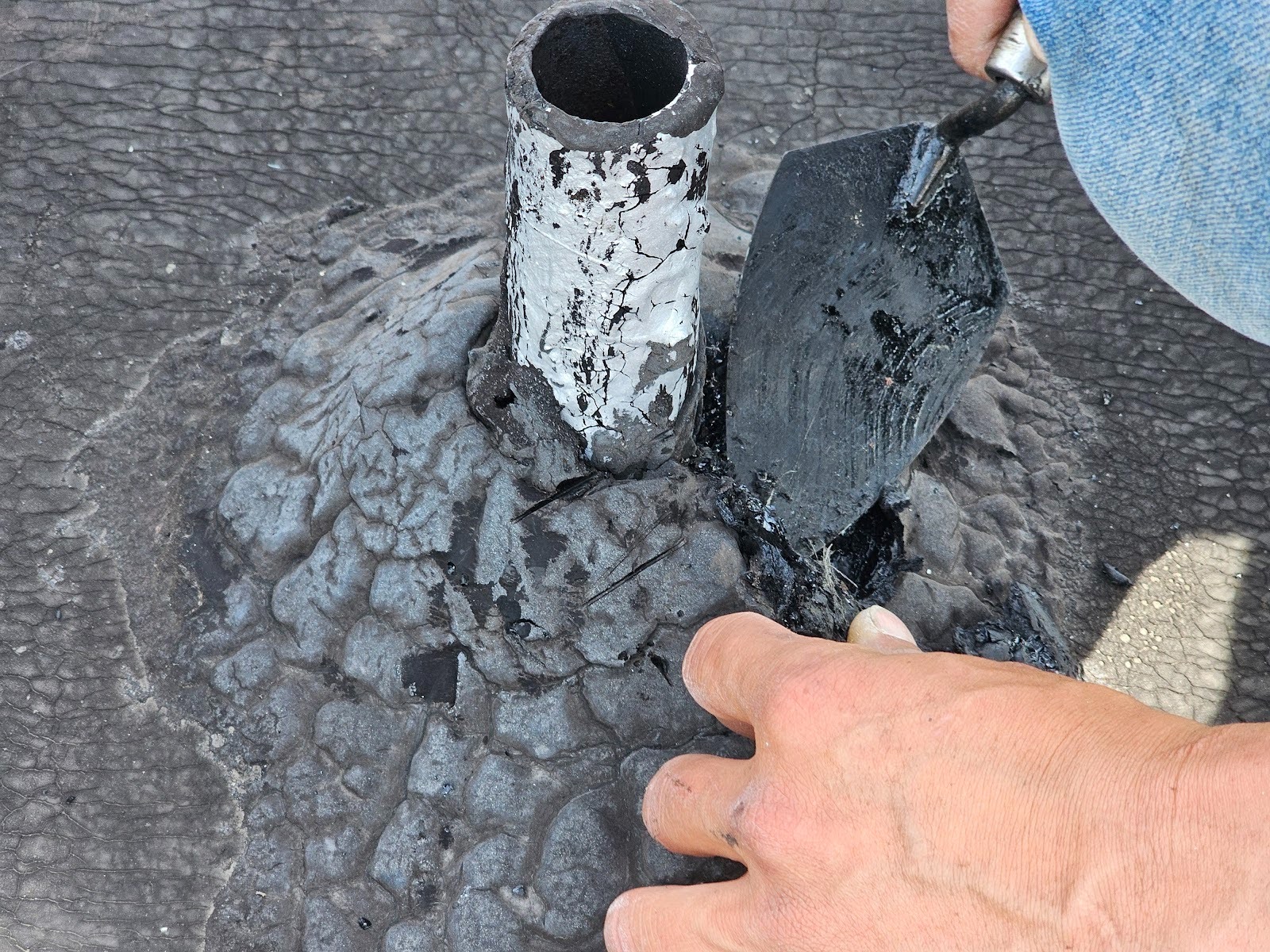
In the blog article from this past week, we did mention that this was applied in several applications or layers. That excessive amount of application, in this particular case, makes it more difficult to clean up and remove. Our opinion of the scenario began to change a little bit though once we got deep down into the built up pile of mastic. We could look closer and see around the base of the pipe. In the picture below, you might notice a little triangle in the shape of the substrate membrane edge, like a sharp snaggletooth.
It’s an edge from the underlying modified bitumen membrane. Here, the roof was never properly installed, it wasn’t just a bad contractor who came in afterwards to make repairs. All along, these bad penetration seals were actually the work of the original contractor. It’s possible that that same contractor is also the one who installed the latest round of roofing wet-seal.
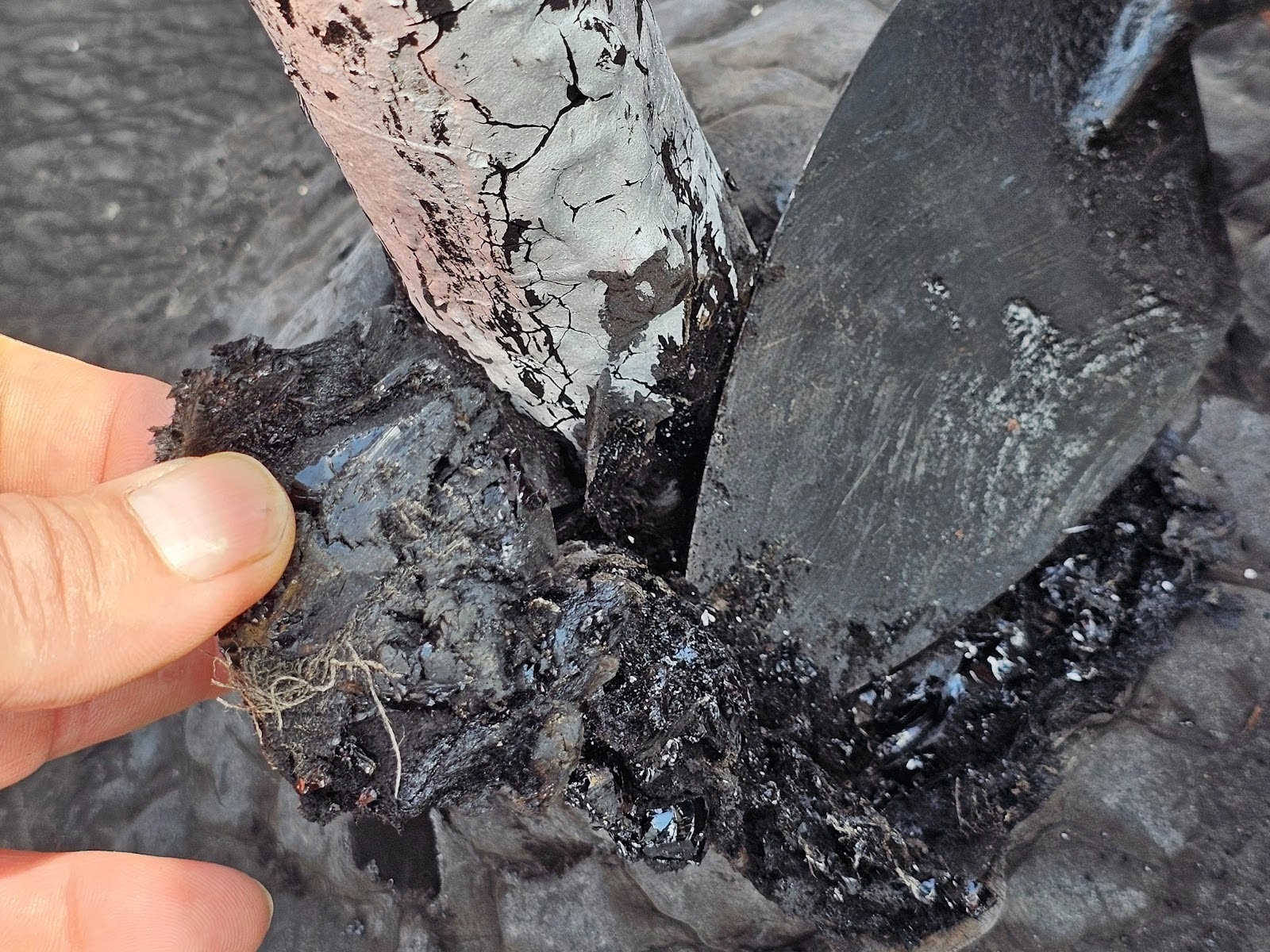
It took us a while, but once we got all the old materials removed around the penetration we were able to reach the original roof membrane substrate. Anyone installing a new roof or even doing an overlay should know the requirements of roofing installation. Here, they did not know how to do things properly. If they had been trained on the full process of roof installation they would have known that applying tar like this is not the proper way to create a seal at a pipe penetration.
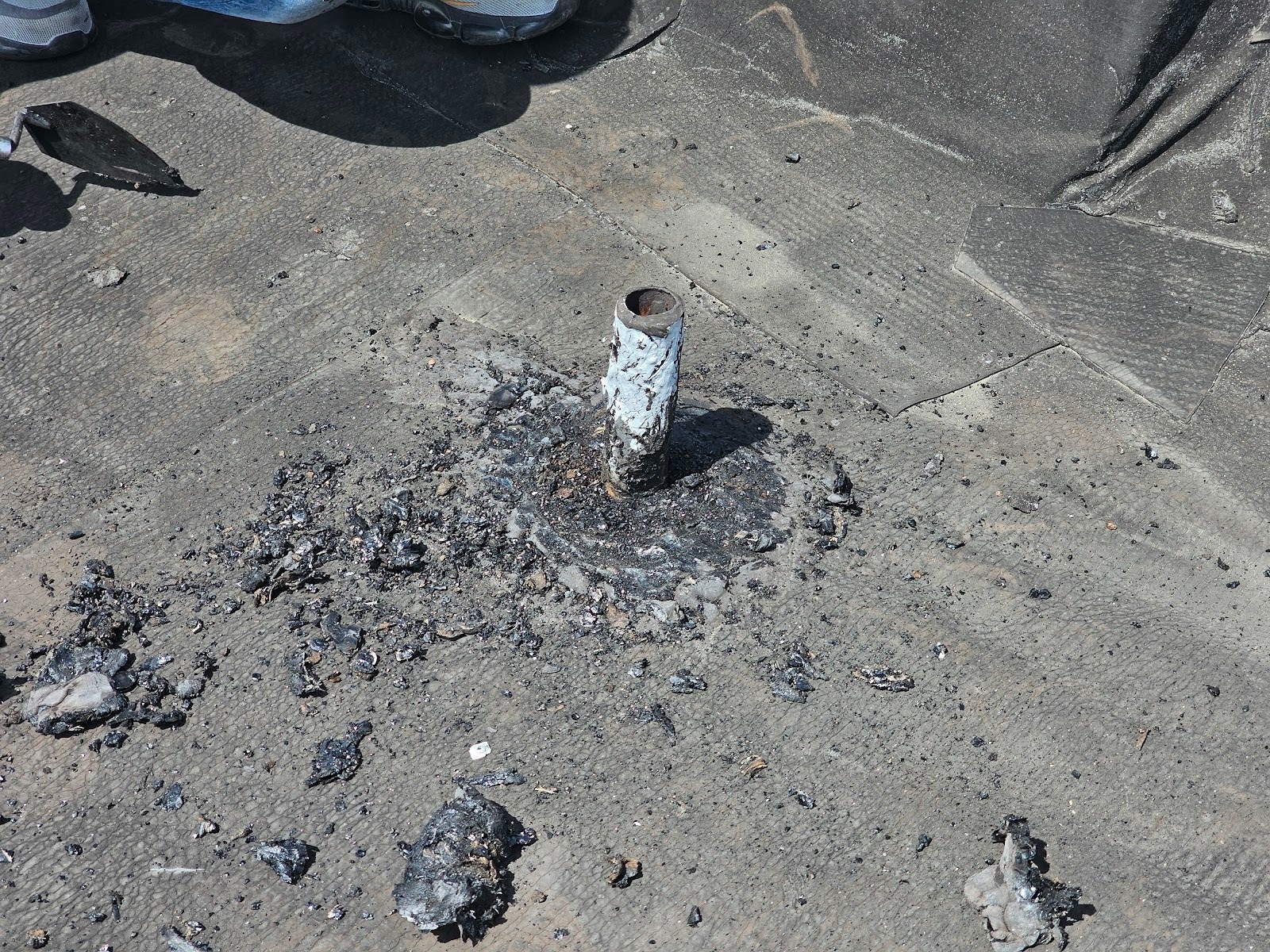
Even though we’ve removed the vast majority of the bulk of the mass of tar that had been applied, we still had to get deeper down to get to a cleaner substrate.
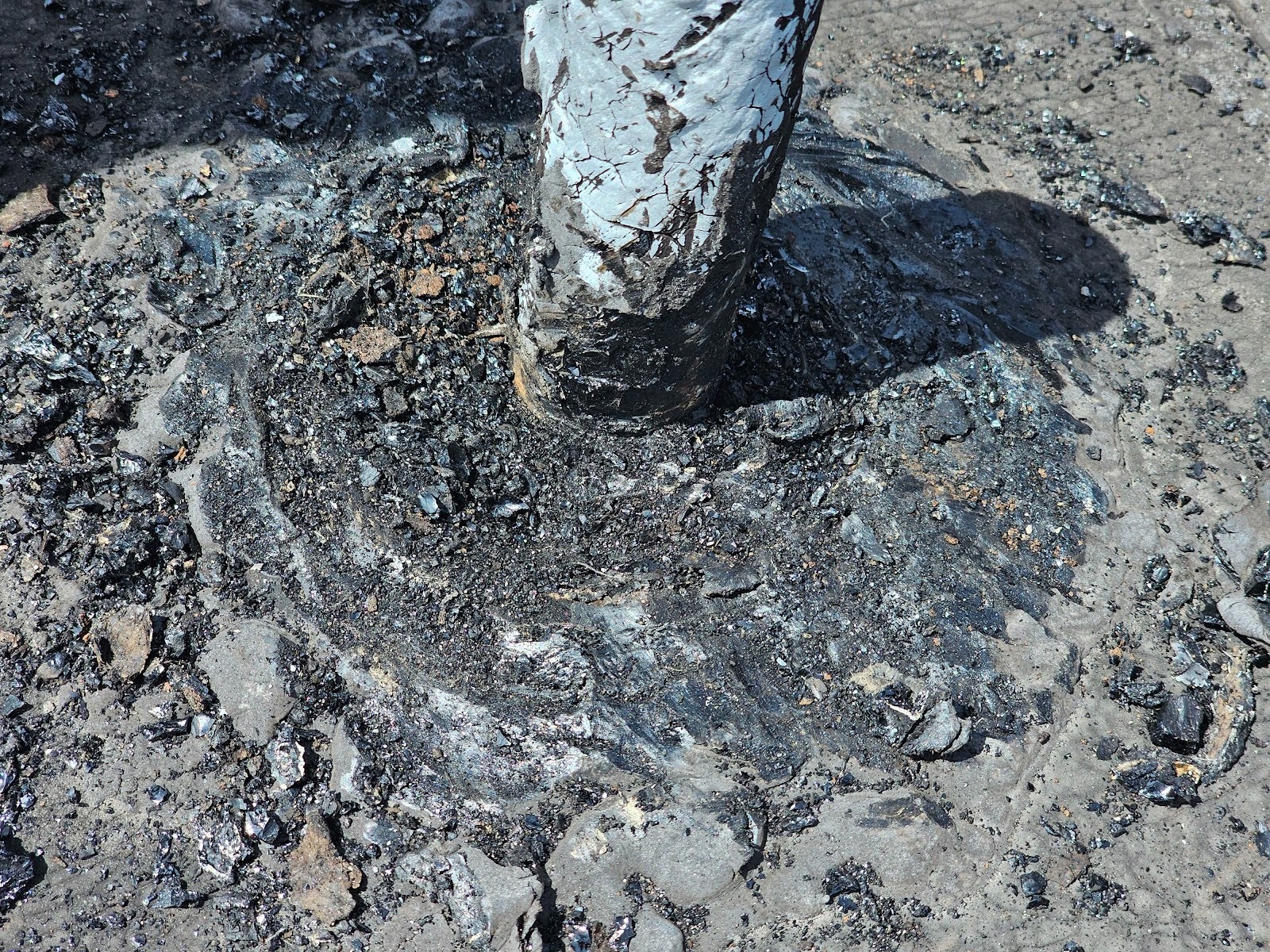
Once we reached a clean substrate, we applied a double wrap of the pipe starting with a flashing wrap around the base of the pipe and then a flat installation with a cutout around the pipe itself.
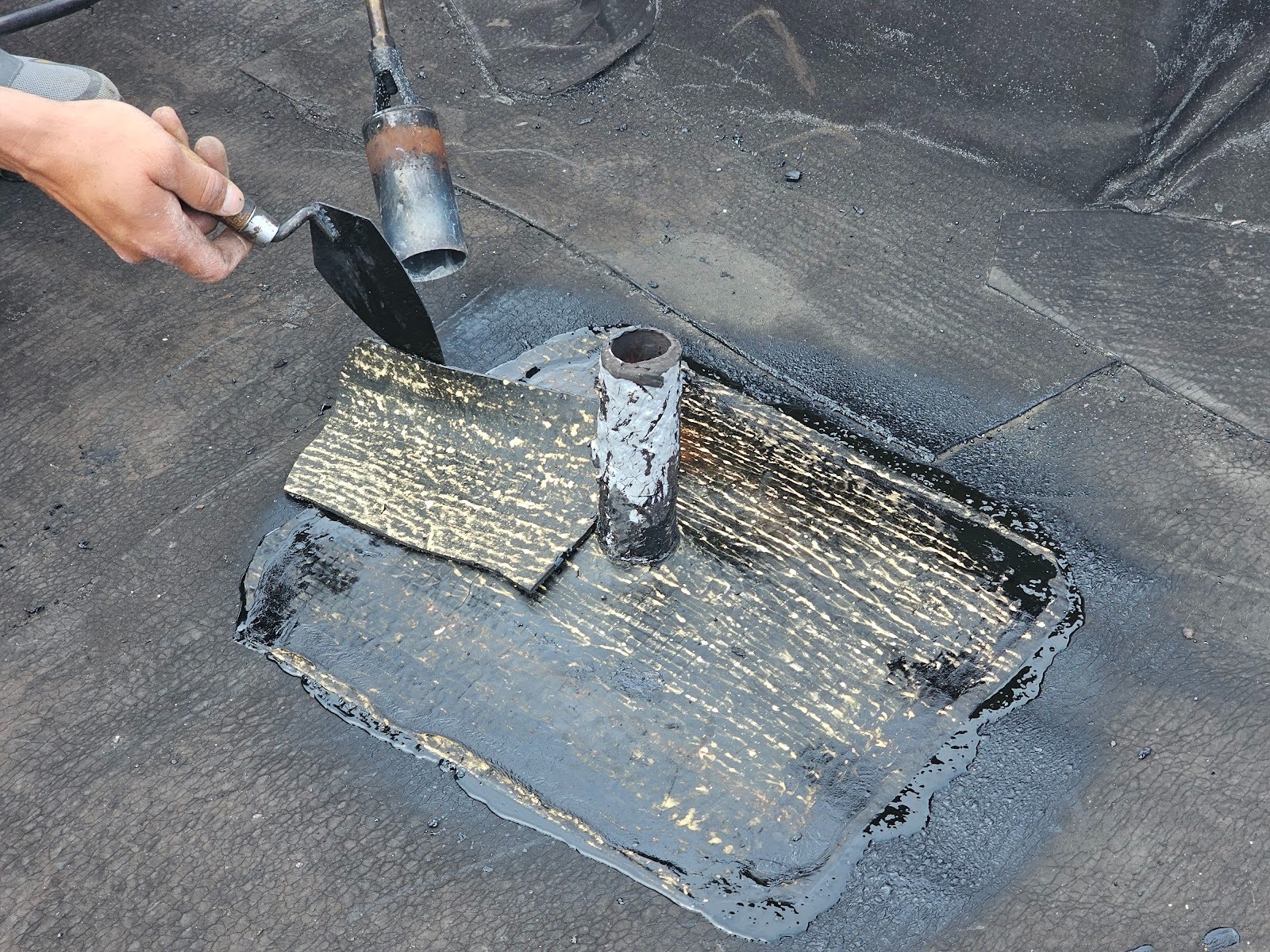
We provide this information here on our blog, and our website, to help our customers and future clients, and we recommend every building owner in DC who values the longevity of their roof (and their investments) and building use a contractor who values the simple and important principles of proper roof construction like Dupont Roofing DC.
Our company specializes in flat roofing here in Washington DC and we’re happy to help building owners of almost all types. Learn more about our company and the proper techniques of working with roofing on historic buildings in Washington DC here on our blog at DupontRoofingDC.com, and you can call us at (202) 840-8698 and email us at dupontroofingdc@gmail.com. We are happy to help and at least talk through options.